
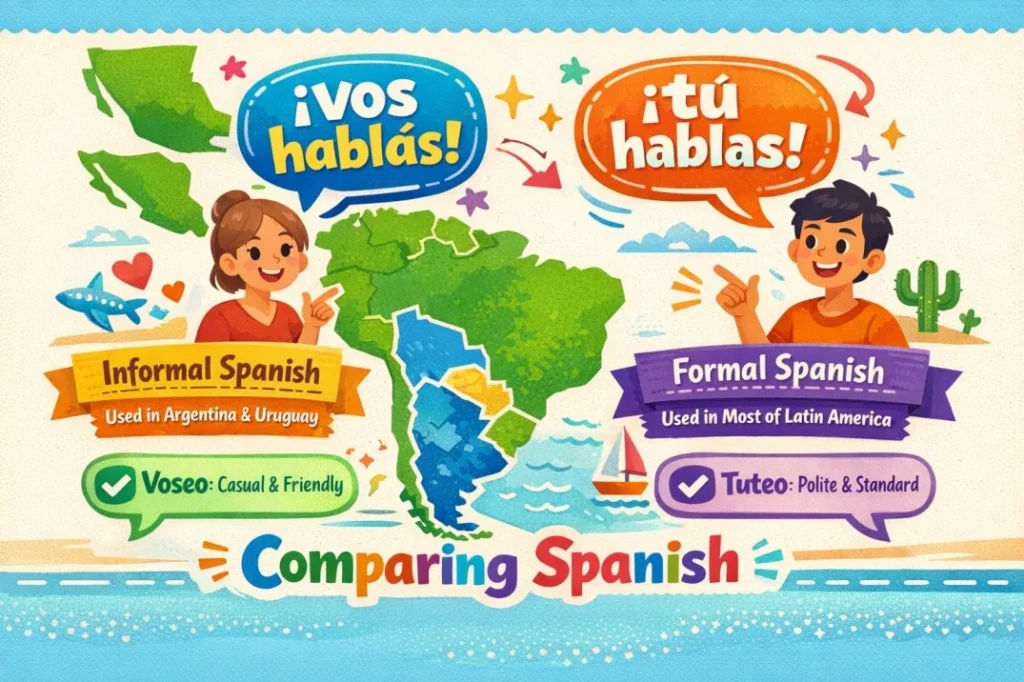
In Spanish, “vos” is a second-person singular pronoun used instead of “tú” to mean “you.” It is commonly used in several Latin American countries such as Argentina, Uruguay, and parts of Central America. While it carries the same basic meaning as “you,” it uses different verb conjugations and often reflects a more informal or familiar tone in everyday speech.
If you have ever listened to Spanish speakers from different countries, you might have noticed something interesting. In some places, people say “tú” when talking to someone informally. In others, you will hear “usted” for a more formal tone. But then there is another word that often surprises learners. That word is “vos.”
At first glance, “vos” might seem confusing. It is not always taught in beginner Spanish lessons, and many textbooks focus mostly on “tú” and “usted.” Yet in real life, millions of people use “vos” every single day. In countries like Argentina, it is actually the most common way to say “you” in informal situations.
Understanding what “vos” means is not just about vocabulary. It opens the door to understanding regional identity, cultural expression, and the natural rhythm of spoken Spanish. In this article, we will explore the meaning of “vos,” where it comes from, how it is used, how it differs from other forms, and how you can recognize or even use it confidently.
What Does Vos Mean in Spanish
In simple terms, “vos” means “you” when speaking to one person in an informal way. It replaces “tú” in certain regions. However, the meaning is not the only thing that changes. The way verbs are conjugated also shifts when using “vos.”
For example:
- Tú hablas means you speak
- Vos hablás also means you speak
Both sentences communicate the same idea, but the form changes depending on the region and the speaker’s preference.
So while the translation remains the same in English, the feeling and usage can be different depending on where you are.
The Origin of Vos
The story of “vos” goes back many centuries. In older forms of Spanish, “vos” was originally used as a formal way of addressing someone, similar to how “you” was used formally in older English. Over time, language evolved.
In Spain, “vos” gradually disappeared and was replaced by “usted” for formal situations and “tú” for informal ones. However, in parts of Latin America, “vos” survived and transformed. Instead of staying formal, it became informal.
This shift is fascinating because it shows how language changes differently in different regions. What was once formal became casual, friendly, and even deeply personal in some cultures.
Where Vos Is Used Today
“Vos” is not used everywhere in the Spanish-speaking world. Its usage depends heavily on geography.
Here are some regions where “vos” is commonly used:
| Country or Region | Usage of Vos | Notes |
|---|---|---|
| Argentina | Very common | Main informal “you” |
| Uruguay | Very common | Used in daily speech |
| Paraguay | Common | Used alongside “tú” |
| Central America | Common in some areas | Varies by country |
| Chile | Limited use | Sometimes mixed with “tú” |
| Spain | Not used | Uses “tú” and “usted” |
In Argentina and Uruguay, “vos” is the standard informal pronoun. In other regions, it may exist alongside “tú,” with speakers switching depending on context.
Vos vs Tú vs Usted
To truly understand “vos,” it helps to compare it with the other ways of saying “you” in Spanish.
| Pronoun | Meaning | Tone | Where Used |
|---|---|---|---|
| Tú | You | Informal | Spain, Mexico, many countries |
| Vos | You | Informal | Argentina, Uruguay, parts of Latin America |
| Usted | You | Formal | All Spanish-speaking regions |
“Tú” and “vos” are both informal, but they are not interchangeable everywhere. “Usted,” on the other hand, is used to show respect, formality, or distance.
Verb Conjugation with Vos
One of the most important differences when using “vos” is how verbs change. The meaning stays the same, but the endings are different.
Here is a simple comparison:
| Verb | Tú Form | Vos Form | English |
|---|---|---|---|
| Hablar | tú hablas | vos hablás | you speak |
| Comer | tú comes | vos comés | you eat |
| Vivir | tú vives | vos vivís | you live |
Notice how the stress shifts to the last syllable in the “vos” form. This creates a distinct sound that is easy to recognize once you get used to it.
Examples of Vos in Everyday Conversation
Understanding “vos” becomes much easier when you see it in real-life situations.
Friendly Tone
“Vos sos muy amable”
You are very kind
“¿Cómo estás vos?”
How are you
These examples feel warm, casual, and personal.
Neutral Tone
“Vos tenés que estudiar para el examen”
You have to study for the exam
“Si vos querés, podemos salir”
If you want, we can go out
This is everyday language used between friends, classmates, or peers.
Slightly Strong or Emphatic Tone
“Vos no entendés nada”
You do not understand anything
Depending on tone of voice, this can sound playful or a bit harsh. Context matters a lot in Spanish, just like in English.
Why Vos Matters in Real Life
Learning “vos” is not just about grammar. It helps you connect with people more naturally in certain regions.
Imagine visiting Argentina and only using “tú.” People will understand you, but using “vos” can make your speech feel more local and relatable. It shows cultural awareness and can even help build stronger connections.
For language learners, recognizing “vos” is just as important as using it. Even if you choose not to speak with it, understanding it will make conversations much easier.
Differences in Tone and Feeling
Even though “vos” and “tú” both mean “you,” they can feel slightly different depending on the region.
- In Argentina, “vos” feels natural and friendly
- In places where it is less common, it might sound regional or unique
- In formal situations, neither “vos” nor “tú” is used, and “usted” takes over
Tone in Spanish is shaped not just by words but by culture, relationships, and setting.
Common Mistakes with Vos
Many learners make a few common mistakes when first encountering “vos.”
- Using “vos” with “tú” verb forms
- Avoiding it completely due to confusion
- Mixing formal and informal pronouns incorrectly
The key is consistency. If you use “vos,” use the correct verb forms with it.
Practical Tips for Learning Vos
If you want to get comfortable with “vos,” here are some helpful tips:
- Listen to speakers from Argentina or Uruguay
- Practice simple verb changes first
- Focus on recognizing patterns rather than memorizing everything
- Do not worry about perfection at the beginning
Learning a new variation of a language takes time, but exposure makes a big difference.
Vos Compared to English “You”
In English, the word “you” works for almost every situation. It can be formal, informal, singular, or plural. Spanish, however, is more specific.
| English | Spanish Equivalent |
|---|---|
| You informal | tú or vos |
| You formal | usted |
This is why “vos” does not have a direct one-word equivalent in English beyond “you.” The difference lies in tone and grammar rather than translation.
Are There Other Meanings of Vos
In modern Spanish, “vos” is almost always a pronoun meaning “you.” However, its historical meaning as a formal address still exists in literature or older texts.
In those contexts, “vos” might appear in ways that feel unusual to modern speakers. But in everyday conversation today, it simply means “you” in regions where it is used.
FAQs
What does vos mean in Spanish
It means you when speaking to one person informally, mainly in certain Latin American countries
Is vos the same as tú
Yes in meaning, but it uses different verb forms and is used in different regions
Where is vos used the most
It is most common in Argentina and Uruguay
Can I use vos everywhere
No it is regional. In many countries people prefer tú or usted
Is vos formal or informal
It is informal in modern usage
Do I need to learn vos to speak Spanish
Not necessarily, but it helps with understanding and communicating in certain regions
Why do verbs change with vos
Because it has its own conjugation pattern different from tú
Is vos used in Spain
No Spain uses tú and usted instead
Conclusion
“Vos” is a fascinating and important part of the Spanish language. While it simply means “you” in English, its usage reflects deep cultural and regional differences. It reminds us that language is not just about words, but about people, history, and identity.
By understanding “vos,” you gain more than vocabulary. You gain insight into how Spanish is truly spoken across the world. Whether you plan to travel, connect with native speakers, or simply deepen your language skills, knowing how “vos” works will make your Spanish feel richer and more authentic.
Read More Related Articles:
- What Does Vanilla Mean in Slang? Modern Slang Guide (2026)
- What Does the Arrow Mean in a Food Chain? How They Show Energy Flow (2026)
- What WTH Means in Texts – Examples You’ll Recognize (2026)

Luna Hartley is a content creator at TextSprout.com, where she specializes in explaining word meanings, modern phrases, and everyday language used in texts and online conversations. Her writing focuses on clarity and context, helping readers understand how words are actually used in real communication.