
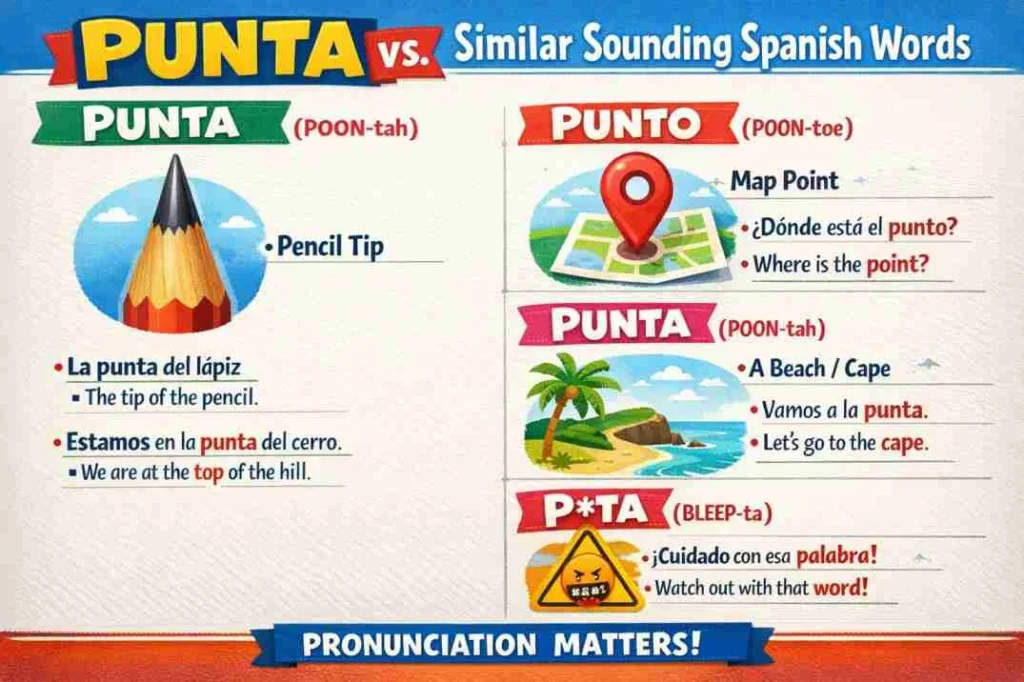
“Punta” in Spanish literally means “point” or “tip,” but it is often confused with “puta,” a slang insult meaning “sex worker” or used as a curse word.
On its own, “punta” is usually not offensive. However, depending on pronunciation, spelling, or context, it can be mistaken for a vulgar term.
If you have heard the word “punta” in Spanish conversations, movies, or online, you might wonder whether it is a bad word. Some people assume it is a curse word, while others say it is completely harmless. The truth is a bit more nuanced.
Spanish is a rich and expressive language, and small differences in spelling or pronunciation can completely change a word’s meaning. This is especially true with words like “punta” and “puta,” which sound similar but have very different meanings.
Understanding what “punta” actually means, and why it is sometimes mistaken for a cuss word, helps avoid confusion and prevents accidental misunderstandings when speaking Spanish. This article explains the literal meaning, slang interpretations, cultural context, and proper usage in a clear and human way.
Literal Meaning of “Punta”
In standard Spanish, “punta” means “point,” “tip,” or “end of something.”
It is a completely normal word used in everyday language across Spanish speaking countries. You might hear it in many harmless situations such as describing objects, places, or directions.
For example:
- The tip of a pencil can be called “la punta del lápiz”
- The end of a knife is “la punta del cuchillo”
- A point of land extending into the sea is called a “punta”
In these contexts, the word is neutral and has no offensive meaning at all.
Why People Think “Punta” Is a Bad Word
The confusion comes from a very similar sounding word: “puta.”
“Puta” is a vulgar term in Spanish that can mean “sex worker” and is often used as an insult. Because “punta” and “puta” sound somewhat alike, especially to non native speakers, people sometimes mix them up.
This confusion is very common among learners of Spanish or those who hear the language casually in movies, music, or online content.
Here is a simple comparison:
| Word | Meaning | Tone |
|---|---|---|
| Punta | Tip or point | Neutral |
| Puta | Vulgar insult | Offensive |
Even a small extra letter like “n” makes a big difference in meaning.
Pronunciation Matters a Lot
One of the main reasons for confusion is pronunciation.
- Punta is pronounced like “poon tah”
- Puta is pronounced like “poo tah”
The difference is subtle but important. Native speakers clearly distinguish between the two, but non native speakers may not notice the difference at first.
Because of this, saying the wrong word accidentally can lead to awkward or even offensive situations.
Can “Punta” Ever Be Used as a Cuss Word?
In most cases, “punta” is not a cuss word at all.
However, language is flexible, and in some regional slang or informal speech, words can take on different tones depending on how they are used. While “punta” itself is not typically offensive, it could appear in phrases or be misunderstood in ways that make it sound inappropriate.
Still, compared to many other Spanish slang words, “punta” is generally considered safe and neutral.
Real Life Examples of “Punta” in Context
To better understand how the word is used, here are some everyday examples:
| Sentence | Meaning | Tone |
|---|---|---|
| La punta del lápiz está rota | The tip of the pencil is broken | Neutral |
| Llegamos a la punta de la isla | We reached the tip of the island | Neutral |
| Corta solo la punta del pan | Cut only the end of the bread | Neutral |
These examples show that “punta” is commonly used in normal conversation without any negative meaning.
Examples of Confusion with “Puta”
Now compare with how the similar sounding word is used:
| Sentence | Meaning | Tone |
|---|---|---|
| Es una puta mentira | It is a damn lie | Offensive |
| No digas esa palabra | Do not say that word | Warning tone |
| Se enojó por el insulto | He got angry because of the insult | Negative |
This comparison highlights why mixing up the words can cause problems.
Cultural Context and Sensitivity
In Spanish speaking cultures, language carries strong emotional and social meaning. Words that might seem harmless in one language can be offensive in another.
Even though “punta” is not a bad word, it is still important to:
- Pronounce words clearly
- Understand context before using slang
- Avoid assumptions about meanings
- Respect cultural differences in language
Being mindful of these factors helps avoid misunderstandings and shows respect when communicating with others.
Regional Differences
Spanish is spoken in many countries, and meanings can vary slightly depending on the region.
In most places:
- Punta remains a neutral word
- It is commonly used in geography, objects, and descriptions
- It does not carry offensive meaning
However, slang and tone can vary, so it is always helpful to listen carefully to how locals use words.
Common Situations Where “Punta” Appears
You may encounter the word in several contexts:
Geography
Many places are named using “punta” because they are located at the tip of land.
Everyday Objects
Used to describe the tip or end of items like pens, knives, or tools.
Directions
Sometimes used when giving directions or describing locations.
Travel
Tourist destinations often include the word “punta” in their names.
In all these situations, the meaning is neutral and descriptive.
Tone and Usage
The tone of “punta” depends entirely on context, but it is almost always neutral.
Neutral Tone
“La punta de la mesa está dañada”
The corner or tip of the table is damaged
Descriptive Tone
“Vivimos en la punta de la ciudad”
We live at the edge of the city
Informal Tone
Even in casual conversation, the word remains non offensive
Unlike actual curse words, “punta” does not carry emotional intensity or insult.
Common Mistakes to Avoid
If you are learning Spanish or using it casually, here are a few things to keep in mind:
- Do not confuse “punta” with “puta”
- Practice pronunciation carefully
- Avoid repeating words you are unsure about
- Listen to native speakers for correct usage
These simple steps can help you avoid embarrassing situations.
Why This Confusion Is So Common
There are a few reasons why people often misunderstand “punta”:
- Similar sounding words in Spanish
- Exposure through movies or music
- Lack of formal language learning
- Mishearing conversations
Because of this, many people assume “punta” is a curse word when it is not.
Is It Safe to Use “Punta”?
Yes, in general, it is completely safe to use “punta” in Spanish.
It is a normal vocabulary word used in everyday speech. As long as you pronounce it correctly and use it in the right context, there is no issue.
However, being aware of similar words helps ensure clear and respectful communication.
FAQs
Is “punta” a bad word in Spanish?
No, “punta” is not a bad word. It means tip or point and is commonly used in everyday language.
Why do people think “punta” is offensive?
Because it sounds similar to “puta,” which is a vulgar insult in Spanish.
What is the difference between “punta” and “puta”?
“Punta” means tip or point, while “puta” is an offensive slang term.
Can saying “punta” offend someone?
Not usually. It is a neutral word, but mispronouncing it could cause confusion.
How do you pronounce “punta”?
It is pronounced “poon tah,” with a clear “n” sound.
Is “punta” used in place names?
Yes, many places include “punta” because it refers to a tip of land.
Is it safe for beginners to use the word?
Yes, as long as it is pronounced correctly and used in proper context.
What should I do if I mix it up accidentally?
Simply clarify your meaning. Most people will understand it was a mistake.
Conclusion
The word “punta” in Spanish is often misunderstood, especially by those who are not familiar with the language. While it may sound similar to certain slang or offensive words, its actual meaning is completely neutral. It simply refers to a point or tip of something, whether that is a physical object or a geographical location.
The confusion mainly comes from its similarity to a different word that is considered vulgar. This highlights how important pronunciation and context are in Spanish. A small difference in sound can completely change the meaning of a word.
By understanding the true meaning of “punta” and how it is used in everyday language, you can avoid misunderstandings and communicate more confidently. Language learning is not just about vocabulary but also about cultural awareness and careful listening.
In the end, “punta” is a harmless and useful word that plays a normal role in Spanish conversation. Knowing its meaning helps you use it correctly and understand it when you hear it in real life.
Read More Related Articles:
- MS Meaning in Coins: How It Affects Price and Rarity In 2026
- Volatile Mean in Stocks: Examples and Investing Insights
- Quesadilla Mean in English: History, Variations and Tips In 2026

Neon Samuel is a digital content creator at TextSprout.com, dedicated to decoding modern words, slang, and expressions. His writing helps readers quickly grasp meanings and understand how terms are used in real conversations across text and social platforms.