
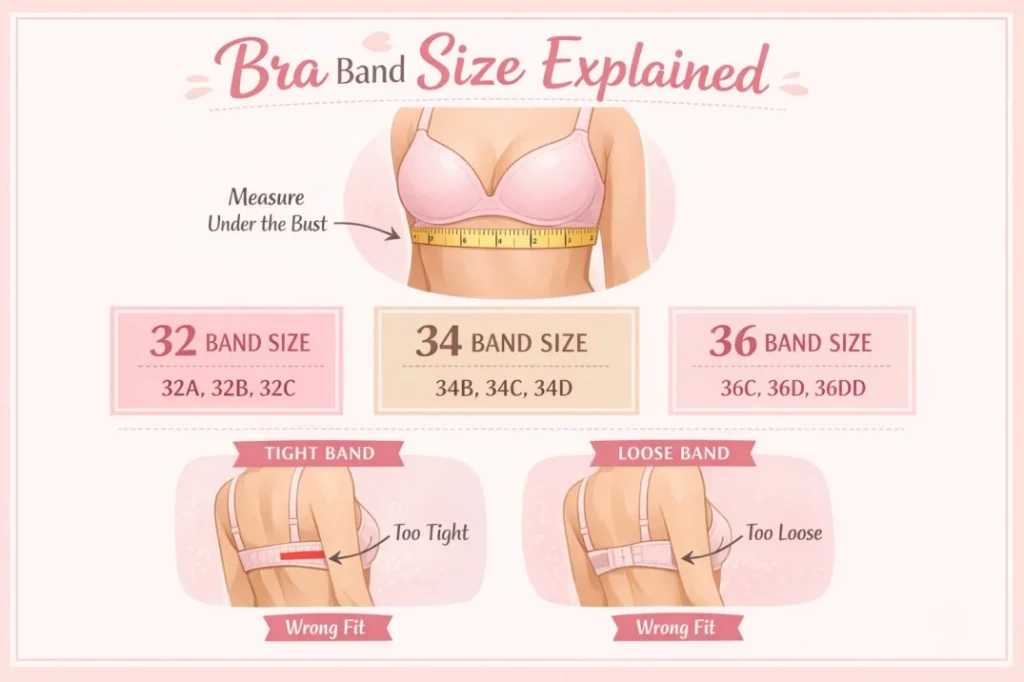
The number in a bra size refers to the band size, which is the measurement around your ribcage just under your bust.
It shows how wide the bra is and how tightly it will fit around your body. For example, in 34C, the number 34 represents the band size in inches.
In simple terms, the number in bra size tells you how snugly the bra wraps around your body, not the size of your breasts.
If you have ever looked at a bra size like 32B, 36C, or 40D and felt confused, you are not alone. Bra sizing can feel complicated at first because it combines two different measurements into one simple code. The number in a bra size is especially important because it represents the band size, which determines how the bra fits around your body and supports your bust.
Understanding what the number means can completely change how comfortable your bra feels. A correct band size improves posture, support, and overall fit, while an incorrect one can lead to discomfort, digging straps, or poor lift.
This guide will break everything down in a simple and human way so you can finally understand bra sizing with confidence.
Understanding Bra Size Structure
A bra size usually has two parts:
- A number (band size)
- A letter (cup size)
For example:
| Bra Size | Number | Letter |
|---|---|---|
| 32B | Band size | Cup size |
| 36C | Band size | Cup size |
| 38D | Band size | Cup size |
The number is the foundation of the fit. The letter only describes the volume of the cup relative to the band.
What Does the Number in Bra Size Actually Measure

The number in a bra size represents the circumference of your ribcage. It is usually measured in inches in countries that use the imperial system.
For example:
However, it is not always exact because bra manufacturers adjust sizing for comfort and support.
The band size plays a key role in:
- Providing support for the bust
- Keeping the bra in place
- Distributing weight evenly
- Supporting posture
A properly fitted band should feel snug but not painful.
How Band Size Is Measured
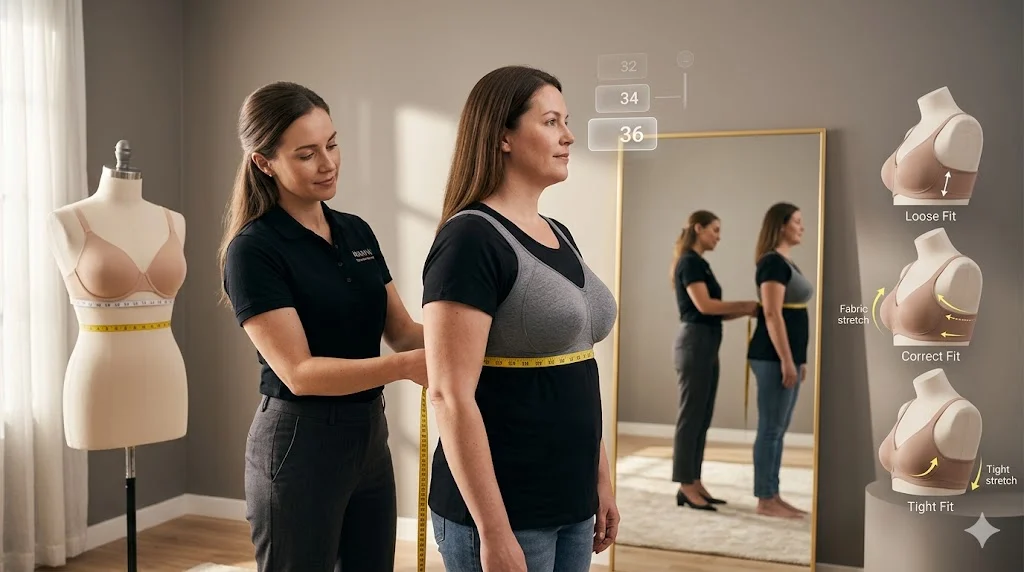
To understand the number more clearly, it helps to know how it is measured.
Step 1: Underbust Measurement
A measuring tape is wrapped around the ribcage, just below the bust.
Step 2: Rounding the Number
The measurement is then rounded to the nearest standard band size, such as 32, 34, 36, 38, and so on.
Step 3: Adjustment for Fit
Different brands may slightly adjust sizing for comfort and fabric stretch.
Example Table of Band Sizes
| Underbust Measurement (inches) | Suggested Band Size |
|---|---|
| 27 to 28 | 28 |
| 29 to 30 | 30 |
| 31 to 32 | 32 |
| 33 to 34 | 34 |
| 35 to 36 | 36 |
| 37 to 38 | 38 |
This is why two people with similar body shapes might wear different bra sizes depending on exact measurements.
Why the Number Matters More Than You Think

Many people assume the cup size is the most important part of a bra size, but the band size actually does most of the work.
The number matters because it:
- Provides most of the support
- Holds the bra in place
- Prevents shoulder strain
- Affects overall comfort
If the band size is too loose, the bra will ride up. If it is too tight, it may feel uncomfortable and restrict breathing.
Common Misunderstanding About Bra Numbers
A very common mistake is thinking that a higher number means a larger cup size. That is not always true.
For example:
- 34C and 36C do NOT have the same cup volume
- When the band increases, the cup size also adjusts proportionally
This is called sister sizing, and it confuses many people.
Sister Sizing Explained
Sister sizes are different bra sizes that hold the same cup volume but have different band sizes.
| If Your Size Is | Sister Size Options |
|---|---|
| 34C | 32D or 36B |
| 36C | 34D or 38B |
| 32B | 30C or 34A |
This shows that the number and letter work together, not independently.
How Band Size Affects Comfort
A properly fitted band should:
- Sit level around your body
- Stay in place when you move
- Feel snug but not painful
- Support most of the bust weight
If the band is wrong:
- Too tight causes discomfort and marks on skin
- Too loose reduces support
- Straps may dig into shoulders
This is why experts often say band fit is more important than cup size.
Signs Your Band Size Is Wrong
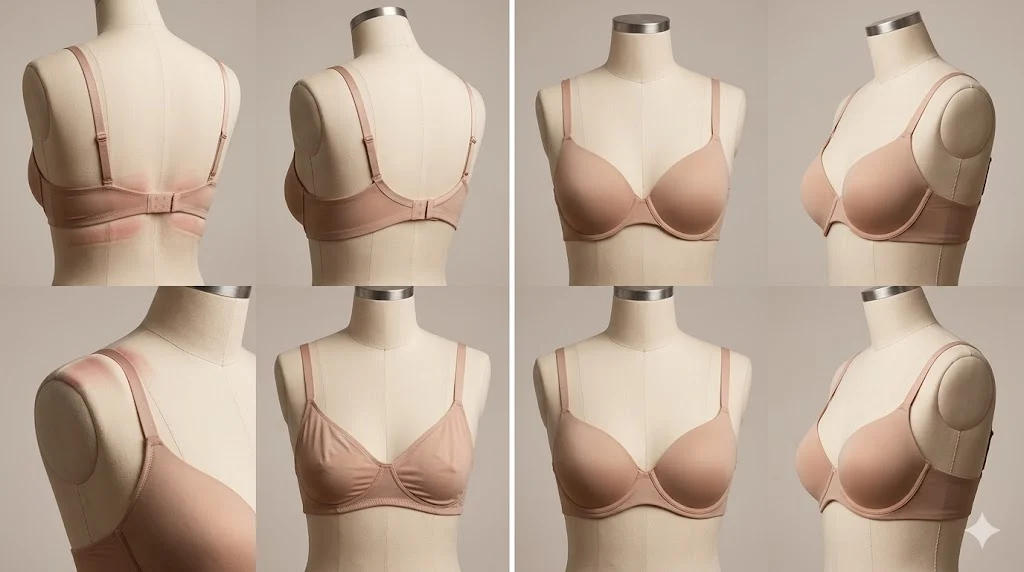
Band is too tight
- Red marks on skin
- Difficulty breathing comfortably
- Bra feels restrictive
Band is too loose
- Bra rides up in the back
- Straps do all the support work
- Poor lift and shaping
A correct band should feel secure but flexible.
Why Bra Numbers Differ Between Brands
Not all brands measure the same way. This is why you might wear 34 in one brand and 36 in another.
Reasons include:
- Fabric elasticity
- Country sizing standards
- Design style (push up, sports, minimizer)
- Manufacturing differences
This is known as vanity sizing or brand sizing variation.
How Age and Body Changes Affect Band Size

The number in bra size can change over time due to:
- Weight gain or loss
- Hormonal changes
- Pregnancy
- Aging and skin elasticity
That is why experts recommend rechecking bra size every year or two.
Professional Tips for Choosing the Right Number
- Always measure under your bust before buying bras
- Try different band sizes even if your cup stays the same
- The band should feel snug on the loosest hook when new
- Avoid choosing based only on habit or guesswork
- Move around to test comfort before finalizing size
Real Life Example
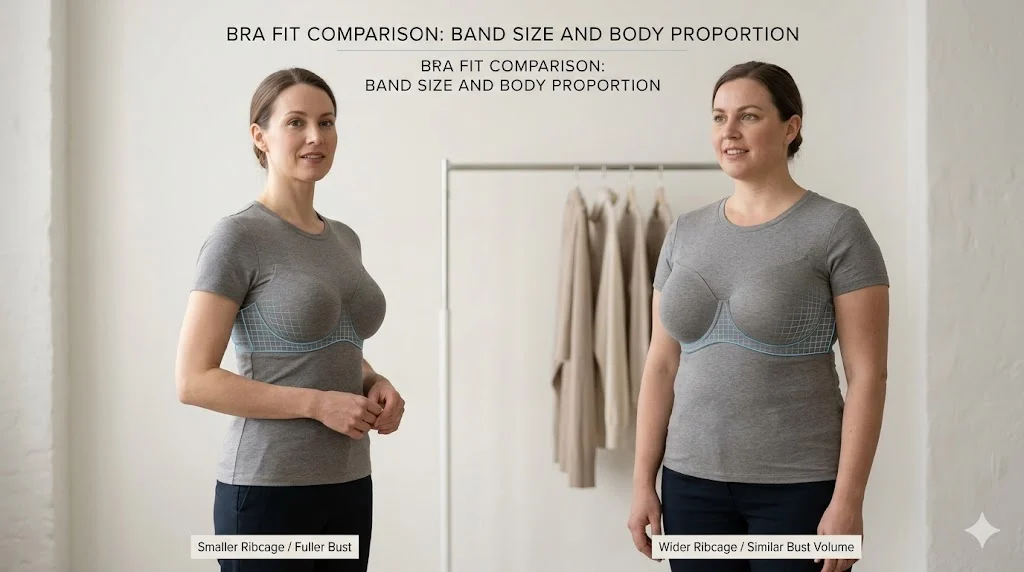
Imagine two people wearing 34C.
- Person A has a smaller ribcage and fuller bust
- Person B has a slightly larger ribcage but similar cup volume
Even though the cup letter is the same, the fit may feel different because the band size affects support and positioning.
This is why proper measurement matters more than guessing.
FAQs
What does the number in bra size mean?
It represents the band size, which measures the circumference of your ribcage under your bust.
Is a higher bra number bigger breasts?
No. The number refers to band size, not breast size. Cup size determines volume.
How is bra band size measured?
It is measured by wrapping a tape around your ribcage just below your bust and rounding to standard sizes.
Can band size affect comfort?
Yes. A wrong band size can cause discomfort, poor support, or shoulder pain.
Why does my bra size change between brands?
Different brands use slightly different sizing systems and materials.
What is the most important part of bra size?
The band size is most important because it provides most of the support.
What happens if I wear the wrong band size?
You may experience discomfort, poor lift, or straps digging into your shoulders.
Does bra size change over time?
Yes. Body weight, age, and hormonal changes can affect your size.
Conclusion
The number in a bra size is not just a random figure. It represents your band size, which is the foundation of proper bra fit and support. Understanding this number helps you choose bras that feel comfortable, support your body correctly, and improve overall posture.
While cup size often gets more attention, the band size plays the most important role in how a bra actually feels. A well fitted band ensures stability, comfort, and confidence throughout the day.
Once you understand how the number works, bra shopping becomes much simpler and more accurate.
Read More Related Article:
- Indignant Mean in the Bible: Meaning and Spiritual Insight In 2026
- Double Double Mean in Basketball: Complete Guide In 2026
- 12 Personnel Mean in Football: Formation, and Strategy In 2026

Luna Hartley is a content creator at TextSprout.com, where she specializes in explaining word meanings, modern phrases, and everyday language used in texts and online conversations. Her writing focuses on clarity and context, helping readers understand how words are actually used in real communication.