
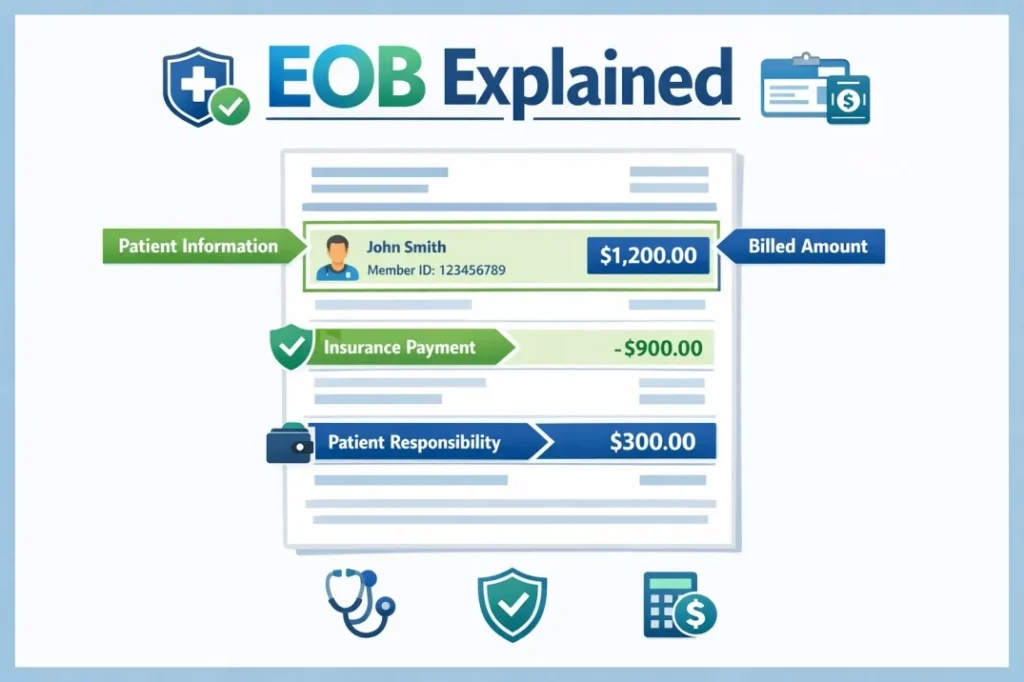
EOB in medical terms stands for “Explanation of Benefits.” It is a document sent by your health insurance company that explains what medical services were billed, how much the insurance covered, and what amount you may still owe.
Medical bills and insurance documents can feel overwhelming, especially when they include unfamiliar abbreviations. One term that often causes confusion is EOB. If you have ever received paperwork from your insurance company after a doctor visit, you may have seen this term and wondered what it means and how it affects your healthcare costs.
Understanding EOB is important because it helps you track your medical expenses, verify insurance payments, and avoid billing mistakes. Once you know how to read an EOB, it becomes a useful tool rather than a confusing document.
An EOB is not a bill. It is simply a summary that helps you understand how your insurance processed a claim.
What EOB Means in Healthcare
An Explanation of Benefits is a detailed statement provided by your insurance company after a healthcare service is billed. It shows how a claim was handled and gives a breakdown of costs.
When you visit a doctor, hospital, or clinic, the provider sends a claim to your insurance company. After reviewing the claim, the insurance company processes it and sends you an EOB.
This document helps answer important questions such as:
- What services were performed
- How much was charged
- How much the insurance paid
- What portion is your responsibility
Think of an EOB as a financial summary of your medical visit. It allows you to track what has been paid and what still needs attention.
Why EOB Is Important
Many people ignore their EOB documents, assuming they are not necessary. However, reviewing your EOB is very important for several reasons.
Key Reasons to Review Your EOB
| Reason | Explanation |
|---|---|
| Verify charges | Ensure you were billed for services you actually received |
| Track insurance payments | Confirm that your insurance paid the correct amount |
| Avoid errors | Identify billing mistakes or duplicate charges |
| Understand costs | Learn how deductibles, copays, and coinsurance apply |
| Prevent fraud | Spot services listed that you never received |
An EOB acts as a safeguard for your healthcare finances. Taking a few minutes to review it can save money and prevent confusion later.
What Information Is Included in an EOB
An EOB contains several sections that break down your medical claim. While the format may vary between insurance companies, most EOBs include similar information.
Common Sections of an EOB
| SectionWhat It Means | |
|---|---|
| Patient information | Name of the person who received care |
| Provider details | Doctor or hospital that provided the service |
| Date of service | When the treatment or visit occurred |
| Description of services | Type of care received |
| Amount billed | Total cost charged by the provider |
| Allowed amount | The amount approved by the insurance company |
| Insurance payment | Portion paid by the insurer |
| Patient responsibility | Amount you may need to pay |
Each section helps you understand how the total cost was divided between you and your insurance provider.
How to Read an EOB Step by Step
Reading an EOB can seem confusing at first, but breaking it down step by step makes it much easier.
Step One Check Basic Details
Start by confirming your name, the provider’s name, and the date of service. Make sure everything matches your actual visit.
Step Two Review Services Listed
Look at the description of services. Ensure that all listed procedures or treatments were actually performed.
Step Three Compare Costs
Check the amount billed by the provider and the allowed amount approved by your insurance. These numbers are often different because insurance companies negotiate rates.
Step Four Understand Payments
See how much your insurance paid and what portion is left as your responsibility. This is the amount you may need to pay once you receive a bill from the provider.
Step Five Look for Notes or Codes
EOBs often include codes or notes explaining why certain charges were reduced or denied. These explanations are important if you have questions about coverage.
Real-Life Examples of EOB
Understanding EOB becomes easier when you look at real scenarios.
Example One Routine Doctor Visit
You visit a doctor for a checkup. The provider charges 100 dollars. Your insurance allows 80 dollars and pays 60 dollars. Your EOB shows that you owe 20 dollars.
Example Two Lab Test
A lab test costs 200 dollars. The insurance company approves 150 dollars and pays 120 dollars. Your responsibility is 30 dollars.
Example Three Emergency Visit
An emergency visit costs 1000 dollars. Insurance approves 700 dollars and pays 500 dollars. The remaining 200 dollars may be your responsibility depending on your plan.
These examples show how EOB explains the breakdown of costs in a clear and structured way.
EOB vs Medical Bill
Many people confuse an EOB with a medical bill, but they are not the same. Understanding the difference is crucial.
| Feature | EOB | Medical Bill |
|---|---|---|
| Purpose | Explains insurance processing | Requests payment |
| Sent by | Insurance company | Healthcare provider |
| Payment required | No | Yes |
| Details included | Charges, coverage, responsibility | Final amount due |
An EOB is for your information only. You should wait for the actual bill before making any payment.
Common Terms Found in an EOB
EOB documents often include additional terms that may be unfamiliar. Understanding these terms can make the document easier to read.
| Term | Meaning |
|---|---|
| Deductible | Amount you must pay before insurance starts covering costs |
| Copay | Fixed amount you pay for a service |
| Coinsurance | Percentage of costs you share with insurance |
| Out of pocket maximum | Maximum amount you pay in a year |
| Claim | Request sent to insurance for payment |
These terms help explain how your insurance plan works alongside your EOB.
Common Mistakes to Watch for in an EOB
Even though EOBs are generated by insurance systems, errors can still occur.
Here are some common issues to look for:
- Services listed that you did not receive
- Incorrect dates or provider information
- Duplicate charges
- Incorrect patient responsibility amounts
- Claims marked as denied without explanation
If you notice any errors, contact your insurance company or healthcare provider to resolve the issue quickly.
Tips for Managing Your EOBs
Keeping track of your EOBs can help you stay organized and avoid confusion.
- Save all EOB documents digitally or in a folder
- Compare EOBs with actual medical bills
- Keep a record of payments you make
- Ask questions if something does not look right
- Review EOBs regularly instead of ignoring them
Staying organized ensures that you always know where your healthcare finances stand.
Alternate Meanings of EOB
Although EOB usually means Explanation of Benefits in healthcare, it can have other meanings in different contexts.
| Meaning | Context |
|---|---|
| End of Business | Used in workplace communication |
| End of Day | Refers to a deadline |
| Explanation of Benefits | Medical and insurance context |
In medical settings, EOB almost always refers to Explanation of Benefits.
FAQs
What does EOB mean in medical terms
EOB stands for Explanation of Benefits. It is a document from your insurance company explaining how a medical claim was processed.
Is an EOB a bill
No, an EOB is not a bill. It is only a summary of costs and payments.
Do I have to pay the amount on the EOB
Not immediately. You should wait for the official bill from your healthcare provider before making any payment.
Why is the billed amount different from the allowed amount
Insurance companies negotiate lower rates with providers, so the allowed amount is usually less than the billed amount.
What should I do if I find an error on my EOB
Contact your insurance company or provider to clarify and correct the issue.
How often will I receive an EOB
You receive an EOB each time a healthcare claim is processed by your insurance.
Can I access my EOB online
Yes, most insurance companies provide EOBs through online portals.
Why was my claim denied on the EOB
Claims may be denied due to coverage limits, missing information, or services not included in your plan.
Conclusion
EOB, or Explanation of Benefits, is an essential document that helps you understand how your health insurance processes medical claims. It provides a clear breakdown of services, costs, and payments, allowing you to track your healthcare expenses with confidence.
Although it may seem confusing at first, learning how to read an EOB can save you money, prevent billing errors, and give you better control over your medical finances. By reviewing each EOB carefully and staying organized, you can ensure that your healthcare costs are accurate and manageable.
Understanding your EOB is not just about reading numbers. It is about becoming an informed patient who can navigate the healthcare system with clarity and confidence.
Read More Related Articles:
- What Does a Walkover Mean in Tennis? Real Match Impact In 2026
- What Does Pick 6 Mean in Football? From Interception to Touchdown In 2026
- What Does Flex Mean in Fantasy Football? Strategy Explained In 2026

Ivy Madison is a content creator at TextSprout.com, specializing in word definitions, internet slang, acronyms, and text abbreviations. She delivers clear and engaging explanations, helping readers quickly understand modern digital language and trending terms.