
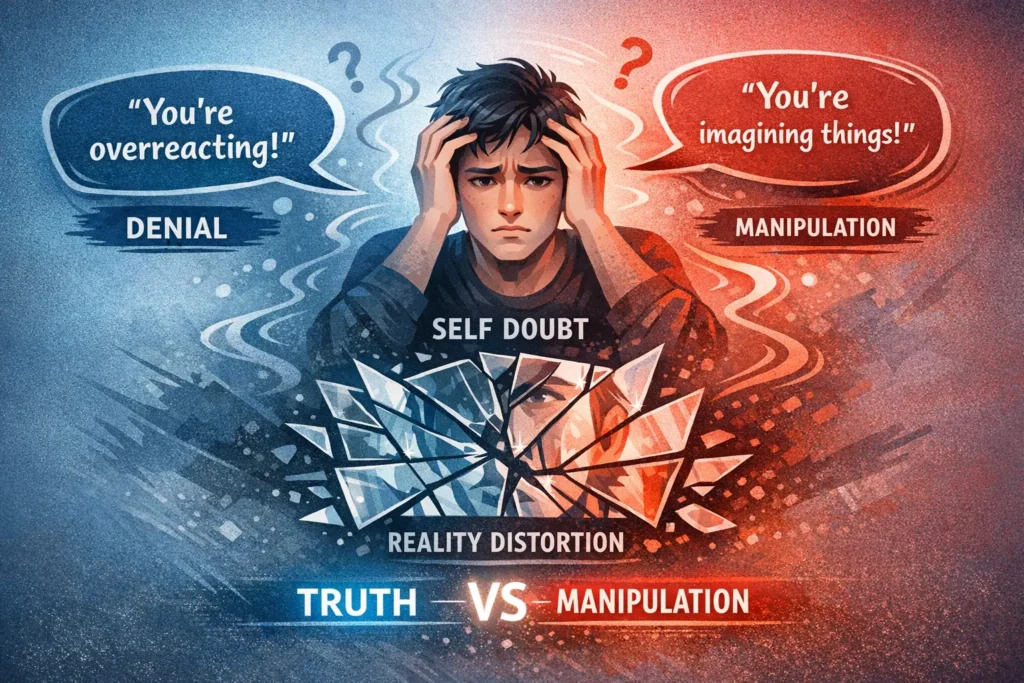
Gaslighting means a form of psychological manipulation where someone makes another person doubt their own memory, perception, or sanity. The goal is often to gain control or power by causing confusion and self doubt. For example, a person might deny saying something hurtful even when they clearly did, making the other person question what actually happened.
The term gaslighting has become very common in conversations about relationships, mental health, and emotional well being. People often use it when describing toxic behavior, manipulation, or situations where someone feels mentally confused after interacting with another person.
But gaslighting is more than just a popular phrase. It is a serious form of emotional manipulation that can deeply affect a person’s confidence, thinking ability, and sense of reality. It often happens slowly and subtly, which makes it hard to notice at first.
Someone experiencing gaslighting may start feeling unsure about their own thoughts, memories, or emotions. Over time, this can lead to anxiety, self doubt, and emotional dependence on the person doing the manipulation.
In this article, we will explain what gaslighting means, where the term comes from, how it works in real life, common examples, warning signs, effects on mental health, and how to protect yourself from it.
What Gaslighting Means in Simple Words
Gaslighting is a type of emotional manipulation where one person tries to make another person question their reality. It can involve denying facts, twisting events, lying confidently, or dismissing someone’s feelings.
The purpose is often control. When someone feels unsure of their own memory or judgment, they become easier to influence.
In simple terms, gaslighting is when someone tries to make you believe that:
- You are remembering things incorrectly
- You are overreacting
- Your feelings are not valid
- Something that happened did not actually happen
This creates confusion and makes the victim rely more on the manipulator for “truth.”
Origin of the Term Gaslighting
The term gaslighting comes from a stage play and later a film called “Gas Light.” In the story, a husband tries to convince his wife that she is losing her sanity by making small changes in their environment and then denying that anything has changed.
For example, he would dim the gas lights in their home and then tell her she is imagining it. Over time, she begins to doubt her own perception of reality.
This story became a powerful metaphor for psychological manipulation, and today the word gaslighting is used to describe similar behavior in real life situations.
How Gaslighting Works Psychologically
Gaslighting is not always loud or obvious. In fact, it is often subtle and repeated over time. It usually works in stages.
Stage 1 Confusion
The victim notices something feels wrong but cannot clearly explain it. The manipulator denies events or changes the story.
Stage 2 Self Doubt
The victim begins to question their memory or judgment. They may think they are overreacting or being too sensitive.
Stage 3 Dependence
The victim starts relying on the manipulator to confirm what is real. Their confidence in themselves decreases.
Stage 4 Control
At this stage, the manipulator has significant influence over the victim’s thoughts, decisions, and emotions.
Common Examples of Gaslighting
Gaslighting can happen in relationships, friendships, workplaces, or even families. It often appears in everyday conversations.
Example in Relationships
One partner says something hurtful. Later, when confronted, they respond with:
“You are imagining things. I never said that. You are too sensitive.”
This makes the other partner question their memory and feelings.
Example in Family
A parent might say:
“That never happened. You are making things up.”
Even when the child clearly remembers the event, repeated denial can create confusion.
Example at Work
A manager gives unclear instructions and later says:
“I never told you to do it that way. You misunderstood everything.”
This can make an employee doubt their competence.
Common Gaslighting Phrases
Gaslighting often involves specific patterns of language. Some common phrases include:
- You are too sensitive
- That never happened
- You are imagining things
- You always misunderstand everything
- It is all in your head
- You are remembering it wrong
These statements are designed to shift focus away from the truth and onto the victim’s doubt.
Emotional Effects of Gaslighting
Gaslighting can have serious emotional and psychological effects, especially when it happens repeatedly.
1 Loss of Self Confidence
A person may stop trusting their own judgment and decisions.
2 Anxiety and Confusion
Constant doubt can lead to stress, anxiety, and mental exhaustion.
3 Memory Doubt
Victims may start questioning whether their memories are accurate.
4 Emotional Dependence
They may rely heavily on the manipulator for validation or approval.
5 Isolation
In some cases, the manipulator may separate the victim from friends or family, increasing dependence.
Gaslighting vs Normal Disagreements
Not every disagreement is gaslighting. People can remember events differently without manipulation being involved.
The key difference is intent and pattern.
| Normal Disagreement | Gaslighting |
|---|---|
| Two people remember things differently | One person deliberately denies reality |
| Respectful discussion | Repeated denial and manipulation |
| No intent to control | Intent to confuse or control |
| Open to resolution | Persistent distortion of facts |
Gaslighting is consistent and intentional, not a one time misunderstanding.
Why People Gaslight Others
There are several reasons someone might engage in gaslighting behavior.
- Desire for control in a relationship
- Avoiding responsibility for actions
- Low emotional maturity
- Manipulative personality traits
- Fear of being wrong or exposed
In some cases, the person may not even realize they are gaslighting, especially if it has become a learned behavior.
Gaslighting in Modern Life
Today, gaslighting is not limited to personal relationships. It can appear in many areas of life.
Social Media
People may deny facts or twist information to confuse others or influence opinions.
Work Environment
Employees may be told they misunderstood instructions even when instructions were unclear or inconsistent.
Friendships
A friend may deny saying something hurtful and make the other person feel overly dramatic.
How to Recognize Gaslighting
Recognizing gaslighting early is important for emotional protection.
Warning Signs
- You often feel confused after conversations
- You second guess your memory frequently
- You apologize even when you are not wrong
- You feel like you are “too sensitive” all the time
- You rely on others to confirm your version of events
If these patterns are consistent, it may be a sign of manipulation.
How to Respond to Gaslighting
Dealing with gaslighting requires awareness and emotional strength.
1 Trust Your Feelings
Your emotions are valid even if someone else denies them.
2 Keep Records
Writing down events or conversations can help you stay grounded in reality.
3 Set Boundaries
Limit exposure to people who consistently manipulate or confuse you.
4 Talk to Trusted People
Friends or family can help confirm your experiences and provide support.
5 Seek Professional Help
Therapists can help you rebuild confidence and recognize manipulation patterns.
Gaslighting and Mental Health
Long term exposure to gaslighting can significantly affect mental health. It can lead to anxiety disorders, depression, low self esteem, and emotional burnout.
The most damaging part is that victims often blame themselves. They may believe they are the problem, when in reality they are being manipulated.
Understanding gaslighting helps break this cycle and restores confidence in one’s own perception of reality.
FAQs
What does gaslighting mean in simple terms
Gaslighting means making someone doubt their own memory or perception through manipulation or denial.
Is gaslighting emotional abuse
Yes. Gaslighting is a form of emotional and psychological abuse that can harm mental health over time.
Can gaslighting happen in friendships
Yes. It can happen in any type of relationship including friendships, family, and work environments.
What are signs of gaslighting
Common signs include confusion, self doubt, frequent apologies, and feeling like your memory is wrong.
Is gaslighting always intentional
Not always. Some people may do it without realizing, but it is often a repeated pattern of behavior.
How do I stop gaslighting in a relationship
Setting boundaries, trusting your memory, and seeking outside support can help reduce its impact.
Can gaslighting affect mental health
Yes. It can lead to anxiety, depression, confusion, and loss of self confidence.
What should I do if I think I am being gaslighted
Talk to someone you trust, document events, and consider speaking with a mental health professional.
Conclusion
Gaslighting is a powerful and harmful form of emotional manipulation that causes people to doubt their own reality. It often begins subtly and grows over time, making it difficult to recognize until the effects are already strong.
At its core, gaslighting is about control. By making someone question their memory or perception, the manipulator gains influence over their thoughts and emotions.
Understanding what gaslighting means is the first step toward protecting yourself. When you learn to recognize the signs, trust your instincts, and seek support, you can break free from confusion and rebuild confidence in your own reality.
Healthy relationships are built on respect, honesty, and trust. Gaslighting does the opposite, which is why awareness is so important.
Read More Related Articles:
- What Does Camp Mean in Fashion? From Drag Queens to Runways (2026)
- What Does K Means in Texts: Not Just Lazy Typing (2026)
- OP Meaning in Gaming – The Term Every Gamer Uses (2026)

Ivy Madison is a content creator at TextSprout.com, specializing in word definitions, internet slang, acronyms, and text abbreviations. She delivers clear and engaging explanations, helping readers quickly understand modern digital language and trending terms.