
Implantation bleeding is light spotting that can occur when a fertilized egg attaches to the lining of the uterus.
It usually appears as light pink or brown discharge, is much lighter than a normal period, and lasts from a few hours to a couple of days. Unlike a regular menstrual flow, implantation bleeding is typically mild, does not increase in intensity, and may come and go.
Noticing unexpected spotting can be confusing, especially when you are trying to understand whether it signals the start of a period or something else. One possibility that often comes up is implantation bleeding. For many people, this is one of the earliest signs of pregnancy, though it does not happen in every case.
Understanding what implantation bleeding looks like can help you interpret your body’s signals more clearly. The key is knowing how it differs from a normal period, what colors and patterns to expect, and when it might occur in your cycle.
This guide walks you through everything in a simple, conversational way. You will learn what implantation bleeding looks like, how long it lasts, how it feels, and how to tell it apart from other types of bleeding.
What Implantation Bleeding Looks Like
Implantation bleeding is usually very light spotting rather than a full flow. It often shows up as a few drops or light streaks rather than steady bleeding.
Common Appearance
| Feature | Description |
|---|---|
| Color | Light pink, pale red, or brown |
| Flow | Very light spotting |
| Texture | Thin, not heavy or clotty |
| Duration | A few hours up to two days |
| Pattern | May come and go |
Most people notice it when wiping or as a small stain on underwear rather than needing a pad or tampon.
Color of Implantation Bleeding
Color is one of the easiest ways to recognize implantation bleeding.
Typical Colors
- Light pink often mixed with cervical fluid
- Brown which usually indicates older blood
- Very light red but not bright or heavy
Dark brown spotting is quite common and may appear slightly different from fresh menstrual blood.
How Much Bleeding Happens
Implantation bleeding is usually minimal.
You might notice:
- A few spots when wiping
- A small amount on underwear
- No need for a sanitary pad in many cases
Flow Comparison
| Type | Flow Level |
|---|---|
| Implantation bleeding | Very light spotting |
| Light period | Noticeable but mild |
| Regular period | Moderate to heavy flow |
If the bleeding becomes heavier over time, it is more likely to be a period rather than implantation.
When Implantation Bleeding Occurs
Timing is important when identifying implantation bleeding.
It typically happens 6 to 12 days after ovulation, which is often just before your expected period.
Timeline Example
| Event | Timing |
|---|---|
| Ovulation | Day 14 (average cycle) |
| Fertilization | Within 24 hours after ovulation |
| Implantation | Days 20 to 26 |
| Possible spotting | Around one week before period |
Because of this timing, many people confuse implantation bleeding with the start of their period.
How Long Implantation Bleeding Lasts
Implantation bleeding is short.
Most cases last:
- A few hours
- Up to one day
- Occasionally up to two days
It does not continue for several days like a normal menstrual cycle.
Implantation Bleeding vs Period
This is one of the most common questions.
Here is a clear comparison.
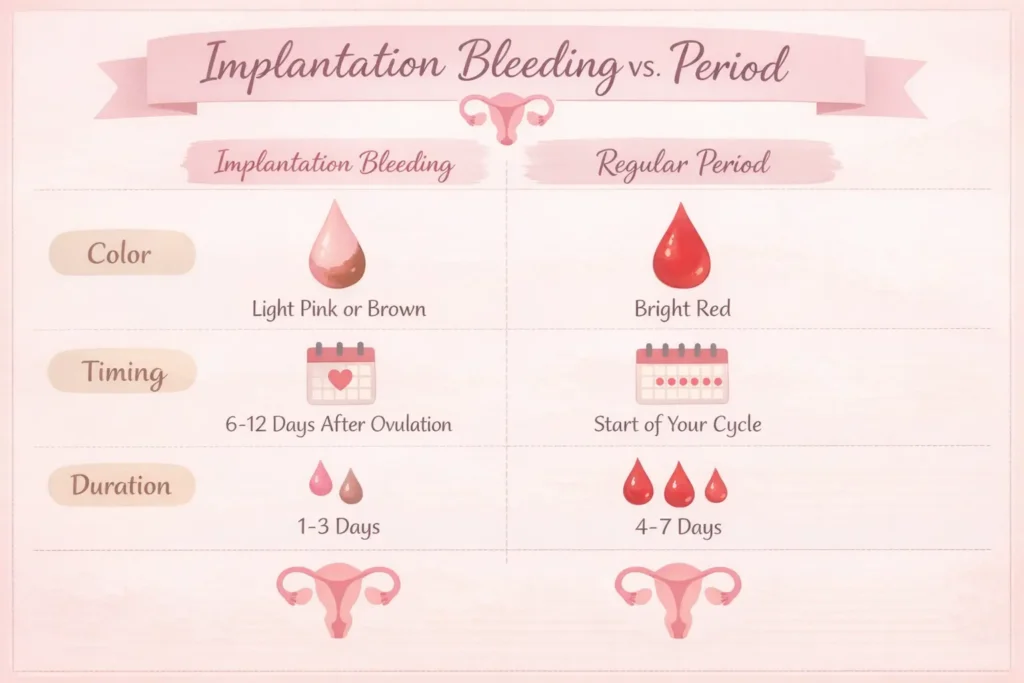
| Feature | Implantation Bleeding | Period |
|---|---|---|
| Flow | Very light | Moderate to heavy |
| Color | Pink or brown | Bright to dark red |
| Duration | Hours to 2 days | 3 to 7 days |
| Clots | Rare | Common |
| Pain | Mild or none | Cramps more noticeable |
If bleeding becomes heavier, lasts longer, or includes clots, it is more likely a period.
Symptoms That May Occur With Implantation Bleeding
Implantation bleeding can come with other early signs of pregnancy, although not everyone experiences them.
Possible Symptoms
- Mild cramping or a pulling sensation
- Slight fatigue
- Breast tenderness
- Increased sensitivity to smells
- Light mood changes
These symptoms are usually subtle and easy to overlook.
Does Implantation Bleeding Always Happen
No, it does not happen to everyone.
Some people experience it clearly, while others never notice any spotting at all.
This means:
- No bleeding does not rule out pregnancy
- Bleeding does not always confirm pregnancy
It is simply one possible early sign.
How to Tell If It Is Implantation Bleeding
There is no single way to confirm it just by looking. However, combining a few clues can help.
Signs It Might Be Implantation Bleeding
- Occurs earlier than expected period
- Very light and short
- Pink or brown in color
- Does not increase in flow
Signs It Is Likely a Period
- Flow becomes heavier
- Lasts several days
- Includes clots
- Strong cramps develop
If you are unsure, waiting a few days and taking a pregnancy test can provide clarity.
Example Scenarios
| Situation | Likely Explanation |
|---|---|
| Light brown spotting for one day before period | Could be implantation |
| Heavy bleeding with cramps for five days | Likely a period |
| Pink spotting followed by no bleeding | Possible implantation |
| Spotting that turns into full flow | Probably start of period |
These examples show how pattern and progression matter more than a single moment.
Can Implantation Bleeding Be Mistaken for Something Else
Yes, it can be confused with several other types of spotting.
Common Confusions
- Early period
- Hormonal spotting
- Ovulation spotting
- Minor irritation or infection
Because of these possibilities, it is important not to rely on spotting alone to determine pregnancy.
When to Take a Pregnancy Test
If you suspect implantation bleeding, timing matters.
- Wait at least a few days after the spotting stops
- Ideally test after a missed period
- Early testing may give unclear results
This allows hormone levels to rise enough for accurate detection.
When to See a Doctor
Light spotting is usually harmless, but medical advice is important in certain situations.
Seek help if you notice
- Heavy bleeding
- Severe pain
- Bleeding lasting more than a few days
- Dizziness or weakness
These could indicate other conditions that need attention.
Emotional Side of Implantation Bleeding
For many people, noticing implantation bleeding can bring a mix of emotions.
Some feel hopeful if they are trying to conceive. Others may feel anxious or uncertain if the pregnancy is unexpected.
It is completely normal to feel unsure. The key is to stay calm, observe your symptoms, and follow up with a test or medical advice if needed.
Tips for Monitoring Early Signs
If you are tracking your cycle or trying to conceive, a few simple habits can help.
- Keep a record of your cycle dates
- Note any unusual spotting
- Pay attention to timing and color
- Avoid jumping to conclusions too quickly
Tracking patterns over time gives a clearer picture than focusing on a single symptom.
FAQs
What does implantation bleeding look like exactly
It usually looks like light pink or brown spotting rather than a full flow. It is much lighter than a period and often only noticeable when wiping.
How many days does implantation bleeding last
It typically lasts a few hours to one or two days. It does not continue like a regular period.
Can implantation bleeding be heavy
No, it is usually very light. Heavy bleeding is more likely to be a period or another condition.
Is implantation bleeding painful
It may come with mild cramping, but it is usually much less painful than period cramps.
Does implantation bleeding happen every pregnancy
No, many people do not experience it at all.
What color is implantation bleeding
It is usually light pink or brown rather than bright red.
Can implantation bleeding have clots
Clots are uncommon. If clots are present, it is more likely a period.
How soon after implantation can I test positive
You may test positive a few days after implantation, but it is more reliable after a missed period.
Conclusion
Implantation bleeding is a light, short episode of spotting that can happen when a fertilized egg attaches to the uterine lining. It usually appears as pink or brown discharge, lasts only a short time, and remains very light compared to a regular period.
While it can be an early sign of pregnancy, it is not experienced by everyone and should not be used as the only indicator. The best way to confirm pregnancy is through a test taken at the right time.
Understanding what implantation bleeding looks like helps reduce confusion and anxiety. By paying attention to timing, color, and flow, you can better interpret what your body is telling you and decide on the next steps with confidence.
Read More Related Articles:
- 2nd and 10 Mean in Football: Complete Guide for Beginners 2026
- What Does WLC Mean in Text? Full Meaning and Examples In 2026
- Code White Mean in a Hospital: Real Life Usage In 2026

Neon Samuel is a digital content creator at TextSprout.com, dedicated to decoding modern words, slang, and expressions. His writing helps readers quickly grasp meanings and understand how terms are used in real conversations across text and social platforms.