
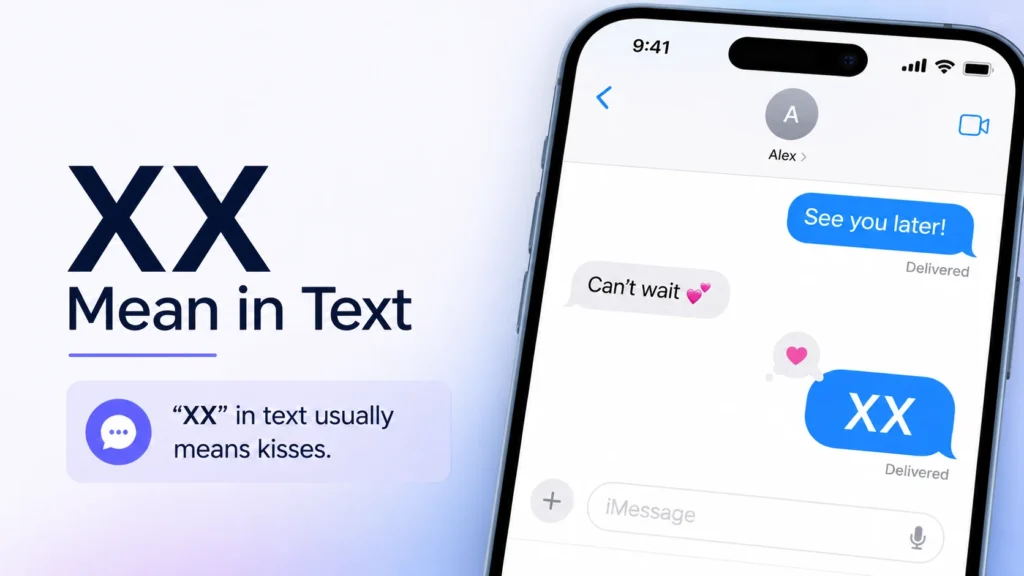
XX in text messages generally represents “kisses” or affectionate gestures, often used to express friendliness, love, or warmth.
In the digital age, messaging apps and social media platforms have developed their own unique language. From emojis to abbreviations, it’s easy to feel lost if you don’t know what certain text shortcuts mean. One of the most common yet sometimes confusing abbreviations you might encounter is “XX.”
Whether in a friendly message, a romantic chat, or even a casual group text, understanding what “XX” means in text can save you from misinterpretation. This article will provide a detailed, friendly, and professional guide on everything you need to know about XX in texting, including examples, variations, comparisons, and polite alternatives.
- Can be casual, romantic, or platonic depending on context.
- Often used at the end of a message as a sign-off.
- Multiple “X”s (e.g., XXX) intensify the sentiment.
Origin of XX in Text Messages
Historical Origin
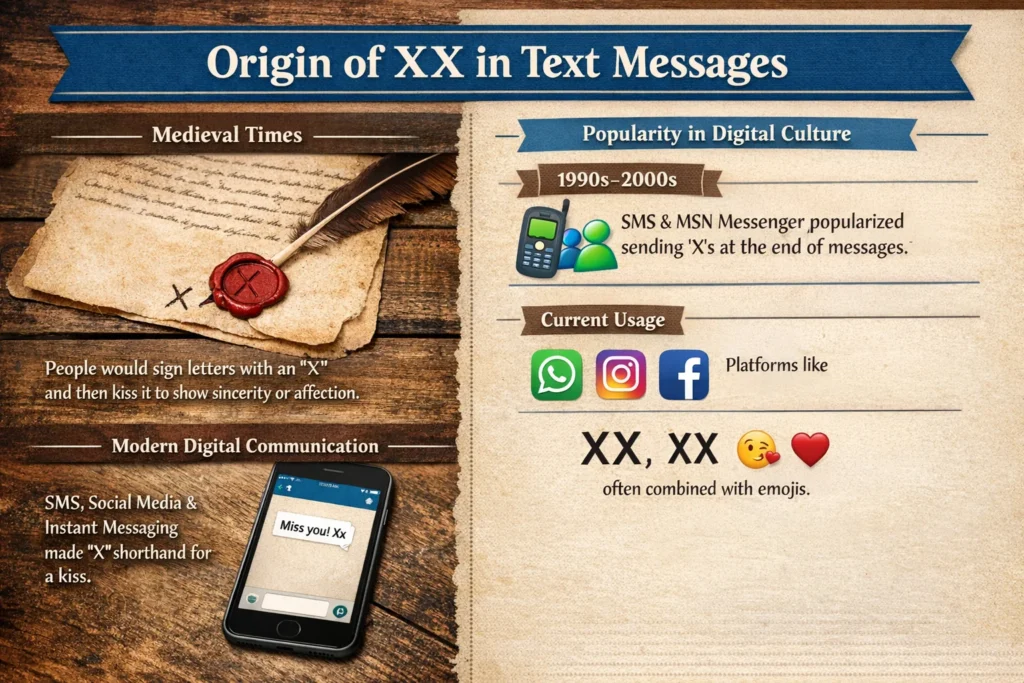
The use of “X” as a kiss goes back to medieval times, when people signed documents with an “X” and would kiss it to show sincerity. Over time, that gesture became symbolic, and the “X” itself started representing affection and goodwill in written communication.
Transition into Letters
As letter writing became more personal, especially in later centuries, people began adding “X” at the end of messages. It worked like a soft emotional sign-off, similar to ending a conversation with warmth or care.
Rise in Digital Communication
In the 1990s and early 2000s, texting and chat platforms like SMS and MSN Messenger made communication shorter and faster. Adding an “X” became a quick way to show emotion without typing long sentences. It helped messages feel less cold and more human.
Modern Usage
Today, “X” and “XX” are widely used on WhatsApp, Instagram, and Facebook. They are often combined with emojis like 😘 or ❤️ to enhance tone. A single “x” feels light and polite, while “xx” or “xxx” can show stronger affection depending on the relationship.
Tone and Meaning Today
“X” now acts as a tone softener. Messages without it can feel neutral or blunt, while adding it makes them warmer and friendlier. For example, “Thanks” feels simple, but “Thanks x” feels more personal.
Cultural Influence
In some regions, especially the UK, using “x” is very common even in casual everyday chats. In other places, it is used more carefully, usually between friends, family, or close contacts.
Practical Insight
The meaning of “X” depends on context, relationship, and platform. It is a small symbol, but it carries emotional weight and helps make digital communication feel more natural and connected.
Usage of XX in Text
The meaning and tone of XX depend heavily on context. Here’s a breakdown:
| Usage Type | Context Example | Meaning / Tone |
|---|---|---|
| Friendly | “Thanks for helping! XX” | Friendly, casual kiss |
| Romantic | “Goodnight, love you XX” | Affectionate or romantic kiss |
| Neutral / Platonic | “See you tomorrow! XX” | Casual sign-off, shows warmth but non-romantic |
| Dismissive / Ironic | “Oh really? XX” | Could be sarcastic depending on context |
Key Points About Usage
- Placement: Usually at the end of a message.
- Quantity: More X’s can indicate stronger affection.
- Combination: Often paired with emojis like 😘, ❤️, or 😊 to clarify tone.
- Cultural Differences: In the UK, X is widely used to sign off letters and messages, while in the US, it’s less common outside close relationships.
Examples of XX in Different Contexts
Here’s a practical look at how XX is used:
- Friendly Tone
- “Had fun at lunch today! XX”
- Used among friends to express warmth.
- Romantic Tone
- “Can’t wait to see you tonight! XX”
- Signals intimacy and romantic affection.
- Neutral / Professional Tone
- “Thanks for your help on the project. XX”
- Some workplaces may avoid this, but in casual professional chats, it can convey friendliness.
- Negative / Dismissive Tone
- “Sure… XX”
- The context and punctuation may indicate sarcasm or passive-aggressiveness.
💡 Tip: Always consider your relationship with the recipient before using XX. Misreading it can lead to confusion!
Comparison with Related Terms
XX is not the only shorthand used in text messaging. Here’s a comparison with other common symbols and abbreviations:
| Abbreviation | Meaning | Tone / Context | Notes |
|---|---|---|---|
| X | Kiss | Friendly, romantic | Single X can be casual or intimate |
| XXX | Multiple kisses | Very affectionate / romantic | Often used by partners or close friends |
| XO / XOXO | Hugs and kisses | Friendly, romantic | Popular in North America and social media |
| ❤️ | Heart emoji | Love, warmth | Visual version of affection |
| 😉 | Winking face | Playful, flirtatious | Can replace or enhance XX |
Alternate Meanings of XX
While XX is most commonly used to represent “kisses” in texting, its meaning can shift depending on context, platform, and intent.
In Roman numerals, XX simply means 20. You might see it in things like event names, chapter titles, or stylized branding where numbers are written in a classical format.
In clothing and sizing, XX appears as part of size labels such as XXS (extra extra small) or XXL (extra extra large). Here, it has nothing to do with emotion or tone—it is purely functional.
In alcohol branding, XX is famously associated with certain drinks, especially Dos Equis, where the double X is part of the product identity rather than an abbreviation.
In online usernames, gaming tags, and social media handles, XX is often used as a stylistic choice. People add it before or after names to make them look unique or aesthetic, like:
- xxShadowxx
- Alex_xx
- xxQueen
In these cases, it usually has no specific meaning—it just looks visually balanced or cool.
There are also occasional niche uses depending on context:
- In film or media ratings, “XX” can sometimes hint at adult or restricted content (though this is less common today)
- In genetics, XX refers to the typical female chromosome pattern
- In informal notes or placeholders, XX might be used where information is missing or to be filled later
How Tone and Meaning Change in Texting
Even when XX means “kisses,” the tone varies based on how it’s used:
- “xx” → light, friendly
- “xxx” → warmer, more affectionate
- “x” → subtle or polite
- “XX” (uppercase) → can feel stronger or more noticeable
Examples:
- “Goodnight xx” → soft and caring
- “Thanks xx” → friendly appreciation
- “See you soon xxx” → more affectionate
When XX Can Be Misunderstood
Because XX carries emotional meaning in texting, confusion can happen if:
- The relationship is not close enough for affectionate tone
- The receiver is not familiar with texting culture
- It appears in a formal or professional conversation
For example:
- Sending “Thanks xx” in a work email may feel too personal
- Using XX with someone you barely know can seem awkward
A Simple Rule to Follow
The meaning of XX depends on where you see it and who is using it:
- In chats → usually emotional (kisses)
- In brands or labels → literal or stylistic
- In usernames → decorative
- In technical contexts → specific meaning (like 20 or chromosomes)
If you are unsure, always look at:
- The platform
- The relationship
- The tone of the conversation
Polite or Professional Alternatives to XX
In professional or formal contexts, XX may not be appropriate. Here are some polite alternatives:
| Alternative | Use Case |
|---|---|
| Best regards | Formal emails or messages |
| Warm regards | Friendly yet professional |
| Sincerely | Formal letters or professional correspondence |
| Cheers | Casual but professional, common in UK/Australia |
| 🙂 / 😊 Emoji | Adds friendliness without romantic implication |
Example Table: XX in Context
| Message | Context / Tone | Meaning / Interpretation |
|---|---|---|
| “Thanks for your help! XX” | Friendly | Casual sign-off, warmth |
| “Goodnight my love XX” | Romantic | Romantic affection |
| “See you at lunch tomorrow XX” | Neutral / Platonic | Warmth, friendly |
| “Oh, really? XX” | Negative / Sarcastic | Could be passive-aggressive or dismissive |
FAQs
1. What does XX mean in texting with a friend?
XX usually means kisses or a friendly sign-off. Context will determine if it’s romantic or platonic.
2. Is XX romantic or just friendly?
It can be both. A single X is often friendly, while multiple X’s (XX, XXX) usually indicate stronger affection or intimacy.
3. Can XX be used professionally?
Rarely. In professional messages, it’s better to use polite closings or friendly emojis to avoid confusion.
4. What’s the difference between X, XX, and XXX?
X = casual or single kiss, XX = more affectionate, XXX = very intimate or romantic.
5. How do I know if XX is sarcastic?
Tone, context, and punctuation can indicate sarcasm, e.g., “Sure… XX” may imply dismissiveness.
6. Are XX and XO the same?
No, XO represents hugs and kisses, while XX only represents kisses. XO is more common in North America.
7. Can XX have other meanings?
Yes, such as Roman numerals (20), clothing sizes, or stylistic online usernames. Context is critical.
8. How do I politely respond to XX?
Match the tone: use XX, a smiley emoji 🙂, or a friendly response that reflects the sender’s tone.
Conclusion:
In text, XX typically represents “kisses”, serving as a digital expression of affection or warmth. Its meaning can vary depending on context, ranging from friendly or romantic to neutral or even sarcastic tones. Cultural and personal factors also influence how this symbol is perceived, so interpretation may differ between people.
In professional communication, it’s best to avoid using XX unless the tone is casual and friendly. To ensure your intention is clear, you can combine XX with words or emojis, making your message warm, playful, or affectionate without causing confusion.
Discover More Related Articles:
- MMCHT in Texts: Meaning, Tone, and How to Use It in 2026
- What Does Te Amo Mean in English? Here’s the Truth (2026)
- SG in Text: The Meaning Changes More Than You Think (2026)

Luna Hartley is a content creator at TextSprout.com, where she specializes in explaining word meanings, modern phrases, and everyday language used in texts and online conversations. Her writing focuses on clarity and context, helping readers understand how words are actually used in real communication.