
Vitamin D is not just another nutrient you get from food or sunlight. It behaves more like a hormone that quietly controls major systems in your body. If you think it only helps bones, you’re missing the bigger picture.
Your body depends on vitamin D for survival-level functions like calcium absorption, immune defense, and even mood regulation. Without enough of it, systems start to weaken slowly. You might not notice it at first, but over time the impact builds up.
Here’s the interesting part: most people don’t realize they’re low in vitamin D until symptoms become serious. That’s why understanding its function matters more than ever.
Let’s break it down in a simple but deep way so you actually understand what vitamin D does inside your body.
What Is Vitamin D and Why It Behaves Like a Hormone
Vitamin D is a fat-soluble nutrient that your body stores in fat tissues. But calling it just a vitamin doesn’t fully explain its role.
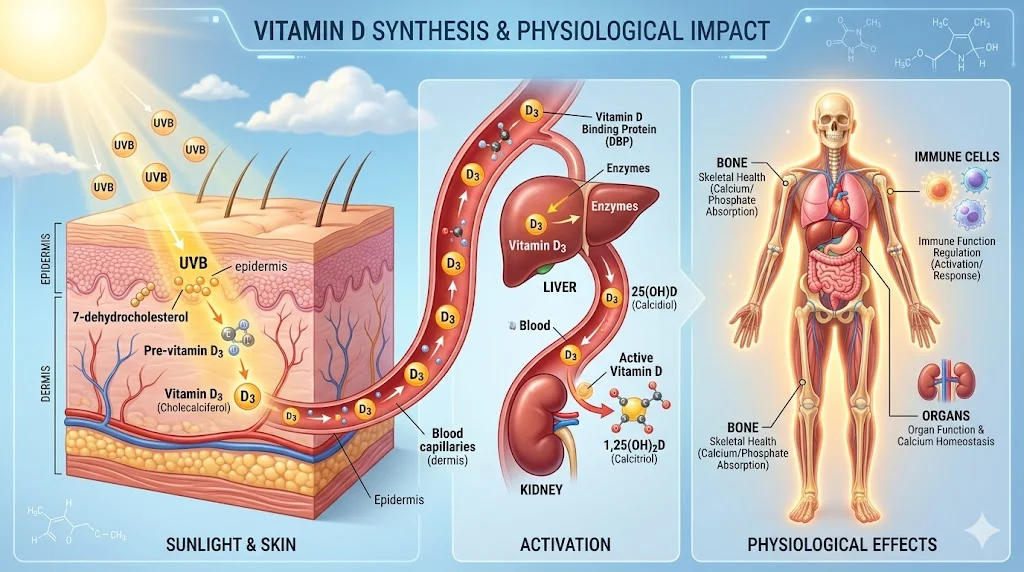
Once inside your body, vitamin D goes through two activation steps:
- First in the liver
- Then in the kidneys
After that, it turns into an active hormone called calcitriol.
This hormone then travels through your bloodstream and interacts with cells in almost every organ system.
That’s why scientists often describe vitamin D as a hormone regulator, not just a dietary nutrient.
Two Main Forms of Vitamin D
- Vitamin D2 (ergocalciferol): Comes from plant sources and fortified foods
- Vitamin D3 (cholecalciferol): Comes from sunlight and animal sources
Vitamin D3 works more efficiently in raising blood levels, which makes it the preferred form in most cases.
How Vitamin D Works in the Body Step by Step
Your body doesn’t use vitamin D immediately after you get it. It follows a multi-step activation process.
Step 1: Sunlight or Food Intake
UVB rays from sunlight trigger vitamin D production in your skin. Food sources also provide small amounts.
Step 2: Liver Conversion
The liver converts vitamin D into 25-hydroxyvitamin D (calcidiol). This is what doctors measure in blood tests.
Step 3: Kidney Activation
The kidneys convert it into calcitriol, the active hormone form.
Step 4: Cellular Action
Calcitriol binds to vitamin D receptors found in:
- Bones
- Immune cells
- Muscles
- Brain
- Intestines
This is where the real action happens.
It turns on or off specific genes that control body functions.
Think of vitamin D as a biological switchboard operator that tells your body how to behave.
The Core Role of Vitamin D in the Human Body
Vitamin D does not perform just one job. It regulates multiple systems at the same time.
Calcium Absorption and Bone Health
One of the most important roles of vitamin D is helping your body absorb calcium.
Without vitamin D, your intestines absorb only a small fraction of dietary calcium.
With enough vitamin D, absorption increases significantly.
This directly affects:
- Bone strength
- Teeth stability
- Skeletal development
Key fact:
Your body will pull calcium from bones if dietary absorption fails, which weakens them over time.
That’s why vitamin D deficiency often leads to bone-related diseases.
Muscle Strength and Function
Vitamin D plays a major role in muscle contraction and neuromuscular coordination.
Low levels can lead to:
- Muscle weakness
- Poor balance
- Increased fall risk
Older adults especially feel this impact.
Muscles rely on vitamin D to function efficiently, not just calcium alone.
Immune System Regulation
Vitamin D supports immune defense by activating immune cells like T-cells and macrophages.
It helps your body:
- Detect pathogens faster
- Control inflammation
- Prevent overreaction of immune responses
Think of vitamin D as a moderator that keeps your immune system balanced—not too weak, not too aggressive.
What Are the Health Benefits of Vitamin D?
Vitamin D influences more than bones and immunity. It impacts your overall well-being in several surprising ways.
Strong Bones and Teeth
Vitamin D works with calcium and phosphorus to maintain bone density.
Without it, bones become soft and fragile.
Over time, this can lead to conditions like osteoporosis.
Better Immune Defense
People with adequate vitamin D levels often experience:
- Fewer respiratory infections
- Better recovery times
- Stronger immune resilience
This is why vitamin D gets extra attention during flu seasons.
Mood and Brain Function
Vitamin D receptors exist in brain tissue.
Low levels have been linked with:
- Low mood
- Fatigue
- Seasonal emotional changes
While it’s not a direct cure for depression, it plays a supportive role in mental balance.
Metabolic and Hormonal Balance
Vitamin D influences insulin function and inflammation control.
This means it may play a role in:
- Blood sugar regulation
- Chronic inflammation
- Hormonal stability
It’s not a miracle nutrient, but it supports multiple metabolic pathways.
Vitamin D Deficiency: What Happens When Levels Drop
Vitamin D deficiency develops slowly. You might not notice it until symptoms become stronger.
Early Symptoms
- Constant fatigue
- Muscle weakness
- Low energy levels
- Mild bone discomfort
These signs are often ignored or blamed on stress.
Advanced Deficiency Effects
If deficiency continues, the risks increase:
- Rickets in children (soft bones)
- Osteomalacia in adults (bone softening)
- Osteoporosis (fragile bones)
Simple fact:
Long-term deficiency weakens the entire skeletal system.
Hidden Symptoms People Miss
- Frequent infections
- Low mood
- Slow healing wounds
- General body aches
These symptoms often confuse people because they don’t point to one clear cause.
What Causes Vitamin D Deficiency?
Several lifestyle and biological factors contribute to low vitamin D.
Lack of Sunlight Exposure
Modern indoor lifestyles reduce UVB exposure dramatically.
People who work indoors most of the day often don’t produce enough vitamin D naturally.
Dark Skin Pigmentation
Melanin reduces UVB absorption.
This means darker skin requires more sun exposure to produce the same amount of vitamin D.
Poor Dietary Intake
Most foods contain very little vitamin D naturally.
Without fortified foods or fish, intake remains low.
Aging
As you age, your skin produces less vitamin D.
Kidney efficiency also declines.
Best Natural Sources of Vitamin D
Sunlight Exposure
Sunlight remains the strongest source of vitamin D.
Short exposure to midday sun helps your body produce it efficiently.
Factors affecting production:
- Skin tone
- Time of day
- Latitude
- Weather conditions
Food Sources
- Fatty fish like salmon and mackerel
- Egg yolks
- Fish liver oils
Fortified Foods
Many foods are enriched with vitamin D:
- Milk
- Breakfast cereals
- Plant-based milk alternatives
Vitamin D3 vs Vitamin D2: Which One Works Better?
Vitamin D3 is generally more effective because:
- It raises blood levels faster
- It stays longer in the body
- It converts more efficiently into active hormone
It still works, but not as efficiently.
Vitamin D and Calcium: A Powerful Partnership
Vitamin D and calcium work together like a lock and key.
Without vitamin D:
- Calcium absorption drops
- Bones lose density
- Teeth become weaker
With vitamin D:
- Calcium enters the bloodstream efficiently
- Bones stay strong
- Muscles function better
This relationship is essential for skeletal health.
Vitamin D Blood Levels: What Is Normal?
Doctors measure vitamin D using blood tests.
General categories:
| Level | Status |
|---|---|
| Below 20 ng/mL | Deficient |
| 20–30 ng/mL | Insufficient |
| 30–50 ng/mL | Sufficient |
| 50+ ng/mL | Optimal range |
These ranges may vary slightly depending on guidelines.
How Much Vitamin D Do You Need Daily?
General recommendations:
- Adults: 600–800 IU per day
- Older adults: 800–1000 IU per day
Some people may need more depending on:
- Sun exposure
- Body weight
- Health conditions
Who Is at Risk of Vitamin D Deficiency?
Certain groups face higher risk:
- People who stay indoors most of the time
- Older adults
- People with darker skin tones
- Individuals with digestive disorders
- Heavier individuals
Vitamin D Supplementation: When It Becomes Necessary
Supplements help when natural intake isn’t enough.
Common form:
- Vitamin D3 supplements
Doctors often recommend supplementation after blood testing confirms low levels.
Long-Term Health Impact of Vitamin D
Vitamin D supports long-term stability in several systems:
- Bone density preservation
- Immune strength
- Muscle function
- Possible chronic disease risk reduction
It doesn’t work instantly, but its long-term role is significant.
Common Myths About Vitamin D
Myth: You only need vitamin D for bones
Reality: It affects immunity, mood, and metabolism too.
Myth: Sunlight is always enough
Reality: Many factors limit vitamin D production.
Myth: More vitamin D is always better
Reality: Excess levels can cause toxicity.
Balance matters more than extremes.
Practical Ways to Maintain Healthy Vitamin D Levels
- Get regular sunlight exposure
- Eat vitamin D-rich foods
- Monitor blood levels if possible
- Use supplements when needed
- Maintain a balanced lifestyle
Small daily habits make a big difference over time.
FAQs
What does vitamin D do in the body?
It helps your body absorb calcium, keeps bones strong, and supports immunity, muscles, and mood.
What are the benefits of vitamin D?
It supports bone strength, improves immune defense, helps muscle function, and may support mood balance.
What happens if you lack vitamin D?
You may feel tired, weak, or achy. Long-term deficiency can lead to bone loss or weak immunity.
What are good sources of vitamin D?
Sunlight is best. You can also get it from fatty fish, egg yolks, and fortified foods.
Can vitamin D improve immunity?
Yes, it helps immune cells work properly and supports the body’s defense system.
How much vitamin D do I need daily?
Most adults need about 600–800 IU per day, depending on sun exposure and health needs.
Conclusion:
Vitamin D is far more than a bone-strengthening nutrient. It works like a silent regulator across multiple systems in your body.
It supports:
- Bone health through calcium absorption
- Immune defense against infections
- Muscle strength and coordination
- Mood and neurological balance
When levels drop, your body doesn’t fail immediately. It slows down gradually, showing subtle warning signs first.
That’s why understanding vitamin D function helps you take control of long-term health instead of reacting late.
In simple terms, vitamin D doesn’t just support your body it helps it function the way it’s supposed to.
Read More Related Articles:
- What Does PR Mean in the Gym: How to Achieve It In 2026
- What Does 6 7 Mean in Slang: Real Usage In 2026
- What Does the L Mean in a Car? Complete Explanation and Guide 2026

Neon Samuel is a digital content creator at TextSprout.com, dedicated to decoding modern words, slang, and expressions. His writing helps readers quickly grasp meanings and understand how terms are used in real conversations across text and social platforms.