
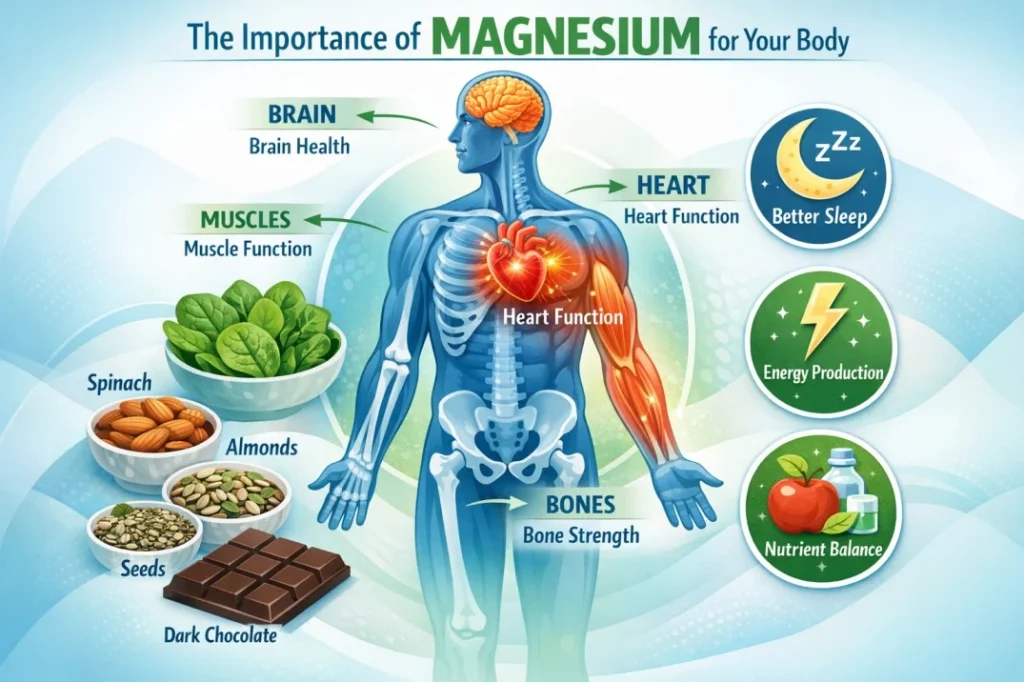
Magnesium is an essential mineral that helps regulate muscle and nerve function, supports energy production, maintains heart rhythm, strengthens bones, and controls blood sugar levels.
It is involved in more than 300 biochemical reactions in the body and is required for normal muscle movement, nerve signaling, and overall cellular function.
Magnesium is one of those essential nutrients that quietly keeps your body running in the background. You may not think about it often, but without enough magnesium, your muscles, nerves, heart, and even your sleep patterns can be affected. It is involved in hundreds of chemical reactions in the body, making it one of the most important minerals for overall health.
Despite its importance, many people do not get enough magnesium from their daily diet. This can lead to fatigue, muscle cramps, poor sleep, and other subtle but impactful symptoms.
Understanding what magnesium does for the body helps you make better dietary choices and recognize when your body might be asking for more of it.
Why Magnesium Is So Important
Magnesium is often called a “master mineral” because it supports so many body systems at once. Unlike some nutrients that have one or two roles, magnesium is involved in energy production, brain function, muscle relaxation, and cardiovascular health all at the same time.
Your body does not produce magnesium naturally, so you must get it from food or supplements. If levels drop too low, various body functions can become unbalanced.
Key Functions of Magnesium in the Body
Magnesium plays many roles that are essential for survival and daily functioning.
Energy Production
Magnesium helps convert food into energy. Every time your body produces ATP, which is the energy currency of cells, magnesium is involved. Without it, energy production slows down, which can lead to fatigue and weakness.
Muscle Function
Magnesium helps muscles contract and relax properly. It works alongside calcium to ensure smooth muscle movement. If magnesium is low, muscles may cramp, twitch, or feel tight.
Nerve Function
Magnesium supports communication between nerves and muscles. It helps regulate neurotransmitters, which send signals throughout the nervous system. This is important for coordination, reflexes, and brain function.
Heart Health
Your heart is a muscle that depends heavily on magnesium. It helps maintain a normal heartbeat and supports healthy blood pressure levels. Low magnesium may increase the risk of irregular heart rhythms.
Bone Strength
Magnesium contributes to bone formation and works closely with calcium and vitamin D. A large portion of magnesium in the body is stored in bones, helping maintain their structure and strength.
Blood Sugar Regulation
Magnesium helps regulate insulin, the hormone that controls blood sugar. It plays a role in how your body processes glucose, making it important for metabolic health.
How Magnesium Works in the Body
Magnesium functions at a cellular level, meaning it affects how your body’s smallest units operate. It helps activate enzymes, stabilize DNA and RNA, and regulate ion channels that control electrical signals in nerves and muscles.
Think of magnesium as a helper that ensures chemical reactions happen smoothly and at the right time.
Without enough magnesium, these processes become inefficient, which can lead to a wide range of symptoms.
Signs of Low Magnesium Levels
Magnesium deficiency can develop slowly, and symptoms may be mild at first.
Common Signs
- Muscle cramps or spasms
- Fatigue and low energy
- Irritability or mood changes
- Difficulty sleeping
- Headaches
- Weakness or tiredness
More Severe Signs
- Irregular heartbeat
- Numbness or tingling
- Severe muscle contractions
- Confusion in extreme cases
These symptoms are not exclusive to magnesium deficiency, but they can be clues that your body may not be getting enough.
Causes of Low Magnesium
Several factors can contribute to low magnesium levels.
Poor Diet
Diets low in leafy greens, nuts, seeds, and whole grains may not provide enough magnesium.
Digestive Issues
Conditions that affect nutrient absorption, such as IBS or Crohn’s disease, can reduce magnesium uptake.
Alcohol Consumption
Excess alcohol can interfere with magnesium absorption and increase loss through urine.
Certain Medications
Some medications, including diuretics and acid blockers, can lower magnesium levels over time.
Chronic Stress
Long-term stress may increase magnesium usage in the body, leading to depletion.
Foods Rich in Magnesium
Getting enough magnesium from food is the best approach for most people.
Magnesium Rich Foods Table
| Food | Magnesium Content | Benefits |
|---|---|---|
| Spinach | High | Supports blood and bone health |
| Almonds | High | Good for heart and energy |
| Pumpkin seeds | Very high | Excellent for muscle and nerve support |
| Black beans | Moderate | Helps with digestion and energy |
| Avocado | Moderate | Supports heart and brain function |
| Dark chocolate | Moderate | Mood and antioxidant support |
| Whole grains | Moderate | Sustained energy release |
A balanced diet with these foods can help maintain healthy magnesium levels naturally.
Magnesium and the Brain
Magnesium plays an important role in brain health and mental well-being.
It helps regulate neurotransmitters that influence mood and stress response. Some studies suggest that low magnesium levels may be linked to increased feelings of anxiety or difficulty managing stress.
It also supports sleep quality by helping the brain relax and prepare for rest.
Many people find that improving magnesium intake helps them feel calmer and sleep more deeply.
Magnesium and Sleep Quality
Magnesium is often associated with better sleep because it helps regulate melatonin, the hormone that controls sleep cycles.
It also relaxes muscles and calms the nervous system, making it easier to fall asleep and stay asleep.
People with low magnesium levels sometimes report:
- Trouble falling asleep
- Restless sleep
- Waking up frequently during the night
Improving magnesium intake through diet or supplements may support better sleep patterns.
Magnesium and Exercise Performance
Athletes and active individuals often need more magnesium because it is used during muscle activity and energy production.
It helps:
- Prevent muscle cramps
- Improve endurance
- Support recovery after exercise
- Maintain electrolyte balance
During intense physical activity, magnesium is lost through sweat, making replenishment important.
Magnesium Deficiency vs Normal Levels
| Status | Symptoms | Body Function |
|---|---|---|
| Normal magnesium | Good energy, stable mood, normal muscle function | Balanced body systems |
| Mild deficiency | Fatigue, mild cramps, irritability | Reduced efficiency in cellular functions |
| Severe deficiency | Irregular heartbeat, strong muscle spasms | Major disruption in nerve and muscle systems |
This shows how important magnesium is for maintaining balance in the body.
Magnesium Supplements
Some people may need supplements if diet alone is not enough.
Common forms include:
- Magnesium citrate
- Magnesium glycinate
- Magnesium oxide
Each type has different absorption rates and effects. However, supplements should be used carefully and ideally under medical guidance.
Magnesium and Overall Health
Magnesium supports almost every major system in the body.
It helps keep your heart steady, your muscles relaxed, your brain focused, and your energy levels stable. Without it, many basic functions become less efficient.
It is not just a nutrient, but a foundational element of health.
FAQs
What does magnesium do for the body?
Magnesium supports muscle function, nerve signaling, energy production, heart health, and bone strength.
What happens if you have low magnesium?
Low magnesium can cause fatigue, muscle cramps, sleep problems, and in severe cases, heart rhythm issues.
Can magnesium help with sleep?
Yes, magnesium helps relax the nervous system and regulate sleep-related hormones.
What foods are high in magnesium?
Leafy greens, nuts, seeds, beans, whole grains, and dark chocolate are rich in magnesium.
Is magnesium important for the heart?
Yes, it helps maintain a steady heartbeat and supports healthy blood pressure.
Can stress affect magnesium levels?
Yes, chronic stress can increase magnesium usage in the body and lead to depletion.
Do athletes need more magnesium?
Yes, because magnesium is lost through sweat and used during muscle activity.
Can you take too much magnesium?
Excess intake from supplements can cause digestive issues, so balance is important.
Conclusion
Magnesium is one of the most essential minerals in the human body, involved in more than 300 biological processes. It supports energy production, muscle movement, nerve communication, heart function, and bone strength.
A healthy magnesium level helps keep your body balanced, energized, and functioning smoothly. When levels drop, even basic processes like sleep, mood, and muscle control can be affected.
The good news is that magnesium is widely available in many foods, making it easy to maintain healthy levels through a balanced diet. Understanding its role allows you to take simple steps that can have a big impact on your overall health.
Read More Related Articles:
- “Bicho” Mean in Spanish: Definition and Cultural Insights In 2026
- RTS Mean in Gaming: Understanding Real-Time Strategy Games In 2026
- What Do Blood Clots Mean in Period: Complete Guide In 2026

Ivy Madison is a content creator at TextSprout.com, specializing in word definitions, internet slang, acronyms, and text abbreviations. She delivers clear and engaging explanations, helping readers quickly understand modern digital language and trending terms.