
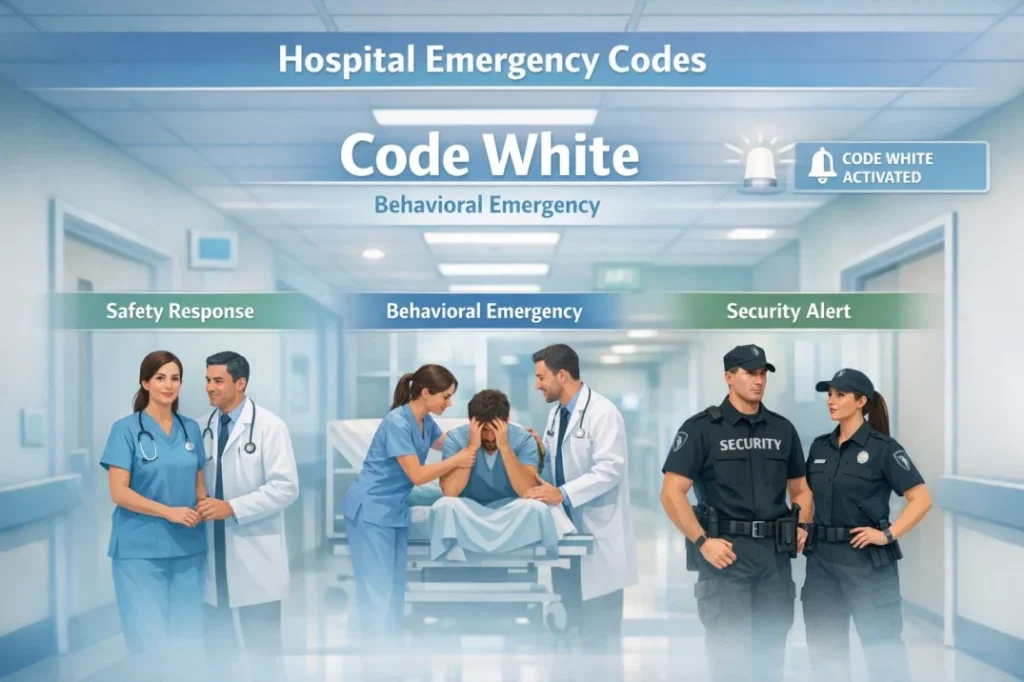
Code White in a hospital usually refers to a situation involving violence, aggressive behavior, or the need for security or emergency assistance to manage a disruptive individual.
In some hospitals, it may also be used for medical emergencies involving children or psychiatric situations, depending on local policy.
Hospitals often use special codes to communicate quickly and quietly during situations that require urgency or coordination. These codes are designed so staff can respond fast without alarming patients or visitors. One of these terms you may hear in some hospitals or healthcare settings is “Code White.”
If you’ve ever heard it in a TV show, seen it in a hospital scene, or overheard it in real life, you might wonder what it actually means. Is it an emergency? Is it about a patient? Or is it something else entirely?
The answer is not as simple as one universal definition. Like many hospital codes, Code White can mean different things depending on the country, hospital, or healthcare system. But there are common patterns that help us understand its general purpose.
The exact meaning varies, but it is generally related to safety, security, or behavioral emergency response inside the hospital.
Understanding Hospital Codes in Simple Words
Before understanding Code White specifically, it helps to know why hospitals use codes in the first place.
Hospitals are busy environments. There are patients, families, doctors, nurses, and emergency situations happening at the same time. In such a place, clear and calm communication is extremely important.
Instead of saying something alarming out loud like:
“An aggressive patient is attacking staff in room 5”
Hospitals use codes like:
“Code White, room 5”
This keeps communication short, professional, and less stressful for patients nearby.
Hospital codes also help staff react quickly without confusion. Each code has a specific meaning so everyone on the team knows what to do immediately.
What Does Code White Mean in Most Hospitals?
In many healthcare systems, Code White is associated with violence or aggressive behavior. This may include situations such as:
- A patient becoming physically aggressive
- A visitor causing disruption
- A person threatening staff or other patients
- A psychiatric emergency involving agitation or violence
When Code White is announced, it usually means that security staff or trained response teams should immediately go to the location.
The goal is to protect:
- Patients
- Healthcare workers
- Visitors
- Hospital property
It is not a medical diagnosis code. Instead, it is a behavioral or safety response code.
Why Hospitals Use Code White Instead of Plain Language
You might wonder why hospitals don’t just say what is happening directly. The reason is very practical.
Hospitals use codes because they help to:
- Avoid panic among patients
- Keep communication discreet
- Speed up staff response
- Reduce emotional stress in public areas
- Maintain professionalism in emergencies
For example, if a hospital announced “violent patient in emergency room,” it could cause fear and confusion. But saying “Code White ER” keeps things calm while still alerting trained staff.
Different Meanings of Code White Around the World
One of the most important things to understand is that Code White is not universal. It can mean different things depending on location.
Here are some variations used in different systems:
1. Violence or Aggression Response
In many hospitals, especially in North America and parts of Europe, Code White refers to:
- Aggressive behavior
- Physical violence
- Security threat in the hospital
This is the most common usage.
2. Pediatric Emergency (in some hospitals)
In certain healthcare systems, Code White may refer to a child medical emergency, such as:
- A critically ill child
- Pediatric resuscitation support needed
However, this is less common and depends on hospital policy.
3. Psychiatric Emergency
In some regions, Code White is used for:
- Mental health crisis situations
- Patients experiencing severe agitation
- Behavioral health emergencies
This version focuses more on mental health safety.
4. Training or Drills in Some Facilities
Some hospitals may also use Code White in training scenarios to practice handling aggressive situations safely.
Because of these differences, hospitals usually train staff specifically on what their version of Code White means.
What Happens When Code White Is Called?
When Code White is announced, a coordinated response is activated. The exact procedure depends on the hospital, but it usually includes the following steps:
1. Immediate Notification
A code is announced through the hospital intercom system or internal communication system.
Example:
“Code White, Emergency Department”
2. Security Response
Trained security personnel or emergency response teams quickly move to the location.
Their job is to:
- De-escalate the situation
- Protect staff and patients
- Control the environment safely
3. Staff Coordination
Doctors and nurses nearby may:
- Move other patients away
- Secure medical equipment
- Assist in calming the situation if safe
4. De-escalation or Control
The goal is always to reduce tension safely, not escalate it. Techniques may include:
- Verbal calming strategies
- Physical separation
- Assistance from trained security staff
5. Resolution and Reporting
Once the situation is under control, staff document what happened and review how to prevent similar incidents in the future.
Real Life Example of Code White
Imagine this scenario in a hospital emergency room:
A patient arrives in distress. At first, everything seems normal, but suddenly the patient becomes confused and starts shouting aggressively. The situation begins to escalate, and staff feel unsafe.
A nurse calmly presses an internal alert and says:
“Code White, ER section 2.”
Within seconds:
- Security arrives
- Staff step back safely
- The patient is calmly restrained or de-escalated
- The situation is controlled without panic spreading through the hospital
This is how Code White works in real time. It is fast, controlled, and focused on safety.
Code White vs Other Hospital Codes
To understand Code White better, it helps to compare it with other common hospital codes.
| Code | Meaning | Purpose |
|---|---|---|
| Code Blue | Cardiac or respiratory arrest | Medical emergency |
| Code Red | Fire or smoke | Fire emergency |
| Code Pink | Infant or child abduction | Security alert |
| Code Black | Bomb threat | Security evacuation |
| Code White | Violence or behavioral emergency | Safety and security |
Each code has a specific purpose so hospital staff can react instantly without confusion.
Why Code White Is Important
Code White is extremely important in hospitals because it helps:
- Protect healthcare workers from harm
- Ensure patient safety during crises
- Prevent escalation of violent situations
- Maintain order in high stress environments
- Allow quick response without panic
Hospitals can be emotionally intense places. Patients may be scared, in pain, or confused. Families may be stressed. In rare cases, this can lead to aggressive behavior. Code White helps manage those moments safely.
Emotional Side of Code White Situations
Behind every Code White is usually a stressful human situation. It may involve:
- A patient in mental distress
- A family member overwhelmed with emotion
- A medical condition affecting behavior
- Fear or confusion during emergency treatment
Hospital staff are trained not only in physical safety but also in emotional de-escalation. They try to calm the situation with respect and care rather than force whenever possible.
This makes Code White not just a security response, but also a human response to crisis situations.
Common Misunderstandings About Code White
Many people misunderstand hospital codes because they are not publicly explained everywhere. Some common myths include:
Myth 1: Code White always means death
This is not true. Code White is about behavior or safety, not death.
Myth 2: Code White is the same everywhere
It actually varies by hospital and country.
Myth 3: Code White is always violent
Most of the time it involves aggression, but it can also include mental health emergencies depending on the system.
When You Might Hear Code White
If you are a visitor or patient, you might hear Code White in places like:
- Emergency rooms
- Psychiatric units
- Waiting areas
- Hospital corridors
Even though it sounds serious, most people outside the situation do not need to panic. It is mainly a signal for trained staff.
What Should You Do If You Hear Code White?
If you are not hospital staff, the best thing to do is:
- Stay calm
- Follow instructions from staff
- Move away if asked
- Do not interfere
- Remain in safe areas
Hospital teams are trained to handle the situation. Your role is simply to stay out of the way and remain safe.
FAQs
What does Code White mean in a hospital?
It usually refers to a behavioral emergency involving aggression, violence, or a need for security response.
Is Code White dangerous?
It can involve a dangerous situation, but it is managed by trained hospital staff to keep everyone safe.
Does Code White mean someone died?
No, it has nothing to do with death. It is related to behavior or safety issues.
Is Code White the same everywhere?
No, the meaning can vary depending on the hospital or country.
What should visitors do during Code White?
Stay calm, follow staff instructions, and avoid the area if directed.
Is Code White related to mental health?
In some hospitals, yes. It may involve psychiatric or behavioral emergencies.
Who responds to Code White?
Usually trained security staff and emergency response teams within the hospital.
Why do hospitals use codes like Code White?
To communicate quickly, maintain privacy, and avoid panic during emergencies.
Conclusion
Code White in a hospital is a safety and emergency response code most commonly used for aggressive behavior or security-related incidents. While the exact meaning can vary depending on location, its purpose is always the same: to protect patients, staff, and visitors while managing a potentially unsafe situation calmly and efficiently.
Hospital codes like Code White are not meant to alarm the public but to help trained teams respond quickly and effectively. Understanding what it means gives you a clearer picture of how hospitals maintain order and safety during high-stress moments.
So the next time you hear “Code White,” you’ll know it is not random jargon. It is a carefully designed system to keep people safe when emotions or situations become unpredictable.
Read More Related Articles:
- MMCHT in Texts: Meaning, Tone, and How to Use It in 2026
- What Does Te Amo Mean in English? Here’s the Truth (2026)
- SG in Text: The Meaning Changes More Than You Think (2026)

Luna Hartley is a content creator at TextSprout.com, where she specializes in explaining word meanings, modern phrases, and everyday language used in texts and online conversations. Her writing focuses on clarity and context, helping readers understand how words are actually used in real communication.