
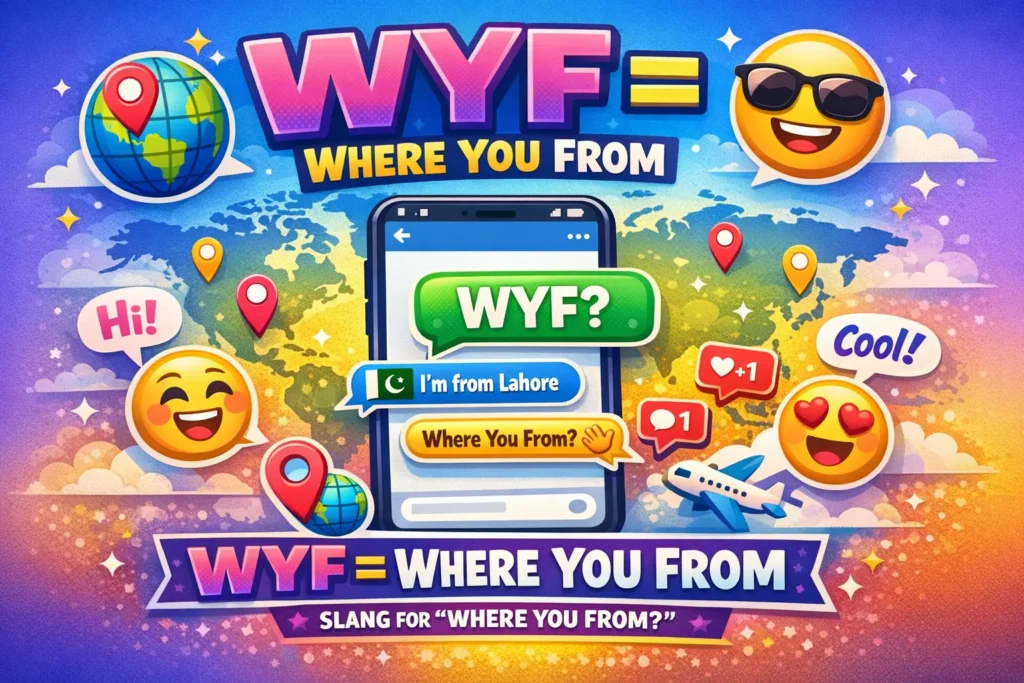
WYF in texting most commonly means “Where You From?” It is used to ask someone about their location, hometown, or country in a casual conversation.
If you spend any time texting, scrolling social media, or chatting in gaming apps, you’ve probably seen short abbreviations that look confusing at first. One of those is WYF. It often appears in messages like “WYF?” or “WYF tho” and can leave people wondering what it actually means.
Understanding texting slang like WYF helps you follow conversations more easily and respond without confusion. It also helps you avoid misunderstandings, especially when tone is not obvious in text.
It can also sometimes be used in other informal ways depending on context, but “Where You From” is the most widely accepted meaning in modern texting and social media.
What WYF Means in Text Messages
WYF is a short form used mainly in casual conversations. Instead of typing the full question “Where are you from?”, people shorten it to WYF to save time and keep the conversation quick.
It is commonly used in:
• Text messages
• Snapchat chats
• Instagram DMs
• TikTok comments
• Gaming chats like Discord or in game lobbies
When someone asks WYF, they are usually trying to start a conversation, get to know someone, or understand their background.
For example:
“Hey WYF?”
This simply means “Hey, where are you from?”
Origin and Rise of WYF
The abbreviation WYF became popular as texting culture evolved. In early mobile phone messaging, people used abbreviations to save space and reduce typing effort. Over time, this habit moved into social media and online chatting.
WYF became especially common among younger users on platforms like Snapchat, Instagram, and TikTok, where quick interactions are the norm.
Unlike formal language, internet slang evolves naturally. WYF spread because it is short, easy to type, and instantly understandable in context.
How WYF Is Used in Conversations
WYF is mainly used as a casual question. It is often part of small talk when two people are getting to know each other online.
Here are some common uses:
• Starting a conversation
• Getting to know someone new
• Casual chatting in social apps
• Online gaming introductions
It is rarely used in formal communication because it is informal and conversational.
Examples of WYF in Texting
To understand WYF better, here are real style examples of how it appears in conversations.
Friendly tone
“Hey WYF? You sound familiar.”
This is a simple and friendly way to ask where someone is from.
Casual conversation
“WYF bro? Your accent is interesting.”
Here the speaker is showing curiosity in a relaxed way.
Social media comment
“WYF? Your vibe is different.”
This is often used under posts or videos when someone is curious about the creator’s background.
Gaming chat
“GG man WYF?”
In gaming, WYF is often used after a match to learn about other players.
Flirty or curious tone
“WYF tho? I feel like we’ve met before.”
In some cases, WYF is used as a way to continue a conversation with interest or curiosity.
Different Contexts and Meanings of WYF
Although “Where You From” is the most common meaning, WYF can sometimes vary depending on context.
| Meaning | Context |
|---|---|
| Where You From | Most common texting meaning |
| What You Feeling | Rare informal usage |
| Why You Fine | Slang used jokingly or flirty in some social circles |
However, in most cases, especially in general texting and social media, WYF means Where You From.
Tone and Emotion in WYF Messages
Even though WYF is just three letters, the tone can change depending on how it is used.
| Tone | Example | Meaning |
|---|---|---|
| Friendly | WYF? Nice to meet you | Casual curiosity |
| Curious | WYF tho? | Wanting more information |
| Flirty | WYF? You seem interesting | Romantic or playful interest |
| Neutral | WYF | Simple question |
| Playful | WYF bro 😂 | Lighthearted conversation |
The meaning becomes clear when you look at emojis, punctuation, and surrounding words.
WYF Compared to Similar Slang
There are other abbreviations that are similar to WYF or often used in the same context.
| Slang | Meaning | Usage |
|---|---|---|
| WYF | Where You From | Asking location or origin |
| WYA | Where You At | Asking current location |
| WRU | Where Are You | Asking general location |
| HMU | Hit Me Up | Inviting conversation |
| WBU | What About You | Asking return question |
WYF is more about origin or background, while WYA focuses on current location.
Is WYF Formal or Informal
WYF is completely informal. It should only be used in casual conversations with friends, social media interactions, or online chats.
It is not suitable for:
• Emails
• Job interviews
• Academic writing
• Professional communication
In formal situations, it is better to say:
“Where are you from?” or “May I ask where you are from?”
How to Respond to WYF
If someone asks you WYF, your response depends on how comfortable you are sharing your location.
Here are some examples:
• “I’m from Pakistan.”
• “I’m from Lahore.”
• “I’m from a small town near Karachi.”
• “Why do you ask?”
• “I prefer not to say.”
Your answer can be short or detailed depending on the situation.
WYF in Online Culture
WYF is widely used in online spaces where people meet strangers or new friends. It is common in:
• Social media comments
• Dating apps
• Gaming communities
• Live streams
In these environments, WYF helps break the ice and start conversations quickly.
For example, in a live stream chat, someone might type:
“WYF everyone here?”
This encourages viewers to interact and share where they are watching from.
Misunderstandings Around WYF
Sometimes WYF can be misunderstood, especially by people who are not familiar with internet slang.
For example:
• Some people may think it is a typo
• Others may misinterpret it as something rude or confusing
• New internet users might not recognize it at all
That is why understanding slang is helpful in digital communication.
Cultural Impact of WYF
Slang like WYF reflects how language evolves in the digital age. It shows how people prioritize speed and simplicity in communication.
Instead of long sentences, people now use short forms that carry meaning instantly. WYF is part of a larger trend where language adapts to technology and fast communication.
It also reflects how global communication has become. People from different countries use the same slang online, even if English is not their first language.
When You Should Avoid Using WYF
Even though WYF is common, there are times when you should avoid it:
• Talking to teachers or professors
• Professional workplace communication
• Formal introductions
• Official forms or emails
In these situations, full sentences are always better.
FAQs
What does WYF mean in texting?
WYF means “Where You From” and is used to ask about someone’s location or origin.
Is WYF rude?
No, WYF is not rude. It is casual and friendly, but tone depends on context.
Is WYF used in dating apps?
Yes, it is often used as an icebreaker to start conversations.
What is the difference between WYF and WYA?
WYF asks about where someone is from, while WYA asks where someone is currently located.
Can WYF be flirty?
Yes, in some contexts it can be used in a playful or flirty way.
Is WYF formal language?
No, it is strictly informal slang.
How do I reply to WYF?
You can simply say your city, country, or choose not to answer.
Is WYF still commonly used?
Yes, it is still widely used in texting and social media conversations.
Conclusion
WYF is a simple but widely used internet slang term that means “Where You From.” It is commonly used in texting, social media, gaming chats, and casual online conversations. While it looks small, it plays an important role in starting conversations and helping people connect across different regions and cultures.
Understanding WYF and similar slang helps you communicate more naturally in digital spaces. It also helps you interpret messages correctly and respond confidently when chatting online.
As online communication continues to evolve, abbreviations like WYF will remain part of everyday digital language, making conversations faster, simpler, and more connected.
Read More Related Articles:
- Rebuke Mean in the Bible: Learn Its Meaning and Power (2026)
- What Does “BTW” Mean? Texting Acronym You See (2026)
- What Does NIL Stand For? The New Era of College Football In 2026

Ivy Madison is a content creator at TextSprout.com, specializing in word definitions, internet slang, acronyms, and text abbreviations. She delivers clear and engaging explanations, helping readers quickly understand modern digital language and trending terms.