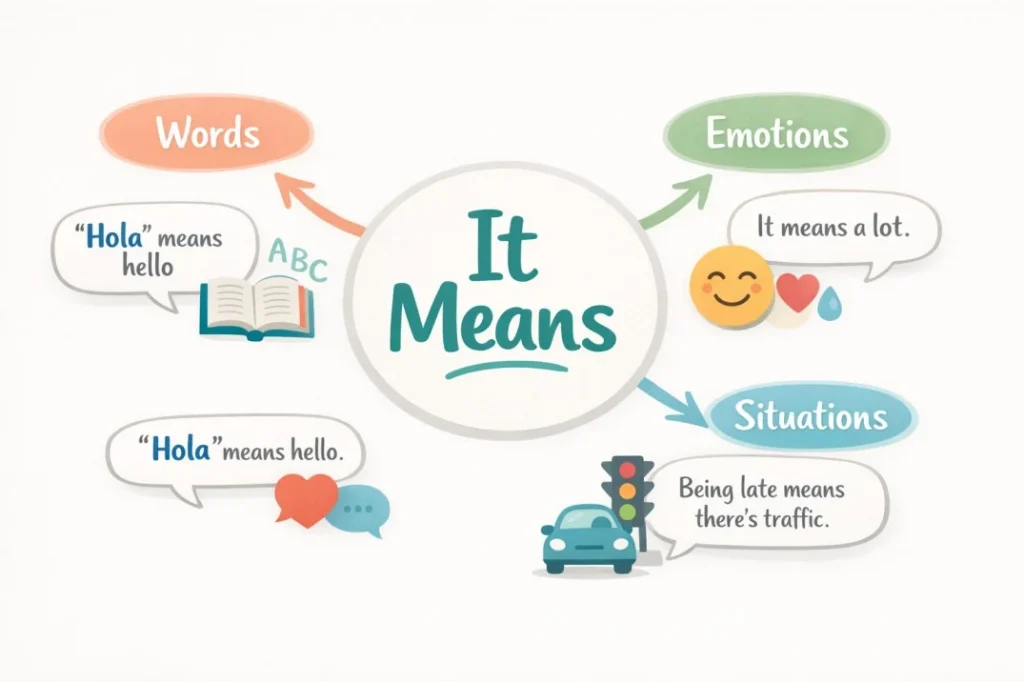
“It means” is a phrase used to explain the definition, purpose, or significance of something. It helps clarify what a word, action, idea, or situation represents or stands for.
Example:
“‘Hola’ means hello in Spanish.”
Language can be funny sometimes. We use simple words every day without thinking too much about them, yet when we pause and look closer, those same words can feel surprisingly complex. The phrase “it mean” or more commonly “it means” is one of those cases. You’ve probably said or heard it countless times in conversations, explanations, or even arguments.
But what does it actually mean when we say “it means”? And why do we use it so often?
This guide breaks it down in a simple, natural way so you can understand not just the definition, but also how people actually use it in real life.
Here, “means” is used to explain the meaning of a word.
What Does “It Means” Actually Do in a Sentence
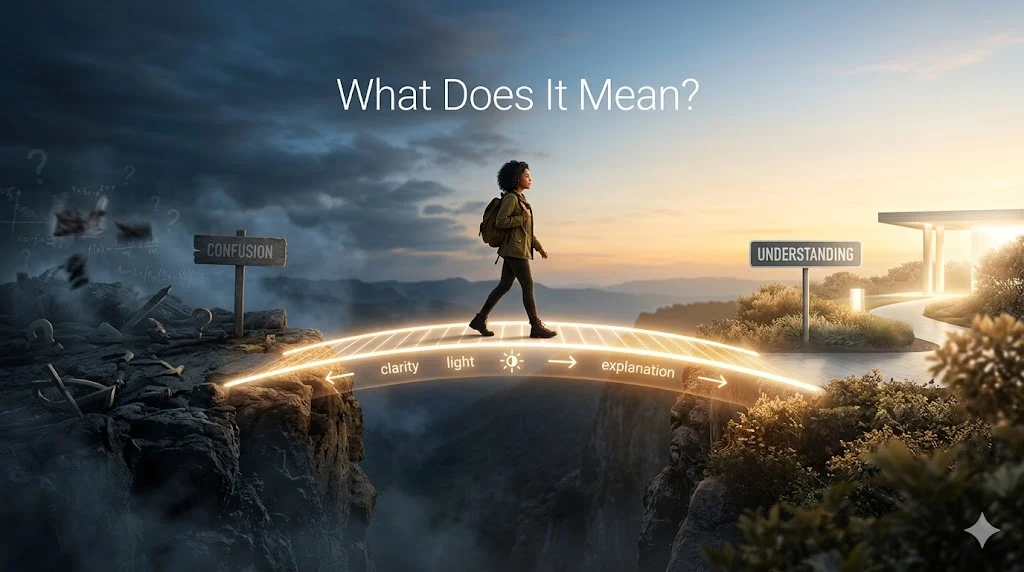
At its core, the phrase “what does it means” is used when you want to explain something. That “something” could be a word, a feeling, a situation, or even a hidden message behind someone’s actions.
Think of it as a bridge between confusion and understanding.
When someone asks:
“What does this mean?”
They are really asking:
“What is the explanation behind this?”
And when you reply with:
“It means…”
You are providing that explanation.
Breaking It Down in a Simple Way
Let’s make it even easier to understand.
- “It” refers to something specific. This could be a word, action, or situation.
- “Means” refers to the explanation or definition of that thing.
Put together, “it means” simply becomes:
“This is what it represents or explains.”
Example:
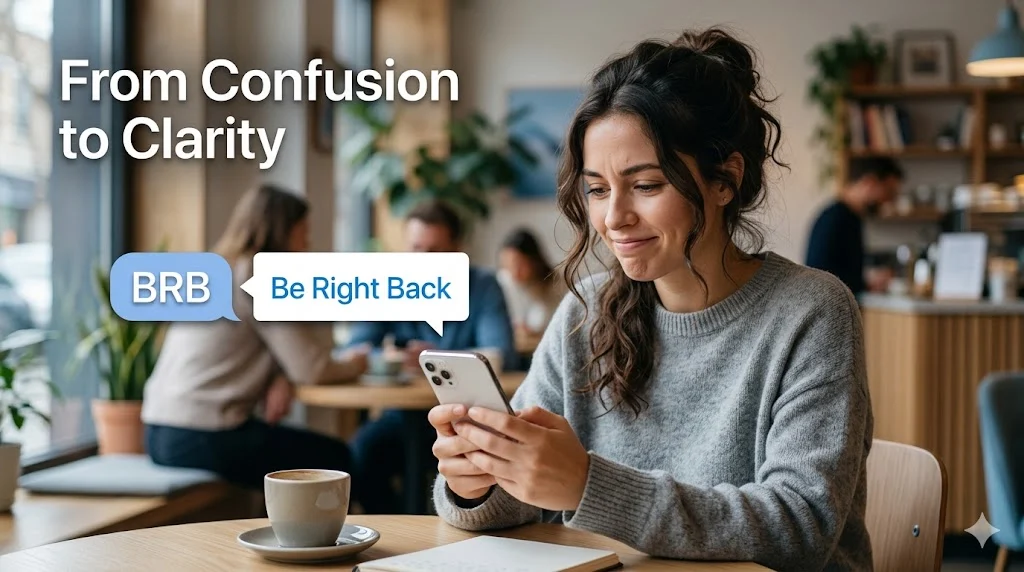
“If someone texts you ‘BRB,’ it means they will be back soon.”
You are taking something unclear and making it clear.
Why We Use “It Means” So Often
The reason this phrase is everywhere is simple. Humans are always trying to understand things.
We use “it means” when we want to:
- Explain something
- Translate a word
- Interpret a situation
- Clarify confusion
- Share understanding
Without phrases like this, communication would feel incomplete.
Imagine trying to explain something without saying what does it mean. It would feel unfinished.
Everyday Examples That Feel Natural
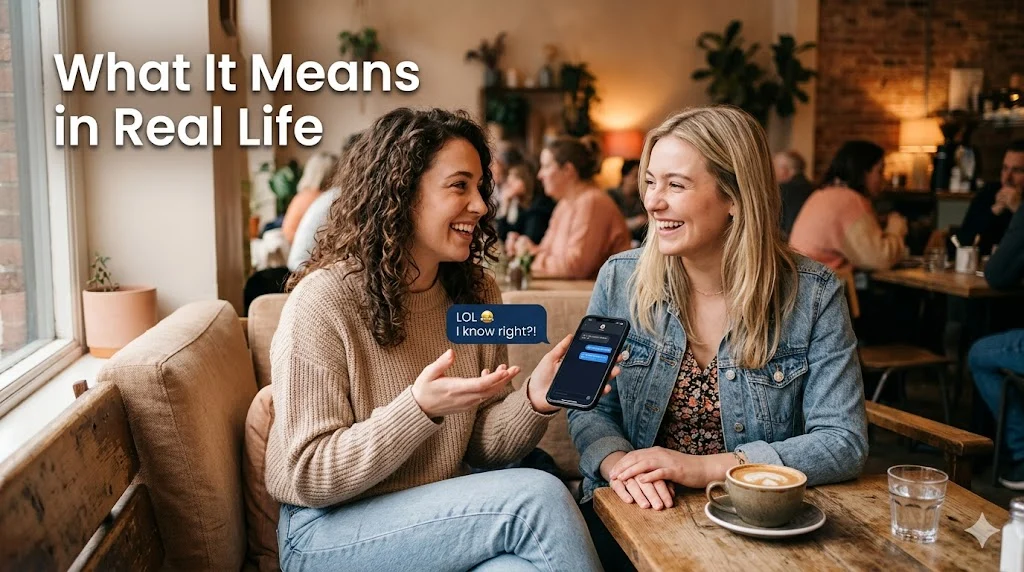
Here are some real-life examples that sound like everyday conversations.
Friend: “What does LOL mean?”
You: “It means laughing out loud.”
Teacher: “What does this sentence mean?”
Student: “It means the character is feeling sad.”
Partner: “What does that message mean?”
You: “It means they want to meet you.”
In each case, “it means” connects the question to the explanation.
What “It Means” Actually Does in Communication
The phrase “it means” works as a connector between confusion and clarity. It takes something unclear—like a word, action, or situation—and turns it into something understandable. Without it, explanations would feel incomplete or vague.
It’s not just about definition; it’s about making information usable in real-life understanding.
“It Means” as a Tool for Turning Information Into Insight
There’s a difference between knowing something and understanding it. “It means” helps bridge that gap.
For example:
A symbol, message, or behavior might exist, but until someone explains it using “it means,” it doesn’t fully make sense.
This makes the phrase essential in learning, teaching, and everyday conversations.
Why This Simple Phrase Appears So Often in Daily Language
“It means” is everywhere because people constantly ask questions and seek clarity.
It is commonly used when:
- Explaining new words
- Clarifying confusion
- Interpreting actions
- Responding to “what does this mean?”
Its simplicity makes it one of the most frequently used explanatory phrases in English.
The Difference Between Explaining Meaning and Guessing Meaning
Not all uses of “it means” are equal.
When used correctly, it explains something factual:
“‘Hola’ means hello.”
But in many cases, it becomes an interpretation:
“He didn’t reply—it means he’s busy.”
The first is a definition. The second is a guess based on context.
Understanding this difference improves both communication and critical thinking.
How Context Completely Changes What Something Means
Meaning is not fixed—it depends on the situation.
Example:
“It’s fine”
This could mean:
- Everything is okay
- Someone is upset but hiding it
- A casual response
Without context, the true meaning can be misunderstood. That’s why “it means” often relies on surrounding details.
“It Means” in Texting and Online Conversations
In digital communication, people often use “it means” to interpret messages quickly.
Examples:
- Short reply → “it means they’re not interested”
- Late response → “it means they’re ignoring you”
- No emoji → “it means the tone is serious”
However, these interpretations are not always accurate. Online communication lacks tone and body language, making meaning less reliable.
How People Use “It Means” in Emotional Situations
In emotional conversations, “it means” shifts from explanation to expression.
Examples:
- “It means a lot to me”
- “It means everything”
Here, the phrase is not defining something—it’s showing importance, value, or emotional weight.
When “It Means” Turns Into Overthinking
People sometimes overuse “it means” when trying to interpret situations.
Example:
“He didn’t call—it means he doesn’t care.”
In reality, there could be many reasons:
- He’s busy
- He forgot
- He didn’t see the message
This shows how “it means” can lead to assumptions rather than facts.
The Role of Tone in Changing Meaning
The tone of voice can completely change how “it means” is understood.
Examples:
- Neutral: “It means you should try again”
- Friendly: “It means you’re improving”
- Serious: “It means this is important”
Same structure, different emotional impact.
Why Humans Naturally Look for Meaning in Everything
People are naturally wired to find meaning in words, actions, and situations.
This happens because:
- We want clarity
- We try to avoid confusion
- We look for patterns
As a result, we often say “it means” even when the meaning is not fully certain.
Situations Where Meaning Is Not Always Clear
Not everything has a definite meaning.
Examples:
- “Maybe later”
- “We’ll see”
- “I’ll think about it”
These phrases are intentionally vague. Trying to assign a fixed meaning to them can lead to misunderstanding.
Alternatives to “It Means” for Better Writing
Using the same phrase repeatedly can make writing feel repetitive.
You can replace it with:
- “This shows”
- “This suggests”
- “In other words”
- “This indicates”
These variations improve flow and make your content more engaging.
How to Use “It Means” Clearly and Effectively
To use this phrase well:
- Be specific in your explanation
- Avoid unnecessary repetition
- Make sure the meaning is logical
- Match your tone with the situation
Clear explanations always work better than vague ones.
Real-Life Examples That Show How Meaning Works
Everyday conversations rely heavily on this phrase.
Examples:
- “LOL means laughing out loud”
- “If she smiles, it means she’s happy”
- “If he’s late, it means something delayed him”
These examples show how meaning connects actions, words, and understanding.
Why “It Means” Is Essential for Clear Communication
Without this phrase, explaining things would feel incomplete.
“It means” helps:
- Define ideas
- Clarify confusion
- Connect questions with answers
- Improve understanding
It’s a simple phrase, but it plays a major role in how people communicate effectively.
Different Ways “It Means” Is Used
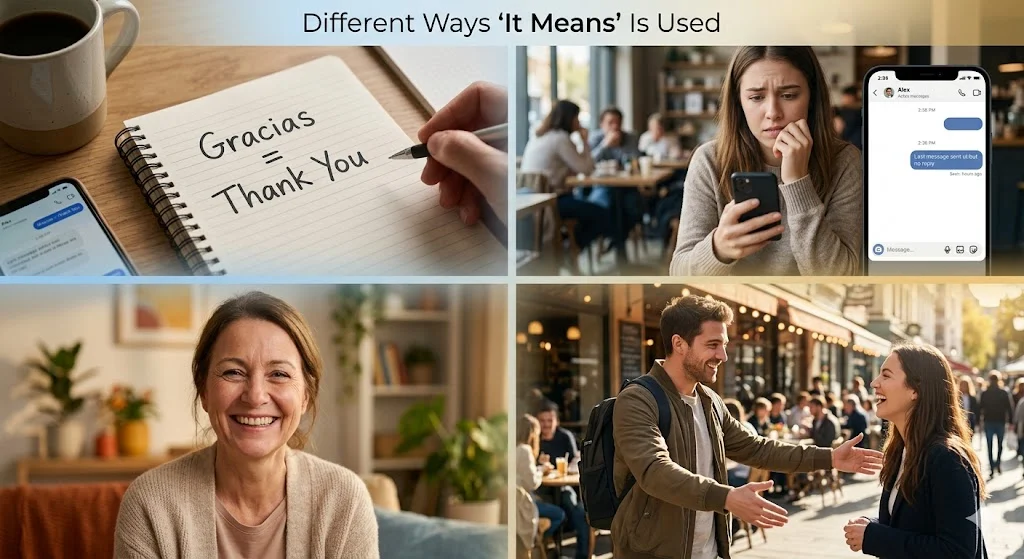
The phrase might look simple, but it can be used in different ways depending on the situation.
1. Explaining Words
This is the most common use.
Example:
“‘Gracias’ means thank you.”
Here, you are translating or defining a word.
2. Explaining Situations
Sometimes “it means” is used to interpret what is happening.
Example:
“If he didn’t reply, it means he is busy.”
You are not defining a word. You are interpreting a situation.
3. Explaining Feelings
People often use “it means” when talking about emotions.
Example:
“When she smiles like that, it means she is happy.”
You are connecting behavior to emotion.
4. Explaining Intentions
Example:
“If someone invites you twice, it means they really want you to come.”
Here, you are explaining what an action represents.
Table of Common Uses
| Situation | Example | What It Does |
|---|---|---|
| Translation | “Hola means hello” | Explains language |
| Behavior | “He left early, it means he was tired” | Interprets actions |
| Emotion | “She’s quiet, it means she’s upset” | Explains feelings |
| Symbol | “A red light means stop” | Defines meaning |
This table shows how flexible the phrase really is.
“It Mean” vs “It Means”
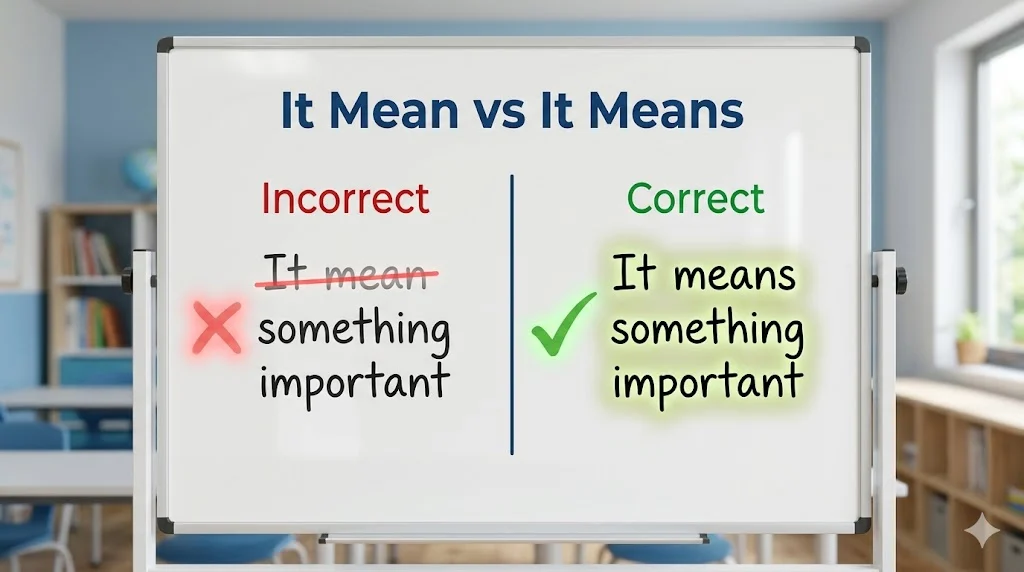
You might have noticed something. Sometimes people say “it mean” instead of “it means.”
Grammatically, the correct form is “it means.”
That’s because:
- “It” is singular
- Singular subjects need verbs with an “s”
So:
Correct → “It means something important”
Incorrect → “It mean something important”
However, in casual texting or slang, people sometimes drop the “s.” It might not be correct, but it happens in informal communication.
Tone and Context Matter
Just like many phrases, “it means” can sound different depending on tone.
| Tone | Example | Feeling |
|---|---|---|
| Neutral | “It means you need to try again” | Simple explanation |
| Friendly | “It means you’re doing great 😊” | Encouraging |
| Serious | “It means this is important” | Firm |
| Emotional | “It means a lot to me” | Personal |
Same phrase, different impact.
When People Overthink “It Means”
Sometimes people read too much into situations and use “it means” to guess things that might not actually be true.
Example:
“He didn’t reply, it means he doesn’t care.”
That might not always be accurate. He could just be busy.
So while “it means” is useful, it’s important not to jump to conclusions.
“It Means” in Emotional Conversations
One of the most powerful uses of this phrase is in emotional situations.
Example:
“When you listen to me, it means a lot.”
Here, “it means” is not about definition. It is about value and importance.
Another example:
“It means everything to me.”
This shows deep emotion, not just explanation.
Similar Phrases to “It Means”
There are other ways to say the same thing depending on the situation.
| Phrase | Example | Tone |
|---|---|---|
| It shows | “It shows you care” | Slightly emotional |
| It indicates | “It indicates progress” | Formal |
| It suggests | “It suggests a problem” | Analytical |
| In other words | “In other words, it means…” | Clarifying |
These alternatives can help you vary your language.
Common Mistakes People Make
Even though it’s simple, people still make small mistakes.
- Saying “it mean” instead of “it means”
- Using it without clear context
- Overinterpreting situations
- Repeating it too much in writing
Keeping it natural and clear is the key.
Tips to Use It Naturally
If you want to sound more natural when using “it means,” here are a few simple tips.
Keep it simple
Avoid overexplaining
Use it when needed
Not every sentence needs it
Match the tone
Friendly, serious, or emotional
Be clear
Make sure the explanation makes sense
FAQs
What does “it means” mean?
It is a phrase used to explain the definition, purpose, or significance of something.
Is “it mean” correct?
No, the correct form is “it means.” “It mean” is informal or incorrect grammar.
When should I use “it means”?
Use it when explaining something, defining a word, or interpreting a situation.
Can “it means” be emotional?
Yes, it can express feelings, such as “it means a lot to me.”
Is “it means” formal or casual?
It can be both, depending on how it is used.
Can I replace “it means” with other phrases?
Yes, you can use phrases like “it shows,” “it indicates,” or “in other words.”
Why do people use “it means” so often?
Because it helps clarify and explain things in communication.
Can “it means” be misunderstood?
Yes, especially when people assume meaning without enough context.
Conclusion
The phrase “what does it mean” might seem small, but it plays a huge role in how we communicate. It helps us explain, understand, and connect ideas in a clear way. Whether you are defining a word, interpreting a situation, or expressing emotions, this simple phrase bridges the gap between confusion and clarity.
It’s one of those everyday tools in language that we don’t think about much, yet we use constantly. And once you start paying attention to it, you’ll notice just how often it appears in conversations.
At the end of the day, “it means” is about understanding. It turns something unclear into something clear, and that’s what good communication is all about.
Read More Related Articles:
- What Does Sanction Mean in Court: Courtroom Guide In 2026
- What Does Playa Mean in Spanish: Beach or Player In 2026
- Suka Meaning in Russian: From Slang to Viral Internet Term In 2026

Ivy Madison is a content creator at TextSprout.com, specializing in word definitions, internet slang, acronyms, and text abbreviations. She delivers clear and engaging explanations, helping readers quickly understand modern digital language and trending terms.