Herpes typically looks like small fluid filled blisters or sores on the skin, often grouped together in clusters. These blisters may break open, forming painful ulcers that eventually scab and heal. The affected area can also appear red, swollen, or irritated.
For example, oral herpes may show up as cold sores around the lips, while genital herpes may appear as blisters or sores in the genital or surrounding area.
If you’ve ever searched for information about herpes, chances are you’re trying to figure out what it actually looks like in real life. It’s a common concern. The internet can make things seem more confusing or even scary, especially when images and descriptions vary so much.
The truth is, herpes does not always look the same for everyone. It can appear differently depending on the person, the stage of the infection, and whether it’s oral or genital herpes. Some people have very noticeable symptoms, while others may barely notice anything at all.
Understanding what herpes looks like is important, not just for awareness but also for knowing when to seek medical advice. This guide will walk you through everything in a clear, realistic, and human way so you can recognize the signs without panic or confusion.
Understanding Herpes in Simple Terms
Herpes is caused by a virus that stays in the body once you get it. There are two main types
- Oral herpes usually affects the mouth and lips
- Genital herpes usually affects the genital area
Even though they affect different parts of the body, both types can look very similar when symptoms appear.
One important thing to know is that herpes does not always show visible signs. Some people carry the virus and never develop noticeable sores. Others may only get symptoms once or occasionally.
What Herpes Looks Like at the Beginning
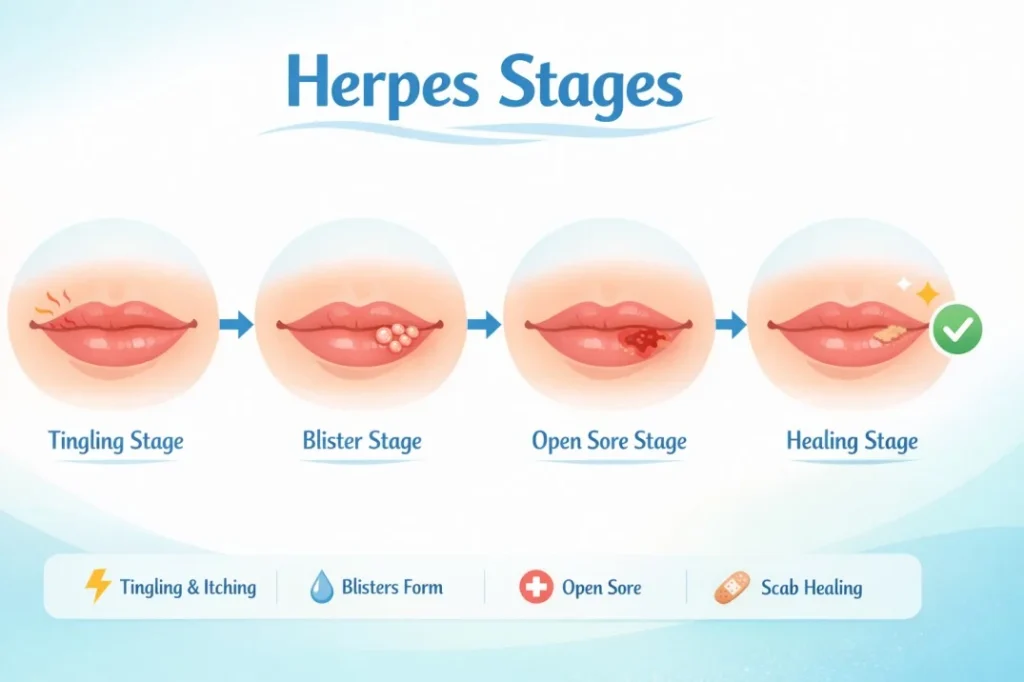
The first time herpes appears, it can be more noticeable than later outbreaks. This is often called the initial outbreak.
At the start, you might notice
- Tingling or itching in a specific area
- Slight redness or irritation
- A feeling like the skin is sensitive or burning
This stage can feel confusing because it does not yet look like blisters. It may just seem like a rash or irritation.
After a short time, small bumps begin to form. These bumps are usually the first visible sign that something is happening.
The Blister Stage
This is the stage most people associate with herpes.
The bumps turn into small fluid filled blisters. These blisters often
- Appear in clusters
- Look like tiny bubbles on the skin
- Are filled with clear or slightly cloudy fluid
- Can be painful or tender
They may be very small or more noticeable depending on the outbreak.
Some people describe them as looking like
- Pimples
- Tiny water droplets
- Small grouped sores
This stage can last a few days before the blisters change again.
When Blisters Break Open
After a short time, the blisters usually break open.
When this happens
- The fluid leaks out
- The area may become more painful
- Open sores or ulcers appear
These sores can look
- Raw
- Red
- Slightly wet or shiny
This stage can be uncomfortable, especially if the sores are in a sensitive area.
The Healing Stage
After the sores form, the body begins to heal.
You may notice
- The sores start to dry out
- A scab or crust forms
- The skin begins to repair itself
Over time, the scabs fall off and the skin heals. In most cases, herpes sores heal without leaving scars, although the area might look slightly different for a short time.
What Oral Herpes Looks Like
Oral herpes usually appears around the mouth. It is often called a cold sore.
Common signs include
- Blisters on or around the lips
- Crusting sores after the blisters break
- Redness and swelling around the mouth
- A tingling feeling before the sore appears
Sometimes the sores can also appear
- Inside the mouth
- On the gums
- Around the nose
At first, it might look like a small pimple or irritation, but it quickly develops into a blister.
What Genital Herpes Looks Like
Genital herpes appears in the genital or nearby areas.
It may show up as
- Small blisters or sores on the genitals
- Red or irritated skin
- Open sores after blisters break
In addition to the genitals, sores can also appear
- Around the thighs
- Near the buttocks
- Around the anus
For some people, the sores may be very small and easy to miss. Others may experience more noticeable clusters.
Differences Between First and Recurrent Outbreaks
The first outbreak is usually the most intense.
You might experience
- More blisters
- Larger affected areas
- More discomfort
Later outbreaks are often
- Milder
- Smaller in size
- Shorter in duration
Some people only get outbreaks occasionally, while others may have them more frequently.
Other Symptoms That Can Appear
Herpes is not just about how it looks. There can also be other symptoms, especially during the first outbreak.
These may include
- Fever
- Body aches
- Swollen lymph nodes
- Fatigue
These symptoms can make it feel similar to having the flu at first.
Conditions That Look Similar to Herpes
It’s easy to confuse herpes with other skin conditions. Some things that may look similar include
- Pimples or acne
- Ingrown hairs
- Allergic reactions
- Skin irritation
- Yeast infections
The key difference is that herpes usually forms clusters of blisters that go through stages, from tingling to blisters to sores to healing.
If you are unsure, it is always best to get checked by a healthcare professional rather than guessing.
Example Comparison Table
| Condition | Appearance | Key Difference |
|---|---|---|
| Herpes | Clustered blisters and sores | Goes through stages and may be painful |
| Pimples | Single bumps with pus | Usually not clustered or recurring in same spot |
| Ingrown hair | Red bump with hair trapped | Often linked to shaving |
| Rash | Flat red patches | No fluid filled blisters |
What Herpes Feels Like
Appearance is one part of it, but how it feels also matters.
People often describe
- Tingling before sores appear
- Burning or itching
- Pain or sensitivity
- Discomfort when touched
These sensations can help you recognize an outbreak early.
When to See a Doctor
If you notice symptoms that look like herpes, it is a good idea to speak to a healthcare provider.
You should consider getting checked if
- You have blisters or sores that do not heal quickly
- The pain is significant
- It is your first outbreak
- You are unsure what it is
Getting a proper diagnosis can give you peace of mind and help you manage symptoms effectively.
Emotional Side of Not Knowing
It’s normal to feel worried if you think you might have herpes. Many people feel anxious or unsure when they notice unusual symptoms.
But it’s important to remember
- Herpes is very common
- It is manageable
- It does not define you
Understanding what it looks like is simply a step toward taking care of your health.
Tips for Recognizing Herpes Early
- Pay attention to tingling or itching before anything appears
- Look for clusters rather than single bumps
- Notice if the same area is affected repeatedly
- Observe how the sores change over time
These small details can help you identify patterns.
FAQs
What does herpes look like at first?
It often starts as tingling or redness, followed by small bumps that turn into blisters.
Do herpes sores always hurt?
They can be painful or uncomfortable, but some people have mild symptoms.
Can herpes look like a pimple?
Yes, early stages can resemble pimples, but herpes usually forms clusters and changes over time.
How long do herpes sores last?
They usually heal within one to two weeks, depending on the person and the outbreak.
Can herpes appear in different places?
Yes, it can appear around the mouth, genitals, or nearby areas.
Is herpes always visible?
No, some people have the virus without noticeable symptoms.
Can herpes go away on its own?
Outbreaks heal on their own, but the virus stays in the body.
Should I get tested if I am unsure?
Yes, getting tested is the best way to confirm what you are experiencing.
Conclusion
Herpes can look different from person to person, but it usually follows a pattern. It starts with tingling or irritation, then forms small fluid filled blisters, which eventually break into sores and heal over time.
While the appearance can feel alarming at first, understanding the stages helps remove some of the uncertainty. It also makes it easier to recognize when something might need medical attention.
Most importantly, herpes is common and manageable. Knowing what it looks like is not about fear, it is about awareness and taking care of your health in a calm and informed way.
Read More Related Articles:
- MMCHT in Texts: Meaning, Tone, and How to Use It in 2026
- What Does Te Amo Mean in English? Here’s the Truth (2026)
- SG in Text: The Meaning Changes More Than You Think (2026)

Ivy Madison is a content creator at TextSprout.com, specializing in word definitions, internet slang, acronyms, and text abbreviations. She delivers clear and engaging explanations, helping readers quickly understand modern digital language and trending terms.