
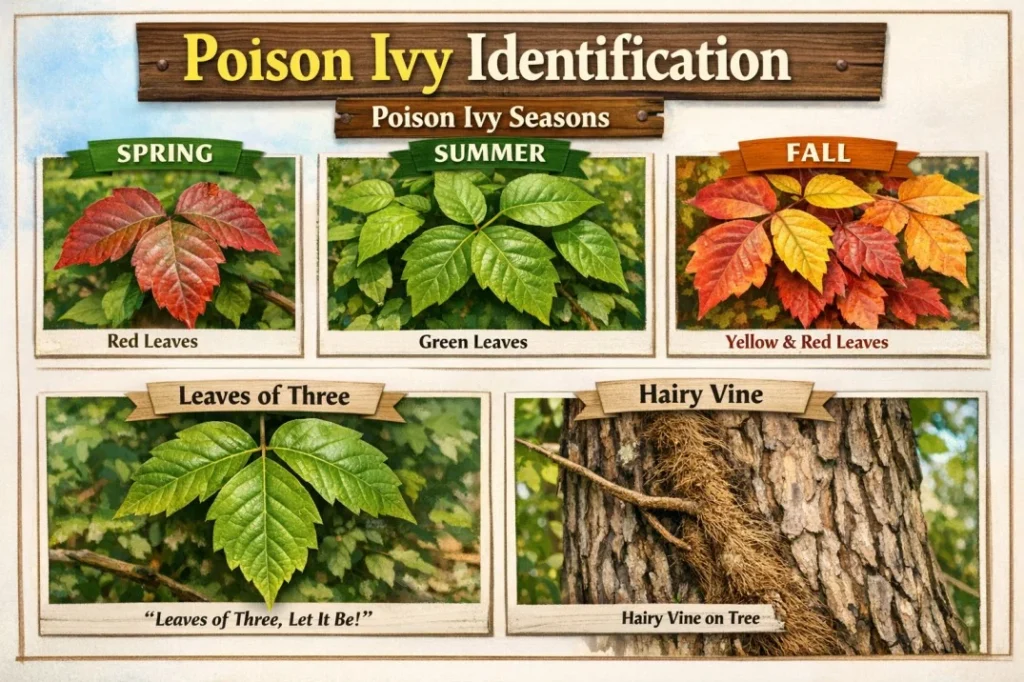
Poison ivy is a plant that typically has clusters of three pointed leaves, often glossy or slightly reddish when young, and green during most of the growing season.
It can grow as a vine, shrub, or ground plant, and is known for causing an itchy skin rash when touched due to an oil called urushiol.
In simple terms, poison ivy is easy to recognize by the phrase “leaves of three, let it be.”
If you have ever spent time outdoors hiking, gardening, or exploring wooded areas, you may have heard warnings about poison ivy. It is one of the most common plants that can cause skin irritation, yet many people are unsure how to identify it correctly.
Knowing what poison ivy looks like can help you avoid painful rashes and enjoy outdoor activities with more confidence. The plant can appear in different forms depending on the season and environment, which sometimes makes it tricky to spot.
This guide will walk you through everything you need to know about poison ivy’s appearance, including its leaves, stems, growth patterns, seasonal changes, and how to distinguish it from similar plants. By the end, you will have a clear mental picture of what to look for and how to stay safe.
Basic Appearance of Poison Ivy
Poison ivy is most commonly recognized by its three leaf structure. Each leaf cluster contains three smaller leaflets connected to a single stem.
Here are the key visual features:
- Three leaflets per cluster
- The middle leaflet usually has a longer stem than the two side ones
- Leaves can be shiny or dull
- Edges may be smooth or slightly jagged
- Color changes depending on the season
The plant’s overall look can vary, but the three leaf pattern remains the most reliable identifying feature.
Leaf Shape and Texture
The leaves of poison ivy can look slightly different depending on where the plant grows, but they share several consistent traits.
- The leaves are typically oval or almond shaped
- Edges may be smooth, toothed, or slightly lobed
- The surface can appear glossy, especially in sunlight
- Young leaves often have a reddish tint
- Mature leaves turn a rich green
Sometimes the leaves may look similar to other plants, but the combination of three leaflets and their arrangement is a strong clue.
Color Changes Throughout the Year
One reason poison ivy can be confusing is that its color changes with the seasons.
Spring
In spring, poison ivy often has reddish or bronze colored leaves. These young leaves can look soft and shiny.
Summer
During summer, the leaves turn bright to deep green. This is when the plant is most noticeable and easiest to identify.
Fall
In autumn, poison ivy becomes more colorful, with leaves turning yellow, orange, or red. This can make it look beautiful, but it is still dangerous to touch.
Winter
In winter, the leaves fall off, but the plant does not disappear. It may remain as a bare vine or stem, which can still cause a rash if touched.
Growth Patterns
Poison ivy is a highly adaptable plant and can grow in several different forms.
Ground Plant
In some areas, poison ivy grows low along the ground like a small plant or patch. This form is common in open fields or forest floors.
Climbing Vine
Poison ivy often grows as a vine that climbs trees, fences, or walls. These vines may have hairy or fuzzy looking stems, which are actually small rootlets that help the plant attach to surfaces.
Shrub Form
In certain environments, poison ivy grows as a bush or shrub, reaching several feet tall. This form can look more like a regular plant, which sometimes makes it harder to identify.
Stems and Vines
The stems of poison ivy provide important clues for identification.
- Climbing vines often look hairy or fuzzy
- Stems may be brown or reddish
- Older vines can become thick and rope like
- New growth appears smoother and greener
The hairy vine is one of the most recognizable features, especially when the plant climbs trees.
Flowers and Berries
Poison ivy also produces small flowers and berries, which can help with identification.
- Flowers are small and greenish white
- They appear in clusters during late spring or early summer
- Berries are typically white, gray, or pale green
- Birds often eat the berries and spread the plant
While the berries may look harmless, they are a sign that the plant is poison ivy.
Quick Identification Table
| Feature | Description |
|---|---|
| Leaves | Three leaflets per cluster |
| Color | Red in spring, green in summer, yellow or red in fall |
| Texture | Can be shiny or slightly dull |
| Growth | Ground plant, vine, or shrub |
| Stem | Hairy vine when climbing |
| Berries | Small, white or pale green |
Common Lookalike Plants
Poison ivy is often confused with other plants that are harmless. Learning the differences can prevent mistakes.
Virginia Creeper
Virginia creeper usually has five leaflets instead of three, making it easy to distinguish.
Boxelder
Boxelder leaves may appear similar but often grow in different patterns and lack the classic three leaf cluster.
Raspberry or Blackberry Plants
These plants can have three leaves, but they usually have thorny stems, unlike poison ivy.
Comparison Table
| Plant | Key Difference |
|---|---|
| Poison Ivy | Three leaves, no thorns |
| Virginia Creeper | Five leaves |
| Blackberry | Thorns on stems |
| Boxelder | Different leaf arrangement |
What Happens If You Touch Poison Ivy
Poison ivy contains an oily substance called urushiol, which causes skin irritation.
When the oil touches your skin, it can lead to:
- Redness
- Itching
- Swelling
- Blisters
The reaction may appear within hours or take a couple of days. Not everyone reacts the same way, but most people will develop some level of rash after exposure.
Where Poison Ivy Is Commonly Found
Poison ivy grows in many environments, especially in:
- Forests and wooded areas
- Edges of trails and paths
- Gardens and backyards
- Riverbanks and beaches
- Fences and walls
It thrives in both sunny and shaded areas, which makes it quite widespread.
Tips for Identifying Poison Ivy Safely
- Always look for the three leaf pattern
- Avoid touching unknown plants
- Wear gloves when gardening
- Stay on clear paths while hiking
- Learn to recognize seasonal color changes
Being cautious can help you avoid accidental contact.
Example Scenarios
Here are a few real life situations where recognizing poison ivy matters.
A hiker notices a vine climbing a tree with three shiny leaves and decides to avoid touching it.
A gardener spots a small patch of three leaf plants near a fence and removes them carefully while wearing gloves.
A child playing outdoors learns to remember the phrase leaves of three, let it be and avoids picking unknown plants.
FAQs
What does poison ivy look like?
Poison ivy usually has three leaflets per cluster, with leaves that can be shiny or dull and change color throughout the seasons.
Can poison ivy have more than three leaves?
No, poison ivy typically grows in groups of three leaves. If a plant has five leaves, it is likely something else.
Is poison ivy always green?
No, it can appear red in spring, green in summer, and yellow or red in fall.
What does poison ivy look like in winter?
In winter, it often appears as a bare vine or stem, sometimes with a hairy texture.
Do poison ivy berries look dangerous?
They are small and pale, but they are still part of the plant and should not be touched.
Can poison ivy grow as a tree?
No, but it can climb trees as a vine or grow as a shrub.
How can I avoid poison ivy?
Learn to recognize its three leaf pattern and avoid touching unfamiliar plants.
Is poison ivy harmful to everyone?
Most people react to it, but sensitivity can vary from person to person.
Conclusion
Poison ivy may seem like an ordinary plant at first glance, but its ability to cause skin irritation makes it important to recognize. Its most defining feature is the cluster of three leaves, supported by other clues such as seasonal color changes, growth patterns, and sometimes hairy vines.
By learning what poison ivy looks like in different seasons and environments, you can protect yourself and others from uncomfortable rashes. Whether you are hiking, gardening, or simply spending time outdoors, awareness is your best defense.
Remember the simple rule that has helped generations stay safe: leaves of three, let it be.
Read More Related Articles:
- MMCHT in Texts: Meaning, Tone, and How to Use It in 2026
- What Does Te Amo Mean in English? Here’s the Truth (2026)
- SG in Text: The Meaning Changes More Than You Think (2026)

Neon Samuel is a digital content creator at TextSprout.com, dedicated to decoding modern words, slang, and expressions. His writing helps readers quickly grasp meanings and understand how terms are used in real conversations across text and social platforms.