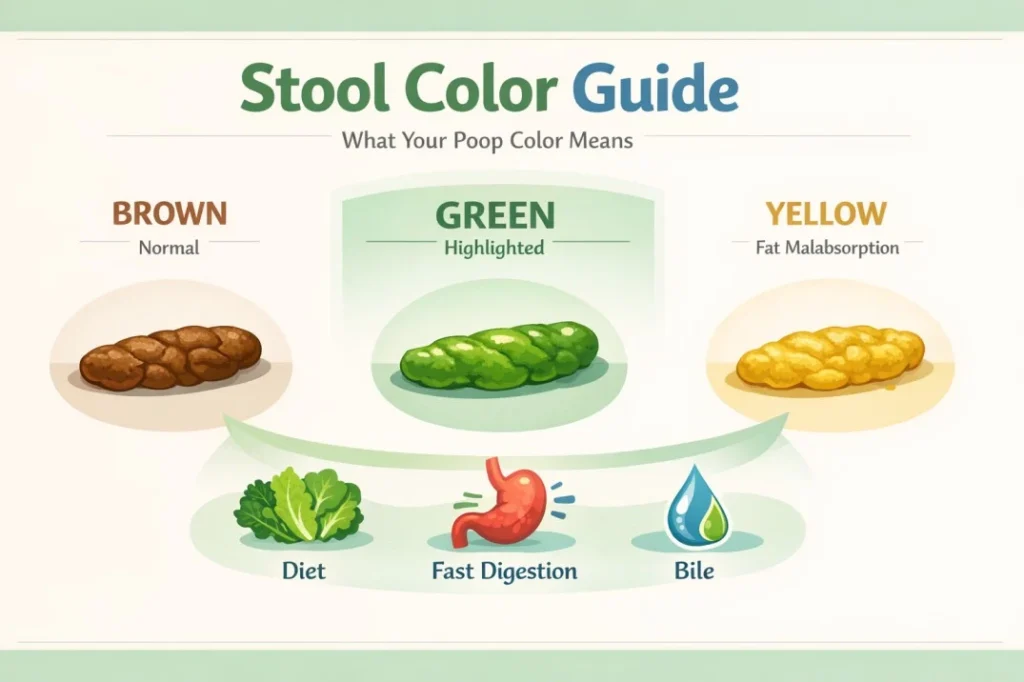
Green poop usually means that food is moving through your digestive system too quickly or that you have eaten green-colored foods or foods with chlorophyll. It can also be caused by bile not breaking down completely or by changes in gut bacteria or medication. In most cases, it is not dangerous and goes away on its own.
Example:
If you eat spinach or take iron supplements and notice green stool afterward, it is usually a normal reaction.
Seeing green poop can be surprising and even a little alarming. Most people are used to brown stool, so when the color suddenly changes, it naturally raises questions like “Is this normal?” or “Should I be worried?”
The good news is that in many cases, green poop is harmless and temporary. It is often linked to something you ate, how quickly food moved through your digestive system, or even minor changes in gut bacteria. However, there are also situations where green stool can signal something worth paying attention to.
Understanding what green poop means can help you decide whether it’s just a normal body reaction or something that needs medical attention. Let’s break it down in a simple, clear, and human way.
Why Does Poop Normally Look Brown?
Before understanding green stool, it helps to know why poop is usually brown in the first place.
The brown color comes from a substance called bile, which is produced by your liver. Bile starts off greenish-yellow and helps digest fats. As it travels through your intestines, it changes chemically and turns brown.
When everything works normally, this process gives stool its typical brown color. But when something interrupts this process, stool color can change. One of those changes is green poop.
Common Causes of Green Poop
There are several reasons why stool might turn green. Most of them are not serious and are related to diet or digestion speed.
1. Eating Green Foods
One of the most common reasons is simply what you eat. Foods that are rich in green pigments like chlorophyll can change stool color.
Examples include:
- Spinach
- Kale
- Broccoli
- Green lettuce
- Seaweed
- Green smoothies
If you recently ate a lot of these foods, your body may not fully break down the green pigment, which can show up in your stool.
2. Food Coloring
Artificial food dyes can also change stool color. Bright green, blue, or purple dyes used in candies, drinks, or processed foods may pass through your digestive system and appear in your poop.
Common sources include:
- Sports drinks
- Candy
- Frosting
- Ice cream
- Packaged snacks
If you notice green stool after eating processed food, this is likely the cause.
3. Fast Digestion
Sometimes food moves too quickly through your intestines. When this happens, bile does not have enough time to fully break down and turn brown.
Instead, it stays green.
This can happen due to:
- Diarrhea
- Stress
- Anxiety
- Food intolerance
- Stomach infection
When digestion speeds up, stool often becomes loose and greenish.
4. Bile Issues
Bile is naturally greenish-yellow. If it does not break down properly during digestion, it can cause green stool.
This is more noticeable when stool moves quickly through the intestines.
5. Supplements and Medications
Certain supplements and medicines can affect stool color.
Common ones include:
- Iron supplements
- Antibiotics
- Some multivitamins
These can change gut bacteria or interact with digestion, leading to green poop.
6. Gut Bacteria Changes
Your gut contains billions of bacteria that help digest food. When this balance changes, stool color can also change.
This can happen after:
- Taking antibiotics
- Eating a sudden change in diet
- Recovering from illness
What Green Poop Looks Like
Green stool can vary in appearance depending on the cause.
| Type of Green Stool | Possible Cause | Description |
|---|---|---|
| Bright green | Food coloring or leafy greens | Often harmless |
| Dark green | Fast digestion or bile | May be linked to diarrhea |
| Greenish brown | Mild digestive change | Usually normal |
| Loose green stool | Infection or fast transit | May need attention |
The shade and texture can help you understand what is happening inside your body.
When Green Poop Is Normal
In most cases, green stool is not a cause for concern. It is usually temporary and linked to diet or minor digestive changes.
It is considered normal if:
- It happens once or twice
- You recently ate green vegetables
- You had a colorful drink or food
- You feel otherwise healthy
Your body often returns to normal within a day or two.
When Green Poop Might Be a Concern
While green stool is usually harmless, there are times when it could signal an underlying issue.
You should pay attention if you notice:
- Persistent green diarrhea
- Severe stomach pain
- Fever
- Blood in stool
- Long-lasting changes in bowel habits
- Signs of dehydration
These symptoms may indicate an infection or digestive condition that needs medical attention.
Green Poop in Babies
Green stool is very common in babies and infants. Their digestive systems are still developing, which makes stool color changes normal.
Possible causes in babies include:
- Formula changes
- Breastfeeding diet changes
- Teething
- Mild infections
In most cases, green poop in babies is harmless unless it comes with other symptoms like fever or irritability.
Green Poop During Pregnancy
Pregnant people may also experience green stool due to:
- Prenatal vitamins (especially iron)
- Dietary changes
- Hormonal shifts affecting digestion
It is usually normal, but persistent changes should be discussed with a healthcare provider.
How Diet Affects Stool Color
Food has a direct impact on digestion and stool color.
Here’s a simple breakdown:
| Food Type | Possible Stool Color |
|---|---|
| Spinach and greens | Green |
| Beets | Red or pink |
| Carrots | Orange |
| Blueberries | Dark or blackish |
| Dairy | Pale or yellow |
This shows how sensitive your digestive system is to what you eat.
How Long Does Green Poop Last?
In most cases, green stool lasts only a short time.
- Diet-related: 1 to 2 days
- Digestive speed changes: 1 to 3 days
- Medication-related: as long as medication continues
- Infection-related: until treated or resolved
If it lasts longer than a week without an obvious cause, it is worth checking with a doctor.
Simple Ways to Normalize Stool Color
If green stool is caused by diet or digestion, these steps can help:
- Drink plenty of water
- Eat balanced meals
- Reduce processed foods
- Avoid excessive food coloring
- Include fiber in your diet
- Allow time for digestion to stabilize
Often, the body corrects itself naturally without any treatment.
Common Myths About Green Poop
There are many misunderstandings about stool color. Let’s clear up a few myths.
Myth 1: Green poop always means illness
Not true. Most cases are harmless.
Myth 2: It means liver disease
Rarely. Liver issues usually come with other serious symptoms.
Myth 3: It is always food-related
Not always, but food is the most common cause.
FAQs
What does green poop mean?
It usually means food is moving quickly through your digestive system or you have eaten green-colored foods.
Is green poop dangerous?
Most of the time, no. It is harmless and temporary.
Can stress cause green stool?
Yes. Stress can speed up digestion, leading to green poop.
Does green poop mean infection?
Sometimes, especially if it comes with diarrhea or fever.
How long does green poop last?
Usually one to three days depending on the cause.
Can vitamins cause green poop?
Yes, especially iron supplements and multivitamins.
Should I see a doctor for green stool?
Only if it lasts long or comes with other symptoms like pain or fever.
Is green poop normal in babies?
Yes, it is common and usually not a concern unless other symptoms appear.
Conclusion
Green poop may look unusual, but in most cases it is simply a harmless sign of what is happening inside your digestive system. It is often linked to diet, fast digestion, or natural changes in bile.
While it can sometimes be connected to illness, most people experience green stool temporarily and without any serious cause. The key is to observe your body, look at other symptoms, and understand what you recently ate or experienced.
In simple terms, green poop is usually your body’s normal reaction to food or digestion speed, not something to panic about.
If it appears occasionally and goes away quickly, it is typically nothing to worry about.
Read More Related Articles:
- What Does Ibid Mean in Footnotes? Usage and Examples In 2026
- What Does Nada Mean in Spanish? Usage and Examples In 2026
- What Does Spread Mean in Basketball? Betting Basics In 2026

Ivy Madison is a content creator at TextSprout.com, specializing in word definitions, internet slang, acronyms, and text abbreviations. She delivers clear and engaging explanations, helping readers quickly understand modern digital language and trending terms.