
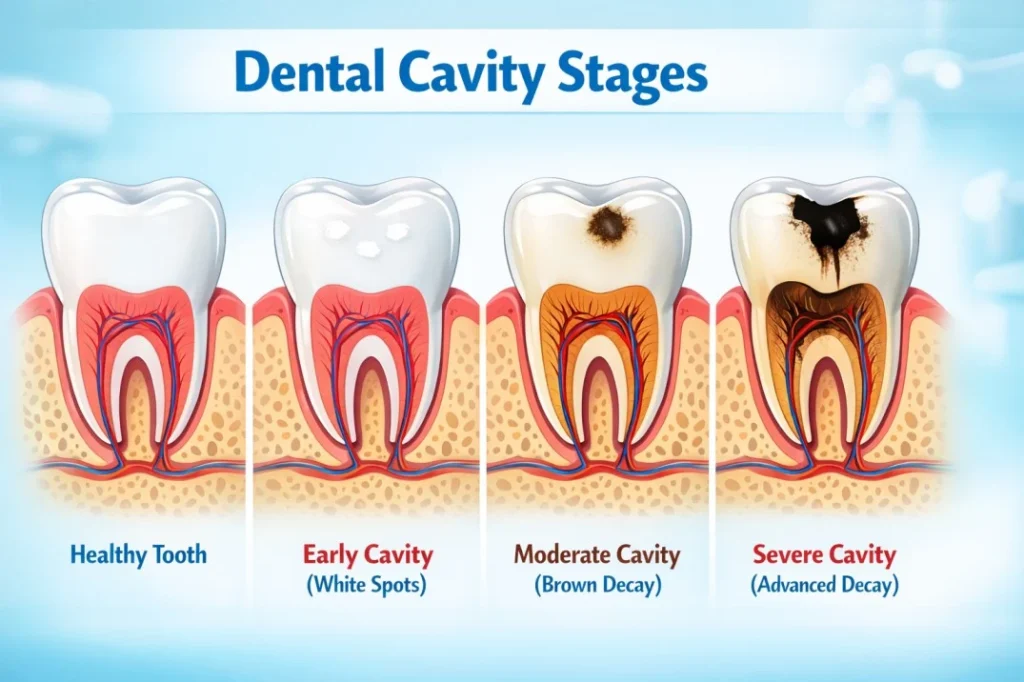
A cavity looks like a hole, dark spot, or damaged area in a tooth caused by tooth decay.
In the early stages, it may appear as a small white or brown stain. As it progresses, it can turn into a visible hole, dark pit, or even a broken section of the tooth.
A cavity is not always easy to see in its early stage, but over time it becomes more noticeable and can cause pain, sensitivity, and visible damage.
If you have ever looked in the mirror and wondered what a cavity actually looks like, you are not alone. Many people associate cavities with pain, but the visual signs often appear long before discomfort begins.
A cavity is one of the most common dental problems worldwide. It develops slowly, starting with tiny changes in the enamel and eventually forming visible damage on the tooth surface. Understanding what a cavity looks like at different stages can help you identify early warning signs and seek treatment before the problem worsens.
Cavities do not appear overnight. They develop gradually due to bacteria, sugar, and poor oral hygiene. This means their appearance also changes over time, starting from almost invisible marks to clearly visible holes in the tooth.
In this guide, we will break down exactly what a cavity looks like, how it changes over time, and what signs you should watch for in your teeth.
What Is a Cavity?
A cavity is a damaged area in a tooth caused by tooth decay. It happens when bacteria in the mouth produce acids that slowly wear away the tooth’s hard outer layer, called enamel.
Once enamel is damaged, the decay can spread deeper into the tooth, affecting dentin and even the inner pulp.
Cavities are also called:
- Tooth decay
- Dental caries
- Decayed teeth
They are extremely common and can affect both children and adults.
What Does a Cavity Look Like in Early Stages?
In the beginning, a cavity is often not a hole at all. Instead, it appears as a subtle change in color or texture.
Early visual signs include:
- Small white spots on the tooth surface
- Chalky or dull areas
- Slight discoloration
- Rough texture when you run your tongue over the tooth
At this stage, the damage is still in the enamel and may be reversible with proper dental care.
Many people miss this stage because it does not look severe. However, this is the most important stage for prevention.
What Does a Developing Cavity Look Like?
As decay continues, the cavity becomes more visible.
Common signs include:
- Light brown or dark yellow spots
- Noticeable discoloration
- Slight indentations in the tooth
- Surface roughness becoming more obvious
At this stage, the enamel is weakening, and the damage is spreading deeper. You may not feel pain yet, but the cavity is progressing.
What Does a Full Cavity Look Like?
When a cavity is fully developed, it becomes much easier to see.
Visual appearance includes:
- A visible hole in the tooth
- Dark brown or black spots
- Cracked or chipped areas
- Sunken pits on the tooth surface
- Areas where enamel appears missing
This stage often comes with sensitivity or pain, especially when eating sweet, hot, or cold foods.
The hole may grow larger over time if not treated.
What Does a Severe Cavity Look Like?
In advanced cases, cavities can cause serious damage to the tooth structure.
Severe cavity signs:
- Large black or dark brown holes
- Broken or fractured teeth
- Missing sections of the tooth
- Gum swelling near the affected area
- Visible decay reaching deep into the tooth
At this stage, the tooth may be very painful or even infected. Dental treatment is necessary to prevent further complications.
Table: Stages of Cavities and Their Appearance
| Stage | Appearance | Symptoms |
|---|---|---|
| Early stage | White spots or dull areas | Usually no pain |
| Moderate stage | Brown or yellow discoloration | Mild sensitivity |
| Advanced stage | Dark spots or small holes | Pain when eating or drinking |
| Severe stage | Large holes or broken tooth | Strong pain, possible infection |
Where Cavities Usually Appear
Cavities can form anywhere in the mouth, but they are more common in certain areas:
- Between teeth where food gets trapped
- Chewing surfaces of molars
- Near the gum line
- Around old fillings or dental work
These areas are harder to clean properly, allowing bacteria to grow and cause decay.
What Causes a Cavity to Look Worse Over Time
A cavity worsens when decay continues unchecked. Several factors contribute to this progression:
- Frequent consumption of sugary foods and drinks
- Poor brushing and flossing habits
- Bacteria buildup in the mouth
- Lack of fluoride protection
- Delayed dental visits
As the decay spreads deeper, the cavity becomes darker, larger, and more visible.
Difference Between a Stain and a Cavity
Many people confuse stains with cavities.
| Feature | Stain | Cavity |
|---|---|---|
| Appearance | Flat discoloration | Hole or damaged area |
| Color | Yellow, brown, or gray | Dark brown or black |
| Texture | Smooth surface | Rough or uneven |
| Pain | No pain | May cause sensitivity or pain |
A stain is only a surface issue, while a cavity involves actual tooth damage.
Can You See a Cavity in the Mirror?
Yes, but only in certain stages.
- Early cavities are usually not visible
- Moderate cavities may appear as discoloration
- Advanced cavities are clearly visible as holes or dark spots
However, some cavities develop between teeth or under the gum line, making them hard to see without dental X rays.
What Does a Cavity Feel Like?
Although this article focuses on appearance, cavities often come with sensations such as:
- Sensitivity to cold or hot food
- Pain when chewing
- Sharp discomfort when eating sweets
- A rough feeling on the tooth surface
- Occasional throbbing pain in advanced cases
Sometimes, a cavity may look small but feel painful due to nerve exposure.
Table: Visual vs Sensory Signs of Cavities
| Type | What You See | What You Feel |
|---|---|---|
| Early cavity | White spots | No pain |
| Moderate cavity | Brown discoloration | Mild sensitivity |
| Advanced cavity | Visible hole | Pain when eating |
| Severe cavity | Broken tooth | Constant pain or infection |
How Cavities Change Over Time
Cavities do not stay the same. They evolve gradually:
- Starts as a white spot
- Becomes a light brown stain
- Turns into a dark spot
- Forms a small hole
- Expands into a large cavity
- May cause tooth fracture or infection
Without treatment, this process continues until the tooth becomes severely damaged.
Why Early Cavities Are Hard to Notice
Early cavities are often invisible because:
- They begin under the enamel surface
- They are very small
- They do not cause pain yet
- They blend with natural tooth color
This is why regular dental checkups are important.
What Dentists See in a Cavity
Dentists can detect cavities earlier than patients can see them.
They may notice:
- Soft spots on enamel
- Hidden decay between teeth
- Dark areas on X rays
- Weak or thinning enamel
Dental tools can reveal cavities long before they become visible holes.
Can a Cavity Look Different in Children?
Yes, cavities in children may appear slightly different:
- More visible discoloration on baby teeth
- Faster progression due to softer enamel
- White or brown spots near gums
- Rapid development of holes if untreated
Children’s cavities often progress faster than adults.
When a Cavity Becomes Dangerous
A cavity becomes serious when it reaches the inner part of the tooth.
Warning signs include:
- Large visible holes
- Swelling near the tooth
- Severe pain
- Pus or infection
- Difficulty chewing
At this stage, treatment is urgent to avoid tooth loss.
Can Cavities Heal on Their Own?
Early enamel damage may be repaired with good oral hygiene and fluoride, but:
- Holes in teeth do not heal naturally
- Advanced cavities require dental treatment
- Ignoring a cavity allows it to worsen
Prevention Tips
To avoid cavities, follow these habits:
- Brush teeth twice daily
- Use fluoride toothpaste
- Floss regularly
- Reduce sugary snacks
- Drink plenty of water
- Visit the dentist regularly
Prevention is always easier than treatment.
FAQs:
1. What does the first stage of a cavity look like?
A white or chalky spot may appear on the tooth.
2. Can you see a cavity with your eyes?
Yes, but only when it becomes more advanced.
3. What does a serious cavity look like?
It may look like a dark hole or deep pit in the tooth.
4. Do cavities always hurt?
No, early cavities usually do not cause pain.
5. What color is a cavity?
It can be white, yellow, brown, or black as it worsens.
6. Can a cavity look like a stain?
Yes, early cavities can look similar to stains.
7. How fast does a cavity grow?
It can take months or even years, depending on care and diet.
8. Can a cavity go away on its own?
No, once a hole forms, it needs dental treatment.
Conclusion
A cavity starts as a small, almost invisible change in the tooth and can progress into a clearly visible hole or dark damaged area. In early stages, it may look like a white or brown spot, while in later stages it becomes a deep pit or broken section of the tooth.
Understanding what a cavity looks like helps you identify problems early and take action before pain or serious damage occurs. Good oral hygiene and regular dental visits are key to preventing cavities and keeping teeth healthy.
By recognizing the visual signs early, you can protect your smile and avoid more complex dental treatments in the future.
Read More Related Articles:
- MMCHT in Texts: Meaning, Tone, and How to Use It in 2026
- What Does Te Amo Mean in English? Here’s the Truth (2026)
- SG in Text: The Meaning Changes More Than You Think (2026)

Neon Samuel is a digital content creator at TextSprout.com, dedicated to decoding modern words, slang, and expressions. His writing helps readers quickly grasp meanings and understand how terms are used in real conversations across text and social platforms.