
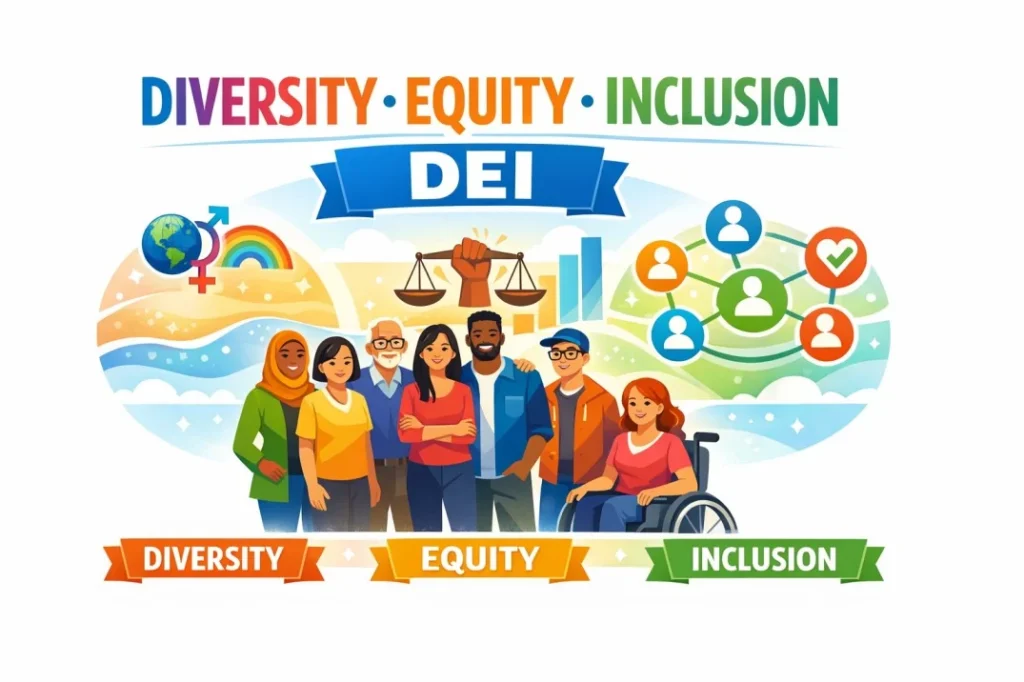
DEI stands for Diversity, Equity, and Inclusion.
It is a framework used by organizations, schools, and communities to promote fair treatment, equal opportunities, and a respectful environment for people of all backgrounds.
In simple terms, DEI focuses on valuing differences, ensuring fairness, and creating spaces where everyone feels welcomed and included.
In recent years, the term DEI has become widely used in workplaces, education systems, and public conversations. You might see it in job descriptions, company policies, or social initiatives. But many people still ask a basic question: what does DEI actually mean?
DEI is more than just a buzzword. It represents a shift in how organizations think about people, culture, and fairness. Instead of treating everyone the same without considering their unique challenges, DEI encourages a deeper understanding of differences and works toward creating equal access and opportunity for all.
Whether you are a student, employee, business owner, or simply curious, understanding DEI helps you better navigate modern conversations about equality, representation, and belonging. It also gives you practical insight into how organizations build stronger, more inclusive environments.
What Does DEI Stand For?
DEI stands for three key ideas that work together.
Diversity
Diversity refers to the presence of differences within a group. These differences can include:
- Race and ethnicity
- Gender and gender identity
- Age
- Religion
- Cultural background
- Disability status
- Socioeconomic background
A diverse environment includes people from a wide range of experiences and perspectives.
Equity
Equity focuses on fairness. It recognizes that people do not all start from the same place and may need different levels of support to succeed.
Equity is not the same as equality. Equality gives everyone the same resources. Equity provides individuals with what they need to reach the same outcome.
Inclusion
Inclusion is about creating an environment where everyone feels respected, valued, and able to participate fully.
It ensures that diverse individuals are not just present but are also heard, supported, and empowered.
Quick Breakdown Table
| Term | Meaning | Focus |
|---|---|---|
| Diversity | Differences among people | Representation |
| Equity | Fair access and opportunity | Fairness |
| Inclusion | Sense of belonging | Participation |
The Origin and Growth of DEI
The ideas behind DEI have existed for decades, but the term itself gained popularity in the late 20th and early 21st centuries.
Historically, movements for civil rights, gender equality, and disability rights laid the foundation for DEI. Over time, organizations realized that simply avoiding discrimination was not enough. They needed proactive strategies to create fair and inclusive environments.
In the corporate world, DEI became more prominent as businesses recognized that diverse teams often perform better. In education, DEI initiatives aim to ensure that students from all backgrounds have equal access to opportunities.
Today, DEI is a global concept, shaping policies in workplaces, schools, and governments.
Why DEI Matters
DEI plays a crucial role in building stronger and more effective communities and organizations.
Better Decision Making
Teams with diverse perspectives often make better decisions because they consider a wider range of ideas and experiences.
Increased Innovation
Different viewpoints lead to creative solutions and innovation.
Improved Employee Satisfaction
Inclusive workplaces tend to have higher morale and lower turnover because people feel valued and respected.
Fair Opportunities
Equity ensures that individuals have the support they need to succeed, reducing systemic barriers.
Real World Examples of DEI
Understanding DEI becomes easier when you look at how it works in everyday situations.
Workplace Example
A company hires employees from different cultural backgrounds. It also offers mentorship programs for underrepresented groups and ensures that all voices are heard in meetings.
Education Example
A school provides additional resources to students who need extra support, ensuring that everyone has a fair chance to succeed.
Community Example
A local organization hosts events that celebrate different cultures and creates spaces where everyone feels welcome.
Example Table of DEI in Action
| Setting | Diversity | Equity | Inclusion |
|---|---|---|---|
| Workplace | Hiring people from different backgrounds | Offering equal pay and support programs | Encouraging open dialogue |
| School | Students from diverse communities | Extra help for struggling students | Inclusive classrooms |
| Community | Multicultural events | Access to services for all groups | Welcoming environment |
DEI vs Similar Terms
It is often compared with other related concepts.
DEI vs Equality
Equality means giving everyone the same resources.
Equity means giving people what they need based on their circumstances.
DEI vs Belonging
Belonging is sometimes added to DEI as an extra concept. It focuses on how comfortable people feel in a group.
DEI vs Diversity Only
Some organizations focus only on diversity, but without equity and inclusion, diversity alone is not enough.
Common Misunderstandings About DEI
Many people misunderstand what DEI really means.
- Some think DEI lowers standards. In reality, it aims to create fair opportunities while maintaining quality.
- Others believe DEI only benefits certain groups. In fact, it benefits everyone by creating a fair and respectful environment.
- Some assume DEI is only about hiring. It actually covers workplace culture, policies, and long-term support.
Tone and Usage in Communication
DEI is usually used in a professional and respectful tone.
Professional Example
“Our organization is committed to strengthening its DEI initiatives.”
Friendly Example
“We want everyone to feel included and supported here.”
Informational Example
“DEI stands for diversity, equity, and inclusion, focusing on fairness and belonging.”
Alternate Meanings of DEI
Although DEI most commonly stands for diversity, equity, and inclusion, it can have other meanings depending on context.
- In Italian, “dei” can mean “of the gods”
- In business, it may appear as an abbreviation for internal programs or departments
However, in modern global conversations, DEI is primarily associated with diversity, equity, and inclusion.
Practical Tips for Applying DEI
If you want to apply DEI principles in real life, consider these simple steps:
- Listen to different perspectives with an open mind
- Treat people with fairness and respect
- Be aware of unconscious bias
- Support equal opportunities for others
- Create inclusive spaces where everyone feels welcome
Even small actions can contribute to a more inclusive environment.
Example Sentences Using DEI
| Sentence | Context |
|---|---|
| The company is improving its DEI strategy | Workplace discussion |
| DEI initiatives help create fair opportunities | General explanation |
| Schools are focusing more on DEI programs | Education context |
| Strong DEI practices improve team performance | Business setting |
FAQs
What does DEI stand for?
DEI stands for diversity, equity, and inclusion, focusing on fairness, representation, and belonging.
Why is DEI important?
DEI helps create fair opportunities, improves teamwork, and ensures that everyone feels valued and respected.
What is the difference between equity and equality?
Equality gives everyone the same resources, while equity provides individuals with what they need to succeed.
How is DEI used in the workplace?
Companies use DEI to create inclusive hiring practices, fair policies, and supportive work environments.
Does DEI only apply to businesses?
No. DEI is also important in schools, communities, and governments.
What is an example of inclusion?
Encouraging everyone to share their ideas and making sure all voices are heard is an example of inclusion.
Can DEI improve performance?
Yes. Diverse and inclusive teams often perform better and make stronger decisions.
Is DEI a global concept?
Yes. DEI is recognized worldwide and applied in many different sectors.
Conclusion
DEI, which stands for diversity, equity, and inclusion, represents a powerful approach to building fair and inclusive environments. It goes beyond simple representation by focusing on fairness and meaningful participation.
By understanding and applying DEI principles, individuals and organizations can create spaces where everyone has the opportunity to succeed and feel valued. Whether in workplaces, schools, or communities, DEI plays a key role in shaping a more inclusive and equitable future.
Read More Related Articles:
- What Does Patent Mean in Medical Terms? Clinical Significance In 2026
- What Does Pick 6 Mean in Football? From Interception to Touchdown In 2026
- What Does SRS Mean in a Car: Why This Safety Feature Matters In 2026

Neon Samuel is a digital content creator at TextSprout.com, dedicated to decoding modern words, slang, and expressions. His writing helps readers quickly grasp meanings and understand how terms are used in real conversations across text and social platforms.