
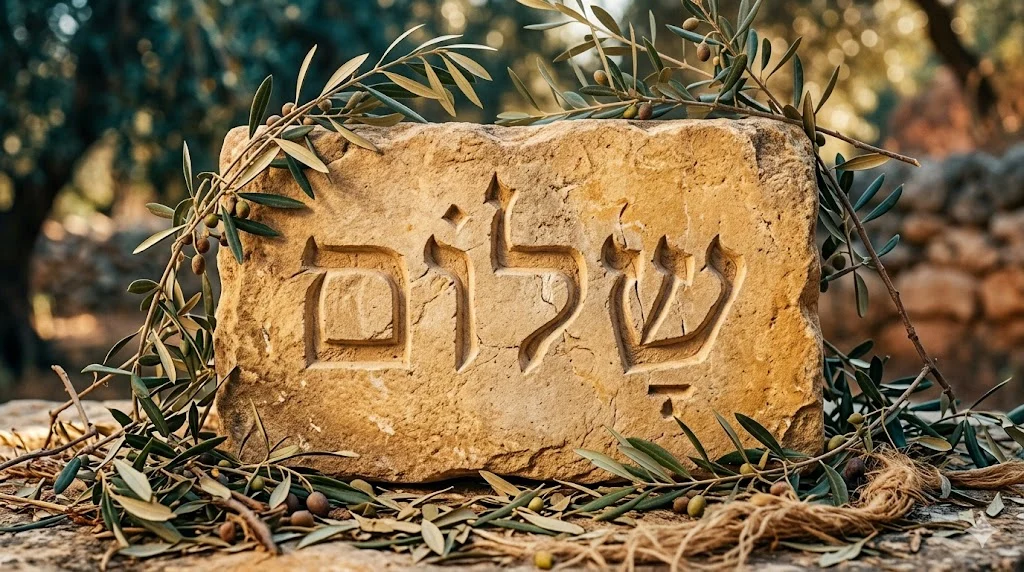
You’ve heard it before. Maybe in a film, a synagogue, or from a Jewish friend who smiled and said it as they left the room. Six letters. One syllable short of two. And somehow impossibly it means hello, goodbye, peace, wholeness, and a blessing all wrapped into one.
That’s shalom (שָׁלוֹם). And once you understand what it actually means, you’ll never hear it the same way again.
This isn’t a simple vocabulary lesson. Shalom is a worldview. It’s one of the most theologically loaded, culturally rich, and linguistically fascinating words in any language on earth. Let’s unpack all of it.
What Does Shalom Mean? The Simple Answer First
Before going deep, here’s the direct answer most people are searching for.
Shalom is a Hebrew word that means:
- Peace
- Wholeness
- Completeness
- Harmony
- Well-being
- Safety
- Prosperity
All at once. Simultaneously. Not one of these meanings replaces the others they all coexist inside a single word.
That’s already different from how English works. In English, “peace” typically means one thing: the absence of conflict. Shalom means something far more active, far more alive than that. It describes a state where everything is functioning exactly as it should relationally, physically, spiritually, economically.
Think of the difference between “not sick” and “genuinely, deeply thriving.” That’s roughly the gap between English “peace” and Hebrew shalom.
Pronunciation: shah-LOME (the final syllable carries the stress)
In Hebrew script: שָׁלוֹם
The Meaning of Shalom in English: Why Translation Falls Short
| English Word | What It Captures | What It Misses |
|---|---|---|
| Peace | Absence of conflict | Wholeness, prosperity, flourishing |
| Harmony | Relational balance | Physical well-being, divine blessing |
| Wholeness | Completeness of self | Social and communal dimension |
| Well-being | Health and flourishing | Spiritual, covenantal dimension |
| Prosperity | Material flourishing | Spiritual peace, relational wholeness |
No single English word does the job. Linguists call this a translation equivalence problem some words carry so much cultural and semantic weight that translating them flattens their meaning. Shalom is a textbook example.
When translators render shalom as simply “peace” in English Bibles and texts, something real gets lost. The word on the page looks simple. The word in Hebrew is anything but.
Shalom Etymology: Where Does the Word Come From?
Every Hebrew word traces back to a three-letter root. This is how the Hebrew language works all related meanings radiate outward from three core consonants like spokes from a wheel.
Shalom’s root is Sh-L-M (שׁ-ל-מ).
That root carries the core idea of completeness, making whole, restoration, and restitution. When something is sha-LEM in Hebrew, it’s complete nothing missing, nothing broken, nothing out of place.
Here’s what’s remarkable: dozens of Hebrew words grow from this same root.
- Shalem (שָׁלֵם) complete, whole, intact
- Shillem (שִׁלֵּם) to repay, to make restitution
- Shalmah a garment (something that makes a person complete/covered)
- Shlomo (שְׁלֹמֹה) Solomon, meaning “man of peace” or “his peace”
- Yerushalayim (יְרוּשָׁלַיִם) Jerusalem, which many scholars connect to the root, linking it to “city of wholeness” or “foundation of peace”
This root is ancient. It predates the Hebrew language as we know it it’s a Semitic root shared across the language family.
Shalom and Arabic Salaam: Cousins in Meaning
Arabic سَلَام (salaam) comes from the exact same Semitic root: s-l-m. The sounds shifted slightly as the languages diverged over millennia, but the meaning remained parallel.
When a Muslim says salaam alaikum (“peace be upon you”), they’re drawing from the same ancient linguistic well as a Jew saying shalom aleichem. Same root. Same ancient wish for wholeness and well-being. Two faiths, one origin.
Aramaic the language Jesus likely spoke in daily life has shlama (ܫܠܡܐ), again from the same root. This cross-linguistic family reveals something profound: the ancient Near Eastern world was deeply preoccupied with the concept of wholeness, harmony, and peace. It wasn’t peripheral it was foundational.
Biblical Meaning of Shalom: What Scripture Actually Says
Shalom appears 237 times in the Hebrew Bible. That’s not a footnote word. That’s a cornerstone of biblical thought.
And it doesn’t mean just one thing across those 237 occurrences. It shifts and expands depending on context which is exactly what a word of this depth should do.
Shalom as Physical Well-Being
In Genesis 29:6, when Jacob arrives at a well and asks about Laban, the question literally is: “Is there shalom to him?” meaning, is he well? Is he healthy? Is everything okay?
Shalom here is physical. Earthy. Practical. It’s not mystical or theological it’s asking whether someone is alive and doing fine. This matters because it grounds shalom in the real, embodied world. It’s not just a spiritual concept floating above daily life.
Shalom as Relational Harmony and Covenant
Numbers 25:12 records God granting Phinehas a brit shalom a “covenant of peace.” This is shalom operating in the space of relationship, of formal commitment between parties.
Throughout the Hebrew Bible, shalom describes the state of right relationship between:
- Nations when wars end and diplomacy holds
- Individuals when conflicts are resolved and trust restored
- God and humanity when the covenant is honored and the relationship intact
Shalom isn’t just inner calm. It’s the condition of relationships functioning as they should.
Shalom as Communal and Social Flourishing
Jeremiah 29:7 is one of the most quoted uses of shalom outside of religious settings and for good reason. God tells the Israelites in exile: “Seek the shalom of the city where I have sent you into exile, and pray to the LORD on its behalf, for in its shalom you will find your shalom.”
This verse completely dismantles the idea that shalom is a private, individual experience. You can’t have personal shalom while your community is broken. The well-being of the city and the well-being of the individual are inseparable. Shalom is communal by nature.
Shalom as Divine Blessing
Numbers 6:24–26 contains the Priestly Blessing one of the oldest texts in the Hebrew Bible and one still recited in synagogues worldwide every week. It ends with:
“The LORD lift up His countenance upon you, and give you shalom.”
This is the culmination of the blessing. Not wealth, not fame and not victory. Shalom. God’s gift of completeness, wholeness, and peace is the crown of the priestly benediction.
Shalom as the Opposite of Brokenness
The Hebrew Bible contrasts shalom with words like:
- Ra evil, harm, disaster
- Milchamah war
- Shever brokenness, fracture
Shalom isn’t merely positive it’s the repair of what’s broken. Where there is fracture, shalom restores. Where there is harm, shalom heals. It’s an active, restorative force not just an absence of the bad, but the presence of everything good.
Isaiah 9:6 calls the coming Messiah Sar Shalom the Prince of Peace. That title doesn’t mean “the one who stops wars.” It means the one who restores all things to wholeness.
Shalom in Judaism: Religious and Cultural Significance
In Jewish tradition, shalom isn’t just a word it’s one of the names of God.
The Talmud (tractate Shabbat 10b) states explicitly: “The name of the Holy Blessed One is Peace.” This means that to utter shalom is, in a sense, to invoke the divine. In practice, this is why observant Jews avoid writing shalom on documents that might be discarded treating it with the same reverence as other divine names.
Shabbat Shalom: The Weekly Blessing
Every Friday evening as the sun sets and Shabbat (the Sabbath) begins, Jews greet one another with Shabbat Shalom “a peaceful Sabbath.”
But knowing what shalom means now, you understand that this isn’t just “have a relaxing weekend.” It’s a blessing for complete rest, wholeness, harmony with family and God, and restoration of the soul. It’s a wish that Shabbat brings everything it’s meant to bring.
Shalom in Jewish Prayer
Shalom saturates the Jewish prayer service:
- The Amidah the central standing prayer concludes with Sim Shalom, a prayer asking God to grant shalom to Israel and all humanity
- Kaddish the memorial prayer ends with oseh shalom bimromav, “He who makes peace in His heavens, may He make peace upon us”
- Priestly Blessing recited by kohanim (priests) in synagogues, ending with the gift of shalom
It isn’t decorative in Jewish prayer. It’s the destination the goal toward which the prayers reach.
Shalom and Tikkun Olam
The Jewish concept of Tikkun Olam “repairing the world” is inseparable from shalom. If shalom is the state of everything being whole and right, then Tikkun Olam is the active work of moving the world toward that state.
This is why shalom, in Jewish ethics, demands justice. A world where some people suffer injustice cannot be a world of shalom. The two are incompatible. The pursuit of shalom is therefore also the pursuit of fairness, dignity, and care for the vulnerable.
Shalom Meaning in Christianity: How the New Testament Uses It
When Jesus rose from the dead and appeared to his frightened disciples, his first word to them recorded three times in John 20 (verses 19, 21, and 26) was shalom: “Peace be with you.”
He wasn’t just telling them to calm down. He was pronouncing a restoration. The broken relationship between God and humanity, the fracture caused by sin and death shalom was being declared over it.
The Greek Bridge
The New Testament was written in Greek, and the Greek word used to translate shalom is eirene (εἰρήνη). But New Testament scholars consistently note that eirene in the NT carries the fuller Hebrew weight of shalom, not just the Greek sense of absence of conflict.
When Paul opens nearly every letter with “grace and peace (eirene/shalom)” he’s not using a casual salutation. He’s invoking the full theological concept wholeness, completeness, right relationship with God.
Shalom Theology in Modern Christianity
Theologian Cornelius Plantinga Jr. offered one of the most quoted definitions of shalom in Christian thought:
“Shalom means universal flourishing, wholeness, and delight a rich state of affairs in which natural needs are satisfied and natural gifts fruitfully employed, all under the arch of God’s love.”
This vision has driven Christian justice movements, peacemaking organizations, and community development work for decades. Shalom isn’t just a personal spiritual experience it’s a description of what the world should look like when God’s intentions are fulfilled.
Shalom as a Greeting: Hello, Goodbye, and Everything Between
Here’s what makes shalom uniquely versatile in daily use: it works in both directions of a conversation.
- Arriving: Say shalom you’re greeting with a wish for peace
- Departing: Say shalom you’re sending someone off with a blessing
No other common English word does this. “Hello” doesn’t work as a goodbye. “Peace” as a farewell sounds dated or counterculture. But shalom flows naturally in both directions because its core meaning a wish for the other person’s wholeness is equally appropriate whenever you encounter someone or part from them.
The Full Greeting: Shalom Aleichem
The expanded form is Shalom Aleichem (שָׁלוֹם עֲלֵיכֶם) “Peace be upon you.” The traditional response is Aleichem Shalom (עֲלֵיכֶם שָׁלוֹם) “And upon you, peace.”
This exchange mirrors the Arabic Salaam alaikum / Wa alaikum salaam almost exactly another reminder of the shared linguistic heritage.
| Hebrew Greeting | Transliteration | Meaning |
|---|---|---|
| שָׁלוֹם | Shalom | Hello / Goodbye / Peace |
| שָׁלוֹם עֲלֵיכֶם | Shalom Aleichem | Peace be upon you |
| עֲלֵיכֶם שָׁלוֹם | Aleichem Shalom | And upon you, peace |
| שַׁבָּת שָׁלוֹם | Shabbat Shalom | A peaceful Sabbath |
| שָׁלוֹם וּבְרָכָה | Shalom Uvracha | Peace and blessing |
Every one of these isn’t just a phrase it’s a blessing. When a Jewish person says Shabbat Shalom to you, they’re not making small talk. They’re genuinely wishing you wholeness.
Shalom vs. Peace: Why the Difference Actually Matters
This distinction is worth slowing down for because it changes how you read a lot of things.
Western “peace” is largely a negative concept it describes the absence of something. No war, no fighting and no conflict. That’s it. The moment the guns go quiet, peace has arrived.
Shalom is a positive concept it describes the presence of something. Flourishing. Right relationships. Justice. Health. Wholeness. Prosperity. Shalom doesn’t arrive just because the fighting stops. Shalom requires that things are actively, genuinely good.
Here’s an analogy that lands it clearly: if a person stops bleeding, you’d say the wound has ceased. But that’s not the same as saying the person is healed. Shalom is the healing not just the stopping of harm.
Philosopher and theologian Walter Brueggemann puts it this way:
“The vision of shalom is the most powerful vision for human community woven through the scriptures. It is the anticipation of completeness and wholeness.”
This has real-world implications that matter deeply:
- Shalom demands justice. You cannot have shalom while people are oppressed. A society with no wars but with deep injustice is not a shalom society.
- Shalom is relational. It can’t be achieved alone, privately. Shalom is about the web of relationships personal, communal, and divine all functioning rightly.
- Shalom is holistic. Spiritual peace without physical health isn’t shalom. Material prosperity without relational harmony isn’t shalom. It requires every dimension of life working together.
Common Phrases and Expressions Using Shalom
Here’s a quick, practical reference for how shalom appears in everyday Hebrew and Jewish life:
- Shabbat Shalom “A peaceful/whole Sabbath” (Friday evening greeting)
- Shalom Aleichem “Peace be upon you” (greeting, also a well-known Jewish song)
- Aleichem Shalom “And upon you, peace” (response)
- Shalom Uvracha “Peace and blessing” (a fuller greeting)
- Lech Leshalom “Go toward peace” (a farewell, said to the living)
- Tzei Leshalom “Go in peace” (a farewell said when someone has died)
- Oseh Shalom “Maker of peace” (God’s title in the Kaddish prayer)
- Brit Shalom “Covenant of peace” (a biblical term)
- Sar Shalom “Prince of Peace” (Messianic title from Isaiah 9:6)
The distinction between Lech Leshalom and Tzei Leshalom is a small but meaningful one in Jewish tradition. The first is said to someone embarking on a journey. The second go in peace is traditionally reserved for the deceased. Rabbi Yochanan in the Talmud explains this distinction, noting the different directional prepositions as theologically significant.
Shalom Across Semitic Languages: A Shared Vision of Wholeness
| Language | Word | Script | Root |
|---|---|---|---|
| Hebrew | Shalom | שָׁלוֹם | Sh-L-M |
| Arabic | Salaam | سَلَام | S-L-M |
| Aramaic | Shlama | ܫܠܡܐ | Sh-L-M |
| Amharic (Ethiopian) | Selam | ሰላም | S-L-M |
What’s remarkable about this table is what it tells us about the ancient world. Across thousands of years and thousands of miles, Semitic-speaking peoples Jews, Arabs, Aramaic speakers, Ethiopians all reached for the same root word to describe their deepest wish for one another.
Peace. Wholeness. Completeness. It wasn’t a niche aspiration. It was the central human longing, encoded in the most common greeting across an entire language family.
Shalom in Modern Hebrew and Contemporary Culture
Modern Israeli Hebrew still uses shalom exactly as it’s always been used as the default everyday greeting and farewell. Walk into a shop in Tel Aviv and the owner says shalom. Leave a meeting in Jerusalem and colleagues say shalom as you exit.
It’s also a popular personal name in Israel. People named Shalom carry the full weight of that meaning they’re literally named “wholeness.”
Shalom has also traveled far beyond its Jewish context in contemporary culture:
- Fashion brands use it as a design motif
- Musicians incorporate it in lyrics across genres
- Interior designers use Hebrew lettering including shalom in home décor
- It appears in interfaith dialogue, conflict resolution programs, and peacebuilding organizations worldwide
The word has proved remarkably portable because the concept it carries is universally human.
Can Non-Jews Use Shalom? A Fair and Honest Answer
Yes with understanding. That’s the key.
When someone uses shalom knowing what it means as a genuine wish for another person’s wholeness and well-being it’s welcomed in interfaith settings, in theological conversations, and in genuine cultural engagement.
What doesn’t work is using it as an aesthetic decoration. Putting שָׁלוֹם on a pillow because it looks nice, without any regard for what it carries that’s where it crosses into something less respectful.
The difference is knowledge and intention. This article exists precisely to give people that knowledge. And with it, shalom becomes something anyone can meaningfully receive and sincerely offer.
Shalom: Quick Reference Summary
| Feature | Detail |
|---|---|
| Language of origin | Biblical and Modern Hebrew |
| Root letters | Sh-L-M (שׁ-ל-מ) |
| Core meanings | Peace, wholeness, completeness, well-being, harmony |
| Used as | Greeting, farewell, blessing, divine name |
| Appearances in Hebrew Bible | 237 times |
| Related words | Salaam (Arabic), Shlama (Aramaic), Solomon (Shlomo) |
| Key biblical text | Numbers 6:24–26 (Priestly Blessing) |
| Divine connection | One of the names of God in Jewish tradition |
| Theological meaning | Flourishing of the whole person and whole community |
| Modern usage | Everyday greeting and farewell in Israeli Hebrew |
FAQs
Is there a difference between shalom in the Old Testament vs. New Testament?
The Hebrew concept carries through into the Greek NT as eirene, but NT scholars agree it retains its fuller Hebrew weight especially in Jesus’s resurrection appearances and Paul’s letters.
What does shalom mean spiritually in meditation and mindfulness contexts?
Many practitioners use shalom as a contemplative word sitting with its full meaning of wholeness, allowing it to orient the mind toward a state of integration rather than tension.
Can shalom be used as a name?
Absolutely. Shalom is a common given name in Israel and Jewish communities worldwide for people. It’s a name that carries an aspirational meaning for the person and those around them.
What is the connection between shalom and healing?
Since shalom encompasses physical well-being, some biblical scholars and theologians connect it directly to healing both physical and emotional. The refuah shleimah (complete healing) blessing in Hebrew uses the same root: shleimah comes from sh-l-m, meaning a wholeness of recovery.
What does shalom mean in the context of Jewish-Arab relations?
Given that both Hebrew shalom and Arabic salaam share the same root, the word itself is sometimes used as a symbol of possible coexistence the shared linguistic heritage as a reminder of a shared human longing.
Conclusion
Here’s what’s striking about shalom: it’s ancient, and it’s urgent.
In a world that defines peace as simply “no shooting,” shalom insists on more. It demands wholeness. Justice. Flourishing. Right relationships. It refuses to settle for the mere absence of harm and pushes toward the active presence of everything good.
That’s a vision with teeth. It’s harder than a ceasefire. It’s more demanding than a treaty. But it’s also more beautiful and more human than any lesser version of peace.
Every time someone says shalom, they’re reaching for that vision. A wish that the person in front of them would be whole. That their life would be complete. That nothing would be missing, nothing broken, nothing out of place.
Six letters. Two syllables. An entire philosophy of human flourishing.
Shalom.
Read More Related Articles:
- LMP Mean in Medical Terms: How Doctors Calculate Due Dates In 2026
- SH Meaning in Text Messages | Why Context Matters In 2026
- Don’t Tread on Me Meaning | Full History and Why It Still Matters Today In 2026

Luna Hartley is a content creator at TextSprout.com, where she specializes in explaining word meanings, modern phrases, and everyday language used in texts and online conversations. Her writing focuses on clarity and context, helping readers understand how words are actually used in real communication.