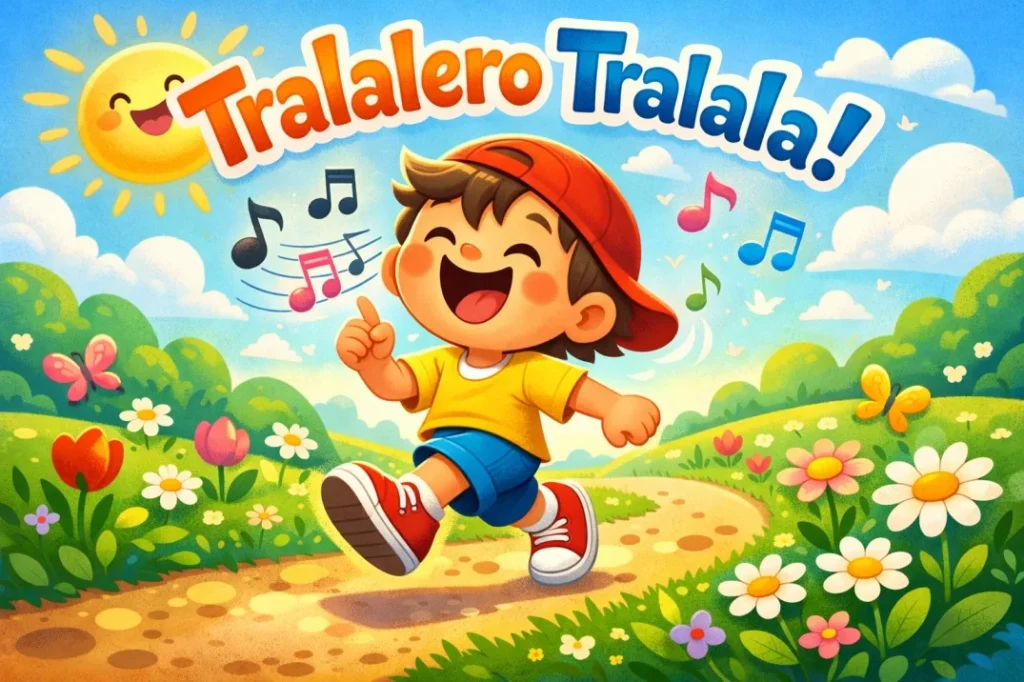
“Tralalero tralala” is a playful, nonsensical phrase used to express lightheartedness, singing, or carefree emotion without any specific literal meaning.
It is often used in music, casual speech, or humorous contexts to mimic the sound of someone singing happily or filling in words with rhythm instead of meaning.
In simple terms, it is like saying “la la la” or “tra la la” when you hum or sing without actual lyrics.
You may have heard someone say “tralalero tralala” in a song, a joke, or even in a playful conversation. At first, it sounds like it must mean something specific. It has a rhythm, a musical quality, and a slightly whimsical tone that makes it feel meaningful. But when you try to translate it, you quickly realize that it does not have a direct definition.
That is because “tralalero tralala” belongs to a special category of language known as nonsense or filler expressions. These are phrases that do not carry a literal meaning but are used to express mood, emotion, or rhythm.
Despite having no strict definition, this phrase has been used across cultures, especially in European languages, in songs, poetry, and casual speech. It often reflects joy, silliness, or a carefree attitude.
Understanding what “tralalero tralala” means is less about translation and more about feeling its tone and context. It is one of those expressions that lives somewhere between language and music.
What Does “Tralalero Tralala” Mean?
At its core, “tralalero tralala” does not have a fixed meaning. It is a sound-based expression rather than a word with a dictionary definition.
People use it to:
• Imitate singing or humming
• Express happiness or a carefree mood
• Add rhythm to speech or storytelling
• Replace actual lyrics in a playful way
It is similar to expressions like:
• “La la la”
• “Na na na”
• “Tra la la”
All of these are used when someone is singing casually or does not want to use real words.
Origin of the Phrase
The phrase “tralalero tralala” likely comes from European musical traditions, especially Italian and Spanish influences.
In Italian, variations like “tralalà” or “tralallero” are commonly used in:
• Folk songs
• Children’s rhymes
• Opera and theatrical performances
These expressions were often used to fill musical gaps or maintain rhythm when lyrics were not necessary. Over time, they became part of everyday language, especially in playful or humorous contexts.
The structure of the phrase itself reflects its musical nature. The repetition of syllables creates a melodic and rhythmic pattern, making it easy to remember and fun to say.
Why People Use “Tralalero Tralala”
Even though it has no literal meaning, the phrase serves several useful purposes in communication.
Expressing Emotion
Sometimes words are not needed to express a feeling. Saying “tralalero tralala” can show that someone is happy, relaxed, or simply enjoying the moment.
Adding Humor
The phrase can make a situation feel lighter. It often appears in jokes or playful storytelling to create a humorous effect.
Filling Silence
Just like humming, it can fill gaps in speech or music when no actual words are required.
Mimicking Singing
People often use it when pretending to sing or when they do not know the lyrics of a song.
Tone and Context
The meaning of “tralalero tralala” depends heavily on how it is used.
Friendly and Playful Tone
“I was walking down the street, tralalero tralala, enjoying the sunshine.”
This usage suggests happiness and a carefree mood.
Silly or Humorous Tone
“He just ignored the problem and went tralalero tralala like nothing happened.”
Here, it can imply someone is being unserious or avoiding responsibility.
Light Dismissive Tone
“Oh, tralalero tralala, everything will work out.”
In this case, it may suggest a slightly careless or overly optimistic attitude.
Examples in Everyday Language
| Example Sentence | Meaning or Tone |
|---|---|
| She was singing tralalero tralala while cooking | Happy and relaxed |
| He walked away like tralalero tralala | Carefree or dismissive |
| Kids were laughing and chanting tralalero tralala | Playful and fun |
| The story ended with tralalero tralala | Lighthearted conclusion |
Comparison With Similar Expressions
“Tralalero tralala” is not the only phrase of its kind. Many languages use similar expressions.
| Expression | Meaning | Usage |
|---|---|---|
| La la la | Singing without words | Very common |
| Na na na | Rhythmic filler in songs | Pop music |
| Tra la la | Classic musical filler | Folk songs |
| Dum de dum | Casual humming sound | Informal speech |
All of these serve the same purpose: expressing sound, rhythm, or emotion rather than literal meaning.
Cultural Significance
Although simple, phrases like “tralalero tralala” have cultural importance. They appear in:
• Children’s songs and nursery rhymes
• Folk music traditions
• Theater and performance art
• Casual storytelling
They show how language is not always about strict meaning. Sometimes it is about sound, rhythm, and emotional expression.
In many cultures, these types of phrases are used to create a sense of joy and playfulness. They remind us that communication can be creative and musical, not just functional.
Psychological and Social Role
Expressions like “tralalero tralala” also play a subtle role in how people communicate emotionally.
They can:
• Reduce tension in conversations
• Make interactions feel more relaxed
• Signal humor or sarcasm
• Help express feelings that are hard to put into words
For example, someone might use the phrase to show they are not taking a situation too seriously.
Alternate Meanings or Interpretations
While the phrase has no official meaning, people sometimes interpret it differently depending on context.
Joyful Expression
Used to show happiness or excitement.
Carefree Attitude
Used to suggest someone is relaxed or unconcerned.
Avoidance or Dismissal
Sometimes used sarcastically to indicate someone is ignoring a problem.
Usage Tips
If you want to use “tralalero tralala” naturally, keep these tips in mind:
• Use it in informal situations
• Avoid using it in professional or serious conversations
• Match your tone with the situation
• Use it sparingly to keep it playful and effective
It works best when you want to sound lighthearted or humorous.
Extended Example Scenarios
| Scenario | How It’s Used |
|---|---|
| Singing casually | “I don’t know the lyrics, so I just go tralalero tralala” |
| Telling a story | “And then he just walked off, tralalero tralala” |
| Joking with friends | “Stop worrying and just go tralalero tralala for a while” |
| Playing with kids | “Let’s sing tralalero tralala together” |
FAQs
What does tralalero tralala mean?
It is a playful, nonsensical phrase used to imitate singing or express a carefree and happy mood.
Is tralalero tralala a real word?
It is not a formal word with a dictionary meaning. It is a sound-based expression used for fun or rhythm.
Where does tralalero tralala come from?
It likely originates from European musical traditions, especially Italian and Spanish folk songs.
Can tralalero tralala be used in serious situations?
It is generally informal and playful, so it is not suitable for serious or professional contexts.
Is it similar to la la la?
Yes, both are used to imitate singing without actual words.
Why do people use phrases like this?
They help express emotion, add humor, and create rhythm in speech or music.
Is tralalero tralala used worldwide?
Variations of similar expressions exist in many languages and cultures.
Does it have a negative meaning?
Not usually, but it can sound dismissive if used sarcastically.
Conclusion
“Tralalero tralala” may not have a literal meaning, but it carries a powerful sense of emotion, rhythm, and playfulness. It shows that language is not always about precise definitions. Sometimes it is about how words sound and how they make us feel.
From its roots in music and folk traditions to its modern use in casual conversation, the phrase continues to bring a sense of lightness and creativity. Whether used to mimic singing, add humor, or express carefree joy, it remains a charming example of how humans use sound to communicate beyond words.
In the end, understanding “tralalero tralala” is not about translating it. It is about hearing the music in the phrase and feeling the mood it creates.
Read More Related Articles:
- What Does ISTG Mean? Used When People Are Fed Up (2026)
- HU Meaning in Text: Simple Guide with Examples You Can’t Miss (2026)
- KK Mean in Texting: Why It Can Sound Passive-Aggressive (2026)

Neon Samuel is a digital content creator at TextSprout.com, dedicated to decoding modern words, slang, and expressions. His writing helps readers quickly grasp meanings and understand how terms are used in real conversations across text and social platforms.