
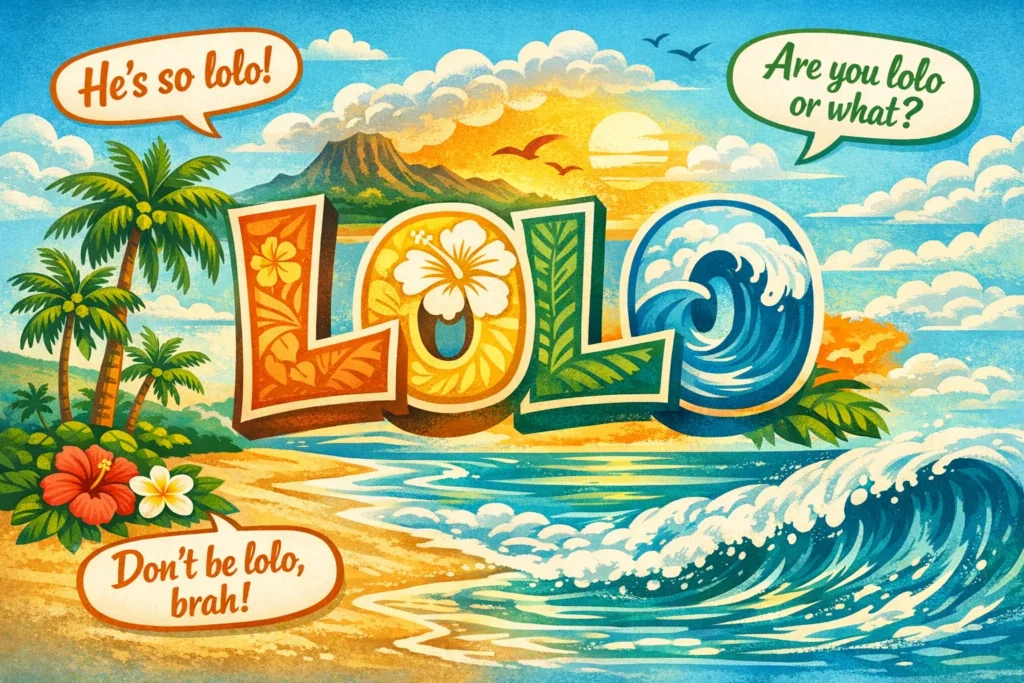
Lolo in Hawaiian is a slang term that generally means “crazy,” “stupid,” or “silly,” depending on context.
It is often used in casual speech among locals and can be either playful or insulting based on tone. In some situations, it can also mean someone is acting foolish or not thinking clearly.
If you’ve heard the word “lolo” while visiting Hawaii, watching Hawaiian content, or chatting with locals, you might have paused and wondered what it actually means. At first, it can sound playful or even confusing, especially because it appears in casual conversation, jokes, and sometimes even friendly teasing.
Like many Hawaiian words, lolo carries meaning depending on tone, context, and situation. Understanding it properly is important because Hawaiian language is deeply tied to culture, respect, and communication style.
In this article, we will break down what lolo means in Hawaiian, how it is used, when it is considered joking or offensive, and how to understand it naturally in conversation.
So, lolo is not a formal Hawaiian word for intelligence or personality, but rather a slang expression used informally in everyday conversation.
The Origin of the Word Lolo
The word lolo originally comes from the Hawaiian language, where it literally refers to the brain or mind. Over time, like many slang terms in languages around the world, it evolved into a more casual and expressive meaning.
In traditional usage, “lolo” is connected to thinking and mental function. However, in modern Hawaiian Pidgin English, it has shifted into slang meaning:
- silly
- foolish
- crazy
- not thinking properly
This evolution shows how language naturally changes in daily communication, especially in multicultural environments like Hawaii.
How Lolo is Used in Everyday Conversation
The meaning of lolo depends heavily on tone. It can sound playful between friends or insulting if used harshly.
Friendly or Playful Usage
When used jokingly among friends, “lolo” is often harmless.
Examples:
- “Eh, you so lolo today!”
- “Stop being lolo, come on!”
- “You doing something lolo again, huh?”
In these cases, it usually means someone is acting silly or funny rather than being seriously insulted.
Neutral Usage
Sometimes it is used simply to describe strange behavior without strong emotion.
Examples:
- “That idea is kind of lolo, but interesting.”
- “He was acting lolo after staying up all night.”
Here, it means confused or not thinking clearly.
Negative or Insulting Usage
If said with anger or frustration, it can become offensive.
Examples:
- “You are lolo!” (can sound insulting depending on tone)
- “Don’t be lolo.” (can feel dismissive or rude)
Tone and relationship between speakers matter a lot.
Example Table of Lolo in Different Contexts
| Situation | Example Sentence | Meaning | Tone |
|---|---|---|---|
| Friends joking | “You so lolo bro!” | Silly or funny behavior | Friendly |
| Casual talk | “That plan is lolo.” | Not smart or strange idea | Neutral |
| Frustration | “Stop being lolo already!” | Acting foolish | Annoyed |
| Insult | “He is lolo.” | Calling someone stupid | Negative |
Lolo in Hawaiian Pidgin English
In Hawaiian Pidgin English, which is a widely spoken local dialect, “lolo” is commonly used in daily speech. It fits into a larger group of expressive slang terms that locals use to communicate quickly and emotionally.
Other similar Pidgin expressions include:
- “broke da mouth” meaning delicious food
- “da kine” meaning a thing or person when you forget the word
- “no worry” meaning don’t stress
Within this system, “lolo” is just one of many colorful expressions that add personality to speech.
Cultural Sensitivity and Respect
Even though “lolo” is common in casual conversation, it is important to understand cultural context. Hawaiian language and Pidgin are deeply tied to identity and community.
Here are some important points:
- Among close friends, it is usually harmless
- With strangers, it can be misunderstood
- In formal situations, it should be avoided
- Tone changes everything
Using it incorrectly or too aggressively may come across as disrespectful.
So while it is a common slang term, it should be used carefully.
Comparison With Similar Slang Words
| Word | Meaning | Similarity to Lolo |
|---|---|---|
| Crazy | mentally wild or silly | very similar |
| Dumb | not smart or foolish | similar but harsher |
| Silly | playful foolishness | softer version |
| Wacky | strange behavior | light similarity |
Compared to English slang, “lolo” sits somewhere between silly and crazy, depending on tone.
Emotional Tone of Lolo
One of the most interesting parts of “lolo” is how flexible it is emotionally.
It can sound:
- playful when joking
- lighthearted when teasing
- irritated when correcting someone
- insulting when used aggressively
This makes it a context-sensitive word, meaning you cannot understand it without hearing how it is spoken.
Real Life Conversation Examples
Example 1
Friend 1: “I tried to cook rice without water.”
Friend 2: “You lolo or what?”
Meaning: joking about a silly mistake
Example 2
“After staying awake all night, he was acting lolo in class.”
Meaning: not thinking clearly due to tiredness
Example 3
“Don’t be lolo, just listen carefully.”
Meaning: slightly annoyed correction
Why Lolo Is Common in Hawaii
Hawaii has a unique linguistic culture where Hawaiian, English, and Pidgin blend together. Words like “lolo” are popular because they are:
- short and easy to say
- expressive and emotional
- flexible in meaning
- part of local identity
This makes them widely used in casual communication across generations.
Should You Use the Word Lolo?
It depends on your familiarity with the culture.
Safe situations
- Talking with close friends who use it
- Casual and joking environments
Avoid using it
- Professional settings
- Conversations with strangers
- When unsure of tone
When in doubt, it is better to use neutral words like “silly” or “confused.”
FAQs
What does lolo mean in Hawaiian slang?
It usually means silly, crazy, or foolish depending on the context and tone of voice.
Is lolo a bad word?
Not always. It can be playful among friends, but it can also sound insulting if used harshly.
Does lolo mean brain in Hawaiian?
Yes, traditionally it refers to the brain or mind, but slang usage has evolved.
Is lolo used in Hawaiian Pidgin?
Yes, it is commonly used in Pidgin English as everyday slang.
Can lolo be a compliment?
Yes, in a joking way it can mean someone is funny or acting silly.
Is lolo offensive?
It can be offensive if used aggressively or toward someone who does not know you well.
Why do Hawaiians say lolo?
It is part of local slang that expresses humor, emotion, and personality in speech.
What is a softer way to say lolo?
You can use words like silly, goofy, or not thinking clearly.
Conclusion
The word lolo in Hawaiian is a flexible slang term that can mean silly, crazy, foolish, or confused depending on how it is used. While it originates from a word meaning “brain,” its modern usage in Hawaiian Pidgin has turned it into a colorful expression used in everyday conversation.
Understanding tone and context is key. Among friends it can be playful and funny, but in other situations it may sound rude or disrespectful.
Like many Hawaiian slang words, “lolo” reflects the rich, expressive, and emotional nature of local communication in Hawaii.
Read More Related Articles:

Ivy Madison is a content creator at TextSprout.com, specializing in word definitions, internet slang, acronyms, and text abbreviations. She delivers clear and engaging explanations, helping readers quickly understand modern digital language and trending terms.