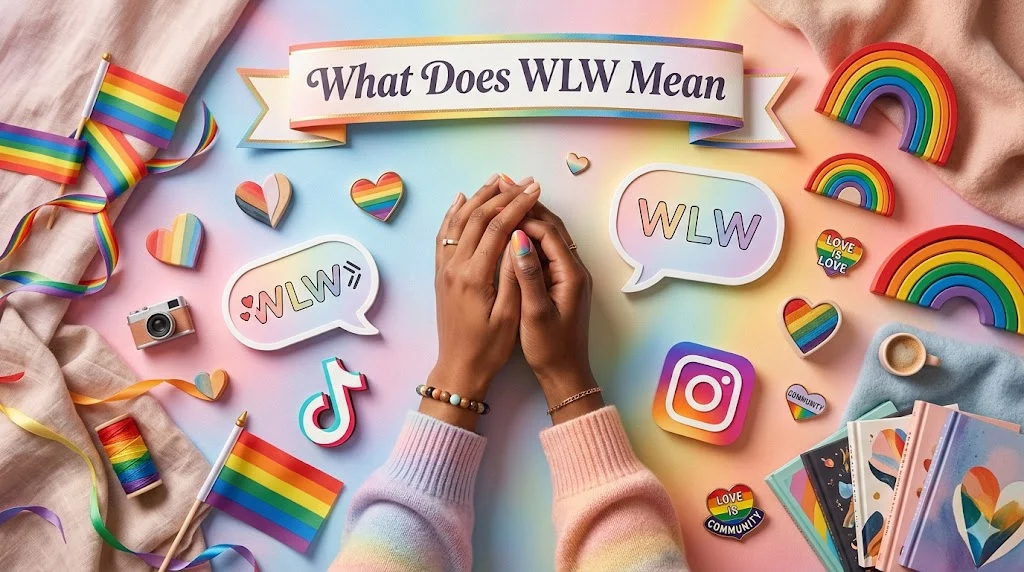
Scrolling through TikTok and suddenly you see the caption “wlw solidarity 🏳️🌈” and your brain just stalls. Or maybe you spotted “wlw 🌸 she/her” tucked into someone’s Instagram bio and didn’t want to ask. You’re not alone. This acronym pops up constantly across social media, group chats, and LGBTQ+ spaces, yet a lot of people queer or not still aren’t totally sure what it means or where it came from.
Here’s the short answer:
WLW stands for Women Loving Women.
But that three-letter acronym carries a lot more weight than those three words suggest. It’s a community marker, a language shortcut, a form of identity expression, and for many people a first step in figuring out who they are. This guide breaks down every layer of the WLW meaning, how it’s used across platforms, why it matters in LGBTQ+ culture, and how it compares to similar terms like sapphic and lesbian.
Let’s get into it.
WLW Meaning: The Full Definition You Actually Need
WLW is an acronym. It stands for Women Loving Women. That’s the full form, plain and simple.
At its core, the term describes any woman who experiences romantic, emotional, or sexual attraction to other women. That includes:
- Lesbians women exclusively attracted to other women
- Bisexual women women attracted to women and other genders
- Pansexual women women attracted to people regardless of gender
- Queer women women who use “queer” as a broad identity umbrella
- Questioning women those still figuring out their orientation
What makes WLW powerful is exactly this breadth. It doesn’t force a specific label. It creates room for everyone who fits under that description, no matter where they fall on the spectrum.
“WLW isn’t a replacement for more specific labels it’s a home base for all of them.”
The term is both a slang abbreviation used casually online and a community identifier used in more intentional, activist-minded contexts. That dual nature is what makes it so versatile.
WLW Full Form and Where It Comes From
The exact origin of the acronym is hard to pin to one moment language like this tends to bubble up organically from community use rather than being invented by any single person.
The phrase “women loving women” itself predates the internet. It appeared in Black feminist and lesbian activist writing during the 1970s and 1980s, particularly in texts discussing the experience of Black queer women. It was used to center women’s attraction to women without relying on clinical or pathologizing language.
As internet forums, Tumblr, Twitter, and then TikTok rose to prominence, the phrase got compressed into its acronym form: WLW. By the mid-2010s, it was firmly embedded in online LGBTQ+ discourse. Today it’s everywhere from casual texts to academic discussions on queer identity.
The WLW acronym meaning hasn’t drifted much from its roots. It still emphasizes love (not just attraction), women (across a range of gender presentations and identities), and community over clinical definition.
What Does WLW Mean in Texting and Everyday Chat?
If someone drops “wlw” in a text or a group chat, they’re using it as a quick, casual identifier usually in reference to themselves, someone else, or a shared experience.
Here’s how it actually looks in everyday digital conversation:
| Context | Example |
|---|---|
| Self-identification | “She’s wlw, so this show hits different for her” |
| Community shoutout | “Happy Pride to all my wlw besties 🏳️🌈” |
| Describing media | “This book has amazing wlw rep” |
| Casual mention | “wlw solidarity forever” |
| Question | “Is this show wlw-friendly?” |
The tone is almost always casual and warm. It’s not clinical, it’s not a slur and it’s the kind of word you’d use with friends or strangers online who share a common identity.
One reason it’s so common in chat is practicality. Saying “women who are attracted to women” every single time is clunky. WLW is a clean shorthand. It also sidesteps the sometimes-charged debate around which label is “correct” lesbian, bi, queer, or otherwise.
WLW Meaning on TikTok: Why It Blew Up There
TikTok is arguably where WLW has its biggest cultural footprint right now.
The hashtag #wlw has accumulated billions of views on the platform. It’s attached to everything from heartfelt coming-out videos to relationship content, comedic skits, fashion, and aesthetic montages. The WLW TikTok niche has its own:
- Creators who build their whole brand around queer women’s experiences
- Aesthetic soft lighting, indie music, flannel, cozy vibes (though this is evolving)
- In-jokes and memes that only make sense if you’re in the community
- Support culture comment sections full of encouragement and solidarity
For a lot of young queer women, WLW TikTok wasn’t just entertainment it was the first place they saw their experience reflected back at them. That matters enormously during self-discovery.
Why does TikTok’s algorithm amplify WLW content? Because engagement is high. People comment, save, share, and duet. The community is active and loyal. And because the word functions as both a hashtag and a keyword, it’s incredibly searchable.
What does WLW mean on TikTok specifically? The same thing it means everywhere Women Loving Women but the platform gives it a particular vibrancy. It’s where the term feels most alive.
WLW in Instagram Bios: What It Signals
Open enough Instagram profiles and you’ll start seeing it in the bio section: “wlw 🌸 she/her” or “wlw | bisexual | lover of books and bad decisions.”
Putting WLW in your Instagram bio is a deliberate act of identity visibility. It tells the people who visit your profile at a glance, before they read a single caption that you’re a woman who loves women.
Why do people choose WLW over more specific labels in their bio?
- It’s inclusive. If you’re bi or pan and don’t want to explain that upfront, WLW does the job.
- It’s low-stakes. It signals identity without requiring a full coming-out declaration.
- It builds connection. Other WLW users recognize it immediately and often follow.
- It’s safe. In some environments, a broad term feels less exposed than a more specific one.
The WLW meaning in Instagram bio contexts also extends to community-building. Many creators use it alongside hashtags like #wlwcreator or #wlwcommunity to find their audience. It’s part identity, part networking strategy.
WLW Meaning on Twitter/X: Fandom, Discourse and Beyond
Twitter (now X) uses WLW in a few overlapping ways.
In fandom spaces, “wlw rep” or “wlw content” refers to representation characters or storylines featuring women in relationships with women. Fans use it to discuss, celebrate, or advocate for queer female characters in shows, films, and books.
In LGBTQ+ discourse, WLW appears in threads about community solidarity, political advocacy, shared experiences, and pushback against erasure (particularly relevant for bisexual and pansexual women who sometimes feel invisible in queer spaces).
In casual use, it functions just like in texting a quick identifier or community marker.
One distinctly Twitter phenomenon: WLW vs. MLM comparisons. MLM Men Loving Men is the parallel acronym, and the two are often mentioned together when discussing queer experiences, representation, or community dynamics.
WLW in the LGBTQ+ Community: The Real Meaning Behind the Acronym
Beyond social media, WLW carries genuine weight in LGBTQ+ culture and community.
Here’s what it actually represents:
1. Umbrella identity without erasure
WLW creates a shared space for women across the orientation spectrum. A lesbian and a bisexual woman might use very different labels but both are WLW. That overlap builds bridges instead of walls.
2. A rejection of clinical language
Terms like “homosexual” or “female same-sex attraction” come from medical and legal frameworks that historically pathologized queer people. WLW sidesteps all of that. It’s community language, not clinical language.
3. A tool for self-discovery
For women who are questioning their orientation, “WLW” is often less intimidating than committing to a specific label. It allows someone to say “I’m figuring something out” without having to name it precisely yet.
4. Pride and visibility
At Pride events, in activist spaces, and in queer media, WLW is used to center and celebrate women’s same-sex love specifically. It’s used in chants, hashtags, merchandise, and community organizations.
5. Intersectionality
The term has roots in Black feminist writing, so it carries a legacy of centering queer women of color a group often marginalized within LGBTQ+ spaces more broadly.
WLW vs. Sapphic: What’s the Actual Difference?
This is one of the most common follow-up questions people have after learning the WLW meaning. The two terms overlap significantly, but they’re not identical.
| Term | Origin | Scope | Vibe |
|---|---|---|---|
| WLW | Internet/community slang | Any woman attracted to women | Casual, modern, social media-native |
| Sapphic | Ancient Greek poet Sappho of Lesbos | Any woman attracted to women | Literary, historical, slightly more poetic |
| Lesbian | Lesbos, the island Sappho lived on | Women exclusively attracted to women | Specific orientation label |
Both WLW and sapphic function as umbrella terms. Both include lesbians, bisexual women, pansexual women, and queer women. The main difference is tone and context.
- Sapphic tends to appear in more literary, artistic, or historically-minded contexts. It references Sappho of Lesbos (circa 630–570 BCE), one of the earliest known writers to express love between women.
- WLW is more common in everyday internet culture texting, TikTok, Instagram, Twitter.
Some people feel strongly that one term fits them better than the other. Some use both interchangeably. Neither is more correct. They serve slightly different registers of the same identity.
“Sapphic is the poetry. WLW is the group chat.”
WLW vs. MLM: The Parallel Term Explained
MLM stands for Men Loving Men the direct counterpart to WLW in LGBTQ+ community language.
Both acronyms emerged from the same linguistic need: an inclusive, non-clinical, umbrella term that covers the full spectrum of same-gender attraction without forcing people into specific boxes.
Here’s a quick comparison:
| Acronym | Full Form | Includes |
|---|---|---|
| WLW | Women Loving Women | Lesbian, bisexual, pansexual, queer women |
| MLM | Men Loving Men | Gay, bisexual, pansexual, queer men |
Note: In non-LGBTQ+ contexts, MLM also stands for “multi-level marketing” so context always matters when interpreting acronyms.
Neither WLW nor MLM replaces specific orientation labels. They work alongside them. Someone might identify primarily as bisexual but also use WLW as a community identifier. Both things are simultaneously true.
How WLW Is Used in a Sentence: Real Examples
Seeing real usage makes the term click faster than any definition. Here are authentic examples across different contexts:
Casual conversation:
“I didn’t realize she was wlw until she mentioned her girlfriend.”
Social media bios:
“wlw | bi | she/her | coffee addict ☕🌈”
Fandom/fan fiction:
“Looking for good wlw book recs slow burn preferred, happy ending required.”
Activism:
“WLW voices deserve space in mainstream LGBTQ+ conversations.”
Media discussion:
“This show finally has genuine wlw representation and I can’t stop watching.”
Pride context:
“Wishing all my wlw friends the most joyful Pride month 🏳️🌈”
Self-identification:
“I’ve known I was wlw since I was like fourteen. It just took a while to say it out loud.”
Why Umbrella Terms Like WLW Matter: The Bigger Picture
Language isn’t neutral. The words a community chooses to describe itself reflect its values, its history, and its understanding of who belongs.
WLW matters for a few concrete reasons:
It reduces bi and pan erasure. Bisexual and pansexual women are often rendered invisible in LGBTQ+ conversations assumed to be straight when with a man, assumed to be lesbian when with a woman. WLW acknowledges their attraction without erasing its complexity.
It eases self-discovery. For young people questioning their identity, adopting a broad term first is less overwhelming than picking a permanent label. WLW says “I like women” without requiring anyone to know the full answer yet.
It builds cross-orientation solidarity. Lesbian, bi, pan, and queer women face some overlapping challenges misrepresentation in media, erasure in broader culture, navigating visibility and safety. WLW creates a shared frame for those shared experiences.
It reflects how Gen Z thinks about identity. Younger generations increasingly reject rigid categories. About 28% of Gen Z Americans identify as LGBTQ+ according to Gallup’s 2024 data a historic high. Within that group, many prefer flexible or umbrella terms. WLW fits that preference perfectly.
It’s democratic. No one owns the term. No organization controls it. It belongs to the community that uses it.
WLW in Pop Culture and Media
The phrase “WLW rep” is everywhere in fan communities and for good reason. Representation matters, and WLW fans track it closely.
What counts as WLW rep?
- A main character who’s lesbian, bisexual, or queer
- A central WLW romantic subplot (not just a background character)
- Stories written by WLW creators, not just featuring WLW characters
- Nuanced, non-stereotyped portrayals of WLW relationships
The appetite for WLW representation has pushed networks and streaming platforms to produce more queer female-led content. Shows with strong WLW storylines consistently generate massive fan engagement trending hashtags, fan art, fan fiction, and vocal community support.
The discourse around “WLW rep” also includes criticism when representation falls short when queer female characters are killed off gratuitously (a long-documented trope known as “Bury Your Gays”), when relationships are queerbaited but never made explicit, or when WLW characters exist only for the male gaze.
Fan communities on Twitter, Tumblr, and TikTok actively hold media accountable on these points. The term WLW becomes a rallying cry in those conversations.
WLW and the Intersectionality You Should Know About
The term Women Loving Women didn’t emerge from mainstream white feminist spaces. Its roots lie in Black feminist and lesbian activist writing of the 1970s and 1980s most notably in the work of scholars and writers who centered the experiences of Black queer women.
That history matters. It means WLW carries a legacy of intersectional thinking the recognition that race, gender, and sexuality don’t operate separately but shape each other.
Black WLW, WLW of color, WLW with disabilities, and trans WLW often navigate additional layers of invisibility both within mainstream LGBTQ+ spaces and in broader society. The term, at its best, holds space for all of them.
This is also why some people are intentional about the language they use around WLW. It’s not just a cute abbreviation. For many, it’s a term with a lineage one that connects contemporary social media culture to a long history of women loving women out loud.
Common Misconceptions About WLW
Let’s clear up a few things people often get wrong:
Misconception 1: WLW only means lesbian.
Wrong. It’s a broad umbrella. Lesbians are WLW, but so are bisexual, pansexual, and queer women.
Misconception 2: You have to be out to use the term.
Not at all. WLW is used by questioning women, women who aren’t publicly out, and women in all stages of self-discovery.
Misconception 3: WLW erases lesbian identity.
This concern comes up in community discussions. The answer is no WLW doesn’t replace “lesbian.” Someone can identify as a lesbian and as WLW simultaneously. They’re not competing terms.
Misconception 4: It only applies to cisgender women.
Many trans women and non-binary people who are attracted to women also use the term. The community is not cis-exclusive.
Misconception 5: It’s just a social media trend.
The phrase women loving women predates the internet by decades. The acronym form is internet-native, but the concept has roots in activist history.
FAQs
“Is wlw a slur?”
No. It’s a community term, not a slur. It was coined by and for the community.
“Can straight women use wlw?”
Generally, no. The term specifically describes women attracted to women. Using it as a straight woman would misrepresent your identity.
“What does wlw mean when a guy says it?”
Often it’s being used descriptively (talking about someone else or a piece of media). Context matters.
“Is wlw the same as queer?”
Not exactly. Queer is a broader reclaimed term covering many identities. WLW specifically describes women attracted to women.
“What does wlw mean in fan fiction?”
It refers to stories or pairings featuring two women in a romantic or sexual relationship.
“Can non-binary people use wlw?”
Some non-binary people who feel a connection to womanhood or who are attracted to women do use the term. Identity is personal; the community is generally welcoming.
“What’s the difference between wlw content and sapphic content?”
They’re largely interchangeable online, though sapphic carries slightly more literary connotation. Both refer to content made by or for women attracted to women.
Is WLW the same as lesbian?
No WLW is broader. Lesbian specifically describes women exclusively attracted to women. WLW includes lesbians but also bisexual, pansexual, and queer women.
Conclusion
Three letters. Enormous meaning.
WLW Women Loving Women is more than a social media abbreviation. It’s a community identity, a historical term with activist roots, a safe space for self-discovery, and a shared language for women who love women across the full spectrum of orientation.
Whether you first saw it in a TikTok caption, an Instagram bio, or a text from a friend now you know exactly what it means, where it came from, and why so many people use it. It’s not a buzzword. Also it’s not a trend. It’s a term built on decades of community history, adapted for the internet age, and claimed by millions of women who use it to find each other, celebrate each other, and love each other out loud.
And if you’re someone who’s just discovering this term for themselves? Welcome. The community is big, the group chats are chaotic, and the WLW TikTok rabbit hole is deep. Dive in.
Read More Related Articles:
- Redshirt Means in College: Hidden Year That Changes Everything In 2026
- What Does TS Mean | 12 Meanings You Need to Know In 2026
- 999 Angel Number Meaning | Completion & What the Universe Is Telling You In 2026
Ivy Madison is a content creator at TextSprout.com, specializing in word definitions, internet slang, acronyms, and text abbreviations. She delivers clear and engaging explanations, helping readers quickly understand modern digital language and trending terms.