
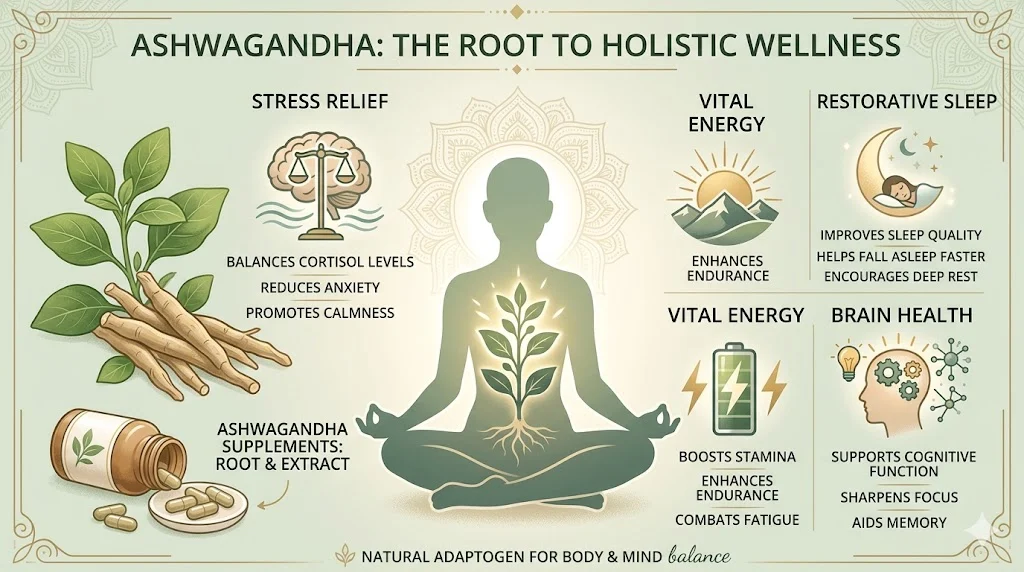
Ashwagandha is a natural herbal supplement known as an adaptogen that may help the body reduce stress, improve sleep, support energy levels, and enhance overall mental and physical well being.
It works by influencing stress hormones, especially cortisol, and supporting balance in the nervous system.
If you’ve been exploring natural health supplements, stress relief options, or herbal remedies for energy and sleep, you have probably come across ashwagandha. It is one of the most talked about herbs in modern wellness, yet many people still ask a simple question: what does ashwagandha actually do?
Ashwagandha has been used for centuries in traditional medicine, but today it is widely studied and used around the world for stress, sleep, energy, and overall well being. It is often labeled as an “adaptogen,” which means it may help the body adapt to physical and mental stress.
Understanding how it works, what benefits it may offer, and how it affects the body can help you decide whether it fits your health routine.
What Is Ashwagandha?
Ashwagandha is a small shrub that grows in parts of India, the Middle East, and Africa. The root of the plant is most commonly used in supplements and powders.
It has been a key part of traditional wellness systems for hundreds of years, especially in Ayurveda, where it is used to promote strength, calmness, and vitality.
Today, it is available in multiple forms such as:
- Capsules
- Powders
- Liquid extracts
- Herbal teas
People take it for stress relief, sleep improvement, energy support, and general wellness.
How Ashwagandha Works in the Body
Ashwagandha is known as an adaptogen, which means it may help the body respond more effectively to stress.
When you are stressed, your body releases cortisol, often called the stress hormone. High cortisol levels for long periods can lead to fatigue, anxiety, weight changes, and poor sleep.
Ashwagandha may help by:
- Supporting balanced cortisol levels
- Calming the nervous system
- Helping the body recover from stress
- Supporting brain function and focus
It does not act like a sedative or stimulant. Instead, it works more like a regulator that helps bring balance.
Key Benefits of Ashwagandha
Stress and Anxiety Support
One of the most well known uses of ashwagandha is stress reduction. Many people report feeling calmer and more relaxed when taking it regularly.
It may help by supporting the body’s response to stressful situations, making it easier to stay emotionally balanced.
Common experiences include:
- Feeling less overwhelmed
- Improved emotional stability
- Reduced tension in the body
Better Sleep Quality
Ashwagandha is often used by people who struggle with sleep.
It may help by calming the mind before bedtime and reducing stress related sleep disturbances.
People commonly report:
- Falling asleep more easily
- Fewer nighttime awakenings
- Feeling more refreshed in the morning
It is not a sleeping pill but may support natural sleep cycles.
Improved Energy Levels
Unlike caffeine, ashwagandha does not give a sudden energy spike. Instead, it may support steady and balanced energy throughout the day.
It is often used by people who feel:
- Constant fatigue
- Burnout from stress
- Low stamina
By helping reduce stress load, it may indirectly improve energy.
Support for Brain Function
Ashwagandha is sometimes associated with better focus and memory.
It may support:
- Mental clarity
- Concentration
- Cognitive performance under stress
This makes it popular among students and working professionals.
Hormonal Balance Support
Ashwagandha may influence hormone regulation in the body, especially cortisol and possibly thyroid hormones in some individuals.
Balanced hormones can contribute to:
- Better mood stability
- Improved metabolism
- Reduced stress related symptoms
Physical Performance and Strength
Some studies and user experiences suggest that ashwagandha may support:
- Muscle strength
- Exercise endurance
- Recovery after workouts
This is why it is sometimes used in fitness routines.
How Ashwagandha Is Commonly Used
Ashwagandha is versatile and can be used in different forms depending on preference.
| Form | Description | Common Use |
|---|---|---|
| Capsules | Easy to take supplement form | Daily stress support |
| Powder | Mixed with milk or water | Traditional use |
| Extract | Concentrated liquid form | Fast absorption |
| Tea | Herbal drink form | Relaxation before sleep |
Most people take it daily for consistent results rather than occasional use.
When People Typically Take Ashwagandha
Timing can depend on your goal:
- Morning use for energy and focus
- Evening use for relaxation and sleep
- Split doses for balanced effects
Consistency is often more important than timing.
Possible Effects of Ashwagandha
Ashwagandha affects people differently, but common effects include:
- Feeling calmer
- Improved sleep quality
- Reduced stress response
- Better focus
- Slight increase in energy stability
Some people notice changes within a few days, while others may take a few weeks.
Who Commonly Uses Ashwagandha
Ashwagandha is popular among:
- People dealing with daily stress
- Students under mental pressure
- Working professionals
- Individuals with sleep issues
- Fitness enthusiasts
It is often used as part of a wellness routine rather than a medical treatment.
Things to Keep in Mind
While ashwagandha is widely used, it may not be suitable for everyone.
Some important considerations include:
- Effects vary from person to person
- It should be used consistently for best results
- It may interact with certain medications
- Pregnant or breastfeeding individuals should consult a professional
It is always best to use it responsibly and pay attention to how your body responds.
Common Misconceptions About Ashwagandha
- It works instantly
- In reality, ashwagandha usually works gradually over time rather than producing immediate effects.
- It is a stimulant
- It is not a stimulant like caffeine. It supports balance rather than stimulation.
- It is only for stress
While stress support is its most famous use, it also supports sleep, energy, and general wellness.
Real World Example of Use
Imagine a person who feels constantly stressed due to work pressure. They also struggle with poor sleep and low energy during the day.
After adding ashwagandha to their routine:
- They may notice reduced stress response over time
- Sleep may become more restful
- Energy levels may feel more stable
This is not an overnight transformation but a gradual improvement in balance.
FAQs
What does ashwagandha do in the body?
It may help reduce stress, support better sleep, improve energy levels, and promote overall balance in the body.
Is ashwagandha good for anxiety?
It is commonly used to support stress and anxiety management by helping regulate cortisol levels and calming the nervous system.
How long does ashwagandha take to work?
Some people notice effects within a few days, but most benefits appear after consistent use for a few weeks.
Can ashwagandha improve sleep?
Yes, it may help improve sleep quality by reducing stress and calming the mind before bedtime.
Does ashwagandha increase energy?
It does not act like caffeine but may help improve steady energy by reducing stress related fatigue.
Can you take ashwagandha daily?
Many people take it daily as part of a wellness routine, but consistency and proper dosage are important.
Does ashwagandha have side effects?
Some people may experience mild digestive changes or drowsiness depending on dosage and sensitivity.
Who should avoid ashwagandha?
Pregnant or breastfeeding individuals and those on certain medications should consult a professional before use.
Conclusion
Ashwagandha is a powerful herbal supplement that supports stress management, sleep quality, energy balance, and mental clarity. It works by helping the body adapt to stress rather than forcing a direct change, making it a gentle but effective wellness option for many people.
While it is not a quick fix, consistent use may support overall balance in both mind and body. Whether used for stress relief, better sleep, or daily energy support, ashwagandha has become one of the most popular natural supplements in modern health routines.
Understanding how it works helps you use it more effectively and set realistic expectations for its benefits.
Read More Related Articles:
- SG in Text: The Meaning Changes More Than You Think (2026)
- MMCHT in Texts: Meaning, Tone, and How to Use It in 2026
- What Does Te Amo Mean in English? Here’s the Truth (2026)

Ivy Madison is a content creator at TextSprout.com, specializing in word definitions, internet slang, acronyms, and text abbreviations. She delivers clear and engaging explanations, helping readers quickly understand modern digital language and trending terms.