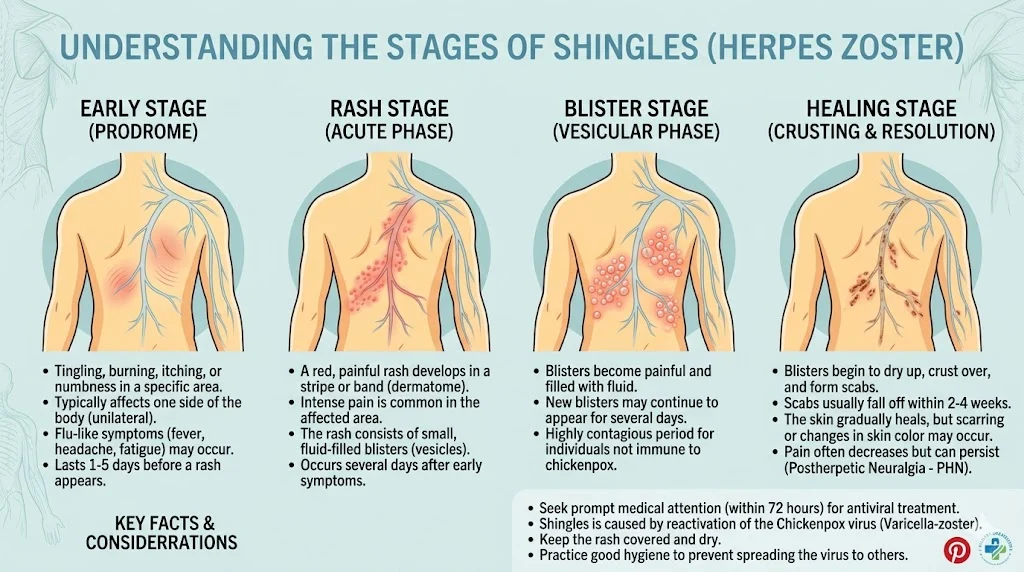
Shingles typically looks like a painful rash with red patches and clusters of fluid-filled blisters that appear on one side of the body or face. The rash often follows a band or strip pattern and may start with tingling, burning, or itching before the blisters appear.
Example:
A person may first feel burning on one side of their chest, and within a few days, a red rash with small blisters appears in that same area.
If you’ve ever noticed a strange rash that suddenly appears on one side of your body and feels painful or sensitive, you might have wondered if it could be shingles. The condition can be confusing at first because it doesn’t always look the same in every person. Some people notice redness and irritation, while others develop clusters of blisters that can be quite uncomfortable.
Understanding what shingles looks like is important because early recognition can help you get treatment sooner and reduce complications. Many people mistake it for a simple rash, an allergic reaction, or even insect bites. The truth is, shingles has a very distinct pattern once you know what to look for.
In this guide, we will walk through everything in a clear and natural way so you can recognize shingles, understand how it develops, and know when it might be time to seek medical advice.
What Is Shingles and Why Does It Appear?
Shingles is caused by the same virus responsible for chickenpox, known as the varicella zoster virus. After a person recovers from chickenpox, the virus doesn’t completely leave the body. Instead, it stays inactive in the nerves.
Years later, it can reactivate and cause shingles, also known as Herpes Zoster.
This reactivation often happens when the immune system is weakened due to stress, aging, illness, or other factors.
Early Signs Before the Rash Appears
One of the most important things to understand about shingles is that it often starts before you can actually see anything on the skin.
People may notice unusual sensations in a specific area, such as:
- Tingling or pins and needles
- Burning or sharp pain
- Itching or sensitivity
- Tenderness to touch
This stage can last a few days. It may feel confusing because there is no visible rash yet. Some people even think it is muscle pain or a minor injury at first.
What Shingles Looks Like in the Beginning
After the early symptoms, the skin begins to change. This is when shingles becomes visible.
At first, you may notice:
- Red or pink patches on the skin
- Slight swelling
- Warm or sensitive areas
The rash usually appears in a specific line or band, often on one side of the body. This is because the virus travels along a nerve pathway.
Common areas include:
- Chest
- Back
- Abdomen
- Face
- Around the eyes
The Blister Stage
Within a short time, the rash develops into one of the most recognizable features of shingles.
Small, fluid-filled blisters begin to form on top of the red skin. These blisters often appear in clusters and may look similar to chickenpox but are usually limited to one area.
At this stage, shingles may look like:
- Groups of tiny bubbles filled with clear fluid
- Raised, shiny blisters
- Closely packed spots forming a patch
The blisters can be very painful. Some people describe the pain as burning, stabbing, or intense sensitivity.
How the Rash Changes Over Time
Shingles does not stay the same. It goes through several stages as it heals.
Stage Progression
| Stage | Appearance | What It Feels Like |
|---|---|---|
| Early stage | Red patches | Tingling or burning |
| Blister stage | Fluid-filled bumps | Pain and sensitivity |
| Crusting stage | Blisters dry and scab | Itching and healing |
| Healing stage | Scabs fade | Less pain, possible marks |
After a few days, the blisters begin to dry out. They form crusts or scabs and slowly heal over a couple of weeks.
Where Shingles Commonly Appears
Shingles usually affects one side of the body. This is one of the key signs that helps distinguish it from other skin conditions.
| Body Area | Description |
|---|---|
| Chest and back | Most common area, often in a stripe pattern |
| Face | May affect eyes or forehead |
| Neck | Can follow nerve paths |
| Waist area | Wraps around one side |
| Eyes | Requires urgent medical attention |
If shingles affects the eye, it can be serious and needs immediate care.
How Shingles Feels Compared to How It Looks
One of the unique things about shingles is that the pain is often stronger than the appearance suggests.
Someone might have a small rash, but the discomfort can be intense.
Common sensations include:
- Burning pain
- Sharp stabbing feeling
- Sensitivity to clothing or touch
- Deep nerve pain
This is because shingles affects the nerves, not just the skin.
Shingles vs Other Skin Conditions
Shingles can sometimes be mistaken for other skin issues. Here is how it compares:
| Condition | Appearance | Key Difference |
|---|---|---|
| Shingles | Blisters in a line on one side | Painful and follows nerves |
| Allergic rash | Red, scattered patches | Usually itchy, not painful |
| Insect bites | Small bumps | Random pattern |
| Eczema | Dry, flaky skin | Chronic condition |
| Chickenpox | Blisters all over body | Not limited to one side |
The one-sided pattern and nerve pain are strong clues for shingles.
Real-Life Example of Shingles Appearance
Imagine waking up with a strange burning feeling on one side of your chest. At first, you think you slept in an awkward position. By the next day, you notice a red patch in the same area.
A couple of days later, small blisters appear, forming a line across your skin. The area becomes sensitive, and even your clothes brushing against it feels uncomfortable.
Over the next week, the blisters dry out and form scabs, and slowly the skin begins to heal.
This is a typical progression of shingles.
When to Be Concerned
While shingles often heals on its own, there are situations where you should not ignore it.
Pay attention if:
- The rash is near your eyes
- The pain is severe
- The rash spreads widely
- You have a weakened immune system
- You develop fever or fatigue
In these cases, medical attention is important to prevent complications.
Tips for Recognizing Shingles Early
- Notice unusual pain before a rash appears
- Look for a one-sided pattern
- Watch for clustered blisters
- Pay attention to sensitivity or burning
- Act quickly if symptoms appear
Early treatment can reduce the severity and duration.
FAQs
What does shingles look like at first?
It usually starts as a red patch with tingling or burning before blisters appear.
Are shingles always painful?
Most people experience pain, but the level can vary from mild to severe.
Can shingles appear anywhere on the body?
Yes, but it often appears on one side of the chest, back, or face.
Do shingles look like pimples?
Not exactly. They look more like fluid-filled blisters grouped together.
How long does shingles last?
Typically two to four weeks from start to healing.
Is shingles contagious?
It can spread the virus to people who have not had chickenpox, but it does not spread as shingles directly.
Can shingles leave scars?
Sometimes, especially if blisters are scratched or severe.
When should I see a doctor?
If the rash is near your eyes, very painful, or not improving.
Conclusion
Shingles has a very recognizable appearance once you know what to look for. It usually begins with unusual sensations like tingling or burning, followed by a red rash that develops into clusters of fluid-filled blisters. These blisters often appear in a band on one side of the body, making it different from many other skin conditions.
The condition can feel more intense than it looks because it affects the nerves as well as the skin. Recognizing the signs early can help you take action and reduce discomfort.
If you ever notice a rash that follows this pattern, especially with pain or sensitivity, it is worth paying attention and seeking advice if needed.
Understanding shingles is not just about identifying a rash. It is about recognizing the signals your body gives you and responding in time.
Read More Related Articles:
- BTW Mean in Texting: Full Explanation and Usage Tips In 2026
- What Does SYBAU Mean: Usage, and Real Meaning in Text In 2026
- Gaslighting Mean In Text | The Manipulation You Might Not Notice In 2026

Luna Hartley is a content creator at TextSprout.com, where she specializes in explaining word meanings, modern phrases, and everyday language used in texts and online conversations. Her writing focuses on clarity and context, helping readers understand how words are actually used in real communication.