
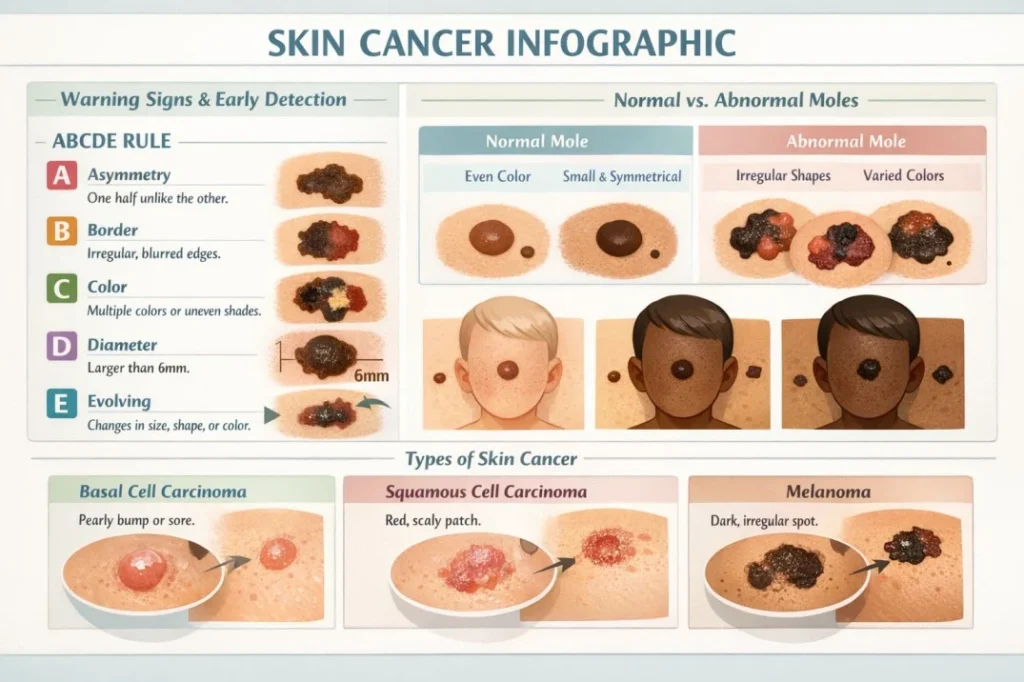
Skin cancer often looks like a new or changing spot on the skin that may appear as a mole, sore, bump, or patch that does not heal. Common warning signs include asymmetry, irregular borders, uneven color, increasing size, or changes over time.
Example:
A mole that becomes darker, grows larger, or develops uneven edges could be an early sign of skin cancer.
Noticing a new spot on your skin can be unsettling. Maybe it looks a little darker than usual, or maybe it has changed shape over time. It is easy to ignore small changes, especially when they do not hurt or feel unusual. But when it comes to skin health, paying attention early can make a big difference.
Skin cancer is one of the most common types of cancer worldwide, and the good news is that it is often highly treatable when detected early. The challenge is knowing what to look for. Skin cancer does not always appear in the same way, and many early signs can look harmless at first glance.
This guide will walk you through what skin cancer can look like, how to recognize warning signs, and when it might be time to get something checked by a professional.
Understanding Skin Cancer
Skin cancer develops when skin cells grow abnormally, often due to damage from ultraviolet radiation from the sun or tanning beds. It can appear anywhere on the body, but it is most common on areas exposed to sunlight like the face, neck, arms, and hands.
There are three main types of skin cancer, and each can look slightly different.
Main Types of Skin Cancer and How They Look
Basal Cell Carcinoma
Basal cell carcinoma is the most common type. It usually grows slowly and rarely spreads, but it still needs treatment.
It often appears as:
- A shiny or pearly bump
- A pink or flesh colored growth
- A sore that does not heal
- A patch that may bleed easily
Sometimes it looks like a small pimple that never goes away. Other times it may form a crust or scab that keeps returning.
Squamous Cell Carcinoma
Squamous cell carcinoma is the second most common type. It can grow deeper into the skin and may spread if not treated.
It often looks like:
- A rough or scaly patch
- A firm red bump
- A sore that crusts or bleeds
- A wart like growth
This type is more likely to appear on sun exposed areas like the face, ears, and hands.
Melanoma
Melanoma is less common but more serious because it can spread quickly to other parts of the body.
Melanoma often looks like a mole that is changing or unusual. It may appear as:
- A dark spot with uneven color
- A mole that grows or changes shape
- A lesion with irregular borders
- A spot that looks very different from others
Melanoma can develop anywhere on the body, even in areas not exposed to the sun.
The ABCDE Rule for Spotting Skin Cancer
One of the easiest ways to recognize suspicious moles is the ABCDE rule. This simple guide helps you notice important changes.
| Letter | What It Means | What to Look For |
|---|---|---|
| A | Asymmetry | One half does not match the other |
| B | Border | Edges are uneven or irregular |
| C | Color | Multiple colors or uneven shading |
| D | Diameter | Larger than about 6 mm |
| E | Evolving | Changes in size, shape, or color |
If you notice any of these signs, it is worth getting the spot checked.
Common Signs and Symptoms
Skin cancer does not always look dramatic. Sometimes the signs are subtle. Here are some things to watch for:
- A new growth or spot on the skin
- A sore that does not heal
- Changes in an existing mole
- Itching, tenderness, or pain in a spot
- Bleeding or crusting skin
- A shiny or translucent bump
Even small changes can be important, especially if they continue over time.
What Skin Cancer Can Feel Like
While appearance is the main clue, skin cancer can sometimes be felt as well.
- A bump that feels firm
- A rough or scaly patch
- A sore that feels tender
- A spot that itches or burns
Not all skin cancers cause pain, which is why visual changes are so important to notice.
Example Comparison Table
| Normal Mole | Possible Skin Cancer |
|---|---|
| Even shape | Uneven or asymmetrical |
| Smooth border | Jagged or irregular edges |
| Single color | Multiple colors |
| Stable over time | Changes over time |
This comparison helps you understand how abnormal spots may differ from harmless ones.
Where Skin Cancer Commonly Appears
Skin cancer can develop anywhere, but some areas are more common.
- Face and neck
- Arms and hands
- Back and shoulders
- Legs
- Scalp
Melanoma can also appear in less obvious places like under nails, on the soles of the feet, or inside the mouth.
Risk Factors to Be Aware Of
Certain factors increase the risk of developing skin cancer.
- Frequent sun exposure
- History of sunburns
- Fair skin
- Family history of skin cancer
- Use of tanning beds
- Large number of moles
Knowing your risk can help you stay more alert to changes.
When to See a Doctor
It is important to get a spot checked if you notice:
- Rapid changes in size or color
- Bleeding or crusting that does not heal
- Pain or itching that continues
- A mole that looks very different from others
Early detection can make treatment much easier and more effective.
Tips for Checking Your Skin
Regular self checks can help you notice changes early.
- Look at your skin once a month
- Use a mirror for hard to see areas
- Check your scalp and nails
- Take photos to track changes
- Ask someone to help check your back
The more familiar you are with your skin, the easier it is to notice something new.
Prevention Tips
While not all skin cancer can be prevented, you can reduce your risk.
- Wear sunscreen daily
- Avoid excessive sun exposure
- Wear protective clothing
- Stay out of the sun during peak hours
- Avoid tanning beds
These small habits can protect your skin over time.
FAQs
What does skin cancer look like in the early stages?
It often looks like a small spot, mole, or bump that changes over time or does not heal.
Can skin cancer look like a pimple?
Yes, especially basal cell carcinoma can appear like a small pimple that does not go away.
Does skin cancer hurt?
Not always. Many early skin cancers do not cause pain, which is why visual changes are important.
Can skin cancer be flat?
Yes, some types appear as flat patches rather than raised bumps.
Is every mole dangerous?
No, most moles are harmless. Only changing or unusual ones are concerning.
How fast does skin cancer grow?
It depends on the type. Some grow slowly, while melanoma can grow more quickly.
Can skin cancer appear in places not exposed to the sun?
Yes, especially melanoma can appear anywhere on the body.
Should I worry about a spot that changes color?
Yes, color changes can be a warning sign and should be checked by a professional.
Conclusion
Skin cancer can appear in many different forms, from small bumps to changing moles or patches that do not heal. The key is not to panic, but to stay aware. Paying attention to your skin and noticing changes early can make a huge difference.
The most important thing to remember is that skin cancer often starts with subtle changes. A new spot, a mole that looks different, or a sore that does not heal should not be ignored.
If something seems unusual, it is always better to get it checked. Early detection can save time, stress, and even lives.
Read More Related Articles:
- MMCHT in Texts: Meaning, Tone, and How to Use It in 2026
- What Does Te Amo Mean in English? Here’s the Truth (2026)
- SG in Text: The Meaning Changes More Than You Think (2026)

Ivy Madison is a content creator at TextSprout.com, specializing in word definitions, internet slang, acronyms, and text abbreviations. She delivers clear and engaging explanations, helping readers quickly understand modern digital language and trending terms.