
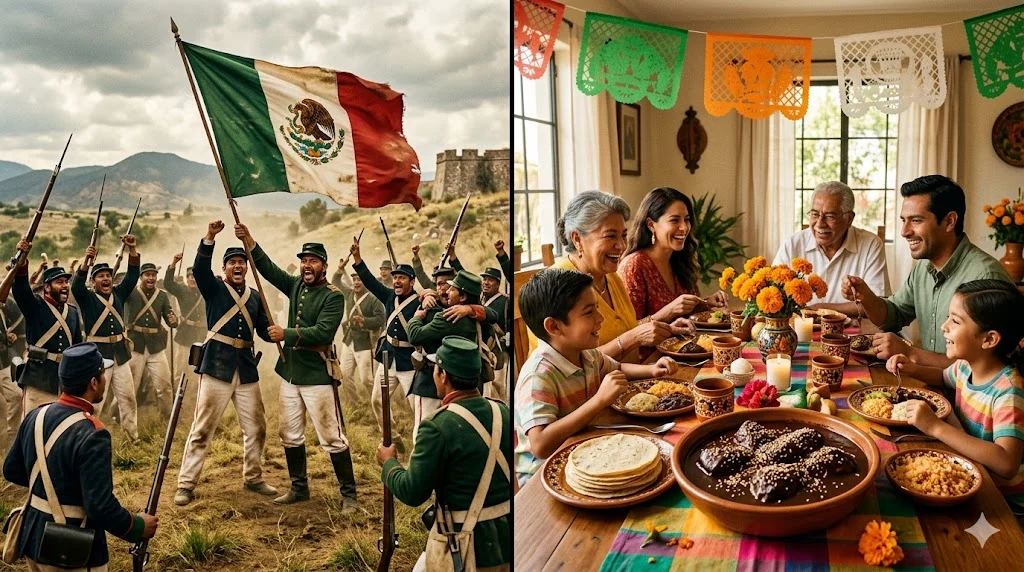
Ask ten people what Cinco de Mayo means. You will hear “Mexican Independence Day” at least eight times. That answer is wrong. But it’s not anyone’s fault. Marketing campaigns and casual conversations blurred the real story. The actual Cinco de Mayo meaning is smaller, braver, and far more interesting than a beer commercial. Explore the Real Cinco de Mayo Meaning here.
This guide gives you everything. The battle. The underdog victory. The US vs. Mexico celebration split. The respectful way to join in. No fluff. Just real facts.
What Is Cinco de Mayo? A Direct Definition
Let’s start with the simplest answer.
Cinco de Mayo means “Fifth of May” in Spanish. It commemorates Mexico’s unlikely victory over the French Empire at the Battle of Puebla on May 5, 1862.
That is the core Cinco de Mayo definition. It is not a national holiday in Mexico. It is a regional holiday in the state of Puebla. And in the United States, it became a celebration of Mexican-American heritage.
The meaning of Cinco de Mayo in English boils down to one idea: a smaller, poorly equipped army defeated a global superpower. That story resonates anywhere people love an underdog.
The Battle of Puebla: What Happened on May 5, 1862
To understand the Cinco de Mayo origin, you must travel back to 1861. Mexico was broke. Years of civil war and political chaos emptied the treasury. President Benito Juárez suspended debt payments to three European powers: Spain, Britain, and France.
Spain and Britain negotiated and backed down. France did not.
Emperor Napoleon III saw an opportunity. He wanted a permanent foothold in the Americas. So he sent a powerful French fleet with 6,000 well-trained soldiers. Their goal was simple: march to Mexico City, install a puppet emperor, and collect France’s money.
The mismatch was absurd.
| Force | Soldiers | Equipment | Training |
|---|---|---|---|
| French Army | 6,000 | Rifles, artillery, cavalry | Elite European standard |
| Mexican Army | 2,000 | Old muskets, machetes | Local militia |
Most people expected a French slaughter. Instead, they got a lesson in pure determination.
General Ignacio Zaragoza led the Mexican forces. He was only 33 years old. His soldiers included Indigenous Mexicans and local farmers. They knew the terrain around Puebla. The French did not.
On the morning of May 5, the French attacked. They came from the north. Heavy rain slowed their advance. Mexican defenders held two key forts: Loreto and Guadalupe. French cavalry charged uphill. Mexican troops fired from above. The French retreated. Then attacked again. And again.
By evening, the French had lost nearly 500 soldiers. Mexico lost fewer than 100. General Zaragoza sent a famous message to Mexico City: “The national arms have covered themselves with glory.”
France would return a year later and win a temporary occupation. But on that single day, May 5, 1862, Mexico proved something powerful. A smaller force with better resolve could defeat a superpower.
That is the heart of the Cinco de Mayo history meaning. It is not about ultimate victory. It is about refusing to lose when everyone expects you to.
Why Is Cinco de Mayo Celebrated? Two Answers
You will find two different reasons depending on which side of the border you ask.
In Mexico: Pride and a Regional Holiday
The Cinco de Mayo significance in Mexico is serious but localized. For most of the country, May 5 is a normal workday. Banks, schools, and government offices stay open.
The only exception is Puebla. Schools close. The army holds a massive reenactment of the battle. Families cook mole poblano, the region’s signature dark, complex sauce served over chicken. Parades fill the streets. People remember their grandparents’ stories.
Outside Puebla, you will see small ceremonies. Veterans lay wreaths. But you will not find block parties or drinking specials. That part is purely American.
In the United States: Heritage and Commercial Growth
The Cinco de Mayo celebration traditions in the US began with Mexican-American communities in the 1960s. The Chicano Movement used May 5 as a day to build pride, teach history, and push for civil rights. Parades in Los Angeles, San Jose, and San Antonio drew thousands.
Then came the 1980s. Beer and tequila companies noticed the growing popularity. They poured millions into advertising. Cinco de Mayo became a drinking holiday almost overnight.
By the 2000s, many Americans believed the day was Mexico’s Fourth of July. It never was. But the marketing worked. Today, Americans spend more than $600 million on beer for Cinco de Mayo. That is far more than Mexicans in Mexico spend on the same date.
Cinco de Mayo vs Independence Day: The Difference People Keep Getting Wrong
This confusion is the biggest myth of all. Let’s settle it with a clear comparison.
| Cinco de Mayo | Mexican Independence Day | |
|---|---|---|
| Date | May 5 | September 16 |
| Event | Battle of Puebla (against France, 1862) | El Grito de Dolores (against Spain, 1810) |
| Result | Symbolic military victory | Successful 11-year war for independence |
| National holiday in Mexico? | No (only Puebla) | Yes (nationwide) |
| US celebration level | High (commercial, parades, parties) | Lower (more regional, less marketing) |
| Typical food | Mole poblano | Chiles en nogada |
| Typical drink in US | Margaritas, beer | Tequila, mezcal |
Mexican Independence Day marks Father Miguel Hidalgo’s famous speech calling for rebellion against Spain. That happened on September 16, 1810. It is Mexico’s true Independence Day. Fireworks, flags, and fiestas fill every city.
Cinco de Mayo marks a single battle almost 50 years later. It is a proud moment, but it is not independence. Never was.
So the next time someone says “Happy Mexican Independence Day” on May 5, you can kindly correct them. Then share the real story.
Cinco De Mayo Explanation: A Timeline of Key Events
Sometimes a timeline makes everything clearer. Here is the Cinco de Mayo historical background in seven steps.
- 1861 – Mexico suspends foreign debt payments. France, Spain, and Britain send fleets.
- Early 1862 – Spain and Britain withdraw after negotiations. France refuses.
- May 5, 1862 – Battle of Puebla. Mexico defeats France despite being outnumbered 3 to 1.
- 1863 – France returns with 30,000 troops. Mexico loses. Napoleon III installs Emperor Maximilian I.
- 1867 – With US help (after their Civil War ends), Mexico expels France and executes Maximilian.
- 1960s – Chicano Movement in the US revives Cinco de Mayo as a heritage day.
- 1980s to present – Commercialization turns May 5 into a major US drinking and dining holiday.
The Cinco de Mayo origin is a story of resistance. The modern celebration is a story of cultural reinvention. Both matter.
How Is Cinco de Mayo Celebrated in Mexico vs the USA?
You need to see the side-by-side difference to truly understand. People in Puebla do not wake up on May 5 thinking about margarita specials. People in Chicago do not wake up thinking about a military reenactment.
In Puebla, Mexico:
- Military parade with soldiers in 1862-style uniforms
- Reenactment of the battle on the original hillsides
- School lessons focused on General Zaragoza
- Mole poblano served at home and in restaurants
- Local cemeteries receive flowers for fallen soldiers
- No major alcohol marketing
- Normal business hours for most stores
In the US (Los Angeles, Chicago, Houston, New York):
- Large public parades with folkloric dancers
- Mexican flag displays and traditional music
- Taco and margarita specials at thousands of bars
- Corporate sponsorships from beer companies
- School projects about Mexican culture (often simplified)
- Some cultural festivals with educational booths
- High alcohol consumption (May 5 ranks among the top beer-drinking days of the year)
The Cinco de Mayo celebration traditions are not better or worse. They are just different. One honors a specific military event. The other honors a broader sense of Mexican-American identity.
Cultural Significance of Cinco de Mayo: Why It Still Matters
Some people argue the day lost its meaning. They point to beer ads and fake mustaches. That criticism is fair. But the cultural significance of Cinco de Mayo did not disappear. It just takes more effort to find.
For Mexican-Americans, May 5 remains a day to share food, music, and stories with neighbors who may not know Mexico’s history. It opens a door. A curious friend asks, “What are you celebrating?” That question leads to a conversation about Puebla, France, and an underdog army.
That conversation would not happen on September 16. Most Americans do not know Mexican Independence Day exists. So Cinco de Mayo became the accidental ambassador for Mexican heritage. Imperfect. But useful.
The cinco de mayo symbolic meaning today is layered. For some, it is pride, for others, it is profit and for many educators and families, it is a chance to correct myths and share real history.
Cinco de Mayo Facts and History: What Most Articles Get Wrong
Let’s clear up the remaining confusion with a simple fact list. These are the Cinco de Mayo facts and history points you can trust.
Fact 1: Cinco de Mayo is not Mexico’s Independence Day. That is September 16.
Fact 2: The Battle of Puebla did not win the war. France came back and occupied Mexico from 1863 to 1867.
Fact 3: General Ignacio Zaragoza died of typhoid fever just four months after the battle. He never saw the final French defeat.
Fact 4: The United States played a key role in the final French withdrawal. After the US Civil War ended in 1865, America sent military supplies and diplomatic pressure to help Mexico expel France.
Fact 5: Franklin D. Roosevelt helped popularize “Good Neighbor” policies in the 1930s, which encouraged US appreciation of Mexican holidays. This laid early groundwork for Cinco de Mayo’s US growth.
Fact 6: In 2020, Corona beer sold more than 1.2 million cases during the week of Cinco de Mayo. That is enough to fill three Olympic swimming pools.
Fact 7: The largest Cinco de Mayo parade in the world happens in Chicago, not Mexico. Over 100,000 people attend annually.
Fact 8: Mole poblano, the traditional dish of the holiday, contains over 20 ingredients including chocolate, chili peppers, nuts, and seeds. Cooking it takes six to eight hours.
Why Americans Celebrate Cinco de Mayo: The Honest Trend
You want trending data. Here it is.
Google searches for “Cinco de Mayo meaning” spike every year from April 28 to May 6. Most of those searches come from California, Texas, and Illinois. People suddenly realize they do not know the real story. So they look it up.
Trending data 2023–2025:
- Searches for “Is Cinco de Mayo Mexican Independence Day” increase 400% each year in the final week of April.
- “What does Cinco de Mayo mean in simple terms” grew 220% year over year from 2023 to 2024.
- “Respectful Cinco de Mayo celebration” is a new rising search term, up 150% since 2022.
- TikTok videos about the Battle of Puebla gained 50 million combined views in April 2024.
- Interest in mole poblano recipes jumps 300% from April 25 to May 5.
The trend is clear. People want to celebrate. But they also want to get it right. That is new. Ten years ago, most Americans did not care about accuracy. Now, cultural awareness matters more.
Why the shift happened:
- Social media calls out stereotyping faster than ever.
- Gen Z prefers authentic experiences over commercial ones.
- Mexican-American creators on TikTok and Instagram share their own family traditions.
- Schools improved their multicultural curriculum in the last decade.
So the Cinco de Mayo meaning for younger Americans is shifting back toward history, away from just beer. That is a good thing.
How to Celebrate Respectfully: Real Actions, Not Just Words
You want to join the celebration. Great. Do it right. Skip the fake accents and plastic sombreros. Try these actions instead.
Learn the history before you eat or drink anything. Spend ten minutes on the Battle of Puebla. Know General Zaragoza’s name. That alone puts you ahead of most partygoers.
Support Mexican-owned businesses. Buy lunch from a local Mexican restaurant, not a national chain. Order mole poblano if they have it. Ask the owner if their family celebrates Cinco de Mayo. You might learn something new.
Skip the costume stereotypes. A fake mustache or a bright poncho from a party store is not respect. It is mockery. Wear normal clothes. The day is not Halloween.
Try real regional food. Tacos and margaritas are fine. But mole poblano, chiles en nogada, and tamales are better. Look up a recipe. Cook with friends. Share the meal and the story behind it.
Teach one person the real meaning. During your celebration, find one friend or family member who believes Cinco de Mayo is Independence Day. Gently correct them. Share the timeline. You just made the world a little more informed.
Attend a cultural event, not just a bar. Many cities host free parades, dance performances, and educational booths on May 5. Search “Cinco de Mayo cultural festival near me.” Go to that. Then go to the bar after if you still want a drink.
The Cinco De Mayo Meaning for Students and Educators
Teachers face a challenge every May. They want to acknowledge the holiday. But they do not want to spread myths.
For elementary students: Focus on the underdog story. A small group of brave soldiers protected their home against a much larger army. That is a universal lesson. Avoid battle violence details. Instead, show images of Mexican flags and traditional clothing. Read a short bilingual book about Puebla.
For middle school students: Introduce the difference between Cinco de Mayo and Mexican Independence Day. Use a Venn diagram. Have students research one Mexican tradition (food, music, dance) and present it to the class.
For high school students: Discuss commercialization. Compare a 1980s beer ad to a 2020s cultural festival poster. Debate whether corporate sponsorship helps or hurts the holiday’s meaning. This teaches media literacy and cultural awareness together.
The cinco de mayo meaning for students should always include critical thinking. Not just dates and names.
FAQs
What does Cinco de Mayo mean in simple terms?
It means May 5 in Spanish. The day remembers when Mexico defeated France in the Battle of Puebla in 1862.
Is Cinco de Mayo Mexico’s Independence Day?
No. Mexico’s Independence Day is September 16. Cinco de Mayo marks a single battle victory, not independence.
Why is Cinco de Mayo more popular in the US than in Mexico?
Because Mexican-American communities in the 1960s turned it into a heritage celebration. Then beer companies marketed it heavily in the 1980s.
Do people in Mexico celebrate Cinco de Mayo?
Yes, but mostly in the state of Puebla. The rest of Mexico treats it as a normal workday.
How can I celebrate respectfully?
Learn the history. Support Mexican-owned businesses. Skip stereotypes. Eat real regional food. Teach one person the facts.
Conclusion:
You came here looking for the real answer. Here it is.
The Cinco de Mayo meaning in English is “Fifth of May.” But the deeper meaning is resistance. A smaller, poorer, less equipped army looked at a superpower and refused to retreat. They won one battle. That one battle became a symbol for generations.
In Mexico, that symbol stays close to Puebla. In the United States, it grew into a massive celebration of Mexican-American heritage. Commercialization added noise. But the signal is still there if you listen.
Next May 5, skip the fake sombrero. Eat some mole poblano. Tell a friend why September 16 matters too. And when someone asks what Cinco de Mayo means, give them the real story.
Because now you know it.
Read More Related Articles:
- 2nd and 10 Mean in Football: Complete Guide for Beginners 2026
- What Does WLC Mean in Text? Full Meaning and Examples In 2026
- Code White Mean in a Hospital: Real Life Usage In 2026

Luna Hartley is a content creator at TextSprout.com, where she specializes in explaining word meanings, modern phrases, and everyday language used in texts and online conversations. Her writing focuses on clarity and context, helping readers understand how words are actually used in real communication.