
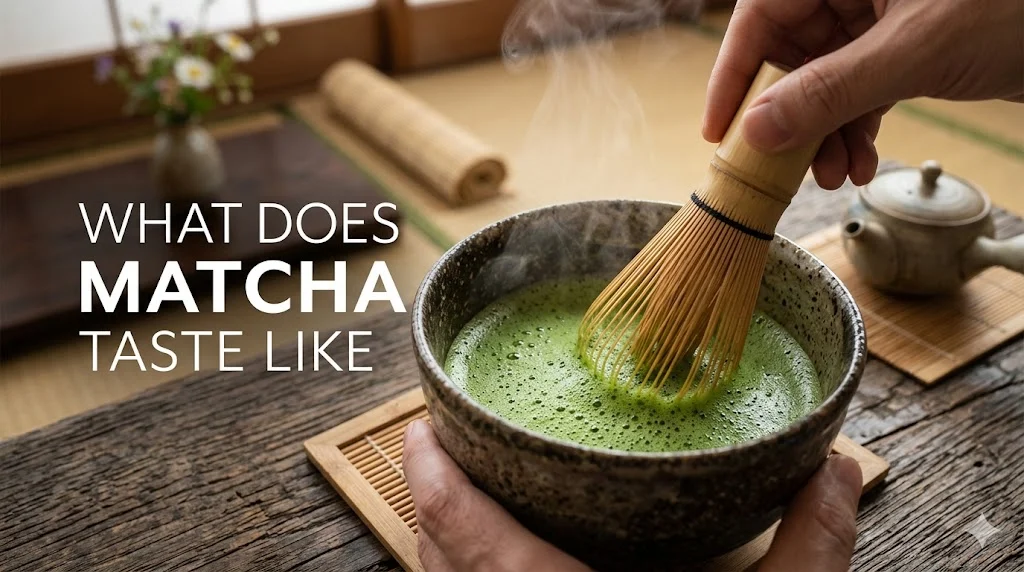
Matcha is one of those drinks that people either instantly love or completely misunderstand at first sip.
You hear words like earthy, grassy, umami, and bitter, and honestly, it doesn’t help much until you actually taste it yourself.
So let’s fix that.
This guide breaks everything down in a simple, honest way so you understand exactly what matcha tastes like, why it tastes that way, and how your experience changes depending on preparation, quality, and even your personal taste buds.
No confusion. No fluff. Just the real flavor story of matcha.
What Does Matcha Taste Like? The Simple Answer First
If you want the shortest honest answer:
Matcha tastes like a blend of fresh green vegetables, soft bitterness, and deep savory umami, with a slightly creamy texture when prepared well.
But that alone doesn’t capture it.
A better way to think about matcha is this:
Imagine blending steamed spinach, fresh-cut grass, and a hint of sea breeze bitterness—then smoothing it into a silky drink.
That’s the foundation.
Now let’s break it down properly so it actually makes sense.
Matcha Flavor Profile Explained in Real Terms
Matcha is not a single-note drink. It’s layered. That’s why people struggle to describe it.
Let’s break its taste into core components.
Earthy Base Notes
The first thing most people notice is earthiness.
It feels grounded, natural, and slightly “wet soil-like” in a fresh way—not dirty, but plant-heavy.
Think of:
- Damp forest leaves after rain
- Raw green vegetables
- Fresh spinach juice
This earthiness comes from how matcha is grown in shade before harvest, which increases chlorophyll and changes its flavor structure.
Grassy and Vegetal Taste
This is the most famous matcha note.
It tastes like:
- Fresh-cut grass
- Steamed kale
- Green beans blended into a drink
For some people, this is refreshing. For others, it feels unfamiliar at first.
This grassy flavor is stronger in lower-quality matcha and lighter in ceremonial-grade matcha.
Umami Depth (The Hidden Star)
Umami is what makes matcha special.
It’s a savory taste that sits between broth-like richness and mild sweetness.
You might notice:
- Slight seaweed-like richness
- A “roundness” in flavor
- A smooth, lingering savory finish
This is why high-quality matcha doesn’t feel harsh—it feels complete.
Bitterness (The Controversial One)
Bitterness is where opinions split.
Matcha can taste bitter when:
- Water is too hot
- Powder is low quality
- Too much powder is used
But good matcha doesn’t attack your taste buds.
Instead, it gives a gentle, controlled bitterness, like dark chocolate rather than coffee grounds.
Natural Sweetness (Yes, It Exists)
Matcha does have sweetness, but not like sugar.
It comes from amino acids like L-theanine, which create a soft, almost creamy sweetness underneath the green notes.
You might notice it more after a few sips rather than immediately.
Creamy Mouthfeel
When whisked properly, matcha feels silky.
Not thick like milkshake. Not watery like tea.
Somewhere in between.
This texture is part of the experience, not just the taste.
Is Matcha Bitter or Sweet? The Real Answer
Matcha is neither purely bitter nor sweet.
It’s balanced between the two, but leaning depending on quality and preparation.
Here’s how it actually breaks down:
Bitter when:
- Water is boiling
- Cheap matcha is used
- Too much powder is added
Sweet and smooth when:
- Ceremonial grade is used
- Water is around 70–80°C
- Proper whisking technique is used
Balanced when:
- High-quality matcha is prepared traditionally
So the real answer is:
Matcha is a controlled bitterness wrapped in natural sweetness and umami depth.
Why Matcha Tastes Like That: The Science Behind the Flavor
Matcha’s flavor isn’t random. It comes from how the tea is grown and processed.
Let’s simplify it.
Shade Grown Leaves
Before harvest, matcha plants are shaded for weeks.
This does three things:
- Increases chlorophyll → greener color and grassy taste
- Boosts L-theanine → smoother, sweeter flavor
- Reduces bitterness → softer taste profile
Whole Leaf Consumption
Unlike regular tea, you consume the entire leaf.
That means:
- Stronger flavor intensity
- Higher nutrient density
- More noticeable bitterness and umami
Stone Ground Powder
Traditional matcha is ground into fine powder using stone mills.
This creates:
- Smooth texture
- Better blending
- Creamier mouthfeel
Matcha vs Green Tea: Do They Taste the Same?
No, and the difference is actually huge.
Even though matcha is technically green tea, the taste is completely different.
Flavor Comparison Table
| Feature | Matcha | Green Tea |
|---|---|---|
| Taste strength | Strong | Light |
| Texture | Creamy | Watery |
| Flavor depth | Rich, umami-heavy | Mild, grassy |
| Bitterness | Medium to high | Low |
| Aftertaste | Long-lasting | Short |
| Consumption | Whole leaf | Infused leaves |
Why Matcha Tastes Stronger
Simple:
You drink the entire leaf.
Green tea just steeps it.
That’s like comparing orange juice to eating the whole orange.
Matcha vs Coffee: A Taste Perspective
People often compare matcha to coffee, but they are very different experiences.
Coffee taste profile
- Roasted
- Bitter
- Acidic
- Bold
Matcha taste profile
- Green and vegetal
- Mild bitterness
- Umami-rich
- Smooth
Energy feeling difference
- Coffee → fast spike, sharp crash
- Matcha → steady, calm focus
This is why people describe matcha as “calm energy.”
Ceremonial vs Culinary Matcha Taste Differences
Not all matcha tastes the same.
Grade matters a lot.
Ceremonial Matcha
This is the highest quality.
Taste:
- Smooth
- Slightly sweet
- Balanced umami
- Minimal bitterness
Best for drinking plain.
Culinary Matcha
Used for cooking and lattes.
Taste:
- Stronger bitterness
- Less sweetness
- More grassy
Works better with milk or sugar.
Quick Comparison
| Type | Taste Intensity | Best Use |
|---|---|---|
| Ceremonial | Soft, refined | Drinking |
| Culinary | Strong, bold | Cooking |
Why Some Matcha Tastes Bad or “Fishy”
This is a common complaint.
Here’s the truth.
Reasons matcha tastes off
- Poor storage (exposed to air and light)
- Old product (oxidation)
- Low-grade leaves
- Over-processing
What “fishy” actually means
It’s usually:
- Oxidized chlorophyll
- Stale vegetal compounds
- Poor quality farming
Good matcha should never taste fishy.
What Does Good Matcha Taste Like?
Good matcha feels balanced.
You should notice:
- Smooth entrance
- Light sweetness
- Gentle vegetal notes
- Soft umami finish
It should not feel harsh or overly bitter.
Simple description
Good matcha tastes like fresh green tea leaves blended into a silky, savory drink with a calm finish.
Matcha Texture and Mouthfeel
Taste is only half the story.
Texture matters a lot.
When poorly prepared
- Gritty
- Powdery
- Uneven
When properly whisked
- Silky
- Frothy
- Light cream-like texture
That foam on top isn’t just decoration—it changes perception of flavor.
Matcha Aftertaste Explained
Matcha doesn’t disappear quickly.
It lingers.
Aftertaste notes
- Mild bitterness
- Vegetal freshness
- Slight sweetness
- Umami depth
Why aftertaste matters
It defines whether matcha feels:
- Clean and refreshing
- Or heavy and bitter
High-quality matcha always leaves a clean finish.
How Matcha Changes in Different Drinks
Matcha behaves differently depending on how you drink it.
Matcha latte taste
When mixed with milk:
- Creamy
- Sweetened naturally
- Less grassy
- Very smooth
Milk softens bitterness significantly.
Iced matcha vs hot matcha
Iced matcha:
- Sharper flavor
- More refreshing
- Slight bitterness
Hot matcha:
- Deeper aroma
- Softer sweetness
- Fuller body
Matcha smoothie taste
- Fruit dominates
- Earthy taste becomes subtle
- Very beginner-friendly
Matcha with milk vs water
| Mix | Taste Result |
|---|---|
| Water | Strong, traditional |
| Milk | Smooth, dessert-like |
What Does Matcha Taste Like for Beginners?
First-time drinkers often react in phases.
First sip
“Hmm… this tastes like grass?”
Second sip
“You start noticing depth.”
Third sip
“It actually feels smooth and interesting.”
Taste perception adjusts over time.
It’s similar to coffee or dark chocolate—you grow into it.
Why Matcha Might Taste Weird (and How to Fix It)
If your matcha tastes off, it’s usually fixable.
Common mistakes
- Boiling water
- Wrong ratio
- Cheap powder
- No whisking
How to improve taste
- Use 70–80°C water
- Sift matcha before mixing
- Whisk in a “W” motion
- Use ceremonial grade for drinking
Quick fix table
| Problem | Solution |
|---|---|
| Bitter taste | Lower water temperature |
| Gritty texture | Sift powder |
| Weak flavor | Increase matcha slightly |
| Too strong | Add milk or water |
What Does Matcha Smell Like vs Taste Like?
Smell and taste are connected but different.
Smell profile
- Fresh grass
- Green vegetables
- Light nuttiness
Taste profile
- Earthy
- Umami-rich
- Slight bitterness
- Creamy finish
Smell prepares your brain for what’s coming.
Health Connection: Why Matcha Tastes “Green”
Matcha’s flavor is tied to its nutrients.
Key compounds
- Chlorophyll → green, vegetal taste
- L-theanine → smooth sweetness
- Catechins → bitterness
What this means
The stronger the “green” taste, the more natural compounds you’re experiencing.
Should You Try Matcha? Honest Answer
Matcha isn’t for everyone—but it’s worth trying.
You might like it if you enjoy:
- Green vegetables
- Herbal drinks
- Complex flavors
- Smooth bitterness
Start with:
- Matcha latte if you prefer mild drinks
- Traditional matcha if you want authenticity
FAQs
What does matcha taste like without sugar?
It tastes earthy, grassy, and slightly bitter with natural umami depth.
Does matcha taste better with milk or water?
Milk makes it smoother and sweeter. Water keeps it traditional and stronger.
Why does my matcha taste bitter?
Usually due to boiling water, low-quality powder, or incorrect ratio.
Is matcha supposed to taste like seaweed?
A slight seaweed-like umami is normal, but strong fishy taste is not.
What does Starbucks matcha taste like?
It’s typically sweeter and milder due to added sweeteners and milk.
Conclusion
Matcha is not a simple flavor.
It’s layered, evolving, and surprisingly complex.
At first, it might feel grassy or bitter. Then it opens up into something deeper—smooth umami, gentle sweetness, and a calming vegetal richness.
It doesn’t try to be sugary or flashy.
Instead, it feels grounded.
And that’s the whole point.
Matcha isn’t just a drink. It’s a slow experience your taste buds learn to understand over time.
Read More Related Articles:
- PP Meaning in Text: Everything You Need to Know (2026)
- WYF Meaning in Texting and Slang: Full Guide with Examples and Tips (2026)
- SG in Text: The Meaning Changes More Than You Think In 2026

Luna Hartley is a content creator at TextSprout.com, where she specializes in explaining word meanings, modern phrases, and everyday language used in texts and online conversations. Her writing focuses on clarity and context, helping readers understand how words are actually used in real communication.