
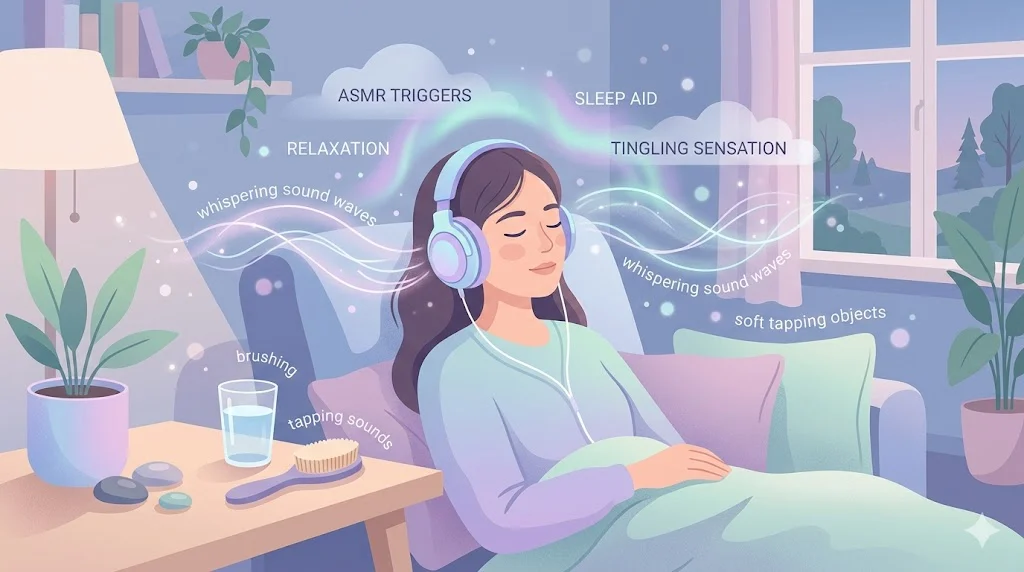
ASMR stands for Autonomous Sensory Meridian Response.
It refers to a calming, tingling sensation that some people experience in response to specific sounds, visuals, or gentle interactions such as whispering, tapping, brushing, or slow movements. This sensation often begins on the scalp and can travel down the neck and spine, creating a feeling of relaxation and comfort.For example, many people feel ASMR while listening to soft whispering or watching slow, careful hand movements in a quiet environment.
If you have ever watched a video of someone whispering softly, tapping on objects, or gently brushing a microphone and felt strangely relaxed, you may have experienced ASMR without even knowing its name. Over the past decade, ASMR has become a huge online phenomenon, especially on video platforms where creators design content specifically to trigger this soothing sensation.
But ASMR is more than just internet content. It describes a real sensory experience that people report in different ways. Some feel deep relaxation, others feel sleepy, and some describe a gentle tingling feeling that spreads through the body.
Understanding what ASMR stands for and how it works helps explain why millions of people use it for relaxation, stress relief, and even sleep support.
This article will explore the meaning of ASMR, how it works, common triggers, scientific explanations, real life examples, benefits, misconceptions, and frequently asked questions in a simple and engaging way.
What ASMR Stands For
ASMR stands for Autonomous Sensory Meridian Response.
Let’s break it down in a simple way:
- Autonomous means it happens naturally without control
- Sensory refers to the senses like hearing, sight, and touch
- Meridian refers to a peak or flowing sensation in the body
- Response means a reaction to a stimulus
Put together, ASMR describes a natural sensory reaction triggered by specific stimuli that produces a calming or tingling sensation.
Even though the name sounds scientific and complex, the experience itself is very simple and personal.
What ASMR Feels Like
People describe ASMR in different ways, but common experiences include:
- A soft tingling feeling starting on the scalp
- Relaxation spreading down the neck and shoulders
- A calming sense of peace or comfort
- Sleepiness or drowsiness
- Reduced anxiety or stress
Not everyone experiences ASMR, and the intensity varies from person to person. Some people feel it strongly, while others do not feel it at all.
How ASMR Works in Real Life
ASMR usually happens when a person is exposed to gentle and repetitive sensory triggers. These triggers can come from sounds, visuals, or even personal attention.
Some common real life examples include:
- Listening to someone whispering softly in a quiet room
- Watching someone slowly fold towels or organize objects
- Hearing gentle tapping on glass, wood, or plastic
- Experiencing soft brushing sounds near the ears
- Receiving calm, focused attention from another person
These experiences create a sense of safety, calmness, and relaxation for many individuals.
Common ASMR Triggers
ASMR triggers are specific sounds or actions that can activate the sensation.
Sound Triggers
- Whispering voices
- Soft speaking tones
- Tapping objects gently
- Crinkling paper or plastic
- Brushing or scratching sounds
- Page turning in books
Visual Triggers
- Slow hand movements
- Careful and repetitive actions
- Watching someone organize items
- Drawing or painting slowly
- Close up focus on small details
Personal Attention Triggers
- Someone speaking directly in a calm tone
- Simulated role play like haircuts or spa treatments
- Gentle instructions or guidance
ASMR in Online Culture
ASMR became widely popular through online videos, especially on platforms like YouTube and TikTok. Content creators, often called ASMR artists, produce videos specifically designed to trigger relaxation responses.
These videos often include:
- Whispered storytelling
- Slow tapping sounds
- Role play scenarios such as medical checkups or spa sessions
- Relaxation-focused visual content
Millions of viewers use ASMR videos to help them sleep, reduce stress, or simply relax after a long day.
Why People Watch ASMR Videos
People enjoy ASMR videos for many reasons:
1. Relaxation
ASMR helps many people feel calm and peaceful after stressful situations.
2. Sleep Aid
Soft sounds and slow movements can help people fall asleep more easily.
3. Stress Relief
ASMR content can reduce feelings of anxiety and tension.
4. Focus and Concentration
Some people use ASMR as background noise while studying or working.
5. Emotional Comfort
The gentle and caring tone of ASMR videos can feel comforting and safe.
Scientific Perspective on ASMR
Although ASMR is widely experienced, scientists are still studying exactly how it works. Some research suggests that ASMR may activate areas of the brain related to relaxation and emotional bonding.
Possible explanations include:
- Release of calming brain chemicals like endorphins
- Reduced heart rate and stress response
- Activation of pleasure and reward systems in the brain
However, not everyone experiences ASMR, which makes it a unique sensory response rather than a universal one.
Is ASMR the Same for Everyone
No, ASMR is not experienced by everyone in the same way.
There are generally three types of responses:
| Type of Response | Description |
|---|---|
| Strong ASMR response | Clear tingling sensation and deep relaxation |
| Mild response | Relaxation without tingling |
| No response | No noticeable effect |
Even people who do not feel tingling may still find ASMR videos relaxing or calming.
Benefits of ASMR
ASMR is not a medical treatment, but many people find it helpful in daily life.
Emotional Benefits
- Reduces stress
- Promotes calmness
- Helps with anxiety management
Sleep Benefits
- Helps people fall asleep faster
- Improves sleep quality for some individuals
- Reduces nighttime restlessness
Mental Focus
- Improves concentration for studying
- Creates a peaceful background environment
ASMR vs Other Relaxation Methods
ASMR is often compared with meditation, music therapy, and white noise.
| Method | Main Purpose | Feeling |
|---|---|---|
| ASMR | Sensory relaxation | Tingling and calmness |
| Meditation | Mind control and awareness | Mental clarity |
| Music therapy | Emotional balance | Mood enhancement |
| White noise | Sound masking | Neutral background sound |
ASMR is unique because it combines sensory triggers with emotional comfort.
Popular ASMR Styles
ASMR content comes in many creative styles:
Whisper ASMR
Soft whispering voices close to the microphone
Role Play ASMR
Simulated experiences like spa treatments or medical checkups
Nature ASMR
Rain sounds, forest ambience, ocean waves
Object Sounds ASMR
Tapping, crinkling, brushing everyday items
Eating ASMR
Slow chewing or food preparation sounds
Each style appeals to different preferences and triggers.
Misconceptions About ASMR
ASMR is often misunderstood, so let’s clear up a few things.
It is not hypnosis
ASMR does not control the mind or create unconscious states.
It is not sexual in nature
ASMR is about relaxation and sensory comfort, not attraction.
It is not harmful
For most people, ASMR is safe and used for relaxation.
Real Life Examples of ASMR Triggers
Here are everyday moments where ASMR can happen naturally:
- A barber gently cutting hair
- A teacher speaking in a calm, soft voice
- Pages turning in a quiet library
- Rain hitting a window at night
- Someone organizing a desk quietly
These small sounds often create unexpected calmness.
FAQs
What does ASMR stand for in simple words?
ASMR stands for Autonomous Sensory Meridian Response, which is a relaxing tingling sensation triggered by sounds or visuals.
Is ASMR real or just psychological?
ASMR is a real experience reported by many people, though science is still studying how it works in the brain.
Why do some people not feel ASMR?
Not everyone has the same sensory response, so some people do not experience tingling sensations.
Is ASMR good for sleep?
Yes, many people use ASMR to relax and fall asleep more easily.
Can ASMR reduce anxiety?
ASMR may help reduce stress and anxiety by creating a calming effect.
What are the most common ASMR triggers?
Whispering, tapping, brushing sounds, and slow movements are the most common triggers.
Is ASMR safe to listen to daily?
Yes, ASMR is generally safe and used regularly by millions of people.
Why is ASMR so popular on the internet?
It is popular because it helps people relax, sleep better, and feel comforted in a simple and accessible way.
Conclusion
ASMR stands for Autonomous Sensory Meridian Response, a unique sensory experience that creates a feeling of relaxation and sometimes tingling in response to specific sounds or visual triggers. It has become widely popular because it offers a simple and effective way to relax, reduce stress, and improve sleep for many people.
Even though not everyone experiences ASMR in the same way, its calming effects make it a valuable tool for those who do. Whether it is whispering, tapping, or gentle visual movements, ASMR continues to grow as a global relaxation trend that connects sensory experience with emotional comfort.
At its core, ASMR is about slowing down, feeling safe, and enjoying small, soothing moments in everyday life.
Read More Related Articles:
- ACV Mean in Insurance: What It Means for Your Insurance Claim In 2026
- Yielding Mean in Driving: What Drivers Need to Know In 2026
- “Allora” Mean in Italian: Translation and Everyday Use In 2026

Ivy Madison is a content creator at TextSprout.com, specializing in word definitions, internet slang, acronyms, and text abbreviations. She delivers clear and engaging explanations, helping readers quickly understand modern digital language and trending terms.