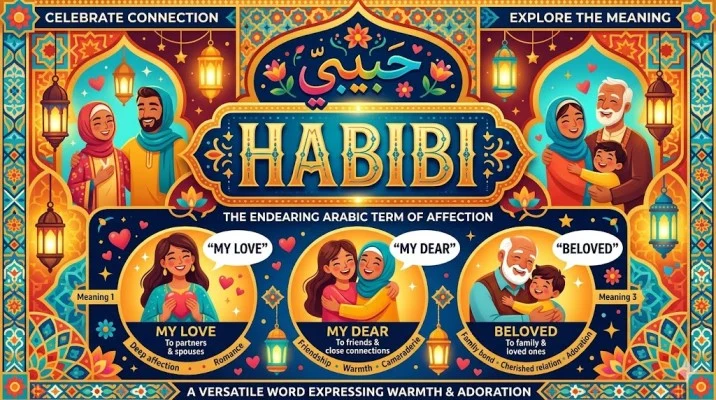
Habibi is an Arabic word that means “my love,” “my dear,” or “my beloved.”
It is commonly used as a term of affection between friends, family members, and romantic partners. The word expresses warmth, care, and closeness. For example, someone might say “thank you, habibi” to show appreciation in a friendly and loving way.
Language has a beautiful way of expressing emotions, and some words carry warmth that goes beyond simple translation. One such word is habibi. Even if you are not familiar with Arabic, you may have heard this word in songs, movies, or casual conversations online. It is one of those terms that instantly feels friendly and inviting.
Habibi is more than just a word. It represents affection, connection, and cultural expression. People use it in everyday life to show kindness, appreciation, and love. It can be used in a serious romantic way, or in a lighthearted friendly tone depending on the context.
In this guide, you will learn what habibi means, where it comes from, how it is used, examples in real life, tone variations, cultural importance, and related terms. By the end, you will understand why this simple word has become so popular around the world.
What Habibi Means
The word habibi comes from Arabic and is derived from the root word “hubb,” which means love. Habibi literally translates to “my beloved” or “my dear.”
In Arabic, the structure of the word adds a personal touch. The ending “i” means “my,” so habibi directly translates to “my loved one.”
It is important to know that Arabic words often change depending on gender. Habibi is typically used when addressing a male, while habibti is used when addressing a female.
Origin of the Word Habibi
Habibi has its roots in classical Arabic, a language spoken for centuries across the Middle East and North Africa. Over time, it became a common part of daily speech in many Arabic-speaking countries.
The word spread beyond its original regions through music, films, and global cultural exchange. Today, people from different backgrounds use habibi, even if they do not speak Arabic fluently.
This global popularity shows how powerful simple, emotional words can be. When people hear habibi, they often associate it with warmth, friendliness, and affection.
How Habibi Is Used in Everyday Life
Habibi is incredibly versatile. It can be used in many different situations depending on tone and relationship.
Friendly Use
Friends often use habibi casually, similar to saying “bro,” “buddy,” or “my friend.”
Example
“Come here, habibi, let’s talk.”
In this case, it sounds warm and welcoming.
Family Use
Family members use habibi to show love and care. Parents might call their children habibi, or siblings might use it with each other.
Example
“Are you okay, habibi?”
This expresses concern and affection.
Romantic Use
In romantic relationships, habibi becomes more intimate. It is similar to calling someone “my love” or “darling.”
Example
“I miss you, habibi.”
Here, the tone is clearly emotional and affectionate.
Examples of Habibi in Different Contexts
| Situation | Sentence | Tone |
|---|---|---|
| Friendship | “What are you doing, habibi?” | Friendly |
| Family | “Good night, habibi.” | Caring |
| Romantic | “You look amazing, habibi.” | Loving |
| Casual chat | “Relax, habibi, it’s all good.” | Lighthearted |
These examples show how flexible the word is. The meaning stays similar, but the tone changes depending on context.
Tone and Meaning Variations
Habibi does not always sound the same. The tone can shift depending on how it is said.
Warm and Affectionate
This is the most common tone. It expresses genuine care and love.
Playful and Casual
Friends might use habibi jokingly or casually, especially in relaxed conversations.
Reassuring
Sometimes habibi is used to comfort someone. It can make a sentence feel softer and more supportive.
Slightly Dismissive
In rare cases, the tone can sound sarcastic depending on delivery. For example, saying “okay, habibi” in a sarcastic tone could imply mild frustration.
Tone is everything. The same word can feel completely different depending on how it is spoken.
Habibi vs Habibti
Arabic is a gendered language, so words often change based on who you are speaking to.
| Word | Meaning | Used For |
|---|---|---|
| Habibi | My love or my dear | Male |
| Habibti | My love or my dear | Female |
For example
- “How are you, habibi” when speaking to a man
- “How are you, habibti” when speaking to a woman
Both words carry the same emotional meaning, but the form changes to match the person being addressed.
Why Habibi Became Popular Worldwide
Habibi is now widely used outside Arabic-speaking countries. There are several reasons for this.
Music and Pop Culture
Many songs, especially from the Middle East and global pop artists, include the word habibi. This exposure made it recognizable to international audiences.
Social Media
People often use habibi in captions, comments, and messages because it sounds warm and expressive.
Easy to Say
Habibi is simple to pronounce and has a pleasant sound, making it easy for people from different languages to adopt.
Emotional Appeal
The meaning of love and affection resonates universally. Even without understanding Arabic, people can feel the warmth behind the word.
Similar Words and Expressions
Different languages have their own versions of affectionate terms similar to habibi.
| Language | Word | Meaning |
|---|---|---|
| English | My love | Romantic affection |
| Spanish | Mi amor | My love |
| French | Mon amour | My love |
| Italian | Amore | Love |
| Hindi | Jaan | Beloved |
These expressions show that every culture has ways to express affection, and habibi fits into this global pattern of loving language.
When to Use Habibi
Using habibi correctly depends on your relationship with the person and the situation.
Appropriate Situations
- Talking to close friends
- Speaking with family members
- Expressing affection to a partner
- Casual conversations with people you know well
Situations to Be Careful
- Formal or professional settings
- Conversations with strangers who may not understand the word
- Cultural contexts where familiarity might be misunderstood
Being mindful of context helps ensure the word is received positively.
Common Misunderstandings
Some people misunderstand habibi because of its literal translation. The phrase “my love” might sound overly romantic, but in Arabic culture, it is often used casually among friends and family.
Another misunderstanding is assuming it is only for romantic use. In reality, it is much broader and can be used in many everyday situations.
Understanding the cultural context helps avoid confusion and makes communication smoother.
Emotional Impact of the Word Habibi
Habibi carries emotional weight. It can make conversations feel warmer, more personal, and more connected.
When someone calls you habibi, it often creates a sense of belonging and friendliness. It softens communication and adds a human touch that plain words sometimes lack.
This emotional quality is one reason the word has gained global popularity. People are naturally drawn to words that express kindness and connection.
FAQs
What does habibi mean in English
Habibi means my love, my dear, or my beloved. It is a term of affection used in Arabic.
Is habibi romantic or friendly
It can be both. It depends on the context and tone. Friends, family, and romantic partners all use it.
What is the female version of habibi
The female version is habibti, which is used when addressing a woman.
Can non Arabic speakers use habibi
Yes. Many people around the world use it, but it is important to understand its meaning and context.
Is it okay to say habibi to a friend
Yes. In many cultures, it is commonly used between friends as a warm and friendly expression.
Does habibi always mean love
Yes, but not always in a romantic sense. It often expresses general affection and care.
Why is habibi used in songs
It sounds melodic and emotional, making it popular in music across different cultures.
Can habibi be used in formal situations
It is usually better to avoid it in formal settings, as it is more casual and personal.
Conclusion
Habibi is a simple yet powerful word that means my love or my dear in Arabic. It reflects warmth, connection, and affection, making it a meaningful part of everyday language in many cultures.
Its flexibility allows it to be used among friends, family, and romantic partners, with tone playing a key role in how it is understood. Over time, habibi has spread across the world through music, media, and social interaction, becoming a widely recognized expression of kindness and care.
Understanding the meaning and usage of habibi helps you appreciate not only the word itself but also the cultural richness behind it. Whether used seriously or casually, it carries a message that is universal. People everywhere value connection, and habibi is one of the many ways language brings that feeling to life.
Read More Related Articles:
- PP Meaning in Text: Everything You Need to Know (2026)
- WYF Meaning in Texting and Slang: Full Guide with Examples and Tips (2026)
- SG in Text: The Meaning Changes More Than You Think In 2026

Ivy Madison is a content creator at TextSprout.com, specializing in word definitions, internet slang, acronyms, and text abbreviations. She delivers clear and engaging explanations, helping readers quickly understand modern digital language and trending terms.