
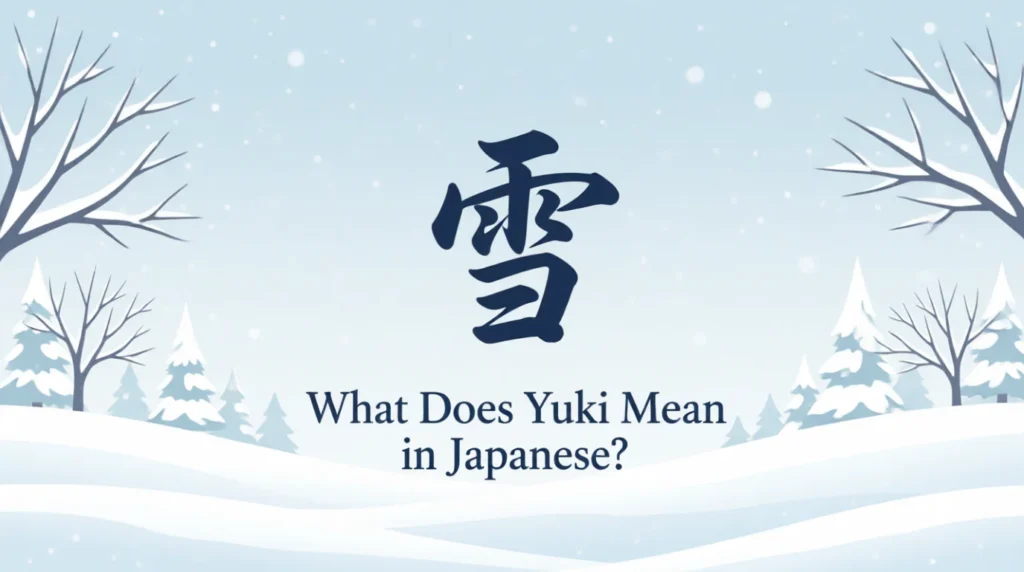
Definition:
Yuki (雪 / ゆき / 由紀 / 幸 / 友希) is a Japanese word and name most commonly meaning “snow” or “happiness,” depending on the kanji used. It can also symbolize purity, calmness, beauty, friendship, and good fortune in Japanese language and culture.
Few Japanese words feel as soft, calm, and poetic as “Yuki.” At first glance, it seems simple—often translated as snow. But in Japanese culture, Yuki is far more than weather. It’s a name, a feeling, a seasonal image, and even a quiet philosophy wrapped into one gentle word.
You might have seen Yuki used as:
- A Japanese first name (for girls and boys)
- A word in anime, manga, and J-dramas
- A symbol of purity, silence, or emotional depth
- A popular username or nickname worldwide
So what does Yuki really mean in Japanese? The answer depends on how it’s written, where it’s used, and the emotion behind it. Let’s explore everything—clearly, culturally, and practically.
What Does Yuki Mean in Japanese?
At its core, Yuki has multiple meanings, determined by kanji characters or context.
Most Common Meanings of Yuki
| Writing | Meaning | Context |
|---|---|---|
| 雪 | Snow | Nature, weather, poetry |
| 幸 | Happiness, good fortune | Names, emotions |
| 由紀 | Reason + chronicle | Personal names |
| 友希 | Friendship + hope | Modern names |
| 優希 | Gentleness + hope | Feminine names |
👉 Key takeaway:
There is no single meaning of Yuki—it changes based on kanji choice and usage.
Origin of the Word “Yuki” in Japanese
Linguistic Roots
- Yuki (雪) comes from Old Japanese, originally describing falling snow
- Over centuries, it evolved into a poetic symbol rather than just a literal weather term
- Snow in Japan is deeply tied to seasons, silence, and beauty
Cultural Importance of Snow (雪)
In Japanese culture, snow represents:
- ❄️ Purity
- ❄️ Impermanence (it melts)
- ❄️ Quiet strength
- ❄️ Emotional restraint
This is why Yuki feels calm and gentle rather than cold or harsh.
Yuki as a Japanese Name
One of the most popular uses of Yuki is as a given name.
Is Yuki a Girl or Boy Name?
Both.
Yuki is a unisex Japanese name, depending on the kanji.
Feminine Name Usage
Often associated with:
- Softness
- Kindness
- Emotional warmth
Common kanji:
- 雪 (Snow)
- 優希 (Gentle hope)
- 幸 (Happiness)
Masculine Name Usage
Often linked to:
- Strength
- Calm intelligence
- Quiet reliability
Common kanji:
- 由紀 (Reasoned history)
- 勇希 (Courage + hope)
Popularity of the Name Yuki
In Japan 🇯🇵
- Popular since the 1970s
- Frequently appears in:
- Baby name rankings
- Literature
- Anime & pop culture
International Popularity 🌍
- Common among anime fans
- Widely used as:
- Online usernames
- Pen names
- Pet names
- Favored for its:
- Short length
- Soft pronunciation
- Cultural elegance
How Yuki Is Used in Real Life
1. Literal Usage (Snow)
Example:
- 今日は雪です。
Kyō wa yuki desu.
“Today, it’s snowing.”
Tone: Neutral & factual
2. As a Name
Example:
- 雪さんは優しい人です。
“Yuki is a kind person.”
Tone: Friendly & respectful
3. Emotional or Poetic Usage
Example:
- 心が雪のように静かだ。
“My heart is quiet like snow.”
Tone: Reflective & poetic
Tone & Emotional Nuance of “Yuki”
Unlike slang words, Yuki is emotionally neutral to positive.
Tone Breakdown
| Tone | Usage | Example |
|---|---|---|
| Friendly | Names, casual talk | “Yukiちゃん” |
| Neutral | Weather | “雪が降る” |
| Poetic | Writing, songs | “雪の心” |
| Romantic | Symbolism | “Pure as snow” |
🚫 Negative or dismissive tone:
Yuki is rarely negative. It does not insult or mock.
Examples of Yuki in Context (With Emojis)
- ❄️ 雪がきれいですね。
“The snow is beautiful.” - 😊 ユキは本当に親切。
“Yuki is really kind.” - 🌙 雪の夜は静かだ。
“A snowy night is quiet.”
Alternate Meanings of Yuki
Although snow is the most famous meaning, Yuki can also represent abstract ideas:
- Happiness (幸)
- Hope (希)
- Friendship (友)
- Courage (勇)
This flexibility is why Japanese parents love the name—they can choose the meaning they want their child’s name to carry.
Comparison: Yuki vs Similar Japanese Words
Yuki vs Fuyu (冬)
| Word | Meaning | Use |
|---|---|---|
| Yuki | Snow | Weather, names |
| Fuyu | Winter | Season |
👉 Snow is part of winter, but not the same thing.
Shiro (白) vsYuki
| Word | Meaning | Symbolism |
|---|---|---|
| Yuki | Snow | Purity + calm |
| Shiro | White | Color |
Setsu (雪 / 節) vsYuki
| Word | Use |
|---|---|
| Yuki | Common speech |
| Setsu | Formal, classical |
Polite & Professional Alternatives to “Yuki”
Depending on context:
- In formal writing:
- 雪景色 (snowy scenery)
- In poetry:
- 白雪 (white snow)
- In conversation:
- 雪が降っています (it’s snowing)
Yuki in Anime, Manga & Pop Culture 🎌
Famous characters named Yuki:
- Yuki Nagato – The Melancholy of Haruhi Suzumiya
- Yuki Sohma – Fruits Basket
- Yuki Cross – Vampire Knight
Why creators love the name:
- Soft but memorable
- Gender-neutral
- Emotionally expressive
Table: Kanji Variations of Yuki
| Kanji | Meaning | Gender Usage | Vibe |
|---|---|---|---|
| 雪 | Snow | Unisex | Calm, pure |
| 幸 | Happiness | Feminine | Warm |
| 由紀 | Reason + record | Masculine | Intelligent |
| 友希 | Friendship + hope | Unisex | Modern |
| 優希 | Gentle hope | Feminine | Soft |
Is Yuki Used as Slang?
❌ No.
Yuki is not slang. It’s a standard Japanese word and name.
However, online communities sometimes use “Yuki” as a soft nickname, especially for:
- Gentle personalities
- Quiet characters
- Winter-themed aesthetics
How to Use “Yuki” Correctly (Practical Tips)
✔ Use 雪 when talking about weather
✔ Confirm kanji meaning when using as a name
✔ Safe for formal and casual settings
✔ Avoid assuming gender—it’s unisex
Conclusion: The True Meaning of Yuki 🌸
Yuki is one of those rare words that feels simple but carries depth. Whether it means snow gently falling, a quiet kind soul, or happiness written into a name, Yuki reflects the heart of Japanese expression—soft, meaningful, and intentional.
- Yuki’s meaning depends on kanji and context
- It’s a unisex name with cultural elegance
- Commonly means snow, happiness, hope, or purity
- Widely used in real life, media, and art
If you’re choosing a name, writing a story, or simply curious about Japanese language, Yuki is a word that never feels out of place.
Frequently Asked Questions (FAQ)
1. What does Yuki literally mean in Japanese?
Yuki literally means snow (雪), but can also mean happiness or hope depending on kanji.
2. Is Yuki a Japanese name?
Yes, Yuki is a common Japanese unisex name.
3. Is Yuki more common for girls or boys?
It’s evenly used, though certain kanji lean feminine or masculine.
4. Does Yuki have a spiritual meaning?
Symbolically, yes—purity, impermanence, and calmness.
5. Is Yuki used in everyday conversation?
Yes, especially when talking about snow or weather.
6. Is Yuki a good name for non-Japanese people?
Yes. It’s easy to pronounce and culturally respectful.
7. Are there negative meanings of Yuki?
No. Yuki has no offensive or negative meanings.
8. What kanji for Yuki is most popular?
雪 (snow) and 幸 (happiness) are the most common.

Neon Samuel is a digital content creator at TextSprout.com, dedicated to decoding modern words, slang, and expressions. His writing helps readers quickly grasp meanings and understand how terms are used in real conversations across text and social platforms.