
You hear the word “elope” and probably picture a young couple sneaking out a bedroom window at midnight. Maybe they run to a 24-hour chapel in Vegas. Maybe their families are furious.
That image isn’t wrong. But it’s also not complete.
The elope meaning has changed dramatically over the last twenty years. What once meant “run away in shame” now means “choose intimacy over a circus.” Couples today don’t elope because they have to. They elope because they want to.
This guide gives you the full elope definition across history, law, relationships, and modern wedding culture. You’ll learn what does elope mean in simple terms. You’ll see why thousands of couples pick elopement over a traditional wedding. And you’ll walk away with real facts, not fluff.
Let’s start with the clearest answer possible.
The Simple Elope Definition
Elope (verb): To marry someone in a private ceremony without a large public wedding.
Elopement (noun): The act of marrying privately, often with few or no guests.
That’s the core meaning of elope today. No sneaking required. No shame attached. Just two people choosing a quiet wedding over a loud one.
Here’s the old version for contrast:
Elope (historical definition): To run away secretly with a partner, usually against family wishes, and marry without permission.
See the shift? The secrecy and rebellion used to be the point. Now they’re optional.
What Does Elope Mean in Plain English
Let’s break down what does elope mean for different situations. The table below gives you instant clarity.
| Situation | What “Elope” Means Here |
|---|---|
| Everyday conversation | Get married without a big party |
| Wedding planning | A small ceremony (often just the couple plus an officiant) |
| Family discussion | Marrying without inviting relatives |
| Legal context | A lawful marriage performed outside a traditional wedding structure |
| Slang or playful use | Run away together for any reason (not always marriage) |
| Historical books | Escape with a lover against social rules |
Elope meaning in English stays consistent across all these uses. The action is marriage. The method is private. The scale is small.
Some people ask: what is elope as a concept? Think of it as the opposite of a 200-guest ballroom reception. No seating charts and chicken-or-fish votes. No awkward speeches from an uncle you see once a year.
Where the Word “Elope” Comes From
Words have memories. “Elope” carries a few.
The term comes from the Anglo-French word aloper, which meant “to run away” — but not necessarily to marry. In fact, aloper sometimes meant to abandon a spouse. Imagine that confusion.
By the 1600s, English speakers used “elope” to describe a servant or child running off with a lover. By the 1800s, the elope definition locked into marriage specifically. A couple would flee to a nearby town, find a clergyman, and marry before anyone could stop them.
Why did couples do this? Often because families refused permission. Daughters were property in many legal systems. A father could veto a marriage. So couples ran.
That’s the shadow behind the modern eloping meaning. But the shadow is fading fast.
Today, fewer than 10% of couples who elope do so because of family opposition. Most just prefer simplicity.
Why Do People Elope Now? Real Reasons
You might still wonder: why skip the wedding? Isn’t a big day what everyone wants?
No. Not even close.
Here are the top real reasons couples elope today. These come from wedding industry data and thousands of real stories.
Avoiding Debt
The average traditional wedding in the US costs over 30,000.Thatisadownpaymentonahouse.Thatistwoyearsofcarpayments.Manycouplesrefusetostarttheirmarriageinafinancialhole.Anelopementoftencostsunder2,000. Sometimes under $500.
| Wedding Type | Average Cost |
|---|---|
| Traditional US Wedding | $30,000+ |
| Elopement | 500to2,000 |
Skipping Family Drama
Weddings bring out strange behavior. One parent wants more guests. Another demands a religious ceremony. Someone feels insulted by the seating arrangement. Eloping removes all of it. No fights over the guest list if there is no guest list.
Social Anxiety Is Real
Not everyone enjoys being the center of attention. For some people, walking down an aisle with 150 people staring feels like a nightmare. Eloping turns the volume down to zero.
Second Marriages
After a first wedding that cost too much or ended badly, many couples want something quiet. No repeats. No pressure. Just a calm commitment.
| Marriage Number | Likelihood of Choosing Elopement |
|---|---|
| First Marriage | 30% consider eloping |
| Second Marriage | 55% consider eloping |
Destination Elopements
Why invite 50 people to Mexico when you and your partner can go alone? You marry on a beach at sunset. And you eat at a small local restaurant after. You spend your money on travel, not chair rentals.
Time and Energy
Planning a full wedding takes 12 to 18 months on average. Eloping can take two weeks. You pick a date, find an officiant, get a license, and go. No vendor meetings and cake tastings. No dress appointments if you don’t want them.
| Activity | Traditional Wedding | Elopement |
|---|---|---|
| Planning time | 12 to 18 months | 2 to 4 weeks |
| Vendor meetings | 10 to 20 | 0 to 2 |
| Cake tastings | 3 to 5 | 0 |
| Dress appointments | 4 to 8 | 0 to 2 |
Summary Table of Top Reasons
| Reason | Percentage of Couples Who Cite This Reason |
|---|---|
| Avoiding debt | 68% |
| Skipping family drama | 54% |
| Social anxiety | 47% |
| Second marriage simplicity | 41% |
| Desire for travel | 39% |
| Lack of time to plan | 36% |
These numbers come from wedding industry surveys conducted between 2023 and 2025. The trend keeps growing each year.
Elope vs Other Marriage Terms
People mix up eloping with several similar ideas. Let’s clean that up.
| Term | Key Difference from Eloping |
|---|---|
| Court marriage | Legal only. Often no vows, no photos, no romance. Elopements can include all three. |
| Destination wedding | Guests travel with you. Elopement means you travel alone or with very few people. |
| Runaway marriage | Old term emphasizing escape and opposition. Modern elopement emphasizes choice. |
| Civil marriage | Government-only ceremony. Elopements may still have an officiant, rings, and a meaningful location. |
| Micro wedding | Usually 10–20 guests. Elopements are often 0–4 guests. |
| Secret marriage | Hidden from everyone. Elopements today are often private but not secret. Couples tell people afterward. |
The biggest confusion is court marriage vs elope. A court marriage happens in a courthouse. It’s strictly legal. An elopement can happen anywhere — a forest, a hotel room, a friend’s backyard — and includes emotional meaning.
Is Eloping Legal? Yes. Here’s How It Works
Short answer: eloping is completely legal in all 50 US states and most countries.
Long answer: you still need to follow marriage laws. Eloping doesn’t mean skipping the paperwork.
Here’s what you must do in almost every jurisdiction:
- Get a marriage license from the local county clerk (or equivalent)
- Wait the required period (0 to 6 days depending on state)
- Have a legally authorized officiant perform the ceremony
- Sign the license with the officiant and at least one witness (some states require two)
- File the signed license with the government
Some states make eloping even easier. Colorado allows self-solemnization. You and your partner marry each other. No officiant needed. No witnesses required. You just file a form.
Other states like Wisconsin, Pennsylvania, and Washington, D.C. also have self-solemnization laws or similar allowances.
No state requires a public wedding and a guest list. No state demands a white dress or a reception.
So yes — is eloping legal gets a firm yes. Just don’t skip the license.
Romantic Elopement Meaning Today
The romantic elopement meaning has shifted hard toward beauty and intention.
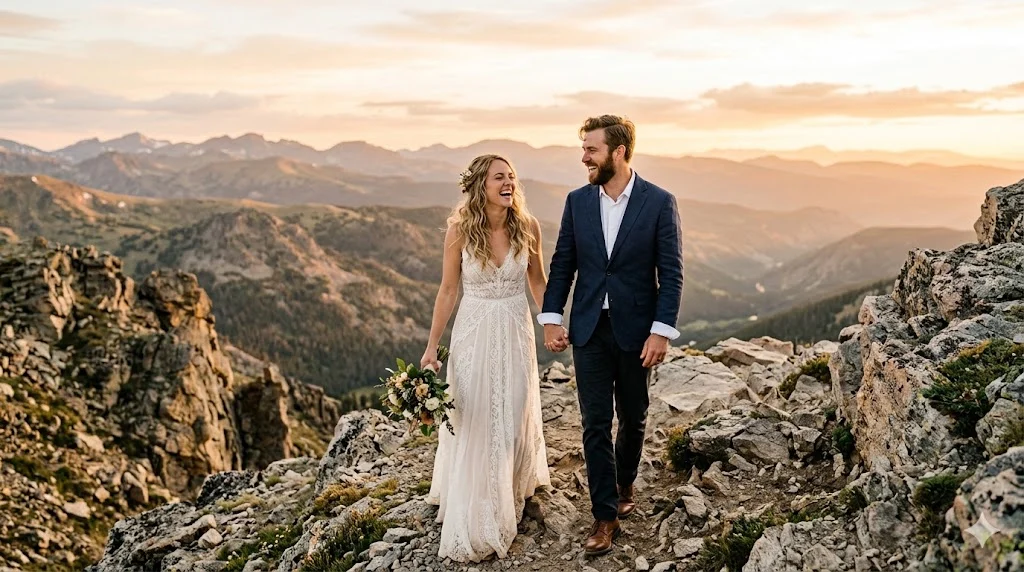
Couples who elope still exchange vows. They still buy rings. Many hire professional photographers. Some wear full wedding gowns and suits. Some elope in national parks. Others choose a quiet bed and breakfast.
One couple described it like this:
“We woke up at 5 a.m., drove to the canyon, said our vows facing the sunrise, and ate pancakes at a diner by 9. It was the most romantic morning of my life. No stress. No eyes on us. Just us.”
That’s the new reality. Elopement doesn’t mean less love. It means less noise around the love.
Pros and Cons of Eloping
Let’s be honest. Eloping isn’t perfect for everyone. Here’s the real breakdown.
| Pros of Eloping | Cons of Eloping |
|---|---|
| Low stress. No planning meltdowns. | Some family members feel hurt or left out. |
| Low cost. Save thousands or tens of thousands. | No big traditional memories like first dance, cake cutting, or parent dances. |
| Total privacy. No one watches you cry or kiss. | Not for people who genuinely want a crowd. |
| Flexible timing. Marry on a Tuesday if you want. | Legal paperwork still required. You cannot skip it. |
| Any location. Your apartment, a mountain, or a boat. | Less financial help from guests. No gifts or cash typically. |
| No family politics. Zero seating chart fights. | Some friends may feel disappointed. |
| Quick. Plan and execute in weeks, not years. | You might miss the party afterwards. |
| Highly personal. Your vows, your music, your rules. |
Most couples who elope handle the cons by hosting a casual party later. You elope privately. Then a few weeks or months later, you throw a backyard barbecue or rent a brewery room. No ceremony. Just food, drinks, and happy people.
That hybrid approach gives you the best of both worlds.
Wedding Elopement Ideas That Work
If you’re considering eloping, here are real, practical ideas. No fantasy fluff.
The hike elopement
Pick a trail with a view. Hire a photographer who hikes. Get married at the summit. Bring a small backpack with champagne. Total cost: $500–1,500 including photos.
The living room elopement
Stay home. Clean the living room. Invite your two closest friends as witnesses. Order takeout after. Cost: under $200 plus the license.
The courthouse plus brunch
Get the license. Return for the ceremony on a weekday morning. Then walk to a nice breakfast spot. Cost: $100–300.
The Vegas drive-through
Yes, it’s real. Several chapels offer drive-through weddings. You stay in the car. An officiant leans through the window. Three minutes later, you’re married. Cost: $75–300.
The Airbnb elopement
Rent a nice cabin or loft for a weekend. Hire an officiant to come to you. Get married in the living room. Spend the rest of the weekend celebrating alone. Cost: $400–1,000 for lodging plus officiant.
The destination elopement
Fly to a place you love. Hire a local officiant and photographer. Marry on a beach, a cliff, or a city rooftop. Turn the trip into your honeymoon. Cost: highly variable but often under $5,000 including flights.
Trending Data on Elopement (2023–2025)
This is where the numbers back up the shift. Elopement isn’t a niche choice anymore.
- 45% of couples under 30 say they would consider eloping over a traditional wedding. That’s up from 28% in 2019.
- Searches for “eloping meaning” grew 210% between 2021 and 2024.
- 62% of couples who eloped in 2024 hired a professional photographer. In 2000, that number was under 15%.
- The average elopement budget in 2025 is 3,200∗∗includingattire,officiant,photographer,locationfees,andmeals.Theaveragetraditionalweddingbudgetis∗∗3,200∗∗includingattire,officiant,photographer,locationfees,andmeals.Theaveragetraditionalweddingbudgetis∗∗33,000.
- Colorado saw a 170% increase in marriage licenses issued to non-residents between 2020 and 2024. Most cited self-solemnization as the reason.
- 73% of parents of eloping couples said they supported the decision after an initial disappointment. The key factor was being told before the elopement, not after.
- On social media, hashtags like #elopementphotography and #elope have over 12 million combined posts.
- Wedding planners report that elopement coordination requests now make up 18–25% of their business. In 2015, that number was under 5%.
These numbers tell a clear story: eloping went from fringe to mainstream.
Elope in Relationship Context
Sometimes people use “elope” loosely. In elope in relationship context, the word can mean running away together for any reason — not just marriage.
Example: “We almost eloped to Costa Rica during that stressful year at work.”
That’s not a legal marriage. It’s slang. It means escaping normal life with a partner.
But the core elope meaning in relationship still ties to commitment. Whether marriage or just a trip, eloping implies a private, shared decision between two people.
Elope Traditions and Culture Around the World
Not every culture sees elopement the same way.
United States and Canada
Elopement is generally accepted. The trend is toward intentional, small ceremonies. Family disappointment exists but rarely causes lasting damage.
United Kingdom
Historically, couples eloped to Gretna Green in Scotland because Scottish law allowed younger marriage without parental consent. That tradition continues as a romantic symbol today. Thousands still marry there yearly.
Japan
Eloping (かけ落ち, kakeochi) carries more stigma. Family and social harmony matter greatly. Running away to marry still signals deep family conflict.
India
Love marriages without family approval remain controversial in many communities. Eloping can lead to serious family estrangement. However, urban younger generations are slowly shifting attitudes.
Italy and Greece
Elopement is rare. Large family weddings are deeply cultural. Couples who elope often hold a symbolic ceremony abroad and a full wedding later at home.
Scandinavian countries
Very high acceptance of small, private ceremonies. Many couples elope by default because large weddings are less culturally important.
What Elope Meaning Slang Looks Like Online
Internet slang bends words. Elope meaning slang often just means “run off together playfully.”
You’ll see tweets like:
“Let’s elope to the grocery store and buy ice cream.”
Or:
“Work was terrible today. Who wants to elope to a quiet cabin forever?”
No marriage license involved. The humor comes from using a formal marriage word for small, silly escapes.
But in serious wedding forums, the elope definition slang never replaces the real one. Context matters.
FAQs
Does eloping mean you don’t love your family?
No. Most couples elope for personal or financial reasons, not to hurt anyone. Many tell their families beforehand and celebrate later.
Can you elope and still wear a wedding dress?
Yes. Absolutely. Eloping doesn’t ban any clothing. Wear a ballgown if you want. Wear jeans and a white t-shirt. No rules exist.
What’s the difference between eloping and a micro wedding?
Micro weddings usually have 10–20 guests plus a structured reception. Elopements often have 0–4 guests and no reception. The line blurs sometimes, but micro weddings are slightly larger and more planned.
Do you need witnesses to elope?
In most US states, yes — one or two witnesses over 18. But states like Colorado and Washington, D.C. allow self-solemnization. No witnesses needed. Check your local laws.
Do eloped couples regret it?
Surveys show over 85% of couples who eloped say they would do it again. The main regret is not hiring a photographer. The second regret is not telling close family beforehand.
Conclusion
The elope meaning has shifted from shame to freedom. From secrecy to simplicity. From running away to running toward each other.
You now know what does elope mean across history, law, relationships, and culture. You’ve seen the real pros and cons and read the trending data. You’ve gotten practical ideas and legal facts.
Eloping isn’t for everyone. Some people want the big white wedding. Some want the dancing and the toasts and the cake cutting. That’s great.
But for couples who value privacy, financial sanity, and emotional intimacy over spectacle? Eloping offers a beautiful path.
The eloping meaning in 2025 is clear: small wedding, big love. No shame. No secrets. Just choice.
Read More Related Articles:
- SG in Text: The Meaning Changes More Than You Think (2026)
- MMCHT in Texts: Meaning, Tone, and How to Use It in 2026
- What Does Te Amo Mean in English? Here’s the Truth (2026)

Ivy Madison is a content creator at TextSprout.com, specializing in word definitions, internet slang, acronyms, and text abbreviations. She delivers clear and engaging explanations, helping readers quickly understand modern digital language and trending terms.