
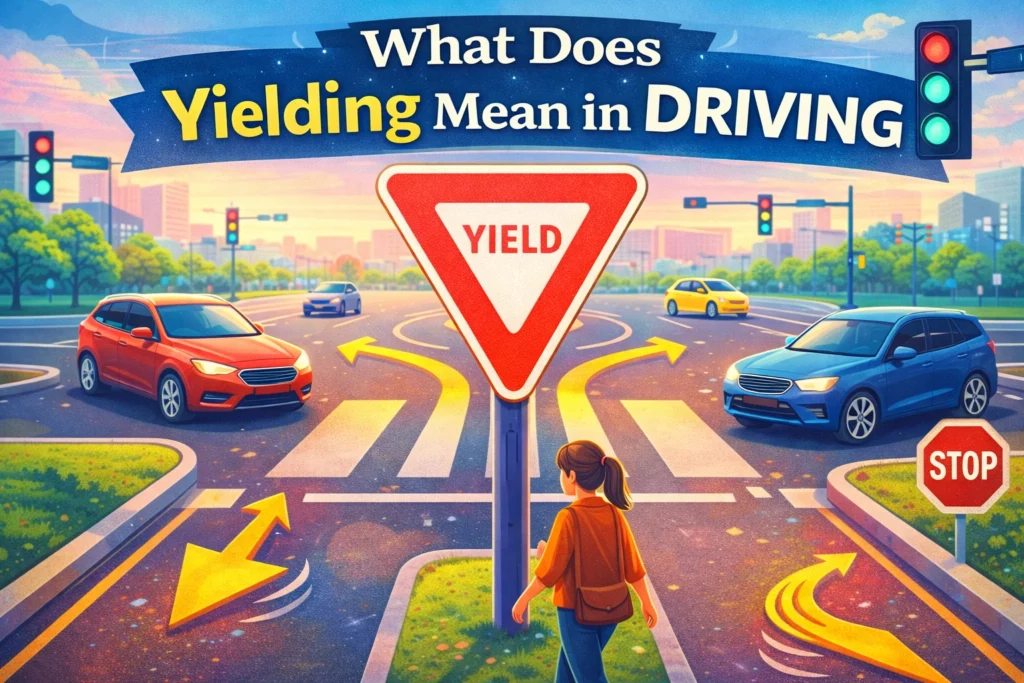
Yielding in driving means allowing another vehicle, pedestrian, or cyclist to go first when they have the right of way.
It usually involves slowing down or stopping to let others pass safely before you continue. Yielding keeps traffic smooth and ensures everyone stays safe on the road.
Driving is more than just pressing the accelerator and steering toward your destination. It is about understanding the invisible rhythm of traffic, anticipating the actions of other road users, and making decisions that keep everyone safe. Among all the traffic rules that drivers learn, yielding is one that is easy to overlook but crucial to master. Misunderstanding it can lead to confusion, near misses, and accidents. At its heart, yielding is about patience, awareness, and courtesy.
You might have seen the familiar triangular Yield sign at intersections or heard phrases like “yield the right of way” in driving lessons. Yet, many drivers treat yielding as optional or fail to apply it correctly. This article will explain everything about yielding, from what it truly means to the scenarios where it matters most, how it compares to right of way, and tips for practicing it safely every day.
By understanding yielding, you not only follow the law but also become a more confident and courteous driver. Yielding is more than a rule; it is a mindset that improves road safety for you, other drivers, and pedestrians. Even experienced drivers can benefit from revisiting the nuances of this fundamental concept to avoid accidents and navigate traffic with ease.
Why Yielding Is Important
Yielding plays a central role in traffic safety. Roads are shared spaces, and without rules, intersections and merges would be chaotic. Yielding allows vehicles and pedestrians to navigate the road safely, reducing the likelihood of collisions. It helps maintain smooth traffic flow and prevents congestion. Beyond safety, yielding demonstrates respect for other road users, including pedestrians, cyclists, and fellow drivers.
Imagine approaching a busy intersection where cars are coming from multiple directions. Without yielding, vehicles might try to enter the intersection simultaneously, creating confusion and accidents. Yielding establishes order and reduces the stress that drivers feel in such situations. It is particularly important at roundabouts, merges, and pedestrian crossings where multiple users are interacting in the same space.
Yielding is not just about obeying the law; it is also about fostering patience and awareness on the road. Courteous yielding signals to other drivers that you are attentive and considerate, which can encourage similar behavior in return. On crowded roads, these small acts of consideration can prevent accidents, avoid traffic violations, and create a safer environment for everyone.
Quick Definition of Yielding
Yielding means giving priority to another road user who has the right of way. This can involve slowing down, pausing, or stopping to allow another vehicle, pedestrian, or cyclist to pass safely. Yielding is different from stopping. A stop requires a complete halt at a stop sign, whereas yielding allows you to proceed if the road is clear. It is a practice that requires judgment, attentiveness, and sometimes a bit of patience.
Origin and History of Yielding
The concept of yielding emerged in the early 20th century when car traffic began to increase dramatically. Intersections were often chaotic, and traffic accidents were common. Traffic engineers needed a system that could guide drivers in determining who goes first. This led to the creation of the Yield sign in the United States during the 1950s.
The Yield sign was designed to be easily recognizable and distinguishable from Stop signs. Its triangular shape and bold lettering communicate the message quickly. Unlike a stop sign, the yield sign does not always require a full stop. Its purpose is to make drivers aware of the need to give priority to other road users.
Since its introduction, the concept of yielding has become standard worldwide. Many countries use the phrase “Give Way” instead of “Yield,” but the principle remains the same. Yielding helps prevent collisions and maintain orderly traffic flow, especially at intersections, roundabouts, and merging lanes.
What a Yield Sign Means
A yield sign instructs drivers to slow down, observe traffic, and allow others to pass first. It is a warning that careful judgment is required. Drivers should be ready to stop if necessary but can proceed if the road is clear. Yield signs are commonly found at intersections where two roads meet, on highway on-ramps, and at roundabouts.
Ignoring a yield sign can have serious consequences, including accidents and traffic violations. Learning to interpret and respond to yield signs appropriately is a fundamental part of safe driving. Yielding ensures that everyone understands who has priority, preventing confusion and keeping traffic moving smoothly.
Situations Where Drivers Must Yield
Yielding is required in a variety of common driving scenarios. Being aware of these situations will help prevent accidents and promote courteous driving.
Table: Everyday Yielding Scenarios
| Situation | Correct Action | Why It Matters |
|---|---|---|
| Turning left at a traffic light | Let oncoming vehicles pass first | They have priority, avoiding collisions |
| Entering a highway | Allow highway traffic to continue | Vehicles on the highway move faster |
| Roundabout entry | Wait for a gap in traffic | Vehicles already circulating go first |
| Pedestrian crosswalk | Stop and let pedestrians cross | Pedestrians have legal priority |
| Merging lanes | Yield to traffic already in the lane | Ensures smooth and safe merging |
For example, imagine merging onto a busy highway. The cars on the highway are moving quickly, and forcing your way without yielding could cause a serious accident. Slowing down, observing the traffic, and merging when there is a safe gap is yielding in practice.
Yielding vs Right of Way
Yielding and right of way are closely connected but not identical. It is the act of allowing someone else to proceed first. Right of way is the legal entitlement to go first.
Understanding this distinction is essential for safe driving.
Table: Yielding vs Right of Way
| Term | Meaning | Example |
|---|---|---|
| Yield | Allow another road user to go first | Slowing down before entering a main road |
| Right of Way | Legal priority to proceed | Cars already on the main road continue without stopping |
In simple terms, one driver has the right of way while the other yields. Misunderstanding this can lead to conflicts at intersections, near roundabouts, and during merges.
Real Life Examples of Yielding
Real-life examples help drivers understand how to yield properly.
Imagine turning left at a busy intersection. You must wait for oncoming traffic to pass. Entering a highway ramp requires yielding to vehicles already moving at high speeds. At a roundabout, you must wait for a safe gap before merging. Pedestrian crosswalks require stopping if someone is crossing. Practicing these behaviors ensures safety and reduces stress on the road.
Table: Everyday Yielding Scenarios with Context
| Situation | What to Do | Outcome |
|---|---|---|
| Turning left at an intersection | Wait for oncoming cars | Prevents collision and confusion |
| Merging onto a highway | Yield to fast-moving traffic | Ensures smooth entry and safety |
| Pedestrian crosswalk | Stop for pedestrians | Protects pedestrians and avoids fines |
| Roundabout entry | Enter when safe | Prevents accidents and maintains traffic flow |
| Side street onto main road | Allow vehicles on main road | Prevents rear-end accidents |
Yielding Etiquette
Yielding is not only a law but also an expression of road courtesy. Polite drivers slow down and allow others to proceed without hesitation. Neutral drivers follow the law without extra gestures. Aggressive drivers ignore rules, forcing their way, which can cause accidents and road rage. Practicing polite yielding improves traffic flow and creates a safer environment for all road users.
Common Mistakes When Yielding
Even experienced drivers can make mistakes when yielding. Common errors include failing to slow down, stopping unnecessarily and confusing drivers behind, ignoring pedestrians, speeding through merges, or misjudging gaps in roundabouts. Awareness of these mistakes is key to preventing accidents and avoiding traffic penalties.
Yielding at Different Types of Intersections
At four-way intersections, the first vehicle to arrive usually goes first. If two vehicles arrive simultaneously, the driver on the left yields. At T-intersections, vehicles on the minor road must yield to the main road. At roundabouts, vehicles entering must yield to those already circulating. Signaling your intentions while merging or exiting is crucial for safety.
Polite Alternatives to Yield
In teaching or discussion, words like give way, let others pass, allow traffic to proceed, or wait for right of way can replace yield. These alternatives can help learners or international drivers understand the concept more clearly.
Other Meanings of Yielding
Outside driving, yielding can refer to crop production in agriculture, returns on investments in finance, or giving in during a discussion. In driving, the meaning remains specific to giving the right of way safely.
Tips for Yielding Safely
Approach yield signs cautiously. Check all directions before proceeding. Make eye contact with pedestrians when possible. Signal early when merging or turning. Avoid aggressive maneuvers. Practicing patience and awareness improves safety and smooths traffic flow.
Small improvements in yielding habits can dramatically reduce accidents. Observing how other drivers yield and adjusting your actions accordingly can prevent collisions and make your drive more stress-free.
Interesting Facts About Yielding
Yield signs are triangular worldwide, instantly recognizable. Some countries use the phrase Give Way. Studies show that yielding in roundabouts reduces accidents by up to forty percent compared to uncontrolled intersections. Defensive driving always includes anticipating when you may need to yield.
FAQs
What does yielding mean in driving?
Yielding means letting another vehicle, pedestrian, or cyclist go first when they have the right of way.
Does yielding mean you must stop?
Not always. Stop only if necessary. Otherwise, slow down and proceed safely.
Who must yield at an intersection?
The driver entering later or on the minor road usually yields.
Do drivers always yield to pedestrians?
Yes, pedestrians almost always have the right of way.
What happens if you fail to yield?
Failing to yield can cause accidents and result in traffic fines.
Is yielding the same as stopping?
No, yielding is about caution and giving priority, while stopping is a complete halt.
When must drivers yield when turning left?
Drivers turning left must yield to oncoming traffic going straight or turning right.
What is a yield sign used for?
It instructs drivers to slow down and allow others to go first.
Conclusion
Yielding is a simple but essential driving rule. It ensures safety, smooth traffic flow, and protection for pedestrians and cyclists. Yielding is about giving priority, not necessarily stopping completely. Practicing safe yielding habits, staying aware, and showing courtesy makes roads safer for everyone. Remember, yielding is a small action that can save lives and prevent traffic conflicts.
Read More Related Articles:
- What Does Market Cap Mean in Stocks: A Complete Investor’s Guide In 2026
- What Does TMU Mean in Text: The Slang You’ve Probably Seen In 2026
- What Does SOW Mean in Business: Definition and Explanation

Luna Hartley is a content creator at TextSprout.com, where she specializes in explaining word meanings, modern phrases, and everyday language used in texts and online conversations. Her writing focuses on clarity and context, helping readers understand how words are actually used in real communication.