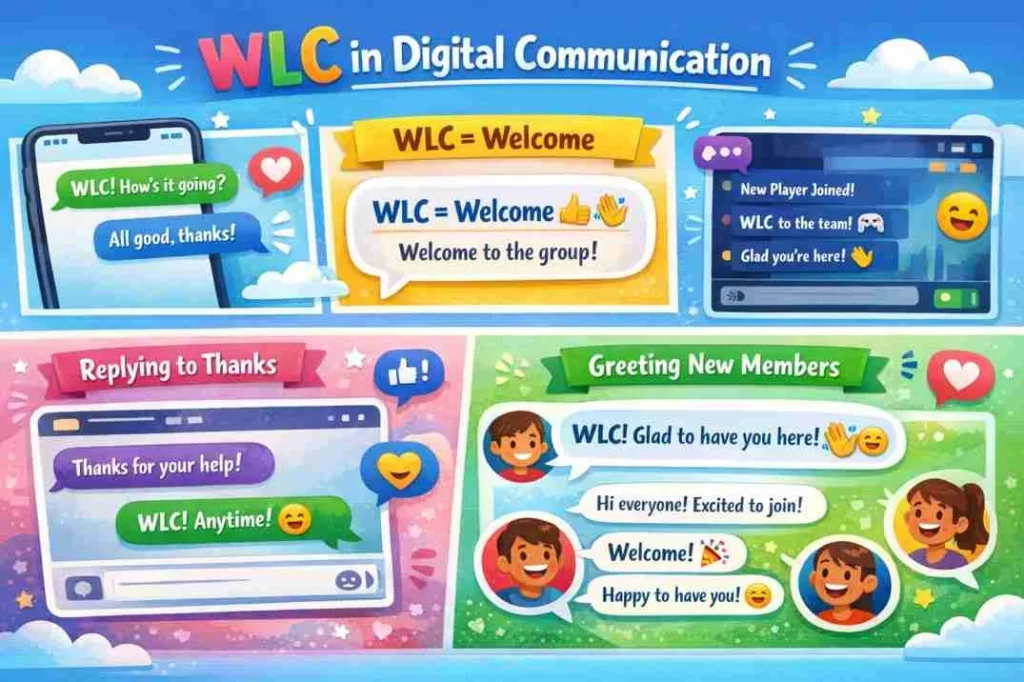
WLC in text messaging and online chats stands for “Welcome.”
It is a shorthand abbreviation used to greet someone politely or respond to thanks in a quick, informal way. People use WLC in texting apps, social media platforms, and even in gaming chats when they want to acknowledge someone politely without typing the full word.
In simple terms, WLC is just a fast and friendly way to say welcome, making conversations quicker and more casual while maintaining a polite tone.
In today’s digital world, communication is fast, informal, and full of abbreviations. From teenagers texting friends to professionals chatting on Slack, shorthand language dominates online conversations. One abbreviation that appears frequently is WLC.
If you’ve seen WLC in a message and wondered what it means, you’re not alone. It’s one of those abbreviations that seems simple once you know it, but it can confuse people who aren’t familiar with texting slang.
At its core, WLC stands for welcome, but its use goes beyond just being a polite response. It has evolved in online culture, social media, gaming chats, and even professional messaging to convey friendliness, acknowledgment, or gratitude in a quick, efficient way.
In this article, we will break down what WLC means in text, explore its origin, explain how it is used, provide examples in different contexts, and answer common questions about this abbreviation. By the end, you’ll understand WLC fully and be able to use it naturally in your digital conversations.
The Meaning of WLC
As mentioned, WLC simply means “welcome.” It is used in two main ways:
- To greet someone:
Example: WLC to the group chat! - To respond when someone says thank you:
Example:- Person A: Thanks for helping me with my project.
- Person B: WLC!
The abbreviation is convenient because it saves time and keeps messages short, which is particularly useful in texting, instant messaging apps, and gaming chats where speed is important.
Origin of WLC
The exact origin of WLC is difficult to trace, but it likely came from the rise of texting shorthand and online chat abbreviations in the late 1990s and early 2000s. Before smartphones became widespread, people typed messages on devices with limited keyboards, like flip phones. Abbreviations like WLC helped save time, keystrokes, and effort.
With the growth of instant messaging platforms, social media, and online gaming, abbreviations like WLC became more popular. They allowed people to communicate politely and quickly, especially in fast-paced chats where typing full words could slow the conversation.
Today, WLC continues to be used casually in texting, social media posts, and online forums, particularly among younger generations who are comfortable with shorthand communication.
How WLC Is Used in Text
The use of WLC can vary depending on the context:
1. As a Response to Thanks
One of the most common ways to use WLC is when someone says thank you. Instead of typing “You’re welcome”, people often reply with WLC.
Example:
- Friend 1: Thanks for sending me the notes!
- Friend 2: WLC, happy to help.
It conveys the same politeness as the full phrase but in a shorter, faster format.
2. As a Greeting
WLC can also be used to welcome someone into a group chat, forum, or new conversation.
Example:
- WLC to our new member! We are excited to have you here.
In this case, it serves as a friendly acknowledgment and makes the newcomer feel included.
3. In Gaming Chats
In multiplayer online games, players often use abbreviations to communicate quickly. WLC is used to:
- Greet a teammate joining the game
- Acknowledge someone who thanks you for support or assistance
- Maintain a polite tone while keeping the game chat fast-paced
Example:
- Player 1: Thanks for reviving me!
- Player 2: WLC! Let’s win this match.
WLC vs Similar Abbreviations
WLC is one of many abbreviations used to convey politeness or acknowledgment online. Others include:
| Abbreviation | Meaning | Usage |
|---|---|---|
| NP | No problem | Response to thanks, casual |
| YW | You’re welcome | Polite response, more formal |
| TY | Thank you | Expressing gratitude |
| THX | Thanks | Informal thanks |
| WLC | Welcome | Response to thanks or greeting |
While all these abbreviations are related to politeness or gratitude, WLC specifically replaces “welcome” and is often used when replying to a thank-you message or greeting someone.
Tone and Context of WLC
The tone of WLC depends on context:
- Friendly tone: WLC can be used warmly to make someone feel welcomed or acknowledged.
Example: WLC to the team! Excited to have you here. - Neutral tone: WLC can simply acknowledge thanks without adding extra warmth.
Example: Thanks for the file. WLC. - Casual tone: In informal texting or gaming, WLC keeps the conversation light and efficient.
Example: WLC! Let’s start the match.
Because it is short and concise, WLC is generally friendly, polite, and non-offensive, making it safe to use in most casual digital conversations.
Examples of WLC in Text Conversations
Here are some practical examples to see WLC in action:
1: Responding to Help
- Person A: Thanks for helping me with my homework.
- Person B: WLC, anytime!
2: Greeting a New Chat Member
- Chat Admin: WLC to our new member! Feel free to introduce yourself.
3: Gaming Chat
- Player 1: Thanks for healing me.
- Player 2: WLC, now let’s win this round!
4: Work Messaging App
- Colleague 1: Thanks for sharing the report.
- Colleague 2: WLC, happy to contribute.
These examples show how versatile WLC can be across different platforms and contexts.
Why People Use WLC
People use WLC for several reasons:
- Speed – Typing WLC is faster than writing the full word “welcome.”
- Casual tone – It fits the relaxed style of texting, instant messaging, and gaming chats.
- Politeness – Despite being short, it conveys acknowledgment or friendliness.
- Space-saving – Especially useful on platforms with character limits, such as Twitter or SMS.
- Cultural familiarity – Online communities and younger users are accustomed to such shorthand.
Variations of WLC
While WLC is the most common form, sometimes people combine it with other words for more emphasis or personalization:
- WLC back – Used to welcome someone returning to a conversation.
Example: WLC back to the chat! - WLC to the team – Specifically used to greet new members joining a group.
- WLC anytime – Adds friendliness and indicates willingness to help.
Example: Thanks for sharing the notes. WLC anytime.
These variations add nuance and context while keeping the shorthand style intact.
Misconceptions About WLC
There are a few common misunderstandings about WLC:
- Misconception 1: WLC is an offensive abbreviation.
Fact: WLC is always polite and friendly, used to acknowledge thanks or greet someone. - Misconception 2: WLC is only used by younger people.
Fact: While more common among younger users, WLC is widely understood across age groups in digital communication. - Misconception 3: WLC replaces full sentences in professional settings.
Fact: WLC is casual. In formal emails or business communication, it is better to use “You’re welcome.”
Tips for Using WLC
- Use WLC in informal or semi-formal settings like texting, instant messaging, gaming, and social media.
- Avoid WLC in formal emails, official letters, or professional reports.
- Combine WLC with emojis for added friendliness. Example: WLC 😊 or WLC! 👍
- Use WLC when replying to thanks or greeting someone, not randomly in unrelated conversations.
FAQs
What does WLC mean in text messaging?
WLC stands for “Welcome” and is used to respond to thanks or greet someone in digital conversations.
Is WLC formal or informal?
WLC is informal and casual, suitable for texting, online chats, and gaming, but not formal business emails.
Can WLC be used in professional settings?
It is generally better for informal communication. In professional contexts, use “You’re welcome.”
How do you pronounce WLC?
Most people say each letter separately: W-L-C, although it is mostly read silently in text.
Is WLC used worldwide?
Yes, WLC is widely recognized in English-speaking online communities, social media, and gaming.
Can WLC replace “You’re welcome”?
Yes, in casual texting and online chats, WLC is a shorthand replacement for “You’re welcome.”
Does WLC have other meanings?
In other contexts, WLC may stand for unrelated abbreviations like “World Literature Class” or “Wireless LAN Controller,” but in texting, it always means “Welcome.”
How is WLC different from YW?
YW stands for “You’re welcome” and is slightly more formal, while WLC is a shorthand, faster, and casual way to say welcome.
Conclusion
WLC in text messaging is a simple, efficient, and friendly abbreviation for welcome. It allows people to respond politely to thanks or greet new members in a quick and casual way.
In the fast-paced digital world, WLC saves time, keeps conversations friendly, and is easily recognized by most online communities. While it should not replace formal communication in professional contexts, it is perfect for texting, social media, gaming, and casual messaging.
Understanding WLC helps you navigate online conversations confidently and participate naturally in informal chats. Next time someone thanks you or joins a group chat, a quick WLC can keep the conversation polite, friendly, and smooth.
Read More Related Articles:
- What Does Patent Mean in Medical Terms? Clinical Significance In 2026
- What Does Pick 6 Mean in Football? From Interception to Touchdown In 2026
- What Does SRS Mean in a Car: Why This Safety Feature Matters In 2026

Neon Samuel is a digital content creator at TextSprout.com, dedicated to decoding modern words, slang, and expressions. His writing helps readers quickly grasp meanings and understand how terms are used in real conversations across text and social platforms.