
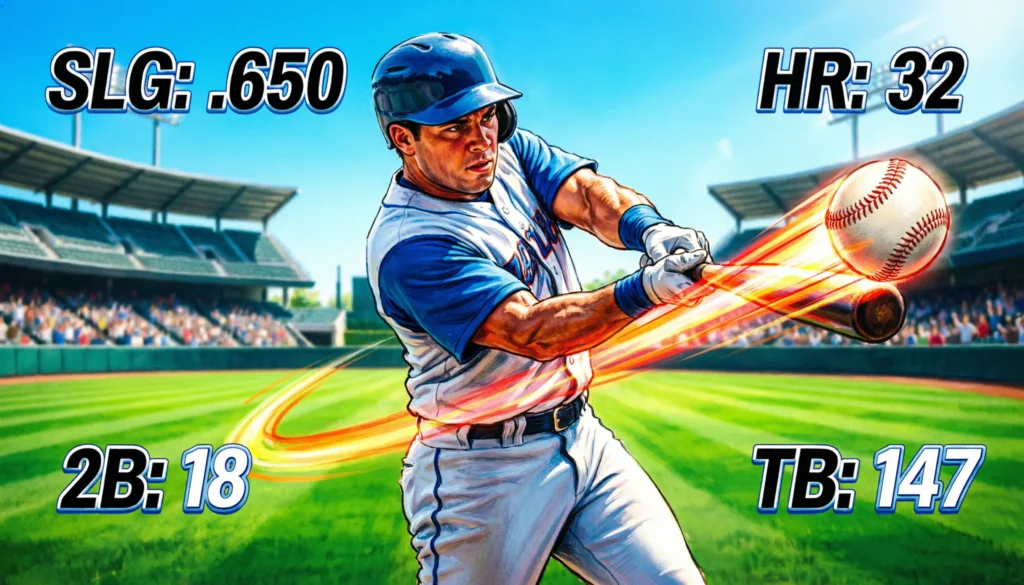
Slugging in baseball refers to a player’s ability to hit for power, measured by slugging percentage, which calculates total bases divided by at bats.
It shows how often a hitter produces extra base hits like doubles, triples, and home runs, rather than just singles.
Slugging in baseball is one of those terms fans hear all the time but don’t always fully understand. It sounds powerful, and honestly, it is. When commentators talk about a team’s slugging or a player’s slugging percentage, they’re usually pointing to raw hitting power and extra base damage.
If you’ve ever wondered what slugging really means, how it’s calculated, and why it matters so much in modern baseball, you’re in the right place. This guide breaks it all down in plain English, with real examples, tables, and context you can actually use.
Understanding Slugging in Simple Terms
Slugging is not about how hard someone swings.
It’s not about how aggressive they look at the plate either.
Slugging is about results.
A player with strong slugging consistently turns hits into extra bases.
Singles help, but doubles, triples, and home runs are what really boost slugging numbers.
Think of slugging as a quick way to answer one question.
How much damage does this hitter do when they connect?
Origin of the Term Slugging in Baseball
The word slugging comes from the verb to slug, meaning to hit something with force.
Baseball writers in the early 20th century began using it to describe powerful hitters who drove the ball deep into the field.
Slugging percentage became an official statistic as baseball evolved beyond batting average alone.
Analysts and managers needed a way to measure power separately from simple contact hitting.
As home runs and extra base hits became more central to offensive strategy, slugging gained popularity across professional baseball.
What Is Slugging Percentage?
Slugging percentage, often abbreviated as SLG, is the actual statistic behind the term slugging.
It measures total bases per at bat.
Here’s the basic formula written out clearly.
Slugging Percentage = Total Bases ÷ At Bats
Total bases are calculated like this.
- Single = 1 base
- Double = 2 bases
- Triple = 3 bases
- Home run = 4 bases
How Slugging Percentage Is Calculated
Let’s break it down with a simple example.
Example Calculation
A player has the following hits in 10 at bats.
- 4 singles
- 2 doubles
- 1 home run
Now calculate total bases.
- Singles: 4 × 1 = 4
- Doubles: 2 × 2 = 4
- Home runs: 1 × 4 = 4
Total bases = 12
Slugging percentage = 12 ÷ 10 = .600
That number tells you the hitter averages 0.6 bases per at bat, which is excellent.
Labeled Example Table: Slugging Calculation
| Hit Type | Number of Hits | Bases per Hit | Total Bases |
|---|---|---|---|
| Singles | 4 | 1 | 4 |
| Doubles | 2 | 2 | 4 |
| Triples | 0 | 3 | 0 |
| Home Runs | 1 | 4 | 4 |
| Total | 7 hits | 12 bases |
What Is a Good Slugging Percentage?
Slugging percentage varies by era, league, and ballpark.
Still, general benchmarks help put numbers into perspective.
Slugging Percentage Benchmarks
| Slugging Percentage | Interpretation |
|---|---|
| Below .350 | Weak power |
| .350 to .400 | Below average |
| .400 to .450 | Average |
| .450 to .500 | Good |
| .500 to .550 | Very good |
| Above .550 | Elite power hitter |
Elite sluggers are often the most feared hitters in a lineup.
Why Slugging Matters in Baseball
Slugging matters because baseball games are often decided by extra base hits.
A single might move a runner.
A double or home run changes the score immediately.
Slugging helps teams evaluate.
- Power potential
- Run producing ability
- Lineup balance
- Player value in contracts and trades
In modern analytics driven baseball, slugging is one of the core stats used alongside on base percentage.
Slugging vs Batting Average
Batting average and slugging are related but very different.
Batting average treats every hit the same.
Slugging rewards power.
Comparison Table: Batting Average vs Slugging
| Stat | What It Measures | What It Ignores |
|---|---|---|
| Batting Average | How often a player gets a hit | Hit quality |
| Slugging Percentage | How powerful the hits are | Walks and plate discipline |
A player hitting .280 with lots of singles may have lower slugging than someone hitting .240 with many home runs.
Slugging vs OPS
OPS stands for On Base Plus Slugging.
It combines two key skills.
- Getting on base
- Hitting for power
OPS Breakdown Table
| Component | Meaning |
|---|---|
| OBP | On base percentage |
| SLG | Slugging percentage |
| OPS | OBP + SLG |
OPS gives a fuller picture of offensive value than slugging alone.
Real World Usage of Slugging in Baseball
You’ll hear slugging mentioned in many real situations.
Broadcasters reference it during games.
Front offices use it in scouting reports.
Fantasy baseball players rely on it heavily.
Examples of real usage include.
- “He’s slugging over .600 since the All Star break.”
- “The team leads the league in slugging percentage.”
- “That rookie doesn’t hit often, but when he does, he slugs.”
Examples of Slugging in Context
Neutral Tone Example
“He finished the season with a .520 slugging percentage, showing consistent power.”
Friendly Fan Tone
“Man, that guy is slugging everything this month. Every hit feels dangerous.”
Slightly Negative or Dismissive Tone
“He’s slugging well, but only against weaker pitching.”
Emoji use is rare in professional analysis, but fans might say something like.
“He’s been slugging bombs lately 💣⚾”
Slugging in Different Levels of Baseball
Slugging is used at nearly every level.
- Major League Baseball
- Minor leagues
- College baseball
- High school stats
The calculation stays the same, but averages vary depending on competition level.
Alternate Meanings of Slugging
Outside of baseball, slugging can mean something very different.
In general English, slugging means hitting someone or something hard.
It can also describe moving slowly, as in “slugging through the day.”
These meanings are unrelated to baseball stats, but context makes the difference clear.
Polite or Professional Alternatives to Saying Slugging
In formal writing or analysis, you might see alternatives such as.
- Power hitting
- Extra base production
- Total base efficiency
- Power output
These phrases are often used in scouting reports or broadcast commentary.
Common Myths About Slugging
Slugging does not measure plate discipline.
Slugging does not count walks.
Slugging does not show consistency alone.
It shows power output, not complete offensive value.
FAQs:
What does slugging percentage mean in baseball?
Slugging percentage measures how many total bases a player averages per at bat, reflecting power hitting.
Is slugging the same as batting average?
No, batting average counts all hits equally, while slugging rewards extra base hits.
What is considered a good slugging percentage?
Anything above .450 is generally considered good, with elite hitters often above .550.
Does slugging include walks?
No, walks are not included in slugging percentage.
Why do analysts care about slugging?
Because extra base hits lead directly to more runs and wins.
What does SLG stand for in baseball stats?
SLG is the abbreviation for slugging percentage.
Can a player have high slugging but low average?
Yes, power hitters often strike out more but still produce high slugging numbers.
How is slugging different from OPS?
Slugging measures power alone, while OPS combines power with on base ability.
Conclusion
So, what does slugging mean in baseball?
It means power, impact, and extra bases.
Slugging percentage gives fans and analysts a clear window into how much damage a hitter does when the bat meets the ball. It’s one of the most important stats in modern baseball and a key reason why some hitters are feared more than others.
Once you understand slugging, watching baseball becomes more interesting, more strategic, and a lot more fun. Slugging tells the story of power. It highlights hitters who change games with one swing.
When evaluating players, look at slugging alongside on base percentage. Avoid judging hitters by batting average alone. For fans, slugging helps explain why some players feel dangerous even when they don’t hit often.
Read More Related Articles:
- “Tata” Means in Spanish: Grammar and Daily Speech In 2026
- “Dónde” Meaning in Spanish: How to Ask “Where” Correctly In 2026
- “Le” Means in Spanish: Why This Small Word Matters So Much In 2026

Luna Hartley is a content creator at TextSprout.com, where she specializes in explaining word meanings, modern phrases, and everyday language used in texts and online conversations. Her writing focuses on clarity and context, helping readers understand how words are actually used in real communication.