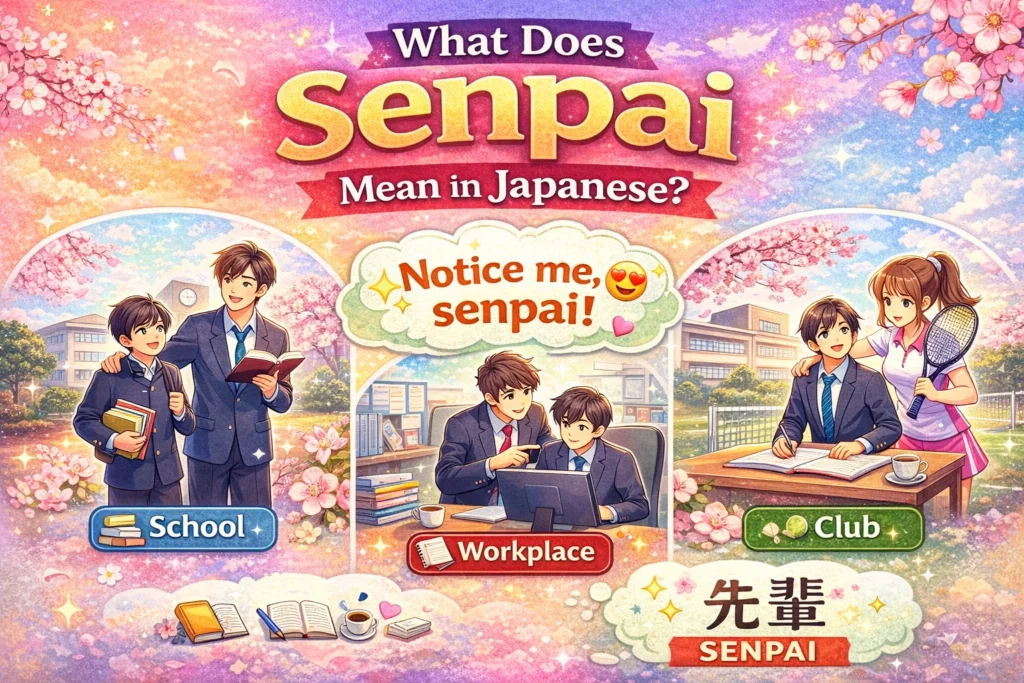
In Japanese, senpai (先輩) refers to a senior, mentor, or someone with more experience in a school, workplace, or social setting. It indicates respect and a hierarchical relationship, often contrasted with kouhai (後輩), the junior counterpart.
In Japanese culture, certain words carry more weight than their literal translations. One such word is “senpai” (先輩), which is widely recognized globally, thanks to anime, manga, and Japanese media. But what does senpai mean in Japanese beyond the surface? Why do so many people use it in everyday conversation, and what cultural nuances does it carry?
The concept of senpai is deeply rooted in Japanese social structures, emphasizing respect, guidance, and mentorship. While it might seem simple at first glance, understanding its usage requires exploring language, etiquette, pop culture, and social dynamics in Japan.
Origin and Cultural Background of Senpai
The word senpai comes from two kanji characters:
- 先 (sen) – “previous” or “ahead”
- 輩 (pai/bai) – “companion,” “fellow,” or “person in the same group”
Combined, 先輩 (senpai) literally translates to “someone who came before” or “senior companion.”
Historically, the concept is tied to Japan’s hierarchical culture, especially in:
- Education: Senior students guide juniors in schools and clubs.
- Workplaces: Experienced employees mentor newcomers.
- Social Groups: Community and club activities often follow a senpai-kouhai (senior-junior) dynamic.
This system is not just about age—it emphasizes experience, skill, and the ability to guide others. Respecting your senpai is seen as both etiquette and social responsibility.
Usage of Senpai in Modern Japanese
The word senpai is versatile, appearing in schools, workplaces, clubs, sports teams, and even casual friendships. Here are the main contexts:
1. School and Academic Settings
In Japanese schools, old people (senpai) often mentor juniors (kouhai) in studies, clubs, and extracurricular activities.
Example:
A first-year student might say:
- “Senpai, can you help me with this homework?”
Here, the term reflects both respect and acknowledgment of experience.
Table: Senpai in Schools
| Role | Description | Example Phrase |
|---|---|---|
| Senpai | Senior student | “Senpai, please teach me this technique.” |
| Kouhai | Junior student | “I’ll follow my senpai’s advice.” |
| Club leader | Senior guiding club activities | “Our senpai organized the sports festival.” |
This dynamic encourages mentorship, collaboration, and learning through experience.
2. Workplace and Professional Settings
In Japanese companies, senpai refers to employees with more experience who mentor newer staff.
Example:
- A newcomer might ask: “Senpai, how do I handle this report?”
Here, respect is paramount. The senpai provides guidance, support, and feedback while juniors show deference.
Cultural Tip: In workplaces, addressing someone as senpai is a polite acknowledgment of their seniority, even if they are only slightly more experienced.
3. Social and Club Activities
Senpai is also common in clubs, sports teams, and hobby groups.
Example:
- A junior member might say: “Senpai, can you teach me that new move?”
- The senpai is expected to offer guidance and encouragement.
This social hierarchy fosters teamwork, responsibility, and trust.
4. Anime and Pop Culture Usage
Globally, senpai gained fame through anime, manga, and internet culture. In these contexts, it often has romantic or playful undertones:
- “Notice me, senpai!” became a meme representing admiration or a desire for recognition from someone more experienced or admired.
- In anime school settings, senpai is often a love interest or respected senior, creating tension, humor, or drama.
Example:
- A first-year student looks up to a third-year senpai in sports anime: “I want to be as skilled as my senpai!”
This usage has influenced how non-Japanese speakers understand the word, though it sometimes differs from formal cultural meanings.
Senpai vs. Kouhai – Understanding the Dynamic
A complete understanding of senpai requires knowing its counterpart: kouhai (後輩).
| Term | Meaning | Relationship |
|---|---|---|
| Senpai | Senior, experienced person | Mentor or guide |
| Kouhai | Junior, less experienced | Learner, subordinate, mentee |
This hierarchical relationship emphasizes:
- Guidance: Senpai teaches or advises the kouhai.
- Respect: Kouhai shows deference through polite language, gestures, and actions.
- Reciprocity: Senpai may expect loyalty, effort, and respect in return.
This system strengthens social cohesion in Japanese schools, workplaces, and community groups.
Variations and Nuances of Senpai
While senpai generally means “senior,” there are nuances based on context:
- Age vs. experience: You can be older but not a senpai if someone else has more experience in a specific field.
- Work vs. school: Workplace senpai focuses on skill and experience; school senpai often emphasizes seniority in years and social guidance.
- Romantic or playful connotations: Pop culture sometimes portrays senpai as someone to admire or crush on, leading to the meme “Notice me, senpai!”
Emoji Usage:
- In internet chats: “Senpai, notice me 😳💖”
- Highlights playful, informal admiration, often exaggerated for humor.
Polite Alternatives and Professional Usage
While senpai is common, formal communication often prefers respectful alternatives:
- 先輩 (senpai) + name/title – e.g., “Tanaka-senpai”
- 敬語 (keigo) expressions – Using polite forms like お願いします (onegai shimasu) or 教えていただけますか (could you teach me?)
- In workplaces, adding さん or 様 after a senior’s name ensures professionalism.
Table: Polite Usage Examples
| Situation | Casual | Polite/Professional |
|---|---|---|
| Asking for advice | “Senpai, help me?” | “Tanaka-senpai, could you guide me?” |
| Learning a technique | “Teach me, senpai!” | “Senpai, would you kindly show me?” |
| General respect | “I’ll follow my senpai.” | “I will do my best to follow your guidance.” |
This approach respects Japanese etiquette while using the word senpai naturally.
Real-World Examples of Senpai Usage
1. Academic Example
A high school student joins the kendo club:
- Kouhai: “Senpai, how do I hold the shinai?”
- Senpai: Demonstrates technique, provides encouragement.
2. Workplace Example
A junior office worker asks their senior:
- Kouhai: “Senpai, could you review my presentation?”
- Senpai: Offers feedback and mentorship, ensuring quality work.
3. Pop Culture Example
In anime, a protagonist may say:
- “Senpai, notice me!”
- While playful, it reflects admiration and desire for attention or guidance.
Common Misunderstandings About Senpai
Many foreigners assume that:
- Senpai always equals older: Age is not the only factor; experience and position matter.
- Senpai is romantic: While pop culture emphasizes this, real-life senpai relationships are often professional or social, not romantic.
- Senpai-kouhai is strict: The relationship encourages respect and guidance but is generally supportive, not oppressive.
Comparison with Similar Japanese Terms
| Term | Meaning | Difference from Senpai |
|---|---|---|
| Sensei | Teacher, instructor | More formal, usually in schools, martial arts, or professions |
| Senpai | Senior, experienced person | Peer-level guidance, more informal than sensei |
| Kouhai | Junior, less experienced | Opposite role to senpai |
| Onii-san | Older brother / familiar senior figure | Familial or friendly tone, less formal |
Understanding these subtle differences ensures correct and respectful usage in Japanese conversations.
Senpai in Modern Internet Culture
Senpai has crossed linguistic and cultural boundaries thanks to social media, anime fandoms, and memes:
- “Notice me, senpai!” – Expresses admiration, playfulness, or infatuation.
- Often combined with emojis: 😳💖, 🙏, or 👀.
- Misinterpretation occurs when non-Japanese speakers assume all senpai relationships are romantic.
Example Meme Context:
- A gamer says: “Senpai, notice my score 😎”
- Humor comes from exaggerating the admiration or attention-seeking dynamic.
Practical Tips for Using Senpai Correctly
- Identify context: School, workplace, club, or casual conversation?
- Check experience, not just age: Someone older may not always be senpai.
- Pair with polite expressions: Especially in professional or formal settings.
- Understand cultural nuances: Respect, guidance, and hierarchy are key.
- Avoid overusing in romantic sense: In real life, it may seem odd.
FAQs
1. What does senpai mean in Japanese?
It refers to a senior, mentor, or someone more experienced in school, work, or social groups.
2. Is senpai only used in schools?
No, it applies in workplaces, clubs, sports, and social groups.
3. What is the opposite of senpai?
The opposite is kouhai, meaning junior or less experienced person.
4. Can senpai be used romantically?
Yes, in pop culture it often carries romantic or playful undertones, but traditionally it is professional or social.
5. How do you address a senpai politely?
Use their name + senpai (e.g., Tanaka-senpai) or combine with keigo expressions like お願いします (please).
6. Is senpai age-dependent?
Not necessarily; experience, skill, or position matters more than age.
7. What is the difference between senpai and sensei?
Sensei is more formal and usually refers to teachers or experts, while senpai is for senior peers.
8. How did senpai become popular worldwide?
Through anime, manga, memes, and online culture, especially the phrase “Notice me, senpai!”
Conclusion
Senpai is more than a simple word—it embodies respect, guidance, and social hierarchy in Japanese culture. Understanding its nuances ensures proper usage in schools, workplaces, clubs, and social situations. While popularized by anime and memes worldwide, its traditional role emphasizes mentorship, learning, and reciprocal respect.
Key Takeaways:
- Senpai refers to a senior or mentor, not necessarily older.
- Respect, guidance, and hierarchy are central to its meaning.
- Pair senpai with polite language in professional settings.
- Be aware of pop culture interpretations versus traditional usage.
By mastering the concept of senpai, learners can appreciate Japanese social dynamics and communicate respectfully in various contexts.
Read More Related Articles:
- What Does MVR Mean in Baseball? The Stat Explained Clearly In 2026
- What Does Slugging Mean in Baseball? How Power Hitters Dominate the Game In 2026
- What Does PRA Mean in Basketball? The Stat Every Bettor Should Know In 2026

Neon Samuel is a digital content creator at TextSprout.com, dedicated to decoding modern words, slang, and expressions. His writing helps readers quickly grasp meanings and understand how terms are used in real conversations across text and social platforms.