
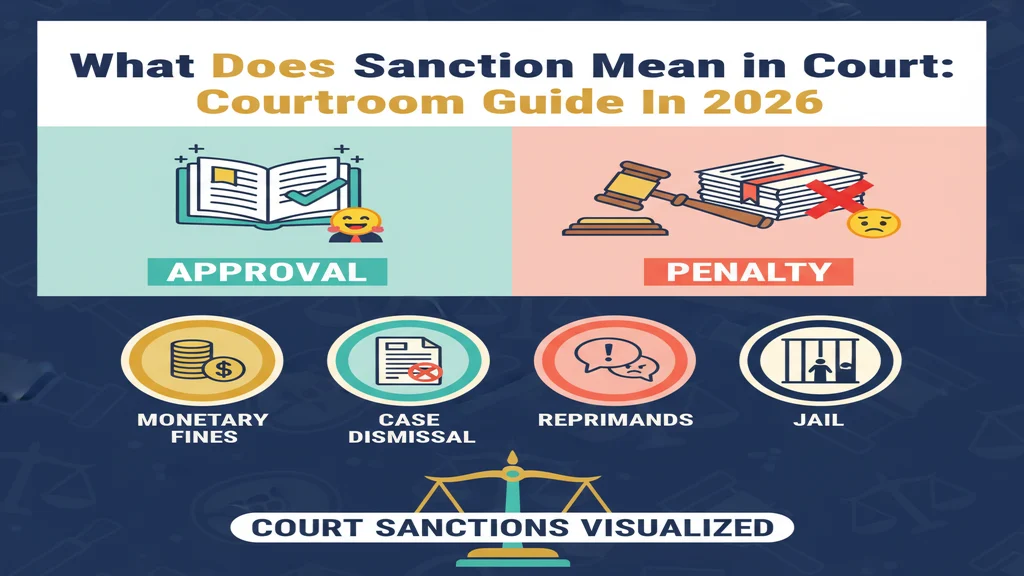
In a court context, a sanction is a legal penalty or enforcement measure imposed by a judge on a party, lawyer, or individual for violating court rules, disobeying orders, or engaging in misconduct during legal proceedings. Sanctions can include fines, reprimands, orders to comply, dismissal of claims, or in extreme cases, imprisonment.
Understanding court sanctions is crucial because the legal system relies on rules, procedures, and ethical behavior to function smoothly. Sanctions serve as a tool to maintain fairness, ensure compliance, and deter misconduct. Whether you are a plaintiff, defendant, attorney, or just curious about law, knowing how sanctions work can save you from costly mistakes and help you navigate court proceedings with confidence.
Many people find the term “sanction” confusing because it can mean both a penalty and an approval or authorization in English. In everyday conversation, saying “the court sanctioned the merger” sounds positive, whereas “the court sanctioned the attorney” is clearly negative. Context is everything, especially in law, where the stakes are high and the consequences real.
Origin and Popularity of the Term “Sanction”
The word sanction comes from the Latin sanctio, which meant a decree, law, or ratification. Over time, English adopted it with two main meanings:
- Approval or authorization – like giving official permission.
- Penalty or enforcement – like punishing rule-breaking.
In courts, the second meaning dominates. Judges, attorneys, and legal documents frequently use the term to describe actions taken to enforce rules or punish misconduct. This dual meaning sometimes leads to confusion, especially for those outside the legal profession.
The term’s popularity in modern law has grown because courts need flexible tools to enforce compliance. Instead of immediately dismissing cases or imposing jail time, judges can issue a range of sanctions that suit the severity of the behavior. This balance helps maintain fairness while keeping the legal process orderly and efficient.
Why Sanctions Matter in Court
Sanctions are more than just legal punishments. They serve several practical purposes:
- Maintain fairness: Ensuring all parties follow rules prevents an unfair advantage.
- Encourage compliance: Sanctions motivate parties to follow court orders and ethical standards.
- Preserve judicial authority: Courts must be respected; sanctions prevent abuse of the legal system.
Imagine a scenario where one party continually ignores discovery requests. Without sanctions, the other party might be at a serious disadvantage. Sanctions allow the court to restore balance, prevent delays, and discourage bad behavior.
Examples of Sanctions in Real-Life Court Scenarios
Here’s a more human-friendly table showing how sanctions can appear in different situations:
| Scenario | Type of Sanction | Real-World Outcome | Emoji Context |
|---|---|---|---|
| Attorney submits misleading evidence | Monetary Sanction | Court fines attorney $5,000 | 💰⚖️ |
| Plaintiff repeatedly delays the case | Case-Level Sanction | Court dismisses claims | ❌📝 |
| Defendant ignores custody orders | Non-Monetary Sanction | Court orders compliance or supervised visitation | 👶🛑 |
| Parties violate settlement agreement | Procedural Sanction | Judge enforces terms or fines parties | 📄🖊️ |
| Lawyer fails to follow courtroom decorum | Contempt | Reprimand or temporary suspension | 😶🌫️📣 |
This table demonstrates that sanctions are not one-size-fits-all. They can be gentle nudges, like a warning, or severe penalties, like dismissal or fines.
Types of Court Sanctions
Courts can impose sanctions in several ways, each designed to match the severity of the misconduct:
- Monetary Sanctions:
- Fines payable to the court or the opposing party.
- Often used for procedural violations or unethical conduct.
- Non-Monetary Sanctions:
- Orders to comply with deadlines, submit documents, or cease certain actions.
- Often corrective rather than punitive.
- Contempt of Court:
- Applied when someone disobeys court orders or behaves disruptively.
- Can include jail time or community service.
- Case-Level Sanctions:
- Dismissal of claims, denial of motions, or default judgment.
- Used for repeated violations or severe misconduct.
- Professional Sanctions:
- Targeted at lawyers for ethical breaches.
- Could involve suspension, disbarment, or mandatory ethics training.
Creative Examples Table: Sanctions in Everyday Court Life
Here’s a more narrative-style table showing real-world examples with context, tone, and practical takeaways:
| Situation | Who is Sanctioned | Type | Tone/Context | Lesson Learned |
|---|---|---|---|---|
| Missing court deadlines | Plaintiff | Procedural Sanction | Neutral, corrective | Always track deadlines 🗓️ |
| False evidence submitted | Lawyer | Monetary & Professional | Negative, serious | Integrity matters above all ⚖️ |
| Disrespectful behavior in court | Witness | Contempt | Negative, formal | Respect court decorum 🙏 |
| Ignoring discovery requests | Defendant | Case-Level Sanction | Serious, punitive | Cooperation prevents case dismissal ✅ |
| Breaching settlement terms | Both parties | Non-Monetary | Neutral, corrective | Court ensures fairness in agreements 🤝 |
This approach humanizes the legal process and shows how sanctions touch multiple parties.
Comparison with Related Legal Terms
To fully understand sanctions, it’s helpful to see how they differ from similar legal concepts:
| Term | Meaning | Court Context | Notes |
|---|---|---|---|
| Sanction | Penalty or enforcement measure | Used for misconduct or rule violation | Broad term |
| Fine | Monetary penalty | Specific financial punishment | Subset of sanctions |
| Contempt | Disobedience to court orders | May include jail or fines | Focused on disrespect or defiance |
| Injunction | Court order to act or refrain | Not a penalty; failure can lead to sanctions | Preventive rather than punitive |
| Reprimand | Formal warning | Can be part of professional sanctions | Soft, corrective tone |
Understanding these distinctions can help parties avoid confusion and prepare for potential legal consequences.
Alternate Meanings of Sanction
While in court, sanctions typically mean penalties, the word can also mean approval or authorization:
- Approval Example: “The court sanctioned the merger between the two companies.” ✅
- Penalty Example: “The court sanctioned the lawyer for failing to submit evidence on time.” ⚖️
Being aware of context prevents misunderstandings. For instance, in corporate or governmental settings, “sanction” might lean toward approval, whereas in courts, it almost always implies a penalty.
How Courts Decide on Sanctions
Judges weigh several factors before imposing a sanction:
- Severity of misconduct – Was it intentional or accidental?
- Impact on other parties – Did it cause delays, financial loss, or unfair advantage?
- Previous warnings – Has the party been warned before?
- Nature of the violation – Procedural, ethical, or legal?
By assessing these elements, the court ensures sanctions are proportionate, fair, and justifiable.
Practical Tips to Avoid Sanctions
- Always follow court rules and deadlines.
- Maintain professional behavior in court and during communications.
- Document everything: emails, submissions, compliance actions.
- Seek legal counsel if unsure about rules or obligations.
- Avoid shortcuts that may violate ethical or procedural standards.
These practical steps can save parties from costly mistakes, fines, or damage to reputation.
FAQs
What is the purpose of a sanction in court?
Sanctions enforce rules, deter misconduct, and maintain fairness in legal proceedings.
Can a court sanction an attorney?
Yes, attorneys can be sanctioned for unethical behavior, procedural violations, or misleading the court.
Are sanctions the same as fines?
Not necessarily. Fines are monetary sanctions, but sanctions also include non-monetary or procedural penalties.
What is an example of a sanction in civil court?
A judge may order a party to pay opposing legal fees for failing to provide required documents.
Can sanctions involve jail time?
Yes, especially for contempt of court or repeated non-compliance.
Is sanction always negative in court?
Mostly yes, but in some contexts, it can mean court approval or authorization.
How can I avoid being sanctioned?
Comply with court orders, meet deadlines, behave ethically, and seek legal guidance if needed.
Do sanctions apply in family court?
Yes. Parents or guardians can face sanctions for violating custody, visitation, or support orders.
Conclusion
Sanctions are a vital part of the legal system. They ensure fairness, enforce compliance, and preserve the integrity of the court process. From monetary fines to case dismissal and even jail time, sanctions are tailored to match the severity of misconduct.
Key takeaways:
- Sanctions are not just punishments—they are tools for fairness and compliance.
- Understanding the dual meanings of sanction helps prevent misinterpretation.
- Following court rules, deadlines, and ethical standards is the best way to avoid penalties.
Being informed about sanctions equips individuals and legal professionals to handle court proceedings responsibly and effectively.
Read More Related Articles:

Luna Hartley is a content creator at TextSprout.com, where she specializes in explaining word meanings, modern phrases, and everyday language used in texts and online conversations. Her writing focuses on clarity and context, helping readers understand how words are actually used in real communication.