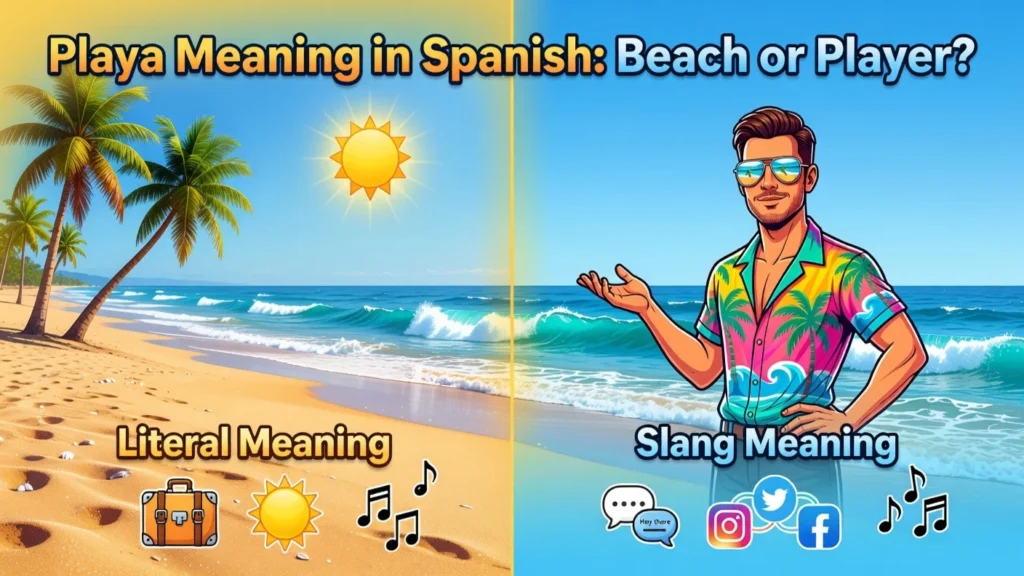
Playa in Spanish primarily means “beach”, referring to a sandy area along the sea, ocean, or lake. In informal or slang contexts, it can describe a flirtatious or socially smooth person, similar to a “player” in English.
If you’ve ever traveled to a Spanish-speaking country, listened to reggaeton, or scrolled through social media posts tagged in Spanish, you’ve probably come across the word “playa.” At first glance, it might seem like a simple term. Many think it only means “beach,” but like many words in Spanish, its meaning depends on context, tone, and even region.
From vacation conversations to flirtatious slang, playa is one of those versatile words that can paint vivid images or describe a personality type. Imagine someone texting about a weekend getaway: “Voy a la playa 🏖️.” It’s clear they mean the sandy shore by the sea.
Now imagine a group of friends talking about someone in a club: “Ese chico es un playa 😏.” Suddenly, the meaning shifts entirely. Understanding both uses and the subtleties between them can make your Spanish sound more natural and culturally aware.
The Origin of the Word “Playa”
The word playa comes from the Latin term “plagia”, which referred to a flat area or shore. Originally, it was a descriptive term for landscapes near water, particularly sandy or flat areas along rivers, lakes, and seas. As the Spanish language spread across Europe and Latin America, the word retained its literal meaning while gradually developing figurative uses.
By the 20th century, especially through music, cinema, and youth slang, playa began to take on a figurative meaning. In popular culture, it describes someone who is charming, flirtatious, or even manipulative in romantic situations essentially, a “player.” The slang usage is particularly prominent in Latin American countries and among Spanish-speaking communities in the U.S., influenced by English pop culture.
Primary Meaning: Playa as Beach 🌴
The most common use of playa is literal: it means a beach. This is standard across nearly all Spanish-speaking countries. People talk about going to the beach, describing the sand, sun, waves, or vacation spots.
Example Table: Literal Usage of Playa
| Spanish Sentence | English Translation | Context/Tone |
|---|---|---|
| Me encanta ir a la playa cada verano. | I love going to the beach every summer. | Friendly/enthusiastic |
| La playa de Copacabana es famosa. | Copacabana beach is famous. | Neutral/descriptive |
| Llevamos sombrillas y toallas a la playa. | We brought umbrellas and towels to the beach. | Neutral/informative |
When used in this context, the meaning is clear, neutral, and universal. It’s perfect for travel conversations, vacation planning, or casual chats.
Descriptive Variations of Playa
Depending on the type of beach, Spanish speakers may add adjectives to playa to convey more specific information:
- Playa de arena blanca – white sand beach
- Playa rocosa – rocky beach
- Playa tranquila – calm beach
- Playa concurrida – crowded beach
These variations allow you to paint a vivid picture in conversation or writing, enhancing storytelling in travel blogs or social media captions.
Slang Meaning: Playa as a “Player” 😎
In informal settings, particularly in music, youth culture, or social contexts, playa can refer to a person who is charming, flirtatious, or socially smooth. Essentially, it’s the Spanish equivalent of calling someone a “player” in English.
Example Table: Slang Usage of Playa
| Spanish Sentence | English Translation | Context/Tone |
|---|---|---|
| Juan es un verdadero playa, no confíes. | Juan is a real player, don’t trust him. | Negative/dismissive |
| Ese chico es un playa, siempre conquista a todas. | That guy is a player, he always charms everyone. | Informal/neutral |
| No seas un playa, sé honesto con ella. | Don’t be a player, be honest with her. | Friendly/advisory |
In these examples, tone is key. Among friends, calling someone a playa can be playful or teasing. In other situations, it may carry a negative implication, warning that the person is manipulative in relationships.
Cultural Context of Slang Playa
- Music Influence: Latin pop, reggaeton, and hip-hop frequently use playa to describe smooth-talking or flirtatious characters.
- Social Media: Influencers and online creators often use the term humorously to call out someone acting like a “player.”
- Regional Nuance: The slang usage is more prevalent in Latin America, the Caribbean, and U.S. Hispanic communities.
Alternate Meanings of Playa
While the two main meanings dominate, playa can occasionally be used in other ways:
- Geographical context: Referring to a flat area or shore along a river or lake, though this is less common.
- Sports slang: Sometimes, playa is used in bilingual or informal contexts to mean a sports player, although jugador is more standard.
- Music slang: In lyrics, playa can symbolize lifestyle, charisma, or social status rather than literal romantic play.
Comparing Playa with Similar Terms
Spanish has several words related to playa, and knowing the nuances ensures correct usage.
| Term | Meaning | Notes |
|---|---|---|
| Playa | Beach / Flirtatious person | Main term; widely recognized in both senses |
| Costa | Coast | Refers to an entire coastline |
| Orilla | Shore / Edge | Often refers to the edge of the beach |
| Balneario | Resort beach | Specifically for beach resorts, tourist areas |
| Jugador | Player (sports or figurative) | Sports standard; figurative “player” possible |
| Coquetón/a | Flirty person | Polite slang; less negative than playa |
| Galán | Gentlemanly charmer | Positive connotation for flirtatious behavior |
This table helps learners differentiate between literal, slang, and polite alternatives.
Friendly Alternatives for Slang Playa
If you want to describe someone playfully without sounding critical, use these alternatives:
- Coquetón / Coqueta: Playful, flirty person
- Seductor / Seductora: Charming, smooth-talking
- Galán: Gentlemanly or attractive flirt
- Conquistador / Conquistadora: Someone who “wins hearts” without negative connotation
These words are helpful in professional or neutral conversations where playa may be too informal or culturally loaded.
Creative Examples and Tables
Here’s a practical table showing different contexts, meanings, and tones for playa:
| Context | Spanish Example | English Translation | Tone/Notes |
|---|---|---|---|
| Vacation | Vamos a la playa este fin de semana. | We’re going to the beach this weekend. | Friendly/enthusiastic |
| Social/Flirtation | Ese chico es un playa, cuidado. | That guy is a player, be careful. | Negative/dismissive |
| Music Lyrics | Ella es la reina de la playa. | She’s the queen of the scene/player. | Figurative/cultural |
| Sports | Messi es un gran playa en el campo. | Messi is a great player on the field. | Neutral/sports-related |
| Writing/Travel Blog | La playa estaba tranquila al amanecer. | The beach was calm at sunrise. | Neutral/descriptive |
| Humor/Social Media | No seas un playa, sé honesto 😏. | Don’t be a player, be honest 😏. | Playful/friendly |
This table shows how versatile playa can be depending on context.
Usage Tips for Different Scenarios
- Travel & Vacation: Stick to the literal meaning. “La playa es hermosa” → The beach is beautiful.
- Pop Culture/Slang: Observe tone and audience. Among friends, “playa” can be teasing; in professional contexts, avoid it.
- Regional Variations: Some Latin American countries use balneario or arena for specific types of beaches.
- Professional Contexts: Always use literal meaning; avoid slang connotations.
FAQs
What does playa mean in Spanish?
It primarily means beach, but in slang, it can describe a flirtatious or socially smooth person.
Is playa used in all Spanish-speaking countries?
Yes, though some regions may prefer balneario or arena for certain beaches.
Can playa be used in professional writing?
Only in its literal sense (beach). The slang meaning is informal and not recommended.
Is the word gender-specific?
Grammatically, playa is feminine, but it can describe people of any gender.
How do you pronounce playa?
It’s pronounced [plah-yah], with the “ll” sounding like a soft “y.”
Does playa mean sports player?
Yes, informally or in bilingual contexts, though jugador is standard.
What are polite alternatives for slang playa?
Use coquetón/a, seductor/a, or galán for playful, charming people.
Is the slang meaning influenced by English?
Yes, the “player” sense comes from English and is especially common in Latin American music and pop culture.
Conclusion
Playa is a simple word with layered meanings. Literally, it’s your go-to word for beaches, evoking sun, sand, and relaxation. Figuratively, it can describe a flirtatious or charming person, often with playful or negative undertones.
When using playa, always consider context, audience, and tone. Stick to literal usage in professional or neutral conversations. Embrace the slang meaning among friends or in cultural references, but understand its nuances.
Practical tip: If unsure, pair playa with context to avoid confusion. “Voy a la playa” is universally understood as a beach trip, while “Ese chico es un playa” clearly indicates a flirtatious personality.
Mastering words like playa adds depth to your Spanish and helps you navigate cultural, social, and linguistic nuances with ease.
Read More Related Articles:
- Suka Meaning in Russian: From Slang to Viral Internet Term In 2026
- Kira Mean in Japanese: Definition and Cultural Significance In 2026
- Aggregate Mean in Insurance: Cap That Controls Total Payouts In 2026

Neon Samuel is a digital content creator at TextSprout.com, dedicated to decoding modern words, slang, and expressions. His writing helps readers quickly grasp meanings and understand how terms are used in real conversations across text and social platforms.