
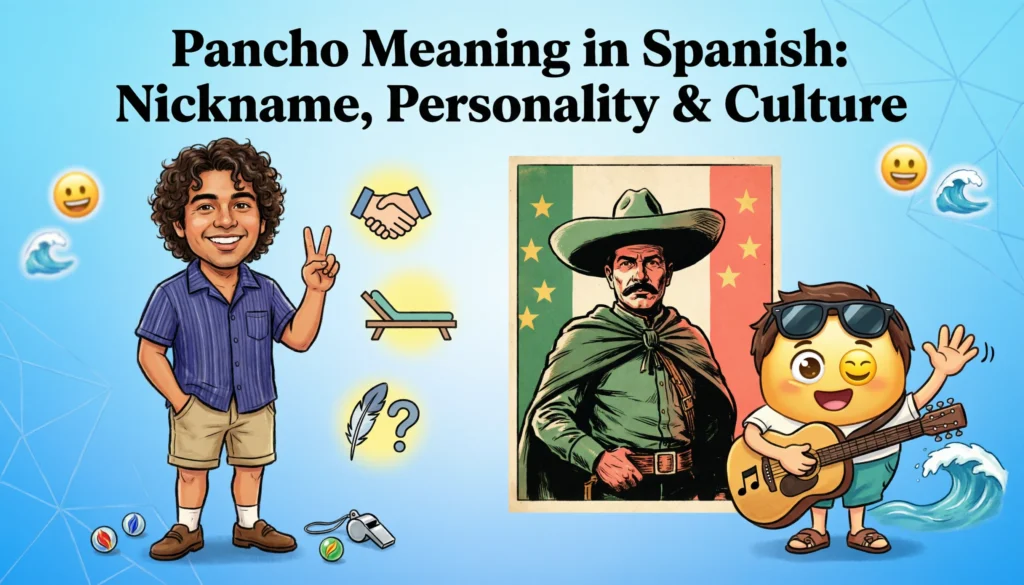
In Spanish, Pancho is a nickname commonly used for the name Francisco, similar to how “Frank” is used in English. Beyond being a proper name, “Pancho” can also carry cultural and colloquial meanings, including being used to describe someone who is relaxed, carefree, or even a bit dramatic depending on the context.
The word “Pancho” is widely recognized in Spanish-speaking countries and often appears in conversations, media, and pop culture. Whether as a personal nickname, a playful term among friends, or a cultural reference, understanding its meaning can help you communicate more naturally and avoid misinterpretations.
In everyday Spanish, context matters. Calling someone “Pancho” might simply refer to their given name, while saying “¡No te hagas Pancho!” could mean “Don’t act all dramatic” in a playful or teasing way. The term carries warmth, humor, and cultural nuance that makes it unique.
Origin and Popularity of the Name “Pancho”
The nickname Pancho originates from the Spanish name Francisco, which itself comes from the Latin Franciscus, meaning Frenchman or “free man.” Over centuries, “Francisco” has evolved into several affectionate diminutives, with Pancho being one of the most popular in Mexico, Spain, and Latin America.
- Historical Popularity: Pancho Villa, the famous Mexican revolutionary, is one of the most well-known figures with this nickname. His prominence helped cement “Pancho” as a familiar and culturally significant name.
- Modern Usage: Today, many parents continue to call their children Pancho informally, and adults often use it among friends or colleagues.
- Cultural Impact: Beyond being a nickname, “Pancho” often appears in songs, TV shows, movies, and memes, reflecting its playful and accessible tone.
Real-World Usage of Pancho in Spanish
“Pancho” is versatile in its usage. Here are some examples to illustrate:
- As a Name:
- “Pancho is coming to the party tonight.”
- Simply refers to a person named Francisco.
- As a Personality Trait:
- “Él está muy Pancho hoy.” (He’s very relaxed today.)
- Can imply calm, carefree, or unconcerned behavior.
- As a Playful or Teasing Term:
- “¡No te pongas Pancho!” (Don’t get all dramatic!)
- Often used among friends in lighthearted contexts.
Examples with Context
| Example | Tone | Explanation |
|---|---|---|
| Pancho Villa was a key figure in Mexican history. | Neutral/Historical | Reference to the famous revolutionary |
| Juan siempre está Pancho, nunca se estresa. | Friendly/Positive | Refers to a relaxed personality |
| ¡No te hagas Pancho con eso! | Playful/Teasing | Telling someone not to overreact |
| Pancho es mi amigo desde la infancia. | Friendly/Personal | Using it as a common nickname for Francisco |
This shows that the meaning of “Pancho” depends heavily on context.
Variations and Diminutives
Spanish nicknames are rich and creative. Pancho is just one of many forms for Francisco:
| Name | Common Nickname | Region/Notes |
|---|---|---|
| Francisco | Pancho | Mexico, Spain, Latin America |
| Francisco | Paco | Spain (particularly popular) |
| Francisco | Kiko | Latin America, informal/friendly |
| Francisco | Pan | Shortened, very casual/friendly |
Using the right nickname can make communication feel more intimate or culturally appropriate.
Alternate Meanings of Pancho
While Pancho is most commonly a nickname, it can also appear in colloquial expressions:
- Relaxed/Carefree Personality:
- “Está muy Pancho hoy” – He’s very relaxed today.
- Dramatic/Overreacting:
- “No te pongas Pancho” – Don’t overreact or make a fuss.
- Pop Culture References:
- Used in songs, movies, and memes, often embodying a cheeky, playful, or bold character.
In certain countries, the exact connotation may shift slightly. For example, in some Mexican slang, calling someone “Pancho” might imply a bit of mischief or boldness.
Comparison with Related Names and Terms
To avoid confusion, it helps to compare Pancho with other Spanish nicknames:
| Name | Nickname | Notes |
|---|---|---|
| Francisco | Pancho | Most common in Mexico & Latin America |
| Francisco | Paco | Traditional in Spain, less common in Latin America |
| Juan | Juanito | Friendly diminutive for casual or childlike reference |
| José | Pepe | Widely used nickname for José in Spanish culture |
Understanding these subtle differences can prevent mix-ups, especially when traveling or interacting in multicultural settings.
Creative Usage Table: Pancho in Everyday Life
| Context | Phrase | Meaning | Emoji |
|---|---|---|---|
| Name | “Pancho llega tarde a la reunión.” | Referring to a person named Pancho | 🕒👤 |
| Relaxed Personality | “Está Pancho en la playa todo el día.” | Relaxed, carefree behavior | 🌊😎 |
| Teasing | “¡No te pongas Pancho!” | Don’t overreact or act dramatic | 😆❌ |
| Pop Culture | “Pancho es el protagonista de la canción.” | Refers to a fictional or cultural figure | 🎵🎭 |
This table makes it easy to visualize how Pancho can be used in different conversational situations.
How to Use Pancho in Conversations
- As a Name: Safe and neutral.
- “Pancho es mi amigo.”
- To Describe Personality: Friendly, positive tone.
- “Está Pancho hoy.”
- Teasing or Playful: Light-hearted or humorous.
- “No te pongas Pancho con eso.”
⚠️ Tip: Be mindful of tone. While playful among friends, using it with strangers may be misinterpreted.
FAQs
What does Pancho mean in Spanish?
It is a nickname for Francisco, also used to describe someone relaxed, carefree, or playful depending on context.
Is Pancho only a name?
No. It can describe personality traits or appear in colloquial expressions.
Where is the nickname Pancho most popular?
Mexico, Spain, and many Latin American countries.
Can Pancho have a negative meaning?
In some contexts, yes. “Ponerse Pancho” can imply overreacting or being dramatic.
Is Pancho used in pop culture?
Absolutely. From songs and movies to memes, Pancho often represents playful or bold characters.
What are other nicknames for Francisco?
Common alternatives include Paco, Kiko, and Pan.
Can Pancho be used for girls?
Traditionally, no. It’s almost exclusively a nickname for Francisco, though female variants may exist regionally.
How should I address someone called Pancho?
If they introduce themselves as Pancho, it’s friendly and acceptable to use. Otherwise, use their formal name, Francisco.
Conclusion
“Pancho” is more than just a nickname. It embodies cultural nuance, friendliness, and playful personality in Spanish-speaking countries. Whether referring to a person named Francisco, describing a relaxed personality, or teasing someone lightly, the word carries warmth, familiarity, and versatility.
Practical tips:
- Use Pancho as a nickname only if the person accepts it.
- Pay attention to context; playful teasing works best among friends.
- Recognize the rich cultural references in songs, movies, and history.
Understanding Pancho helps learners and travelers alike connect with Spanish speakers naturally and respectfully. It’s a small word with a lot of cultural weight!
Read More Related Articles:
- DTD Mean in Fantasy Basketball: Impact and Strategy Tips In 2026
- What Does Texture Mean in Music: Guide for Music Lovers In 2026
- C and H Mean in a Car: And What It Means for Your Engine In 2026

Ivy Madison is a content creator at TextSprout.com, specializing in word definitions, internet slang, acronyms, and text abbreviations. She delivers clear and engaging explanations, helping readers quickly understand modern digital language and trending terms.