
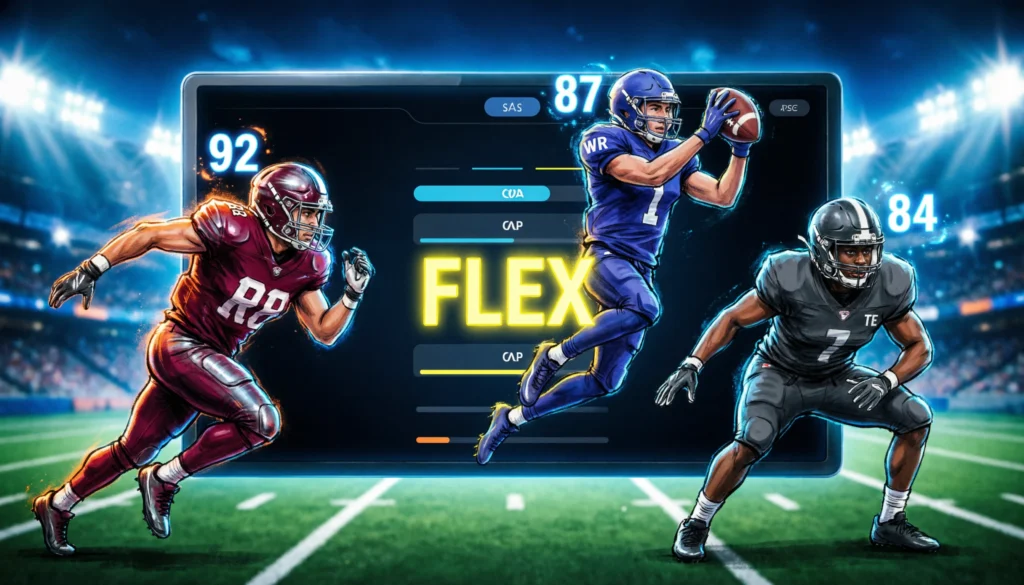
In fantasy football, flex refers to a roster spot that allows managers to start a player from multiple eligible positions, usually running back, wide receiver, or tight end, instead of being locked into just one position.
Fantasy football can feel overwhelming at first. New rules, unfamiliar terms, and league settings all stack up quickly. One word that confuses beginners and even some experienced players is flex. You see it on your lineup page every week, yet many managers never fully use it to their advantage.
This guide breaks it all down. You will learn exactly what flex means in fantasy football, where it came from, how it works in real leagues, and how to use it strategically to win more matchups. By the end, flex will stop being a mystery and start being one of your strongest tools.
What Does Flex Mean in Fantasy Football?
In fantasy football, a flex position is a lineup slot that gives you flexibility to start different types of players based on matchup, scoring format, and weekly performance trends.
Most standard leagues allow these positions in a flex spot:
- Running backs
- Wide receivers
- Tight ends
Some leagues expand flex eligibility further, which we will cover later. The core idea stays the same. Flex lets you play your best available option instead of forcing a strict positional choice.
The Origin of the Flex Position in Fantasy Football
Fantasy football was originally simple. Early leagues had fixed starting lineups that looked something like this:
- 1 quarterback
- 2 running backs
- 2 wide receivers
- 1 tight end
- 1 kicker
- 1 defense
As the game grew in popularity, league managers wanted more strategy and less rigidity. Fantasy platforms noticed that talented players were often stuck on benches simply because of lineup restrictions.
The flex position emerged as a solution.
- It added variety.
- It rewarded smart decisions.
- It also mirrored real football more closely, where teams adapt personnel based on game plans rather than fixed templates.
Why the Flex Position Became So Popular
The flex spot quickly became standard across fantasy football platforms. Its popularity grew for several reasons.
First, it increased strategic depth. Managers had to think about matchups, not just names.
Second, it boosted player relevance. More running backs and wide receivers became weekly starters, which made drafts deeper and more interesting.
Third, it reduced frustration. Benching a high scoring player because of lineup limits felt unfair. Flex solved that.
Today, most leagues include at least one flex spot, and many competitive leagues include multiple flex positions.
How the Flex Position Works in Fantasy Football
A flex spot works just like any other lineup slot, with one key difference. You can place different positions there.
Here is a basic example.
Your league lineup requires:
- 2 running backs
- 2 wide receivers
- 1 flex
You could start:
- 3 running backs and 2 wide receivers
- 2 running backs and 3 wide receivers
- 2 running backs, 2 wide receivers, and 1 tight end
The choice depends on scoring format, matchups, and player consistency.
Common Flex Eligibility Rules
Most leagues follow these eligibility rules:
- RB, WR, TE only
- No quarterbacks in standard flex
- No kickers or defenses
Always double check your league settings. Flex rules can vary slightly depending on platform and commissioner preferences.
Standard Flex vs Superflex Explained
Not all flex spots are the same. Understanding the difference is crucial.
Standard Flex
This is the most common format.
Eligible positions usually include:
- Running back
- Wide receiver
- Tight end
Quarterbacks are excluded.
Superflex
A superflex league allows quarterbacks in the flex spot.
This dramatically changes strategy.
Quarterbacks score more points on average than other positions. That makes superflex leagues value quarterbacks much more highly in drafts and trades.
Flex Position Types Explained in a Simple Table
| Flex Type | Eligible Positions | Common In | Strategy Impact |
|---|---|---|---|
| Standard Flex | RB, WR, TE | Most leagues | Rewards matchup based choices |
| Superflex | QB, RB, WR, TE | Advanced leagues | Increases QB value |
| WR Flex | WR only | Custom leagues | Boosts receiver depth |
| RB Flex | RB only | Rare formats | Focuses on rushing depth |
How to Choose the Right Flex Player Each Week
Choosing your flex player is not about star power alone. It is about opportunity and context.
Here are the most important factors.
Matchups Matter
A mid tier running back facing a weak run defense may outscore a big name receiver facing elite coverage.
Scoring Format Changes Everything
In PPR leagues, wide receivers often dominate flex spots.
In standard scoring leagues, running backs usually carry more value.
Volume Beats Talent in Flex Decisions
A player with guaranteed touches or targets is often safer than a boom or bust option.
Flex is the perfect place to balance risk and reward.
Example Flex Decisions With Context and Tone
Friendly Tone Example
“I am flexing my wide receiver this week because the matchup looks juicy and the offense throws a lot.”
This sounds casual and confident, often used in league chats.
Neutral Tone Example
“The flex spot allows managers to maximize weekly scoring potential based on matchup and scoring rules.”
This tone fits articles, guides, and rule explanations.
Slightly Dismissive Tone Example
“I would never flex a tight end unless my other options were terrible.”
This reflects opinionated fantasy discussions and debates.
Common Flex Strategy Mistakes to Avoid
Many fantasy managers misuse the flex spot without realizing it.
Avoid these common errors.
- Locking the flex too early in the week
- Ignoring weather conditions
- Starting name brand players over better matchups
- Forgetting late game flexibility
A smart tip is to place your flex player in the latest possible game slot. This gives you more flexibility if injury news breaks late.
Flex Strategy by Scoring Format
| Scoring Format | Best Flex Options | Why It Works |
|---|---|---|
| Standard | Running backs | Touchdowns matter more |
| Half PPR | RB or WR | Balanced scoring |
| Full PPR | Wide receivers | Reception volume boosts points |
| Superflex | Quarterbacks | Highest point ceilings |
Drafting With the Flex Spot in Mind
Draft strategy changes when a flex is involved.
Instead of filling positions rigidly, you draft value and depth.
That means:
- Prioritizing strong RB and WR depth
- Avoiding overinvestment in low ceiling positions
- Being flexible during the draft itself
A deep roster gives you weekly flex advantages over opponents with shallow lineups.
Alternate Meanings of Flex Outside Fantasy Football
The word flex has meanings beyond fantasy football.
- In slang, flex means showing off or bragging.
- In fitness, flex refers to tightening muscles.
- In grammar, flex can mean adapting or adjusting.
- In fantasy football, flex focuses on adaptability rather than ego or strength.
Context always matters.
Polite or Professional Alternatives to the Term Flex
In professional writing or league rules, you may see alternative phrases.
- Utility position
- Flexible roster slot
- Multi eligible position
These terms mean the same thing but sound more formal.
Flex Position Compared With Utility Spots in Other Fantasy Sports
Fantasy basketball and baseball also use similar concepts.
| Sport | Term Used | Similar Function |
|---|---|---|
| Fantasy Football | Flex | Multi position starter |
| Fantasy Basketball | Utility | Any offensive player |
| Fantasy Baseball | Utility | Non positional hitter |
The idea remains consistent. Flex rewards adaptable roster construction.
Practical Flex Tips From Experienced Fantasy Managers
Flex strategy evolves as the season progresses.
Early season favors upside and unknown breakouts.
Mid season favors consistency and matchup analysis.
Late season favors safety and volume during playoffs.
Tracking usage trends weekly helps identify the best flex plays before your league mates catch on.
FAQs
What does flex mean in fantasy football for beginners?
Flex is a lineup spot that lets you start different positions like running backs, wide receivers, or tight ends based on preference and matchup.
Can you put a quarterback in a flex spot?
Only in superflex leagues. Standard flex spots do not allow quarterbacks.
Is flex better for running backs or wide receivers?
It depends on scoring format. Wide receivers usually shine in PPR leagues, while running backs often dominate in standard scoring.
Can you play a tight end in flex?
Yes, most leagues allow tight ends in the flex spot, though they are often lower priority than RBs or WRs.
Should your best player always be in the flex?
No. Your best players should fill required slots first. Flex is best used for your strongest remaining option.
Does flex scoring differ from other positions?
No. Flex players score points the same way as if they were in their normal position.
What is the difference between flex and superflex?
Superflex allows quarterbacks. Standard flex does not.
How many flex spots do most leagues have?
Most leagues have one flex spot, though competitive leagues sometimes include two.
Conclusion:
The flex position is one of the most powerful tools in fantasy football.
It rewards research, adaptability, and smart decision making.
Understanding what flex means in fantasy football goes beyond definitions. It shapes how you draft, manage, and win.
Use flex to maximize weekly points, exploit matchups, and gain an edge over less flexible opponents.
Once mastered, flex stops being confusing and starts becoming your secret weapon.
Read More Related Articles:
- Someone Texted You “TS”? Here’s What It Means and How to Respond (2026)
- “Eres” Meaning in Spanish: More Than Just “You Are” In 2026
- PH Means in Texting: Meaning Most People Get Wrong (2026)

Luna Hartley is a content creator at TextSprout.com, where she specializes in explaining word meanings, modern phrases, and everyday language used in texts and online conversations. Her writing focuses on clarity and context, helping readers understand how words are actually used in real communication.