
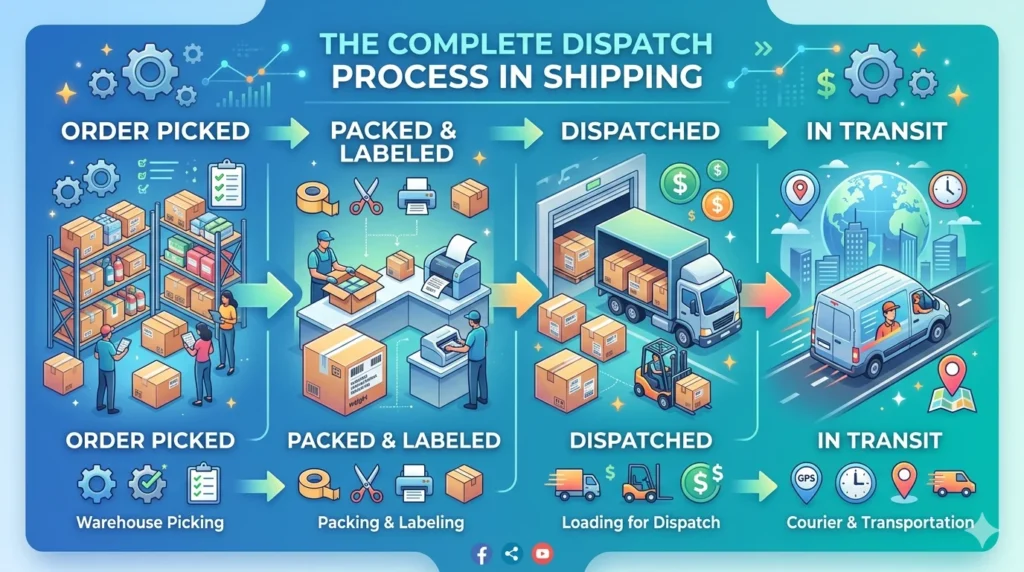
In shipping, dispatch refers to the process of preparing and sending goods from a warehouse, fulfillment center, or seller to the customer or delivery service.
It is essentially the moment when a package leaves the storage location and enters the logistics network for delivery.
In simpler terms, dispatch is when an order is ready to go out and is handed over for transportation. Once an item is dispatched, it is officially on its way to its destination, and customers can start tracking its progress.
Ordering a product online is now part of everyday life for millions of people. From groceries to electronics, fashion to books, we expect our purchases to arrive quickly, accurately, and in good condition. One term that customers often see in order notifications is “dispatched.” Many wonder what it actually means and how it fits into the journey of their package.
Dispatch is a critical step in the shipping process. It marks the transition between having a product ready in a warehouse and the moment it begins its journey to the customer. Without an efficient dispatch system, packages could sit idle in storage, orders could get delayed, and customers could experience frustration.
Understanding dispatch is important not only for business owners and warehouse operators but also for customers who want to know exactly where their orders are. It is a key part of logistics that affects delivery speed, operational efficiency, and overall satisfaction.
In this article, we will explore dispatch in detail, explain how it differs from other shipping terms, show examples from real-world operations, and provide tips for businesses to optimize the process.
What Does Dispatch Mean in Shipping?
In shipping, dispatch is the process of sending goods from the warehouse, store, or fulfillment center to the next point in the supply chain or directly to the customer.
This process usually involves multiple steps to ensure the correct items are sent in the proper condition. Dispatch is more than just moving a package; it is a carefully coordinated action that ensures accuracy, efficiency, and traceability.
When a package is dispatched, it is typically recorded in the system so both the seller and the customer know that the order has officially left the storage facility. This allows tracking to begin and gives the customer peace of mind that their purchase is on the way.
In e-commerce, dispatch notifications are often one of the first updates that customers receive after ordering. Seeing that their package has been dispatched means that the order has been processed, packed, and is now moving through the shipping network.
Dispatch vs Fulfillment
It is common to confuse dispatch with fulfillment, but they are not the same thing. Understanding the difference is important for anyone involved in shipping or logistics.
Fulfillment refers to the entire process of completing an order, from receiving it to delivering it to the customer. It includes inventory management, picking the right products, packing them, labeling, and ultimately dispatching the items for shipping.
Dispatch, on the other hand, is a specific stage within the fulfillment process. It refers to the point at which the package leaves the warehouse or storage facility and begins its journey toward delivery.
For example, if you order a pair of shoes online, the fulfillment process would involve verifying your order, picking the shoes from inventory, packing them securely, and preparing them for shipment. The dispatch stage occurs when the shoes are handed over to a courier like DHL, FedEx, or UPS. That handover is the moment the order is officially dispatched.
| Term | Meaning | Scope |
|---|---|---|
| Fulfillment | Entire order process from receipt to delivery | Covers picking, packing, dispatch, and delivery |
| Dispatch | The point when an order leaves the warehouse | Focused on handing over packages for transport |
Steps in the Dispatch Process
Dispatch is not just a single action; it is a structured workflow that ensures packages are sent accurately and efficiently. Each step plays a role in reducing errors and improving customer satisfaction.
- Order Verification – Before dispatch, the order is verified to ensure that the correct products are being sent and that payment has been processed.
- Picking Items – Warehouse staff locate the ordered items using the inventory management system. This step must be accurate to prevent wrong items from being dispatched.
- Packing – Items are securely packed in boxes or protective materials to prevent damage during transportation. Fragile items often receive extra protection.
- Labeling – Shipping labels are printed and attached. These labels include addresses, tracking numbers, and sometimes barcodes that integrate with the courier’s system.
- Handover to Courier – Packages are physically transferred to the shipping carrier. At this point, responsibility shifts from the seller to the courier.
- Confirmation and Notification – Once the package is dispatched, the system updates the order status, and the customer is often notified via email or SMS.
By following these steps carefully, businesses ensure that packages reach customers efficiently and safely.
Dispatch Timeline Example
To better understand the dispatch process, here is a simple example of a typical timeline from order placement to delivery:
| Stage | Action | Customer Update |
|---|---|---|
| Order Received | Verify order and payment | Order confirmation email |
| Picking | Retrieve items from inventory | Internal warehouse process |
| Packing & Labeling | Pack items and attach shipping label | Internal warehouse process |
| Dispatch | Hand over to courier | “Your order has been dispatched” notification |
| Transit | Carrier transports package | Tracking updates available |
| Delivery | Package arrives at destination | “Delivered” confirmation email |
This timeline shows how dispatch fits into the larger journey of a package, serving as the key moment when the order moves from storage to shipment.
Real-World Examples of Dispatch
Online Retailer
A customer orders a laptop from an e-commerce site. The warehouse team picks the laptop from inventory, packs it with protective foam, prints a shipping label, and hands it to FedEx. At that moment, the order is marked as dispatched. The customer receives a notification and can track the shipment until it arrives.
Local Grocery Delivery
A customer orders groceries online for same-day delivery. When the packed bags leave the store and are loaded into the delivery vehicle, the order is considered dispatched. From that point, the delivery driver is responsible for bringing the items to the customer’s doorstep.
Clothing Brand
A fashion retailer prepares weekly online orders. Packages are grouped by region and dispatched in batches to the courier service. Each package is scanned at dispatch, updating both the warehouse system and customer tracking information.
Why Dispatch Is Important in Shipping
Dispatch is more than just a step in logistics. It has significant implications for businesses and customers alike.
- Customer Transparency – Dispatch notifications keep customers informed about their orders. Knowing that a package is on its way provides confidence and reduces anxiety about delivery times.
- Tracking Accuracy – Dispatch triggers the start of tracking. Without this step, customers and businesses would have no visibility into the package’s journey.
- Operational Efficiency – Organized dispatch ensures that packages leave the warehouse on schedule, reducing delays and errors. It helps manage courier workloads and maintains smooth supply chain flow.
- Business Reputation – Fast and reliable dispatch improves customer satisfaction, encourages repeat purchases, and strengthens brand trust.
Common Dispatch Terms
Understanding dispatch also involves recognizing commonly used terms:
- Dispatched from warehouse – The package has left the storage facility and is now in the hands of the courier.
- Dispatched via courier – The courier is now responsible for delivering the package to the customer.
- Dispatched but delayed – Sometimes a package leaves the warehouse but faces delays during transit.
- Scheduled for dispatch – The order is ready but has not yet left the warehouse.
These terms are often visible in customer tracking systems or order updates.
Dispatch vs Shipping
Actually, dispatch and shipping are closely related but distinct concepts.
Dispatch is the step when the order leaves the warehouse. Shipping is the broader process of transporting the package to its final destination.
For example, a notification might say, “Your order has been dispatched.” This means the package is leaving the warehouse. Later, tracking updates show the item in transit, moving through different hubs, and finally delivered.
| Term | Meaning | Stage |
|---|---|---|
| Dispatch | Package leaves warehouse | Precedes shipping |
| Shipping | Package is transported to customer | After dispatch, includes transit |
Dispatch in E-Commerce
In e-commerce, dispatch is especially important because it directly affects customer experience and satisfaction. Efficient dispatch ensures that packages move quickly through the supply chain and reach customers on time.
Fast dispatch helps businesses:
- Reduce delivery times
- Minimize errors in orders
- Meet same-day or next-day delivery expectations
- Build trust and credibility with customers
Many modern e-commerce platforms use automated systems to manage dispatch. These systems integrate with inventory management and courier APIs to ensure that packages are ready, labeled, and handed over efficiently.
Tips for Efficient Dispatch
Businesses can optimize dispatch with a few practical strategies:
- Use warehouse management systems to track orders and inventory in real-time.
- Organize high-demand products near packing stations to speed up picking.
- Standardize packing procedures to reduce errors and damage.
- Integrate courier APIs for automatic label printing and dispatch confirmation.
- Notify customers immediately once orders are dispatched to improve transparency.
Efficient dispatch is a competitive advantage for businesses, especially in industries with high order volumes.
Examples of Dispatch in Sentences
| Sentence | Context |
|---|---|
| The warehouse dispatched all orders before noon | Business operations |
| Your order has been dispatched via UPS | Customer notification |
| Delays in dispatch may affect delivery times | Logistics management |
| Efficient dispatch ensures happy customers | Supply chain efficiency |
Common Misconceptions About Dispatch
Many people misunderstand what dispatch means. Some common misconceptions include:
- Dispatch means delivery. In reality, dispatch only indicates the order has left the warehouse. Delivery occurs later.
- Dispatch is the same as fulfillment. Fulfillment covers the entire process from order receipt to delivery, while dispatch is a specific step in that process.
- Dispatched packages cannot be tracked. Most modern couriers allow real-time tracking as soon as the package is dispatched.
Understanding these differences helps customers manage expectations and businesses operate more efficiently.
FAQs
What does dispatch mean in shipping?
Dispatch refers to sending goods from a warehouse or seller to the next point in the delivery chain or to the customer.
Is dispatch the same as shipping?
Not exactly. Dispatch is when the package leaves the warehouse. Shipping refers to the transport of the package to its final destination.
How can I know if my order has been dispatched?
You will usually receive a notification from the seller or courier with tracking information.
Can dispatch be delayed?
Yes. Delays can happen due to high order volumes, courier schedules, or inventory issues.
What is a dispatch note?
A dispatch note is a document listing the items sent and is used by warehouses and couriers to confirm shipment.
Does dispatch include international shipping?
Yes. International dispatch means the package leaves the origin facility and enters the international shipping network.
What happens after dispatch?
Once dispatched, the courier takes responsibility for the package. Tracking updates follow until delivery is completed.
Why is dispatch important in e-commerce?
Dispatch marks the transition from warehouse to delivery. It ensures timely order processing and improves customer satisfaction.
Conclusion
Dispatch is a critical step in shipping that ensures packages move efficiently from storage to delivery. It is the moment when an order leaves the warehouse and officially enters the logistics network. Understanding dispatch helps both businesses and customers track orders, prevent errors, and improve overall satisfaction.
For businesses, efficient dispatch reduces delays, minimizes mistakes, and enhances operational efficiency. For customers, dispatch notifications provide transparency, peace of mind, and the ability to track shipments in real time. Whether in e-commerce, local delivery services, or international shipping, dispatch plays a central role in the smooth movement of goods and the success of the modern supply chain.
Read More Related Articles:
- True Meaning of “Quiero” in Spanish and How It’s Used In 2026
- “Of” Mean When Someone Texts It: Detailed Explanation in 2026
- Low MCHC Mean: Understanding Your Blood Test Results In 2026

Neon Samuel is a digital content creator at TextSprout.com, dedicated to decoding modern words, slang, and expressions. His writing helps readers quickly grasp meanings and understand how terms are used in real conversations across text and social platforms.