
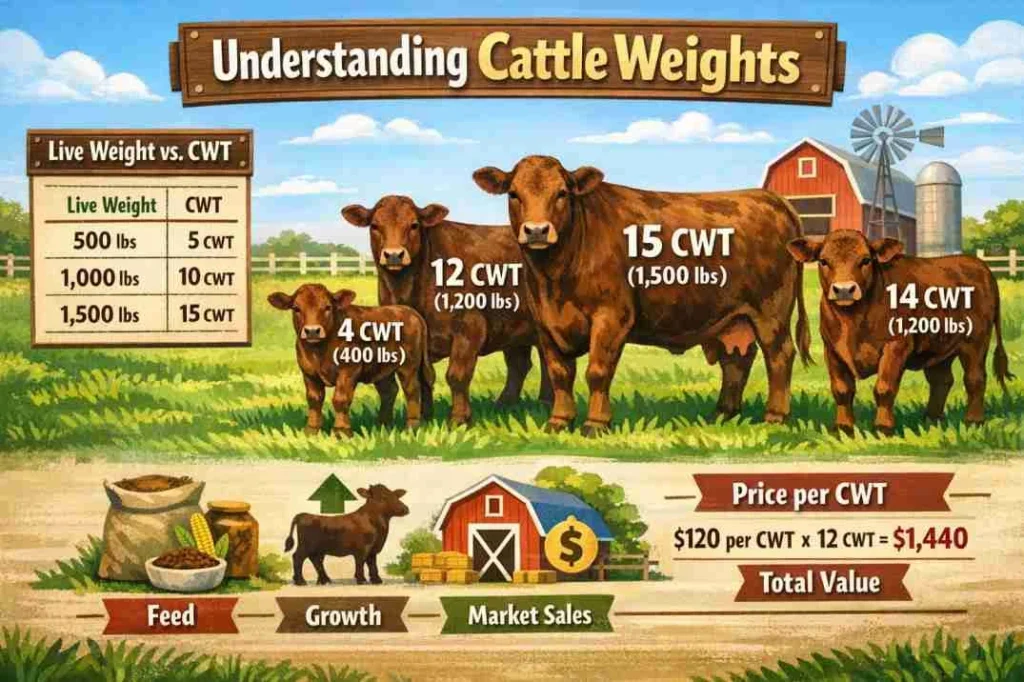
CWT in cattle stands for Hundredweight, a unit of measurement used to express the weight of cattle in increments of 100 pounds.
For example, a cow that weighs 1,200 pounds would be described as weighing 12 CWT. This measurement is commonly used in livestock markets to calculate the value of cattle and determine pricing based on weight.
If you are involved in livestock, agriculture, or even just curious about cattle farming, you may have come across the term CWT. For those new to the industry, this abbreviation can be confusing. Knowing what CWT means, how it is calculated, and why it matters can help farmers, ranchers, and buyers make informed decisions when raising, selling, or purchasing cattle.
CWT is more than just a number. It is a key measurement that affects pricing, market decisions, and herd management. Understanding it is essential whether you are managing a small farm or participating in large-scale cattle operations.
The Origin and Purpose of CWT
The term CWT comes from the English system of weights. A “hundredweight” literally means 100 pounds. In the cattle industry, it has become a standard way to communicate weight efficiently, especially when discussing pricing in the livestock market.
Using CWT allows farmers, ranchers, and buyers to quickly calculate the value of animals, since cattle prices are often quoted per CWT. This standardization helps simplify transactions, making buying and selling more consistent and transparent.
Why CWT is Important in the Cattle Industry
CWT is critical in several aspects of cattle management and marketing:
1. Pricing
Cattle are usually sold by weight at auctions or in private sales. The price is often quoted per CWT, meaning per hundred pounds of live weight or carcass weight. For example, if the market price is 150 dollars per CWT, a 12 CWT animal would be valued at 1,800 dollars.
2. Feeding and Growth Management
Farmers use CWT to monitor growth rates of cattle. By tracking weight in CWT over time, they can assess the effectiveness of feed programs, health management, and overall herd performance.
3. Market Planning
Knowing the average CWT of a herd helps ranchers plan when to sell cattle to maximize profit. Lighter cattle may need more time on feed to reach ideal weight, while heavier animals may be ready for sale.
4. Record-Keeping
CWT is also useful for record-keeping. Farmers track herd weights in CWT to calculate feed efficiency, monitor health trends, and manage breeding programs.
How CWT is Calculated
Calculating CWT is straightforward:
CWT = Animal Weight in Pounds ÷ 100
For example:
| Animal Weight (lbs) | CWT |
|---|---|
| 800 | 8 |
| 1,050 | 10.5 |
| 1,250 | 12.5 |
CWT can be used for both live weight and carcass weight. Live weight refers to the actual weight of the animal before slaughter, while carcass weight is measured after processing, typically less than live weight due to the removal of internal organs, hide, and other parts.
Live Weight vs. Carcass Weight
Understanding the difference between live weight and carcass weight is important in the cattle industry.
- Live Weight: The weight of the animal while it is alive. Used for auctions and general sales. Prices may be quoted per CWT of live weight.
- Carcass Weight: The weight after slaughter and dressing. Used by meat processors to calculate the yield of meat. Prices may also be quoted per CWT of carcass weight.
For instance, a steer weighing 1,200 pounds live might have a carcass weight of 750 pounds. If the price is $160 per CWT of carcass weight, the final value calculation would be 7.5 CWT × 160 dollars = 1,200 dollars.
This distinction is crucial for ranchers who sell cattle directly to processors, as the price per CWT can differ between live weight and carcass weight markets.
Factors That Affect CWT in Cattle
Several factors influence the CWT of cattle, including genetics, feed, age, and health.
1. Genetics
Certain breeds naturally grow larger and heavier than others. For example, Angus and Hereford cattle are often heavier than smaller breeds like Dexter. Understanding breed characteristics helps farmers estimate expected CWT at different stages of growth.
2. Age
Young calves weigh less, naturally resulting in lower CWT. As cattle mature, their CWT increases. Tracking weight over time helps farmers make decisions about feeding programs and optimal market timing.
3. Feed and Nutrition
The quality and quantity of feed significantly affect weight gain. High-protein diets or specialized feedlots can increase daily weight gain, resulting in higher CWT over time. Proper nutrition management is key to maximizing profitability.
4. Health and Disease
Illness or parasite infestations can reduce weight gain, lowering CWT. Maintaining herd health through vaccinations, parasite control, and regular veterinary care is essential for optimal growth.
Practical Examples of CWT in the Cattle Market
Consider a small herd of cattle being sold at auction. Here’s an example:
| Animal | Live Weight (lbs) | CWT | Price per CWT ($) | Total Value ($) |
|---|---|---|---|---|
| Steer 1 | 1,200 | 12 | 150 | 1,800 |
| Steer 2 | 1,050 | 10.5 | 150 | 1,575 |
| Heifer | 900 | 9 | 145 | 1,305 |
This table demonstrates how CWT is used to calculate the total value of cattle at the market. It also highlights how slightly lighter or heavier animals can significantly affect income for ranchers.
How CWT Influences Farm Management
CWT is not just a market measurement; it also affects decisions on the farm. Farmers monitor CWT to:
- Determine feed efficiency
- Track herd growth trends
- Plan breeding and culling strategies
- Decide when to sell animals for maximum profitability
By consistently tracking weight in CWT, farmers can optimize both herd health and financial outcomes.
Using CWT to Compare Livestock
CWT allows farmers and buyers to compare the value of different cattle fairly. Instead of negotiating based on total weight alone, price per CWT standardizes transactions. For example, a 1,100-pound steer and a 1,200-pound steer can be compared easily by calculating their CWT and multiplying by the price per CWT.
This system reduces confusion, ensures fairness in trade, and simplifies market reporting.
Advantages of Using CWT
- Simplifies weight-based pricing
- Standardizes transactions across markets
- Makes herd management easier
- Helps track growth and efficiency
- Facilitates comparison between animals
By using CWT, ranchers can make more informed decisions about feeding, selling, and breeding, ensuring both animal health and profitability.
Tips for Farmers and Ranchers
- Regularly weigh your cattle to monitor CWT growth over time.
- Use high-quality feed to maximize weight gain efficiently.
- Monitor herd health closely, as illness can negatively affect CWT.
- Understand market trends for pricing per CWT to sell at optimal times.
- Keep detailed records of weights in CWT for planning and reporting.
FAQs
What is a typical CWT for market-ready cattle?
Market-ready cattle often range between 10 to 14 CWT for steers and heifers, depending on breed, age, and feed program.
Can CWT be used for other livestock?
Yes, CWT can also be applied to hogs, sheep, and other livestock. It is a convenient unit for expressing weight in hundreds of pounds.
Is CWT used worldwide?
While CWT is common in the United States, some countries use kilograms or metric tons instead. However, the concept of measuring weight in standard units for pricing and management is universal.
Does CWT vary by cattle breed?
Yes. Different breeds have different average sizes. For example, Angus cattle typically reach higher CWTs faster than smaller breeds like Dexter. Breed characteristics should be considered when planning feeding and market timing.
How does feed affect CWT in cattle?
Quality and quantity of feed directly impact weight gain. High-protein or nutrient-rich diets accelerate growth, increasing CWT. Poor nutrition or inconsistent feeding can slow growth and reduce expected CWT.
Can illness or parasites affect CWT?
Absolutely. Diseases, parasites, or stress can reduce weight gain, lowering the CWT of affected cattle. Maintaining herd health is essential to achieving optimal market weights.
What is the typical market CWT for steers and heifers?
Market-ready cattle often range from 10 to 14 CWT, depending on breed, age, and feeding practices. Heifers may be slightly lighter than steers on average.
Is CWT used outside the United States?
While CWT is commonly used in the U.S., other countries may use kilograms or metric tons. Regardless of the unit, the principle of weight-based pricing and management is universal in the livestock industry.
How do you use CWT to calculate the sale price of cattle?
Multiply the CWT of the animal by the price per CWT. For example, if a steer weighs 12 CWT and the price is 160 dollars per CWT, the total value is 12 × 160 = 1,920 dollars.
Conclusion
CWT is an essential term in the cattle industry. Standing for hundredweight, it represents 100 pounds of an animal’s weight and is used to calculate value, monitor growth, and manage herds effectively. Understanding CWT helps farmers, ranchers, and buyers make informed decisions, plan feeding and breeding programs, and maximize profitability.
Whether you are selling cattle at auction or tracking herd growth on a farm, knowing how to use CWT can make your operations more efficient and your financial planning more accurate.
CWT is simple to calculate, practical to use, and a key tool for anyone involved in livestock management.
Read More Related Articles:
- ACV Mean in Insurance: What It Means for Your Insurance Claim In 2026
- Yielding Mean in Driving: What Drivers Need to Know In 2026
- “Allora” Mean in Italian: Translation and Everyday Use In 2026

Ivy Madison is a content creator at TextSprout.com, specializing in word definitions, internet slang, acronyms, and text abbreviations. She delivers clear and engaging explanations, helping readers quickly understand modern digital language and trending terms.