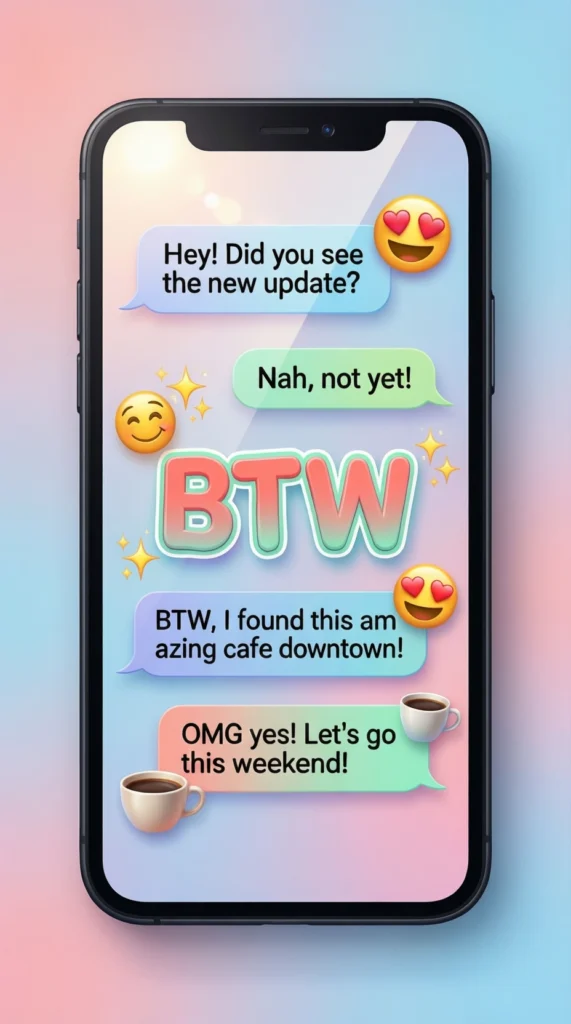
BTW means “by the way.”
In texting and online messaging, it is used to introduce an extra thought, reminder, or side comment that is related but not central to the main message.
BTW is one of those tiny texting abbreviations that shows up everywhere. You see it in casual chats, social media comments, work messages, and even emails. Most people use it without thinking, yet many still pause and wonder what it really means or whether it is appropriate to use.
If you have ever read a message and thought, “Wait, what does BTW mean in texting?” you are in the right place. This guide explains the meaning, origin, tone, usage rules, and real life examples in a clear and friendly way. By the end, you will know exactly when to use BTW, when to avoid it, and what to say instead.
Why “BTW” Is So Popular in Texting
Texting is fast. People want to share ideas quickly without typing full phrases. BTW saves time and keeps conversations flowing naturally. It also mirrors how people speak in real life when they casually add something to a conversation.
This abbreviation feels friendly and informal, which is why it works so well in personal messages and relaxed online spaces.
The Origin of BTW
BTW comes directly from the phrase “by the way,” which has been part of English for centuries. The shortened form gained popularity with the rise of early internet chat rooms, SMS texting, and instant messaging platforms.
During the late 1990s and early 2000s, character limits pushed users to shorten phrases. BTW quickly became a staple, along with abbreviations like LOL and BRB.
Today, even though character limits matter less, BTW remains popular because it feels natural and conversational.
What Does BTW Mean in Different Contexts?
BTW can slightly change meaning depending on how and where it is used. The core idea stays the same, but tone matters.
Casual and Friendly Use
In friendly conversations, BTW feels light and relaxed. It often introduces helpful or interesting information.
Example
“BTW, I loved the restaurant you recommended.”
Neutral or Informational Use
In neutral settings, BTW simply adds information without emotion.
Example
“BTW, the meeting starts at 10 instead of 9.”
Dismissive or Abrupt Use
Sometimes, BTW can feel dismissive if it interrupts or downplays something important. Tone and punctuation play a big role here.
Example
“BTW, that issue is already solved.”
This version can feel abrupt if not softened with context.
How BTW Is Used in Real Life Conversations
People use BTW in texting for many reasons. Here are the most common ones.
• Adding a reminder
• Changing the topic slightly
• Including extra information
• Bringing up something forgotten earlier
• Softening a sudden shift in conversation
Common Sentence Positions for BTW
BTW can appear at the beginning, middle, or end of a sentence.
Beginning
“BTW, are you free tomorrow?”
Middle
“I was thinking, btw, that we should double check the plan.”
End
“I will send the file tonight btw.”
Each placement creates a slightly different rhythm and tone.
Example Table: BTW in Different Tones
| Tone Type | Example Text Message | Implied Feeling |
|---|---|---|
| Friendly | “BTW, thanks for helping me yesterday 😊” | Warm and appreciative |
| Neutral | “BTW, the deadline is Friday.” | Informational |
| Playful | “BTW, guess who I ran into today 👀” | Curious and fun |
| Abrupt | “BTW, that’s not correct.” | Direct or dismissive |
Emojis and Punctuation with BTW
Emojis and punctuation can soften or intensify the meaning of BTW.
A smiley emoji often makes it feel friendly.
An exclamation mark can make it sound excited.
A period can make it sound more serious.
Examples
“BTW 😊 I found your keys.”
“BTW! You were right.”
“BTW. We need to talk.”
The last one feels much heavier due to punctuation alone.
Is BTW Formal or Informal?
BTW is considered informal. It works best in casual environments.
Good places to use BTW
• Text messages with friends
• Group chats
• Social media comments
• Informal workplace chats
Places to avoid BTW
• Formal emails
• Academic writing
• Professional reports
• Client facing communication
Using BTW in the wrong place can make you seem careless or unprofessional.
Polite and Professional Alternatives to BTW
Sometimes you want the meaning of “by the way” without sounding casual. Here are safer alternatives.
Polite Alternatives
• Just a quick note
• As a reminder
• I wanted to mention
• Also worth noting
Professional Alternatives Table
| Situation | Better Alternative | Example |
|---|---|---|
| Work email | “Additionally” | “Additionally, the report is attached.” |
| Client message | “I would like to mention” | “I would like to mention the updated timeline.” |
| Formal note | “Please note” | “Please note the revised schedule.” |
Comparison with Similar Texting Abbreviations
BTW is not alone. Many abbreviations serve similar purposes but feel slightly different.
BTW vs FYI
BTW feels casual and conversational.
FYI feels more informational and sometimes formal.
BTW example
“BTW, I might be late.”
FYI example
“FYI, the office is closed tomorrow.”
BTW vs TBH
BTW introduces extra information.
TBH expresses honesty or opinion.
TBH example
“TBH, I did not like the movie.”
BTW vs Also
Also is neutral and works well in writing.
BTW feels more spoken and informal.
Alternate Meanings of BTW
BTW almost always means “by the way.” However, in rare contexts, it can stand for other phrases.
Examples include
• Bring the wine
• Back to work
These meanings are uncommon and usually only make sense within specific group jokes or workplace slang. In most cases, assume it means “by the way.”
When Using BTW Can Be Misunderstood
BTW can sometimes cause confusion if used poorly.
May feel dismissive if placed before criticism.
It can interrupt emotional conversations.
It may seem careless in serious discussions.
Example
“BTW, your presentation had mistakes.”
This message feels blunt. A softer alternative would help.
Best Practices for Using BTW in Texting
Follow these tips to avoid awkward moments.
• Use it sparingly
• Match the tone of the conversation
• Add context when needed
• Avoid using it before sensitive topics
• Pair it with friendly language if necessary
Labeled Example Table: Good vs Bad Usage
| Scenario | Message | Effect |
|---|---|---|
| Good usage | “BTW, I saved you a seat.” | Helpful and friendly |
| Risky usage | “BTW, that was wrong.” | Sounds harsh |
| Better rewrite | “Just a heads up, that part needs fixing.” | Polite and constructive |
FAQs
What does BTW stand for in texting?
BTW stands for “by the way.” It is used to add extra information or change the topic slightly in a message.
Is BTW rude or polite?
BTW is neutral by itself. Tone depends on context, punctuation, and surrounding words.
Can BTW be used in professional emails?
It is better avoided in formal emails. Polite alternatives sound more professional.
Do people still use BTW today?
Yes, BTW remains widely used in texting, social media, and casual digital communication.
Does BTW mean the same thing as FYI?
No. BTW adds a side comment, while FYI shares information more directly.
Can BTW sound passive aggressive?
Yes, especially if it introduces criticism or correction without softening language.
Is BTW appropriate for group chats?
Yes, especially in casual group chats where the tone is relaxed.
How can I make BTW sound friendlier?
Add context, emojis, or warm phrasing to soften the message.
Conclusion:
BTW means “by the way” and is used to introduce extra thoughts or reminders. It is informal and best suited for casual conversations. Tone depends on placement, punctuation, and context. Professional alternatives exist for formal communication. Using BTW thoughtfully keeps conversations smooth and friendly. If you treat BTW like spoken language rather than formal writing, you will almost always use it correctly.
Read More Related Articles:
- What Does GIF Mean in Texting? How It Changed Modern Messaging (2026)
- WYO Meaning in Text: What It Says About the Conversation (2026)

Luna Hartley is a content creator at TextSprout.com, where she specializes in explaining word meanings, modern phrases, and everyday language used in texts and online conversations. Her writing focuses on clarity and context, helping readers understand how words are actually used in real communication.