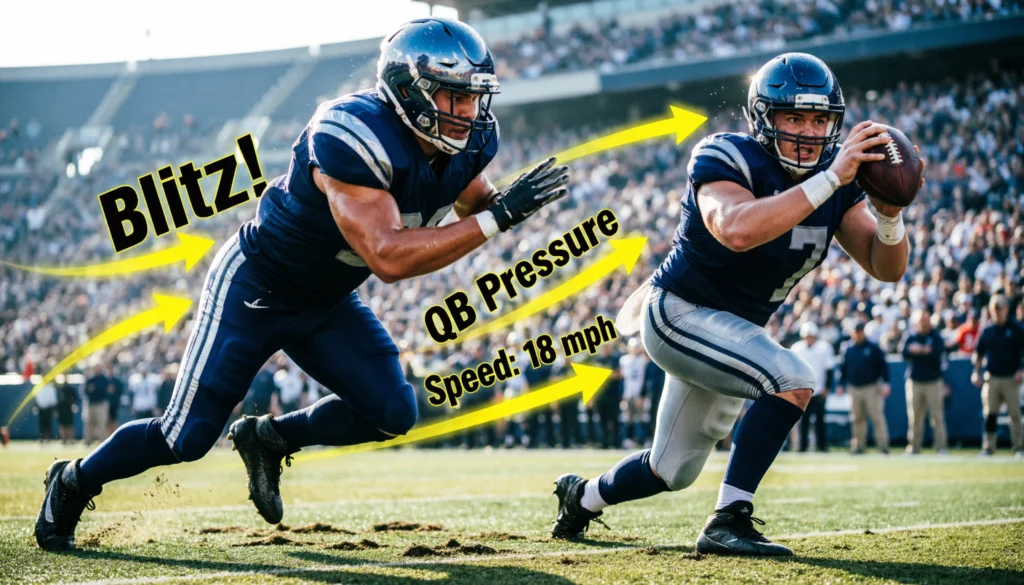
In football, a blitz is a defensive strategy where extra players rush the quarterback after the snap, aiming to disrupt the pass, force a quick decision, or cause a sack or turnover.
Football is often described as a game of chess played at full speed. One move that instantly shifts momentum is the blitz. Fans feel it in the stadium, quarterbacks sense it in their bones, and defenses rely on it to flip games in seconds. Whether you’re new to football or trying to deepen your understanding of defensive tactics, knowing what a blitz means can completely change how you watch the game.
This guide breaks it all down in clear, human terms. You’ll learn what a blitz is, why teams use it, how it evolved, and how it compares to other defensive concepts. Real examples, tables, FAQs, and practical tips make it easy to follow and fun to read.
What Is a Blitz in Football?
A blitz happens when the defense sends more players to rush the quarterback than the offensive line expects. Instead of relying only on defensive linemen, linebackers or defensive backs also attack the backfield.
The goal is pressure. Pressure leads to hurried throws. Hurried throws create mistakes. Mistakes change games.
Unlike a standard pass rush, a blitz is aggressive and risky. It can produce sacks and interceptions, yet it can also leave receivers open if it fails.
Why Is It Called a Blitz?
The word blitz comes from the German term “Blitzkrieg,” meaning “lightning war.” It described fast, overwhelming attacks during World War II.
Football coaches borrowed the term because the strategy mirrors the idea perfectly. A blitz strikes suddenly, overwhelms protection, and forces the opponent to react immediately.
The name stuck because it captures both speed and surprise in a single word.
The Purpose of a Blitz in Football
A blitz is not just about tackling the quarterback. Defensive coordinators use it for several strategic reasons.
- To disrupt timing between the quarterback and receivers
- To force quick throws before routes develop
- To create sacks and negative plays
- To pressure inexperienced or immobile quarterbacks
- To change momentum after a big offensive gain
Some teams blitz often. Others use it sparingly. The effectiveness depends on personnel, game situation, and opponent tendencies.
How a Blitz Works on the Field
Before the snap, defenses disguise their intentions. Linebackers creep forward. Safeties inch toward the line. Quarterbacks scan the defense, trying to predict who is coming.
Once the ball is snapped, blitzers explode toward the quarterback. If the offensive line misreads the pressure, the play collapses quickly.
A successful blitz feels instant. An unsuccessful one can turn into a long touchdown.
Common Types of Blitzes in Football
Different blitz designs exist, each with a specific purpose. Some are simple. Others are highly complex.
Linebacker Blitz
A linebacker rushes the quarterback instead of dropping into coverage. This is one of the most common blitzes.
Safety Blitz
A defensive back attacks from deep coverage. This blitz is dangerous but extremely effective when disguised well.
Cornerback Blitz
A cornerback rushes from the outside edge. It is risky but can surprise quarterbacks who focus on the middle of the field.
Zone Blitz
Defenders rush while others drop into unexpected coverage zones. This creates confusion and passing lane traps.
All-Out Blitz
Multiple defenders rush with little coverage behind them. This is high risk and high reward.
Blitz vs Standard Pass Rush
Understanding the difference helps fans read defenses more clearly.
Blitz vs Pass Rush Table
| Aspect | Blitz | Standard Pass Rush |
|---|---|---|
| Rushers | Extra defenders | Defensive linemen only |
| Risk Level | High | Moderate |
| Coverage | Limited | Full coverage |
| Surprise Factor | Strong | Predictable |
| Usage | Situational | Every passing down |
A standard pass rush is safer. A blitz is bolder. Coaches choose based on down, distance, and score.
When Do Teams Use a Blitz?
Timing matters just as much as design. Blitzing at the wrong moment can cost a team the game.
Teams often blitz on:
- Third-and-long situations
- Red zone plays
- Against rookie quarterbacks
- After offensive tempo shifts
- Late-game must-stop situations
Smart blitzing is situational rather than constant.
Famous Blitz Examples in Football History
Some blitzes live forever in highlight reels.
One iconic example came during Super Bowl XXV when the New York Giants used relentless pressure to disrupt Buffalo’s offense. Another famous moment occurred when a perfectly timed safety blitz resulted in a game-sealing sack during a playoff matchup.
Fans remember blitzes because they often arrive at the biggest moments.
Blitz Examples With Tone and Context
Example Usage Table
| Situation | Example | Tone |
|---|---|---|
| Commentary | “The defense brings a blitz on third down!” | Neutral |
| Fan Reaction | “That blitz was brutal😮” | Friendly |
| Criticism | “The blitz left the receiver wide open.” | Negative |
| Coaching Analysis | “The blitz forced a bad throw.” | Professional |
Context shapes perception. The same blitz can be praised or criticized depending on the outcome.
How Quarterbacks Handle Blitzes
Elite quarterbacks expect blitzes. They study tendencies and adjust protections before the snap.
Common blitz-beating tactics include:
- Quick slant passes
- Hot routes to running backs
- Screen passes
- Max protection formations
- Pre-snap audibles
When a quarterback reads a blitz correctly, the defense often pays the price.
Blitz in American Football vs Other Football Codes
In American football, blitzing is central to defensive strategy. In Canadian football, blitzes occur more often due to fewer downs.
Soccer fans may hear “blitz” used metaphorically to describe aggressive attacking spells. The meaning changes, but the idea of overwhelming pressure remains.
Related Football Terms Compared to Blitz
Blitz Comparison Table
| Term | Meaning | Difference |
|---|---|---|
| Pass Rush | Pressure from linemen | Safer than blitz |
| Stunt | Linemen switch gaps | Less aggressive |
| Spy | Defender watches QB | Defensive focus |
| Contain | Edge discipline | Prevents scrambling |
Each concept serves a unique purpose. Blitzing is simply the most aggressive option.
Alternate Meanings of Blitz
Outside football, blitz has several meanings.
- In chess, a blitz game is played quickly
- In marketing, a blitz means intense promotion
- In news, a blitz refers to rapid coverage
- In everyday speech, it suggests speed or intensity
The core idea remains fast and forceful action.
Professional and Polite Alternatives to the Word Blitz
In formal writing or analysis, alternatives may sound more precise.
- Aggressive pressure
- Heavy pass rush
- Defensive overload
- Multiple rusher attack
These phrases maintain professionalism while keeping the meaning intact.
How Blitzing Has Evolved Over Time
Early football defenses relied heavily on basic pressure. Modern schemes use disguise, alignment shifts, and hybrid defenders.
Today’s blitzes are smarter rather than reckless. Analytics now guide when and how often teams blitz. The emphasis has shifted from volume to efficiency.
Is Blitzing Always a Good Idea?
No defensive strategy is perfect. Blitzing exposes weaknesses.
Potential downsides include:
- Vulnerable coverage zones
- Missed tackles in open space
- Big plays if pressure fails
Great defenses know when not to blitz just as well as when to send pressure.
FAQs:
What does blitz mean in football?
A blitz is when the defense sends extra players to rush the quarterback after the snap.
Why do teams blitz so often on third down?
Third downs require stops, and pressure increases the chance of forcing a mistake.
Is blitzing risky?
Yes, because it reduces coverage and can lead to big plays if it fails.
Who usually blitzes on defense?
Linebackers and defensive backs are the most common blitzers.
Can a blitz cause turnovers?
Absolutely, hurried throws often result in interceptions or fumbles.
Do all teams blitz the same way?
No, blitz frequency and style depend on coaching philosophy and personnel.
How do quarterbacks recognize a blitz?
They read defensive alignment, movement, and pre-snap cues.
Is blitzing common in youth or high school football?
It exists but is often simplified to reduce risk and complexity.
Conclusion:
A blitz is football’s definition of controlled chaos. It is aggressive, strategic, and game-changing when executed properly.
Understanding blitzes helps fans:
- Read defenses more accurately
- Appreciate quarterback decision-making
- Enjoy the tactical side of football
Next time you watch a game, pay attention before the snap. That creeping linebacker might be the story of the play.
Read More Related Articles:
- “Vosotros” in Spanish: Why You Hear It in Spain but Not Latin America In 2026
- MK Meaning in Texting: Tone, and When to Use It (2026)
- “Los” Means in Spanish: The Small Word You See Everywhere In 2026

Luna Hartley is a content creator at TextSprout.com, where she specializes in explaining word meanings, modern phrases, and everyday language used in texts and online conversations. Her writing focuses on clarity and context, helping readers understand how words are actually used in real communication.