
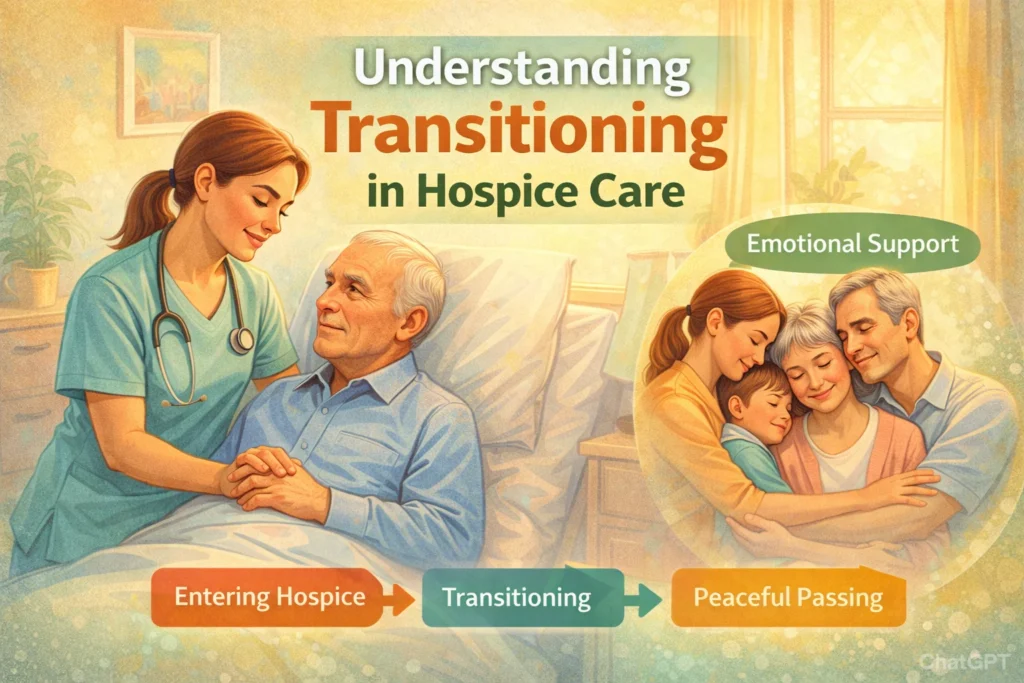
In hospice care, transitioning refers to the process a patient goes through as they shift from active medical treatment to end-of-life care, focusing on comfort, quality of life, and emotional support rather than curative measures.
This process involves adjustments for both the patient and their loved ones, often including discussions about goals of care, pain management, and emotional readiness.
Understanding what transitioning means in hospice can help families navigate this delicate stage with compassion, clarity, and dignity.
The Origin of the Term “Transitioning” in Hospice
The word “transitioning” originates from the Latin transire, meaning “to go across” or “to pass over.” In general English, it refers to moving from one state, condition, or place to another.
In healthcare, the term gained popularity in the late 20th century as hospice and palliative care programs grew in the United States and worldwide. It was adopted to describe the shift from curative treatment to comfort-focused care, recognizing that patients nearing the end of life undergo significant emotional, physical, and social changes.
Hospice teams emphasize gentle guidance, clear communication, and patient-centered care during this transition, helping patients and families prepare for life’s final stages.
Usage in Real-World Hospice Care
In practice, “transitioning” can appear in various contexts:
- Medical documentation: Notes may indicate a patient is “transitioning to hospice,” signaling the shift from aggressive treatment to palliative care.
- Family discussions: Caregivers may hear phrases like, “Your loved one is transitioning, and we will focus on comfort now.”
- Hospice care planning: Transitioning involves creating care plans, medication adjustments, and emotional support systems.
Tone Matters:
- Friendly and supportive: “We’re here to help your father transition comfortably.”
- Neutral: “The patient is transitioning to hospice care next week.”
- Clinical/dismissive: “Transitioning, proceed with hospice orders.”
Examples of Transitioning in Hospice
Here’s a table showing different scenarios and contexts of transitioning:
| Scenario | Example Statement | Tone |
|---|---|---|
| Patient at home | “We’ll help you transition to hospice so you can stay comfortable in your own home.” | Friendly |
| Hospital to hospice | “The patient is transitioning from acute care to hospice.” | Neutral |
| Family meeting | “Transitioning to hospice means we focus on comfort, not curing the illness.” | Supportive |
| Medical chart | “Patient transitioning, DNR and palliative measures initiated.” | Clinical |
In these examples, transitioning is less about death itself and more about changing focus from life-prolonging treatments to quality-of-life care.
Comparison With Related Terms
Several terms are often used interchangeably with “transitioning,” but subtle differences exist:
| Term | Meaning | How It Differs From Transitioning |
|---|---|---|
| Palliative Care | Specialized medical care focused on relief from symptoms | Transitioning is part of the move toward palliative care; palliative care can occur earlier |
| End-of-Life Care | Care provided in the final stages of life | Transitioning is the process; end-of-life care is the stage after the transition |
| Hospice Admission | Official entry into a hospice program | Transitioning describes the journey toward hospice, not just the administrative step |
| Comfort Care | Care emphasizing relief from pain and discomfort | Comfort care is an outcome of transitioning, not the process itself |
Understanding these distinctions helps families and caregivers communicate clearly with healthcare teams.
Alternate Meanings of Transitioning
While in hospice care, transitioning specifically relates to end-of-life adjustment, the term can have other contexts:
- Gender transition: Moving from one gender identity to another.
- Career or life transition: Changing jobs, relocating, or entering a new life phase.
- Healthcare context outside hospice: Moving from hospital to rehabilitation or skilled nursing.
It is important to clarify the meaning when discussing hospice to avoid confusion.
Polite and Professional Alternatives
Healthcare professionals often use substitute phrases that sound less clinical or harsh:
- “Moving to comfort-focused care”
- “Shifting to hospice support”
- “Focusing on quality of life”
- “Beginning the end-of-life care process”
These alternatives provide sensitivity and reassurance to patients and families.
Practical Steps for Transitioning in Hospice
Transitioning can feel overwhelming, but clear steps make the process smoother:
- Assessment: Evaluate the patient’s physical, emotional, and social needs.
- Communication: Discuss prognosis, goals of care, and patient/family wishes.
- Planning: Develop a hospice care plan, including medications, home setup, and support.
- Support: Offer counseling, spiritual care, and respite services for families.
- Follow-Up: Regular visits to adjust care and provide emotional support.
Tip: Encouraging patients to express their preferences early helps ensure the transition aligns with their values.
Examples With Tone Context
| Statement | Tone | Context |
|---|---|---|
| “We’ll help you transition so you can be comfortable at home.” | Friendly | Home hospice setup |
| “Patient is transitioning to hospice; all curative measures discontinued.” | Neutral | Medical documentation |
| “Transitioning means we focus on what matters most to your loved one now.” | Supportive | Family discussion |
| “Initiate hospice transition orders immediately.” | Clinical | Hospital charting |
Helpful Example Table for Hospice Transitioning Timeline
| Phase | Typical Actions | Key Focus |
|---|---|---|
| Initial Discussion | Family meeting, goals of care explained | Understanding options |
| Admission Planning | Hospice enrollment, care plan creation | Comfort & symptom management |
| Care Implementation | Medication adjustments, home or facility setup | Pain relief, emotional support |
| Ongoing Support | Regular nurse visits, counseling, spiritual care | Maintaining quality of life |
| End-of-Life Care | Final days monitored, family supported | Dignity & comfort |
FAQs
1. What does transitioning mean in hospice care?
It refers to the process of shifting from active treatment to comfort-focused end-of-life care.
2. How long does transitioning to hospice take?
It varies; some patients transition in days, others weeks. The focus is on ensuring comfort and dignity.
3. Who is involved in the transitioning process?
Hospice nurses, doctors, social workers, chaplains, and family members all play a role.
4. Can a patient change their mind after transitioning?
Yes. Hospice care is flexible, and patients can resume curative treatment if they choose.
5. Is transitioning the same as dying?
No. Transitioning is a process to improve quality of life, not an immediate indication of death.
6. What emotions are common during transitioning?
Patients and families may feel relief, anxiety, sadness, or even guilt. Emotional support is critical.
7. How does insurance affect transitioning to hospice?
Many insurance plans cover hospice; documentation of terminal prognosis (usually six months or less) is required.
8. Are pets or home comforts allowed during transitioning?
Yes, hospice encourages personal comforts, including pets, familiar surroundings, and favorite activities.
Conclusion:
- Transitioning is a gentle, structured shift from active treatment to comfort care.
- It focuses on quality of life, symptom management, and emotional support.
- Clear communication between the patient, family, and hospice team is essential.
- Alternatives to the word “transitioning” can provide reassurance and sensitivity.
- Understanding related terms helps families navigate the process confidently.
- Emotional, spiritual, and practical support make the transition smoother for everyone involved.
By recognizing transitioning as a process rather than an event, families and caregivers can approach hospice care with empathy, respect, and clarity.
Read More Related Articles:
- What Does < Mean in Math? How to Use It in Equations and Inequalities (2026)
- PA Means in Medical Terms: Physician Assistant, Position & More In 2026
- “Que” Meaning Explained in English: More Than Just “That” In 2026

Luna Hartley is a content creator at TextSprout.com, where she specializes in explaining word meanings, modern phrases, and everyday language used in texts and online conversations. Her writing focuses on clarity and context, helping readers understand how words are actually used in real communication.