
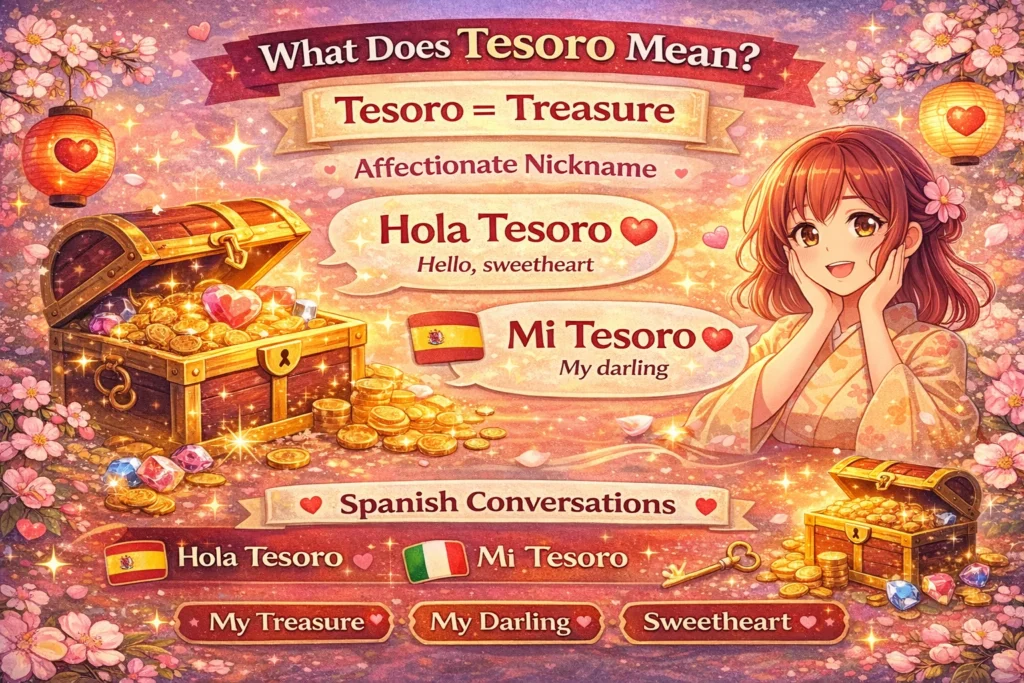
Tesoro is a Spanish and Italian word that means “treasure” in English. It can refer to something valuable, precious, or cherished.
In everyday conversation, it is often used as a term of affection, similar to “darling,” “sweetheart,” or “my precious.”
Language has a beautiful way of carrying emotion, culture, and meaning in just a single word. One such word is “tesoro.” If you’ve heard it in movies, songs, or conversations in Spanish or Italian, you might wonder what it really means in English and how people use it in everyday speech.
At its core, the word expresses value and affection. Sometimes it refers to literal treasure like gold or jewels. Other times it describes someone dear to you, such as a child, partner, or loved one.
In this detailed guide, we’ll explore the full meaning of tesoro, its origins, cultural significance, examples in conversation, comparisons with similar terms, and the many ways it appears in real life.
Origin of the Word Tesoro
The word tesoro has deep historical roots that trace back to classical languages.
It originates from the Latin word “thesaurus.” In ancient Latin and Greek contexts, thesaurus meant a storehouse or collection of valuable things. Over centuries, the word evolved into tesoro in both Spanish and Italian.
Historical Evolution
| Language | Word | Meaning |
|---|---|---|
| Greek | thesauros | treasure or storehouse |
| Latin | thesaurus | valuable collection |
| Spanish | tesoro | treasure |
| Italian | tesoro | treasure or beloved person |
The meaning remained remarkably consistent over time. What changed was how people began using it metaphorically to describe people rather than objects.
For example, in medieval literature and poetry, lovers were often called “tesoro mio”, meaning “my treasure.”
Literal Meaning of Tesoro
The most direct English translation of tesoro is treasure.
Treasure usually refers to valuable objects such as gold, silver, jewels, or rare artifacts. In this literal sense, the word is commonly used in history, storytelling, and archaeology.
Literal Usage Examples
| SentenceEnglish Meaning | |
|---|---|
| El pirata encontró un tesoro | The pirate found a treasure |
| Este cofre contiene un tesoro antiguo | This chest contains an ancient treasure |
| El museo guarda muchos tesoros | The museum keeps many treasures |
In stories about pirates, kings, or explorers, tesoro often refers to hidden wealth or precious discoveries.
Tesoro as a Term of Affection
One of the most common modern uses of tesoro is as a loving nickname.
In many Spanish and Italian speaking cultures, calling someone tesoro expresses affection, warmth, and appreciation.
It is similar to English expressions like:
- Sweetheart
- Darling
- My love
- Honey
- Precious
Parents often call their children tesoro, and couples use it as a romantic nickname.
Everyday Examples
| Phrase | Meaning in English |
|---|---|
| Hola tesoro | Hello darling |
| Gracias, tesoro | Thank you, sweetheart |
| Buenas noches, tesoro | Good night, my love |
The tone here is friendly and loving. It shows care and emotional closeness.
Tesoro in Romantic Contexts
In romantic relationships, tesoro carries a deeply affectionate tone.
Partners use it to express love or admiration.
Examples might include:
- “Buenos días, tesoro” meaning Good morning, my love.
- “Te extraño, tesoro” meaning I miss you, sweetheart.
In these situations, the word emphasizes that the person is valuable and precious, just like a treasure.
Tesoro Used by Parents and Family
Parents commonly use tesoro when speaking to their children.
The word communicates tenderness and warmth.
For example:
A mother might say
“Ven aquí, tesoro.”
This means Come here, my precious.
Grandparents also use the word when talking to grandchildren.
In family conversations, it expresses care and emotional closeness rather than romantic love.
Cultural Importance of Tesoro
In Spanish and Italian culture, affectionate nicknames are a normal part of everyday speech.
People frequently address loved ones using terms that show warmth.
Common affectionate words
| Word | English Meaning |
|---|---|
| Tesoro | Treasure |
| Amor | Love |
| Cariño | Darling |
| Corazón | Heart |
| Mi vida | My life |
These expressions strengthen emotional connections and create friendly communication.
Using affectionate words is especially common in families and romantic relationships.
Tesoro in Movies, Music, and Literature
The word tesoro frequently appears in entertainment and storytelling.
Because of its emotional tone, writers and musicians often use it in romantic dialogue or song lyrics.
In movies set in Spanish or Italian speaking cultures, characters might say “mi tesoro” to express deep affection.
In literature, the word can represent both literal treasure and emotional value.
A character might describe a loved one as their greatest tesoro, symbolizing that the person is more valuable than wealth.
Tesoro in Everyday Conversations
You might hear tesoro in casual conversations in restaurants, homes, or public places.
For example:
A shop owner greeting a regular customer might say
“Hola tesoro, ¿cómo estás?”
This would translate to
“Hello dear, how are you?”
In some cases, the word is simply used as a friendly expression, similar to how English speakers say “dear” or “sweetie.”
Tone and Context of Tesoro
The meaning of tesoro can slightly change depending on tone and context.
Friendly Tone
Example
“Gracias por tu ayuda, tesoro.”
Meaning
“Thank you for your help, dear.”
Tone here is warm and appreciative.
Romantic Tone
Example
“Te amo, tesoro.”
Meaning
“I love you, my treasure.”
Tone here is affectionate and intimate.
Playful Tone
Example
“Tranquilo, tesoro.”
Meaning
“Relax, sweetheart.”
Tone here is comforting or playful.
Comparison With Similar Words
Several words share similar meanings with tesoro, but each has slightly different emotional nuance.
Comparison Table
| Word | Language | Meaning | Usage |
|---|---|---|---|
| Tesoro | Spanish / Italian | Treasure | Affection or valuable object |
| Amor | Spanish | Love | Romantic or affectionate |
| Cariño | Spanish | Darling | Friendly affection |
| Corazón | Spanish | Heart | Emotional closeness |
| Precious | English | Valuable person | Romantic or affectionate |
While amor directly means love, tesoro emphasizes value and preciousness.
Alternate Meanings of Tesoro
Although the primary translation is treasure, the word may appear in different contexts.
Economic or Government Context
In some situations, tesoro refers to a national treasury or financial institution.
For example, in Spanish government terminology, “Tesoro Público” means public treasury.
Figurative Meaning
People sometimes use tesoro metaphorically to describe something extremely valuable.
Examples might include:
- A rare painting
- An important historical document
- A priceless family heirloom
In these cases, the word emphasizes emotional or historical importance.
Polite or Professional Alternatives
In formal English communication, translating tesoro literally as “treasure” may not always sound natural.
Depending on context, better alternatives might include:
- Dear
- Beloved
- Valued
- Cherished
For instance, a formal letter might say “Dear colleague” instead of “treasure.”
Choosing the right translation depends on the situation and audience.
Practical Tips for Understanding Tesoro
If you encounter the word tesoro, consider these helpful tips:
- Check the context to see whether it refers to literal treasure or affection.
- Notice the tone of the conversation. Romantic speech often uses tesoro.
- Look at surrounding words like “mi” which means “my.”
- Understand cultural differences, since affectionate nicknames are common in Spanish-speaking cultures.
With practice, recognizing the meaning becomes much easier.
Example Sentences Table
| Sentence | Translation | Context |
|---|---|---|
| Mi tesoro está aquí | My treasure is here | Romantic |
| Ese cuadro es un tesoro | That painting is a treasure | Valuable object |
| Buenas noches, tesoro | Good night, darling | Affectionate |
| Encontraron un tesoro antiguo | They found an ancient treasure | Historical |
This table shows how the word can change meaning depending on the situation.
FAQs
What does tesoro literally mean in English?
Tesoro literally translates to treasure in English. It refers to something valuable or precious.
Is tesoro used as a nickname?
Yes. Many Spanish and Italian speakers use tesoro as an affectionate nickname similar to sweetheart or darling.
Does tesoro mean love?
Not exactly. While it expresses affection, the direct translation is treasure rather than love.
Can tesoro be used for children?
Yes. Parents commonly call their children tesoro as a loving term.
Is tesoro romantic?
It can be romantic when used between partners, but it can also be friendly or familial.
What does mi tesoro mean?
Mi tesoro means my treasure, often used as a term of deep affection.
Is tesoro used in Italian as well?
Yes. In Italian, tesoro also means treasure and is commonly used as a loving nickname.
Is tesoro formal or informal?
It is generally informal and used in personal conversations rather than professional settings.
Conclusion
The word tesoro carries a beautiful combination of meaning and emotion. Literally, it translates to treasure, representing something valuable and precious. In everyday conversations, it often becomes a warm and affectionate nickname for loved ones.
Understanding the word requires paying attention to context. Sometimes it refers to gold, jewels, or valuable objects. Other times it expresses love, care, and appreciation for people who matter most.
Across Spanish and Italian cultures, tesoro reflects how language can transform simple words into powerful expressions of affection.
Whether used in family conversations, romantic dialogue, literature, or music, the word reminds us that people themselves can be our greatest treasures.
Read More Related Articles:
- What Is the Meaning of “Deku”? English Translation Explained In 2026
- What Does 3 Mean in Texting: Love Symbol or Something Else In 2026
- What Does Bonjour Mean in French: More Than Just Hello In 2026

Luna Hartley is a content creator at TextSprout.com, where she specializes in explaining word meanings, modern phrases, and everyday language used in texts and online conversations. Her writing focuses on clarity and context, helping readers understand how words are actually used in real communication.