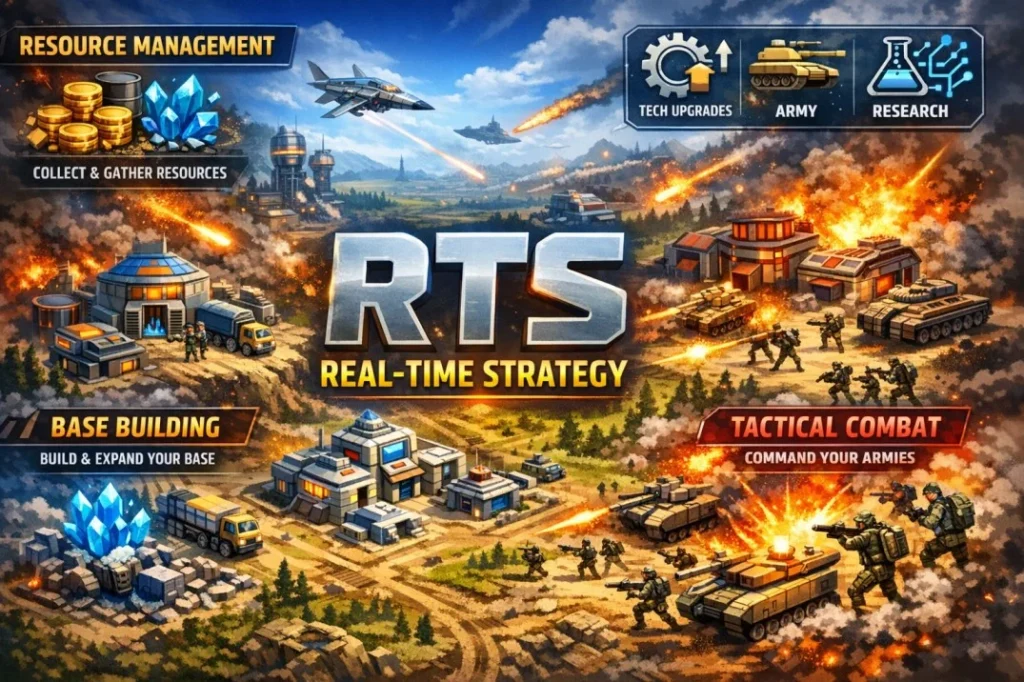
RTS in gaming stands for Real-Time Strategy. It is a genre of video games where players build bases, gather resources, and control units in real time to defeat opponents or complete objectives. Unlike turn-based strategy games, RTS games require quick thinking, multitasking, and rapid decision-making, as all players act simultaneously.
For example, in games like StarCraft or Age of Empires, players must manage their economy, army, and defenses while reacting to enemy actions in real time.
If you are new to gaming, you may have seen the term RTS and wondered what it means. Real-time strategy games are a cornerstone of the gaming world, loved for their mix of planning, resource management, and fast-paced action. They differ from other genres in that players are not limited to taking turns. Instead, the game progresses continuously, meaning every decision, movement, and attack happens in real time.
RTS games are more than just entertainment. They challenge players to think critically, prioritize tasks, and adapt quickly to changing circumstances. The genre has evolved over decades, offering both classic experiences and modern twists, and it continues to attract players who enjoy strategic thinking combined with immediate execution.
This article will explain what RTS means in gaming, explore its history, discuss gameplay mechanics, provide examples of popular RTS games, explain strategies, compare it to other genres, and answer common questions. By the end, you will have a comprehensive understanding of RTS games and why they remain so popular.
What RTS Means in Gaming
RTS, or Real-Time Strategy, refers to games where all players or opponents operate simultaneously. Unlike turn-based strategy games, where players take their time to plan moves, RTS games occur in real time. This means that the game does not pause for your decisions, and you must react as events unfold.
In an RTS game, players often need to:
- Build and expand bases or settlements
- Gather resources like gold, wood, food, or minerals
- Produce and manage units such as soldiers, vehicles, or magical creatures
- Research technologies or upgrades to improve capabilities
- Attack or defend against enemy players or AI opponents
The combination of strategic planning and real-time execution makes RTS games both challenging and exciting. Players must balance economy, military production, and tactical combat simultaneously to succeed.
The History of RTS Games
The RTS genre has a rich history that dates back to the 1980s. Early strategy games allowed players to make decisions, but they were often turn-based. The shift to real-time gameplay transformed the genre and added urgency and excitement.
One of the first widely recognized RTS games was Dune II, released in the early 1990s. It introduced many elements that define RTS games today, including resource management, base building, and controlling multiple units at once.
Following Dune II, games like Command & Conquer, Warcraft, and Age of Empires popularized the genre. These games refined mechanics, added storytelling elements, and created competitive multiplayer experiences. StarCraft, in particular, became an iconic RTS game, famous for its balance between races, complex strategies, and a thriving esports community.
Over time, RTS games have evolved to include modern graphics, advanced AI, and online multiplayer, but the core elements of resource management, base building, and real-time tactical combat remain central to the genre.
Key Gameplay Mechanics in RTS Games
Understanding the core mechanics of RTS games helps explain why they are so engaging. Some key aspects include:
Base Building
Players must construct buildings to produce units, research technologies, and provide defenses. Placement and timing of structures can significantly influence the outcome of the game.
Resource Management
Gathering and managing resources is critical. Whether it is mining minerals, harvesting wood, or collecting food, players must balance resource production with unit creation and upgrades.
Unit Control
Players command multiple units simultaneously. This includes moving troops, attacking enemies, and positioning units strategically for defense or offense. Effective unit control is often the difference between victory and defeat.
Fog of War
Many RTS games include a “fog of war” mechanic, where unexplored or enemy territory is hidden. Players must scout and gather intelligence to make informed decisions.
Technology and Upgrades
Advancing technology or upgrading units can provide a strategic advantage. Players must decide whether to invest resources in stronger units, improved defenses, or economic advantages.
Combat and Tactics
Combat occurs in real time, requiring quick reactions. Successful players coordinate attacks, defend critical areas, and anticipate enemy movements. Micro-management and macro-management skills are essential.
Popular RTS Games and Examples
RTS games cover a wide range of themes, from historical battles to futuristic warfare and fantasy realms. Some notable examples include:
1. StarCraft Series
One of the most iconic RTS franchises, StarCraft pits three races against each other: Terrans, Zerg, and Protoss. Each has unique units and abilities, and competitive multiplayer is a hallmark of the series.
2. Age of Empires Series
Age of Empires combines historical themes with RTS gameplay. Players develop civilizations, manage resources, and wage battles across different eras.
3. Command & Conquer Series
Known for its modern and futuristic military themes, Command & Conquer emphasizes base building, unit management, and strategic combat.
4. Warcraft Series
Blending fantasy elements with RTS mechanics, Warcraft introduced heroes, spells, and story-driven campaigns, eventually leading to MMORPG spin-offs like World of Warcraft.
5. Total Annihilation and Supreme Commander
These games focus on large-scale warfare and resource management, allowing players to control hundreds of units at once.
Each of these examples highlights the diversity of RTS games and the variety of strategies and experiences players can enjoy.
Strategies for Success in RTS Games
RTS games reward planning, multitasking, and adaptability. Some key strategies include:
Economic Management
Maintaining a strong economy is vital. Efficiently gathering resources and balancing production ensures you can create units, upgrade technologies, and build structures without interruption.
Scouting and Intelligence
Knowing what your opponent is doing is critical. Scouting allows you to anticipate attacks, exploit weaknesses, and adjust your strategy accordingly.
Micro-Management
Micro-management involves controlling individual units effectively in combat. Moving units, focusing attacks, and using special abilities at the right moment can turn the tide of battle.
Macro-Management
Macro-management involves overseeing the broader game strategy, including base expansion, resource allocation, and long-term planning.
Timing and Adaptation
In RTS games, timing is everything. Launching an attack too early or too late can result in defeat. Adapting to enemy strategies in real time is crucial for success.
RTS vs Other Gaming Genres
To better understand RTS games, it helps to compare them to other genres:
| Genre | Key Difference from RTS | Example |
|---|---|---|
| Turn-Based Strategy | Players take turns instead of acting simultaneously | Civilization |
| MOBA | Focus on single hero units rather than base building | League of Legends |
| FPS | First-person shooting perspective, real-time action without resource management | Call of Duty |
| RPG | Focuses on character progression and story rather than resource management | Skyrim |
RTS games combine elements of strategy, resource management, and tactical combat in real time, making them unique and challenging.
The Appeal of RTS Games
RTS games have endured for decades because they offer a mix of strategy, action, and skill. Players enjoy the intellectual challenge of managing economies and units while reacting to fast-paced changes on the battlefield. Competitive multiplayer adds another layer, with players testing their skills against humans rather than predictable AI.
RTS games also encourage creativity. Players can experiment with strategies, explore different unit combinations, and develop unique approaches to objectives. This dynamic nature keeps gameplay fresh and engaging.
Challenges of RTS Games
While RTS games are rewarding, they can also be demanding:
- High Learning Curve: Learning to balance resource management, unit control, and tactical decisions takes practice.
- Multitasking: Players must handle multiple tasks simultaneously, which can be overwhelming for beginners.
- Fast-Paced Pressure: Decisions must be made quickly, and mistakes can be costly.
- Hardware Requirements: Large-scale battles with hundreds of units can be taxing on computers.
Despite these challenges, many players find RTS games highly rewarding due to the combination of strategy and real-time execution.
FAQs
What does RTS mean in gaming
RTS stands for Real-Time Strategy, a genre where players control units, gather resources, and build bases in real time.
How is RTS different from turn-based strategy
In RTS, all players act simultaneously, whereas in turn-based strategy, players take turns to make moves.
Do RTS games require fast reactions
Yes, quick thinking, multitasking, and real-time decision-making are essential in RTS games.
Can I play RTS games on a console or mobile
While traditionally PC-focused, many RTS games are now available on consoles and mobile devices, though controls may vary.
Are RTS games competitive
Yes, RTS games are popular in esports, with professional tournaments for games like StarCraft.
Do RTS games have single-player campaigns
Most RTS games include single-player campaigns with story-driven missions and objectives.
Can beginners enjoy RTS games
Yes, starting with tutorials and simpler games helps build skills before tackling competitive multiplayer.
What skills do RTS games develop
RTS games improve multitasking, strategic thinking, resource management, and quick decision-making.
Conclusion
RTS, or Real-Time Strategy, games are a beloved genre in the gaming world because they combine planning, quick thinking, and tactical execution. From managing resources and building bases to commanding armies and reacting to opponents, RTS games challenge both the mind and reflexes.
The genre has evolved over decades, offering diverse themes, gameplay mechanics, and experiences. From historical settings like Age of Empires to futuristic battles in StarCraft, RTS games continue to captivate players who enjoy strategy, competition, and creativity.
Whether you are a beginner learning the basics or a seasoned player competing in multiplayer tournaments, understanding RTS games opens up a world of challenges, excitement, and strategic satisfaction. Mastering real-time strategy requires practice, patience, and adaptability, but the reward is a deeply engaging and intellectually stimulating gaming experience.
Read More Related Articles:
- What Does Total Bases Mean in Betting: Full Explanation In 2026
- What Does 6 Mean in the Bible: Symbolism, and Spiritual Meaning In 2026
- What Does Mediation Mean in a Divorce: Real-Life Examples In 2026

Neon Samuel is a digital content creator at TextSprout.com, dedicated to decoding modern words, slang, and expressions. His writing helps readers quickly grasp meanings and understand how terms are used in real conversations across text and social platforms.