
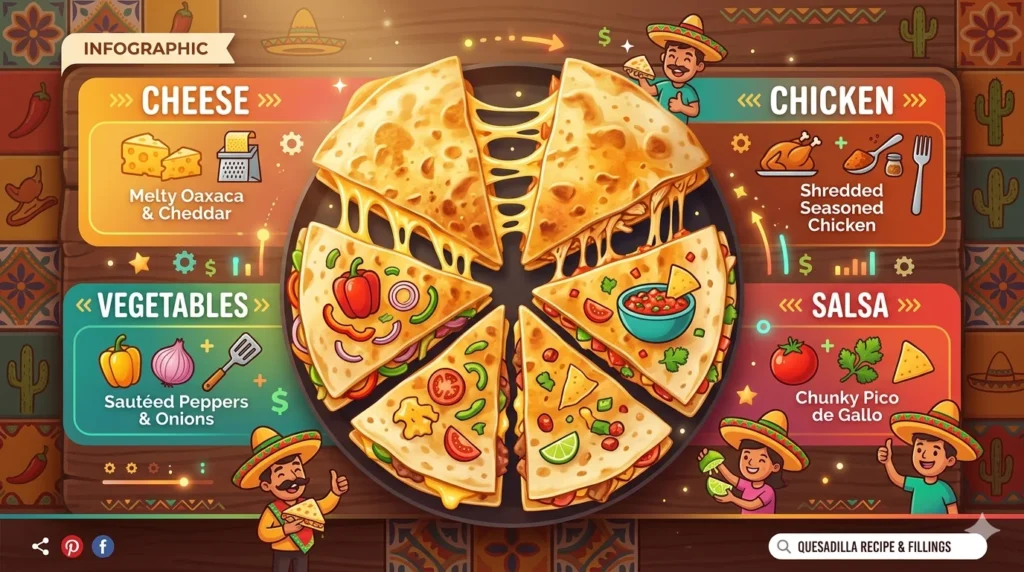
Quesadilla in English means a tortilla filled with cheese and sometimes other ingredients, folded or stacked, and cooked until the cheese melts.
If you’ve ever walked into a Mexican restaurant, ordered takeout, or even browsed a Tex-Mex menu, you have probably seen the word quesadilla. The sight of a golden, toasted tortilla filled with melted cheese and other ingredients can be mouthwatering.
But what does quesadilla mean in English, and where does it come from? Understanding this term will not only help you order confidently but also appreciate a dish that has become a beloved part of global cuisine.
Traditionally, quesadillas are enjoyed as a snack, appetizer, or main meal. While cheese is always a key ingredient, many modern variations also include vegetables, meats, beans, and sauces.
The Literal Meaning of Quesadilla
The word quesadilla originates from Spanish. It is derived from queso, which means cheese, and the suffix -adilla, which can imply something small or cute. Therefore, the word can be interpreted literally as “little cheesy thing” or “small cheese dish.”
In English, this literal meaning is simplified to “cheese-filled tortilla”. While modern versions of the dish often have more than just cheese, the focus on cheese remains at its core.
History of the Quesadilla
Quesadillas have a long history that stretches back to traditional Mexican cuisine. They were originally made with corn tortillas, a staple in Mexico for thousands of years, and filled with local cheeses. The tortilla provided a simple, portable, and filling base, while the cheese offered protein and flavor.
Early quesadillas were cooked on a comal, a flat griddle made of clay or metal. This method allowed the cheese to melt evenly and the tortilla to crisp just slightly. Over time, quesadillas evolved as regional ingredients and cooking methods influenced their preparation.
When quesadillas crossed borders into the United States and other countries, flour tortillas became popular, and the fillings expanded to include a variety of meats, vegetables, and sauces. Today, quesadillas are both a traditional Mexican dish and a global favorite in many casual dining establishments.
How Quesadillas Are Made
Making a quesadilla is surprisingly simple, yet the possibilities are endless. The basic process involves a few key steps:
- Choose the tortilla: Corn tortillas are traditional, but flour tortillas are often used for larger, more flexible quesadillas.
- Add cheese: Oaxaca cheese is the traditional choice, but mozzarella, cheddar, or other melty cheeses work perfectly.
- Add optional fillings: Popular additions include cooked chicken, beef, vegetables, beans, mushrooms, peppers, or salsa.
- Fold or stack the tortilla: Some recipes fold a single tortilla over the filling, while others use two tortillas with the filling in between.
- Cook the quesadilla: Grill, pan-fry, or toast until the cheese is fully melted and the tortilla is lightly browned and crisp.
Quesadillas are often served with sides such as guacamole, sour cream, or salsa, which enhance the flavor and provide a creamy or tangy contrast to the melted cheese.
Types and Variations of Quesadillas
Quesadillas are highly versatile, and regional differences across Mexico and international adaptations make them unique. Here are some examples:
| Variation | Ingredients | Description |
|---|---|---|
| Classic Mexican | Corn tortilla, Oaxaca cheese | Simple, traditional, often served as street food |
| Chicken Quesadilla | Tortilla, cheese, grilled chicken | Popular in restaurants and homes worldwide |
| Beef Quesadilla | Tortilla, cheese, seasoned beef | Common in Tex-Mex cuisine |
| Veggie Quesadilla | Tortilla, cheese, spinach, mushrooms, peppers | A healthy alternative |
| Dessert Quesadilla | Tortilla, chocolate, fruits, cream cheese | Sweet version served as a dessert |
Despite the variations, all quesadillas maintain the essential concept of melted cheese enveloped in a tortilla.
Cultural Significance
In Mexico, quesadillas are more than just food. They are a reflection of regional flavors, traditions, and the adaptability of local ingredients. For example, some regions fill quesadillas with local herbs, indigenous cheeses, or even edible flowers. Street vendors often sell simple cheese quesadillas for quick meals, while home cooks may prepare elaborate versions for family gatherings.
Quesadillas have also become a symbol of Mexican cuisine abroad. In the United States, for instance, they are a staple of Tex-Mex restaurants and are often included in menus alongside tacos, burritos, and nachos. They are seen as approachable, customizable, and satisfying for all ages.
How to Use “Quesadilla” in English Sentences
Using the word quesadilla in English is straightforward. Here are some examples:
- “I ordered a cheese quesadilla for lunch.”
- “This quesadilla is crispy on the outside and gooey with cheese inside.”
- “We made chicken and vegetable quesadillas for dinner.”
- “The dessert quesadilla with chocolate and bananas was delicious.”
In these sentences, quesadilla refers to the prepared food, not just the literal translation of “little cheesy thing.”
Quesadilla vs. Other Similar Foods
It can be helpful to compare quesadillas with similar foods to understand its uniqueness:
| Dish | Difference | Notes |
|---|---|---|
| Quesadilla | Cheese-focused, folded tortilla | Can include meats or vegetables but always centers on melted cheese |
| Burrito | Larger, fully wrapped tortilla with multiple fillings | Often eaten as a main meal |
| Taco | Open tortilla, smaller portion | Usually topped with meat, salsa, and vegetables |
| Enchilada | Rolled tortilla baked in sauce | Often served with sauce on top, unlike quesadillas |
| Grilled Cheese | Bread instead of tortilla | Focuses on melted cheese but lacks Mexican flavors |
Quesadillas are distinct for their simplicity and adaptability, keeping cheese at the center while allowing endless fillings and cooking styles.
Tips for Making the Perfect Quesadilla
Creating a delicious quesadilla at home requires a few simple tips:
- Use high-quality cheese that melts easily.
- Avoid overfilling the tortilla, which can make it hard to fold or toast.
- Preheat your pan or griddle so the tortilla crisps evenly.
- Cook on medium heat to avoid burning the outside while the cheese melts inside.
- Experiment with fillings and sauces, like caramelized onions, roasted peppers, or spicy salsa.
- Cut the quesadilla into wedges for easy sharing and serving.
Following these tips ensures that the quesadilla is warm, gooey, and delicious every time.
Fun Facts About Quesadillas
- Quesadillas are often eaten as a snack, appetizer, or main meal, depending on size and fillings.
- In some regions of Mexico, quesadillas may be cooked without cheese, using mushrooms, squash, or other fillings instead.
- Street vendors in Mexico often sell quesadillas made to order, allowing customers to customize fillings.
- The word “quesadilla” first appeared in print in the early 20th century, though the dish existed long before.
- Quesadillas can be baked, grilled, or even microwaved for a quick meal.
These facts highlight the dish’s adaptability and cultural importance.
FAQs
What does quesadilla mean in English?
A quesadilla is a tortilla filled with cheese and sometimes other ingredients, folded or stacked, and cooked until the cheese melts.
Is quesadilla only cheese?
Traditionally yes, but modern versions often include meats, vegetables, or sauces.
What cheese is used in quesadillas?
Oaxaca cheese is traditional, but mozzarella, cheddar, or Monterey Jack also work well.
Can quesadillas be made with flour tortillas?
Yes, flour tortillas are common, especially for larger quesadillas.
Are quesadillas Mexican or Tex-Mex?
They originated in Mexico but are also popular in Tex-Mex cuisine and worldwide.
Can quesadillas be dessert?
Yes, dessert quesadillas often include chocolate, fruits, or cream cheese.
How do you pronounce quesadilla in English?
It is usually pronounced “keh-sah-DEE-yah,” similar to Spanish pronunciation.
Is a quesadilla like a grilled cheese?
Not exactly. A quesadilla uses a tortilla and may include other ingredients beyond cheese.
Conclusion
In English, quesadilla means a cheese-filled tortilla that can be folded or stacked and cooked until the cheese melts. It is a dish with roots in traditional Mexican cuisine, yet it has become a global favorite thanks to its simplicity, adaptability, and comforting flavor.
From traditional street food to restaurant specialties and creative home recipes, quesadillas continue to delight people of all ages. Whether you enjoy a classic cheese quesadilla or a modern variation with chicken, vegetables, or chocolate, the essence of the dish remains the same: warm, cheesy, and irresistible.
Next time you see the word on a menu, you will not only know what it means but also appreciate the history, versatility, and joy behind every bite.
Read More Related Articles:
- What Does Vanilla Mean in Slang? Modern Slang Guide (2026)
- WYF Meaning in Texting and Slang: Full Guide with Examples and Tips (2026)
- What Does IKTR Mean in Text? Here’s What It Really Means (2026)

Luna Hartley is a content creator at TextSprout.com, where she specializes in explaining word meanings, modern phrases, and everyday language used in texts and online conversations. Her writing focuses on clarity and context, helping readers understand how words are actually used in real communication.