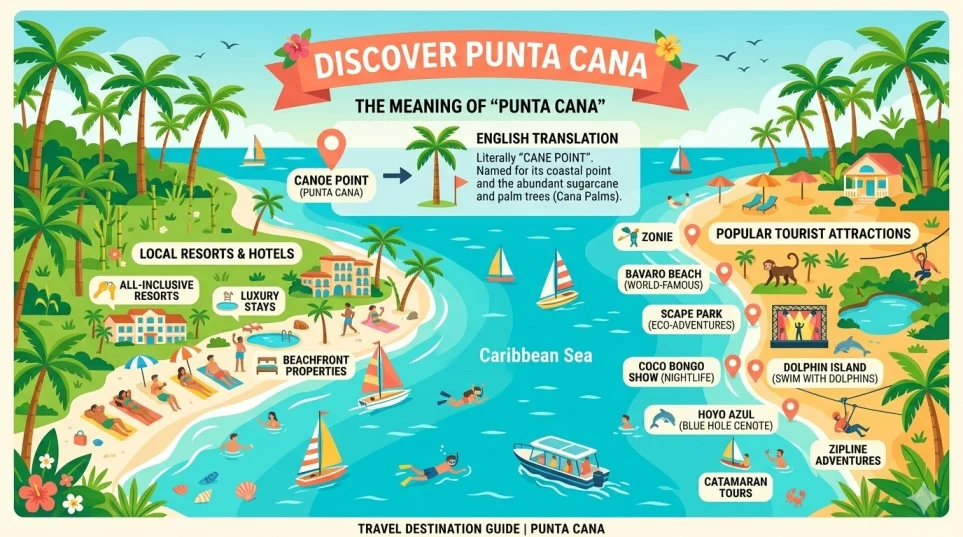
Punta Cana in English literally means “Cane Point” or “Point of the Cane.”
The name comes from the combination of “punta,” meaning point or tip, and “cana,” meaning sugar cane or cane palm.
Punta Cana is most widely known as a world-famous tourist destination in the Dominican Republic, famous for its white sandy beaches, turquoise waters, and luxury resorts. But its name reflects its origins in the natural landscape, specifically the areas where cane palms or sugarcane grew along the coastline.
Understanding what Punta Cana means in English helps travelers, students, and curious readers connect the meaning of the name with the rich history and culture of this Caribbean paradise.
Punta Cana is one of the most recognized names in the Caribbean. Millions of tourists visit every year to enjoy its warm climate, vibrant resorts, and beautiful natural scenery. But many people do not know what the name actually means.
The literal translation of Punta Cana is surprisingly simple. In Spanish, “punta” means point, usually referring to a tip of land that juts out into the sea. “Cana” refers to sugar cane or cane palm, a plant that grows abundantly in tropical climates. Put together, Punta Cana translates to “Cane Point”, reflecting the natural environment that early explorers or settlers noticed when they first saw the area.
While today Punta Cana is known primarily as a resort town with all-inclusive hotels and beaches, the name itself is a nod to the natural beauty of the region, long before tourism became its defining feature.
The Origin of the Name Punta Cana
Punta Cana’s name is deeply rooted in its geography and the vegetation that was native to the area.
Historically, the region was sparsely populated, and the coastline was lined with tall cane palms, which were an important part of the local ecosystem. Early settlers, explorers, or cartographers used these prominent natural markers to describe the landscape. A point of land jutting into the Atlantic Ocean that was covered with cane palms became naturally known as Punta Cana, literally the “point where cane grows.”
The simplicity of the name reflects a common practice in naming places, particularly in Spanish-speaking countries. Many coastal areas, towns, or cities were named after prominent physical features, plants, or animals that made the location easily identifiable.
Literal vs Cultural Meaning
While the literal English translation is Cane Point, the cultural and symbolic meaning of Punta Cana extends far beyond words.
- Literal meaning: A geographical point where cane palms or sugarcane were present.
- Cultural meaning: A tropical paradise, a vacation destination, and a symbol of natural beauty and leisure.
For travelers, the name evokes images of beaches, luxury resorts, and clear blue waters rather than agricultural fields, which shows how the meaning of a name can evolve over time.
Geographical Context
Punta Cana is located on the eastern tip of the Dominican Republic, which itself is part of the Caribbean island of Hispaniola. The town sits on a peninsula surrounded by the Atlantic Ocean to the north and east, with miles of coastline. The term “punta” in Spanish often refers to such peninsulas or tips of land, which perfectly describes its geography.
The area is naturally rich in cane palms, coconut trees, and tropical vegetation, which explains the “cana” part of the name. Even today, tourists can see the lush greenery along the beaches, which serves as a reminder of the origin of the name.
| Term | Spanish | English Meaning |
|---|---|---|
| Punta | Point, tip, or promontory | Point |
| Cana | Cane, sugarcane, or cane palm | Cane |
| Punta Cana | Tip of land with cane or cane palm | Cane Point |
Why Punta Cana Became Famous
While the name originally described a geographical and botanical feature, Punta Cana became famous worldwide for tourism starting in the late 20th century.
Developers recognized the natural beauty of the area—the white sand, clear water, and tropical climate—and began building resorts and hotels along the coast. Over time, Punta Cana transformed from a remote location into a luxury tourism hub, attracting visitors from North America, Europe, and beyond.
Today, when people hear Punta Cana, they often think of:
- White sandy beaches stretching for miles
- Crystal-clear turquoise waters
- All-inclusive resorts and spas
- Water sports and recreational activities
- Golf courses, adventure parks, and nightlife
Although the literal meaning is “Cane Point,” the modern association is with relaxation, beauty, and tropical luxury.
Historical Significance
Before tourism, Punta Cana and the surrounding region were largely rural and agricultural. Sugarcane was an important crop in the Caribbean, and the cane palms in the area played a role in the local economy and daily life. The name preserves that history, connecting the modern tourist destination to its past.
The early settlers likely named the region based on its natural landmarks, which included:
- Peninsulas or “points” of land along the coast
- Tall cane palms or sugarcane fields
- Accessible beaches and shallow waters ideal for small boats
In essence, the name Punta Cana acts as a window into the region’s historical landscape, long before it became synonymous with travel and leisure.
How to Pronounce Punta Cana
In Spanish, the correct pronunciation is POON-tah KAH-nah, emphasizing the first syllable of each word.
Many English speakers say it as PUN-tah CAH-nah, which is close and generally accepted in tourist contexts. Proper pronunciation not only shows respect for the local language but also makes it easier to communicate when traveling or booking trips.
Fun Facts About Punta Cana
- Punta Cana is home to some of the longest beaches in the Caribbean, stretching over 50 miles.
- The area’s name is a direct reference to its natural vegetation, reminding visitors of the lush greenery that existed long before resorts.
- Punta Cana International Airport is the main gateway for tourists, making it one of the busiest airports in the Caribbean.
- Even though the literal meaning is “Cane Point,” very few visitors associate the area with sugarcane today because of its tourism-focused image.
Tourism and Cultural Impact
The literal meaning of Punta Cana may reference cane palms, but tourism has transformed the perception of the name. Today, Punta Cana represents leisure, tropical adventures, and Caribbean hospitality.
Tourists visiting the area experience:
- Swimming and snorkeling in calm, clear waters
- Exploring natural parks, mangroves, and ecological reserves
- Experiencing Dominican culture, food, and music
- Relaxing in luxury resorts with spas and golf courses
The name Punta Cana, while simple in origin, now carries a symbolic meaning of tropical paradise, which has helped the region brand itself successfully to the world.
Examples of Using Punta Cana in Sentences
| Sentence | Context |
|---|---|
| We are planning a vacation to Punta Cana this summer | Travel plans |
| Punta Cana means Cane Point in English | Literal translation |
| The beaches in Punta Cana are some of the most beautiful in the Caribbean | Tourism description |
| I booked an all-inclusive resort in Punta Cana for our honeymoon | Travel recommendation |
| Learning what Punta Cana means gave me a deeper appreciation of the area | Educational context |
Modern Usage of the Name
While the original meaning is rooted in geography and vegetation, Punta Cana today is synonymous with luxury tourism and unforgettable vacations. Hotels, resorts, and travel agencies use the name to evoke images of calm waters, white sand, and tropical landscapes.
- Travel websites often feature Punta Cana as a dream vacation destination.
- Airlines use the name in their promotions for flights to the Dominican Republic.
- Hotels brand themselves as Punta Cana resorts to attract international visitors.
The evolution of the name demonstrates how language and culture interact. A simple descriptive name transformed over decades into a brand associated with relaxation, beauty, and adventure.
FAQs
What does Punta Cana mean in English?
It literally means “Cane Point” or “Point of the Cane,” referring to a geographical tip of land with cane palms or sugarcane.
Why is it called Punta Cana?
The name reflects the natural vegetation and geography of the area, where cane palms were abundant along a coastal point.
Is Punta Cana a city or a region?
Punta Cana refers to a region on the eastern tip of the Dominican Republic, primarily known for its resorts and tourist areas.
How do you pronounce Punta Cana correctly?
In Spanish, it is pronounced POON-tah KAH-nah. In English, PUN-tah CAH-nah is commonly used.
Does the name still relate to cane or sugarcane today?
While the literal meaning refers to cane, today Punta Cana is more associated with beaches, resorts, and tourism than agriculture.
What language is Punta Cana from?
It is from Spanish, the official language of the Dominican Republic.
Are there other places named Punta in the Dominican Republic?
Yes, “punta” is a common prefix in Spanish for coastal points or tips of land, often combined with other descriptive words.
Why is Punta Cana famous worldwide?
It is known for its long beaches, clear waters, luxury resorts, and status as a major Caribbean tourist destination.
Conclusion
Punta Cana, when translated to English, means Cane Point, a simple name with roots in the natural geography and vegetation of the area. While its original meaning described a point of land covered in cane palms or sugarcane, today the name has taken on a much broader cultural significance. It represents tropical beauty, leisure, luxury, and one of the most popular tourist destinations in the Caribbean.
Understanding the meaning of Punta Cana allows travelers to appreciate the connection between its name and its history. From humble beginnings as a descriptive place name to its modern image as a vacation paradise, Punta Cana shows how language, geography, and culture evolve over time.
Whether you are planning a trip, learning Spanish, or simply curious about Caribbean geography, knowing what Punta Cana means adds depth to your understanding of this stunning region and the stories behind its name.
Read More Related Articles:
- MS Meaning in Coins: How It Affects Price and Rarity In 2026
- Volatile Mean in Stocks: Examples and Investing Insights
- Quesadilla Mean in English: History, Variations and Tips In 2026

Luna Hartley is a content creator at TextSprout.com, where she specializes in explaining word meanings, modern phrases, and everyday language used in texts and online conversations. Her writing focuses on clarity and context, helping readers understand how words are actually used in real communication.