
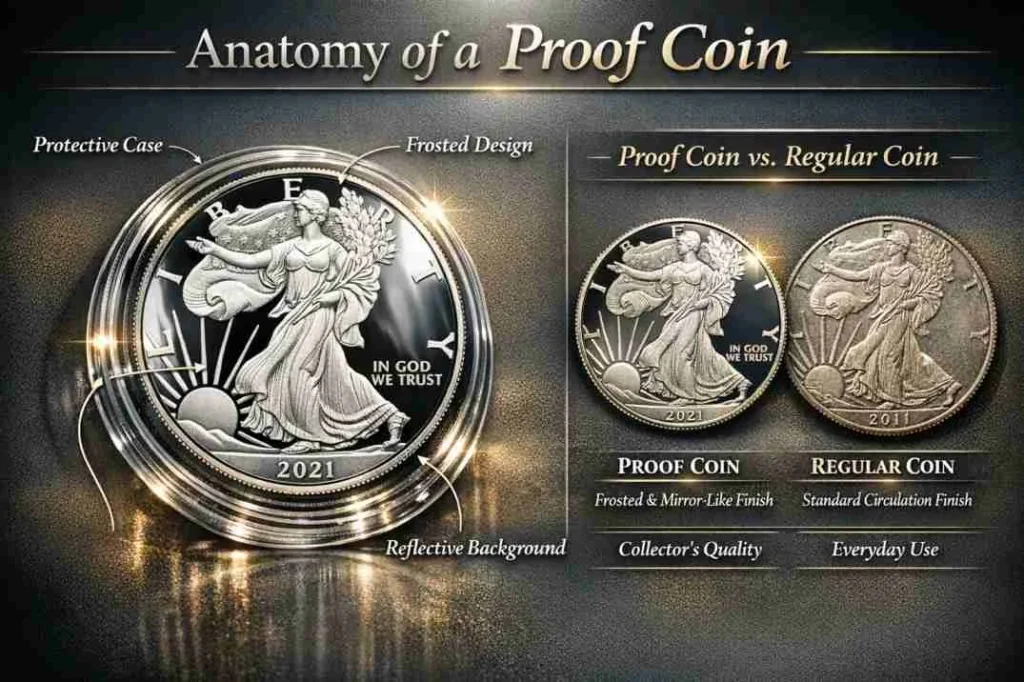
In coins, “proof” refers to a specially made coin that is struck using a unique minting process to produce a highly detailed design with a mirror-like background and frosted raised features. Proof coins are created mainly for collectors rather than for everyday circulation.
If you have ever explored coin collecting or looked closely at special edition coins, you may have come across the term proof coin. At first glance, it might sound like something related to authentication or testing. In reality, proof coins are a unique category of coins that stand out for their quality, finish, and method of production.
Understanding what proof means in coins can open the door to a deeper appreciation of numismatics, the study and collection of coins. Whether you are a beginner or someone curious about coin value, this guide will explain everything in a clear and approachable way.
What “Proof” Means in Coin Collecting
In simple terms, a proof coin is not about proving something. It refers to the quality and method of manufacturing. Proof coins are made with extra care compared to regular coins.
They are produced using polished dies and specially prepared coin blanks. The result is a coin that looks more refined, with sharper details and a striking contrast between the design and the background.
Unlike regular coins that are made quickly in large quantities for circulation, proof coins are crafted slowly and carefully. This attention to detail is what makes them highly desirable among collectors.
The Origin of Proof Coins
The concept of proof coins dates back several centuries. Early minting facilities would create special coins as samples to “prove” the quality of the dies and the design. These coins were not intended for everyday use.
Over time, these sample coins became valued for their beauty and craftsmanship. By the 18th and 19th centuries, mints began producing proof coins specifically for collectors and dignitaries.
Today, proof coins are issued by many national mints around the world. They are often released as part of limited sets or commemorative collections, making them even more appealing to collectors.
How Proof Coins Are Made
The process of making proof coins is what sets them apart. It involves several additional steps compared to standard coin production.
First, the coin blanks are polished to remove any imperfections. Then, the dies used to strike the coin are also polished and sometimes treated to create a frosted effect on certain areas.
When the coin is struck, it is done with greater pressure and often multiple times. This ensures that every detail of the design is crisp and clear.
After striking, proof coins are carefully inspected and packaged, usually in protective cases to preserve their condition.
Key Features of Proof Coins
Proof coins have distinctive characteristics that make them easy to recognize.
- Mirror-like background that reflects light
- Frosted or matte design elements that stand out
- Sharp, detailed images and lettering
- Clean, flawless surfaces without scratches
- Often packaged in protective cases or capsules
These features give proof coins a premium appearance that is very different from regular coins.
Proof Coins vs Regular Coins
Understanding the difference between proof coins and regular coins helps clarify why they are special.
| Feature | Proof Coins | Regular Coins |
|---|---|---|
| Purpose | Made for collectors | Made for everyday use |
| Finish | Mirror-like and detailed | Standard finish |
| Production | Carefully struck multiple times | Mass-produced quickly |
| Packaging | Comes in protective cases | Circulated without special packaging |
| Value | Often higher due to quality and rarity | Usually face value unless rare |
Proof coins are not meant for circulation, which is why they maintain their pristine condition.
Types of Proof Coins
Not all proof coins look exactly the same. There are a few variations depending on how they are produced.
| Type | Description |
|---|---|
| Cameo Proof | Strong contrast between frosted design and mirror background |
| Deep Cameo Proof | Extremely sharp contrast with highly reflective surfaces |
| Matte Proof | Soft, non-reflective finish used in some historical coins |
| Reverse Proof | Frosted background with shiny design elements |
Each type has its own appeal and can attract different kinds of collectors.
Why Proof Coins Are Valuable
Proof coins are often more valuable than regular coins, but not always for the same reasons as rare circulation coins. Their value comes from several factors.
- Limited production numbers
- High-quality craftsmanship
- Special designs or commemorative themes
- Demand among collectors
- Condition and preservation
For example, a proof coin from a limited release may increase in value over time if collectors seek it out. However, not all proof coins become extremely valuable, so understanding the market is important.
Real-Life Examples of Proof Coins
Imagine receiving two versions of the same coin. One is a regular coin from your pocket, slightly worn and dull. The other is a proof version of the same design, shining with a mirror-like finish and sharp details.
Another example could be a special edition coin released to celebrate an event. The proof version of that coin would likely come in a display case, making it suitable for collectors rather than everyday use.
These examples show how proof coins are designed to be admired rather than spent.
How to Identify a Proof Coin
If you are unsure whether a coin is a proof coin, there are a few signs to look for.
- Check for a reflective, mirror-like surface
- Look for sharp, crisp details in the design
- Examine the packaging, as proof coins are often sold in cases
- Look for a mint mark or special labeling
- Compare it with a regular coin of the same type
With a bit of practice, identifying proof coins becomes easier.
Caring for Proof Coins
Because proof coins are delicate and valuable, proper care is essential.
- Always handle coins by the edges
- Avoid touching the surface to prevent fingerprints
- Store coins in protective holders or capsules
- Keep them in a cool, dry place
- Avoid cleaning them, as this can reduce value
Collectors often treat proof coins as display items rather than objects to handle frequently.
Proof Coins in Modern Collecting
Today, proof coins are a major part of coin collecting. Many mints release annual proof sets that include all the coins produced in a given year, but in proof quality.
Collectors often buy these sets as a way to preserve a complete collection in pristine condition. Some also focus on specific themes, such as historical events, famous figures, or special anniversaries.
Proof coins are also popular gifts, especially for people interested in history or collecting.
Common Misunderstandings About Proof Coins
There are a few misconceptions about proof coins that are worth clearing up.
Some people believe that proof coins are always rare or extremely valuable. While they are often limited, not all proof coins increase significantly in value.
Others think that proof coins are meant to be used like regular coins. In reality, they are designed for collecting and display.
Another misunderstanding is that proof means a coin is authentic. While proof coins are genuine, the term refers to their finish and production method, not authentication.
FAQs
What does proof mean in coins
Proof refers to a specially made coin with a high-quality finish, created using a detailed minting process for collectors.
Are proof coins real money
Yes, proof coins are legal tender, but they are usually not used in circulation.
Why are proof coins shiny
They are polished and struck using special techniques that create a mirror-like surface.
Are proof coins worth more than regular coins
Often they are, especially if they are rare or in high demand among collectors.
Can proof coins be used as currency
Yes, but it is not recommended since they are more valuable as collectibles.
How can I tell if a coin is proof
Look for a reflective surface, sharp details, and original packaging.
Do proof coins lose value
They can lose value if damaged or if demand decreases, but many retain or increase value over time.
Should I clean proof coins
No, cleaning can damage the surface and reduce the coin’s value.
Conclusion
In coin collecting, proof means a coin that has been specially crafted with exceptional detail and finish, primarily for collectors rather than everyday use. These coins stand out for their beauty, precision, and the care taken in their production.
From their historical origins as test pieces to their modern role as collectible items, proof coins represent the artistry and craftsmanship of minting. Whether you are just starting a collection or simply curious, understanding proof coins can help you appreciate the finer details of numismatics.
By learning how they are made, how to identify them, and how to care for them, you can make informed decisions and perhaps even start a collection of your own.
Read More Related Articles:
- Open Interest Mean in Options: How It Impacts Options Trading In 2026
- What Does Evergreen Mean in Business: Long-Term Growth Explained In 2026
- GPT Meaning in Chat GPT: What the Letters Actually Stand In 2026

Luna Hartley is a content creator at TextSprout.com, where she specializes in explaining word meanings, modern phrases, and everyday language used in texts and online conversations. Her writing focuses on clarity and context, helping readers understand how words are actually used in real communication.