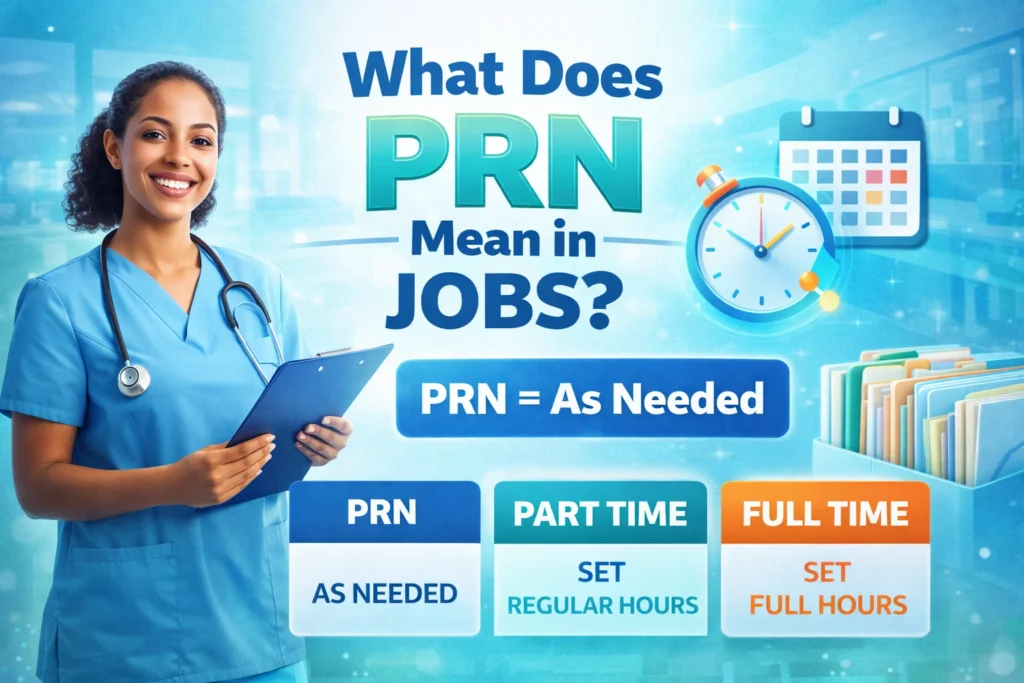
PRN in jobs means “pro re nata,” a Latin term that translates to “as needed.” In employment settings, especially in healthcare, PRN refers to employees who work only when their services are required rather than on a fixed schedule.
Ever seen a job posting labeled “PRN position” and wondered what it actually means? You are not alone. The term appears frequently in healthcare, education, and service industries. Yet many job seekers feel confused about how PRN roles work, how they differ from part time or full time jobs, and whether they are a good fit.
If you are exploring flexible work options or trying to decode employment terminology, this guide will walk you through everything you need to know about what PRN means in jobs, how it works, and whether it is right for you.
Let’s break it down in simple, practical terms.
What Does PRN Mean in Jobs?
PRN stands for pro re nata, a Latin phrase meaning as the situation demands or as needed.
In the workplace, a PRN employee:
• Works only when the employer needs extra staff
• Has no guaranteed hours
• May fill in for absent employees
• Often works flexible or on call shifts
Most commonly, PRN jobs appear in healthcare settings such as hospitals, clinics, and nursing homes. However, the concept is spreading to other industries that require staffing flexibility.
Origin of the Term PRN
The abbreviation PRN comes from Latin medical terminology. It has long been used in prescriptions to indicate medication taken only when necessary.
For example:
• Take one tablet PRN for pain
• Use inhaler PRN for shortness of breath
Because healthcare systems already used this terminology, it naturally carried over into staffing language.
Today, PRN remains heavily associated with healthcare professions like nursing and allied health roles. Its use has expanded into broader job markets where flexible staffing models are common.
Why PRN Jobs Are So Popular Today
Work culture has shifted significantly over the past decade. Flexibility is now a top priority for many workers.
PRN roles offer:
• Control over scheduling
• Supplemental income opportunities
• Reduced long term commitment
• Work life balance flexibility
For employers, PRN staff help manage fluctuating workloads. Seasonal demand, patient surges, or employee absences create gaps that PRN workers fill efficiently.
In industries like healthcare, unpredictable staffing needs make PRN positions essential.
Where PRN Jobs Are Most Common
1. Healthcare



Healthcare is where PRN jobs are most frequently found.
Common PRN roles include:
• Registered Nurse
• Licensed Practical Nurse
• Medical Assistant
• Physical Therapist
• Radiology Technician
Hospitals and clinics rely heavily on PRN staff to maintain patient coverage.
2. Education and Childcare
Substitute teachers often work in PRN style arrangements. They step in when full time teachers are absent.
3. Retail and Hospitality
Restaurants and event venues sometimes use PRN staff during busy seasons or special events.
4. Emergency Services
On call paramedics and crisis workers may also work under PRN terms.
How PRN Jobs Work in Practice
PRN employees typically:
• Submit availability schedules
• Accept shifts when offered
• May decline shifts depending on employer policy
• Are not guaranteed consistent hours
Some employers require PRN staff to work a minimum number of shifts per month to remain active.
Others allow complete flexibility with no obligation.
PRN vs Other Employment Types
Understanding the differences between PRN and other work arrangements helps you make informed decisions.
Table 1: PRN vs Part Time vs Full Time
| Feature | PRN | Part Time | Full Time |
|---|---|---|---|
| Guaranteed Hours | No | Usually Yes | Yes |
| Benefits Eligibility | Rare | Sometimes | Yes |
| Schedule | As needed | Fixed schedule | Fixed schedule |
| Job Stability | Low | Moderate | High |
| Flexibility | Very High | Moderate | Low |
PRN offers maximum flexibility but minimal security.
PRN vs Per Diem
Many people confuse PRN with per diem. They are similar but not identical.
Table 2: PRN vs Per Diem Comparison
| Feature | PRN | Per Diem |
|---|---|---|
| Meaning | As needed | Per day |
| Common Industry | Healthcare | Healthcare |
| Pay Structure | Hourly | Often higher daily rate |
| Scheduling | Employer calls as needed | Works specific daily assignments |
In most healthcare environments, the two terms are used interchangeably. However, per diem sometimes implies a higher hourly wage without benefits.
Advantages of PRN Jobs
PRN roles can be extremely attractive for certain workers.
Benefits Include:
• Flexible scheduling
• Ability to earn extra income
• Great for students or retirees
• Ideal for parents needing adaptable hours
• Opportunity to gain varied experience
Many nurses use PRN positions to supplement full time employment.
Some professionals use PRN work to test new workplaces before committing.
Disadvantages of PRN Employment
Flexibility comes with trade offs.
Potential Drawbacks:
• No guaranteed income
• Usually no health insurance or retirement benefits
• Less job security
• Possible inconsistent scheduling
• Limited eligibility for promotions
If financial stability is your top priority, PRN may feel risky.
Real World Examples of PRN Usage
Friendly Tone Example
“I love working PRN because I can choose shifts that fit my schedule 😊”
Neutral Tone Example
This is a PRN role, meaning shifts are assigned as needed.”
Slightly Dismissive Tone Example
“It is only PRN, so hours are not guaranteed.”
Context matters when employers present PRN opportunities. Tone often depends on how flexible the arrangement is.
Table 3: Example PRN Job Listings Explained
| Job Title | Description Snippet | What It Means |
|---|---|---|
| PRN Registered Nurse | Fill shifts as needed | No fixed weekly schedule |
| PRN Medical Assistant | Coverage during staff shortages | Temporary or flexible |
| PRN Therapist | Provide patient care per demand | Called in during high volume |
Understanding listing language prevents confusion during interviews.
Alternate Meanings of PRN
While PRN primarily refers to employment in job settings, it can also mean:
• As needed in medical prescriptions
• In texting, rarely used outside healthcare context
In jobs, it almost always refers to staffing flexibility.
Professional Alternatives to Saying PRN
If you want to sound more formal in interviews, you can say:
• On call position
• As needed role
• Flexible shift assignment
• Supplemental staffing position
These alternatives communicate similar meaning while sounding polished.
Is a PRN Job Right for You?
Ask yourself:
• Do I need consistent income
• Do I prefer flexible scheduling
• Can I handle unpredictable hours
• Am I seeking supplemental income
PRN works best for:
• Students
• Parents
• Retirees
• Professionals with primary employment elsewhere
It may not suit someone who depends on steady paychecks.
How PRN Impacts Pay and Benefits
PRN workers sometimes earn slightly higher hourly rates to compensate for lack of benefits.
However, this varies widely by employer.
Most PRN employees do not receive:
• Health insurance
• Paid time off
• Retirement contributions
Some hospitals provide limited perks after meeting minimum shift requirements.
Always ask about policies during interviews.
Tips for Succeeding in a PRN Role
• Stay responsive to scheduling requests
• Maintain professional relationships
• Keep certifications updated
• Track your hours carefully
• Clarify expectations early
Reliability increases the likelihood of getting more shift offers.
FAQs
What does PRN stand for in a job posting
PRN stands for pro re nata which means as needed. It indicates that the job has no guaranteed hours and work is assigned based on demand.
Is PRN the same as part time
No. Part time employees typically have a set schedule with consistent weekly hours. PRN employees work only when needed and schedules may vary significantly.
Do PRN employees get benefits
Most PRN employees do not receive health insurance or paid leave. Some employers may offer limited benefits depending on hours worked.
How often do PRN employees work
It depends on employer demand. Some may work several shifts per week during busy periods. Others may only work a few shifts per month.
Is PRN considered temporary employment
Not necessarily. PRN positions can be ongoing but hours are flexible and not guaranteed.
Does PRN pay more than full time
Sometimes PRN workers earn higher hourly wages to offset the lack of benefits. This varies by employer and industry.
Can a PRN job become full time
Yes. Some employers offer full time opportunities to reliable PRN workers when openings become available.
Is PRN work good for students
Yes. PRN roles are ideal for students because of flexible scheduling and the ability to work around classes.
Conclusion
So what does PRN mean in jobs? It means working as needed without guaranteed hours. The term originates from Latin medical language and remains deeply rooted in healthcare employment.
PRN roles provide unmatched flexibility. They also come with financial unpredictability.
If you value freedom over routine, PRN may be a smart option. If you need structured income and benefits, traditional employment might be better.
Before accepting a PRN position, clarify scheduling expectations, pay rates, and any minimum shift requirements.
Informed decisions lead to better career outcomes.
Read More Related Articles:
- What Does Waived Mean in NBA? A Quick Guide for Fans In 2026
- What Does Adam Mean in Hebrew? Biblical Insights and Usage Guide (2026)
- What Does MVR Mean in Baseball? The Stat Explained Clearly In 2026

Luna Hartley is a content creator at TextSprout.com, where she specializes in explaining word meanings, modern phrases, and everyday language used in texts and online conversations. Her writing focuses on clarity and context, helping readers understand how words are actually used in real communication.