
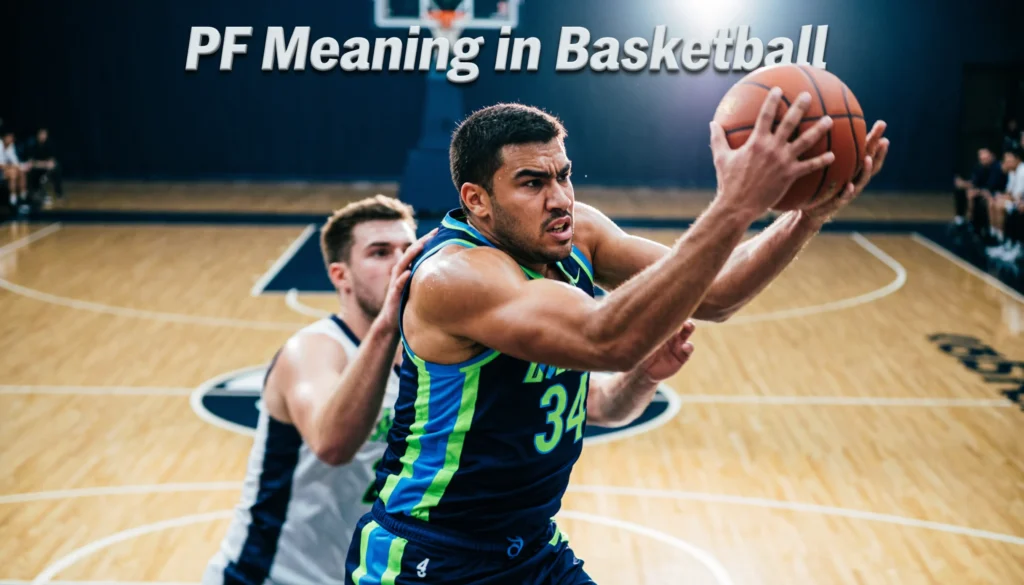
PF in basketball means Power Forward, a player position typically responsible for rebounding, interior scoring, physical defense, and supporting the center while also stretching the floor in modern basketball.
PF in basketball stands for Power Forward, a frontcourt position known for strength, rebounding, inside scoring, and defensive versatility.
If you have ever checked a basketball box score, watched an NBA draft, or played NBA 2K, you have almost certainly seen the abbreviation PF. It appears simple on the surface, yet it carries a lot of history, strategy, and modern evolution behind it. Understanding what PF means in basketball helps fans read the game better and helps players understand where they fit on the court.
In basketball, PF meaning basketball refers to a personal foul, which is called when a player makes illegal physical contact with an opponent. Personal fouls can occur in various situations, such as blocking, holding, pushing, or hitting another player, and they affect both the flow of the game and the player’s standing.
Accumulating too many personal fouls can lead to a player being disqualified from the game, and it can also result in free throws for the opposing team. Understanding PF meaning basketball is important for players, coaches, and fans alike, as it highlights the rules around fair play and the consequences of excessive physical contact on the court.
This guide breaks it all down in plain English. You will learn the meaning, origin, responsibilities, examples, tone usage, comparisons, and even alternate meanings of PF, all in one place.
What Does PF Mean in Basketball?
In basketball terminology, PF refers to the Power Forward position.
It is one of the five traditional positions in the sport.
The standard lineup looks like this:
| Abbreviation | Position Name |
|---|---|
| PG | Point Guard |
| SG | Shooting Guard |
| SF | Small Forward |
| PF | Power Forward |
| C | Center |
The power forward usually plays near the basket but is more mobile than the center.
This position blends physical strength with skill and flexibility.
Origin and History of the Power Forward Position
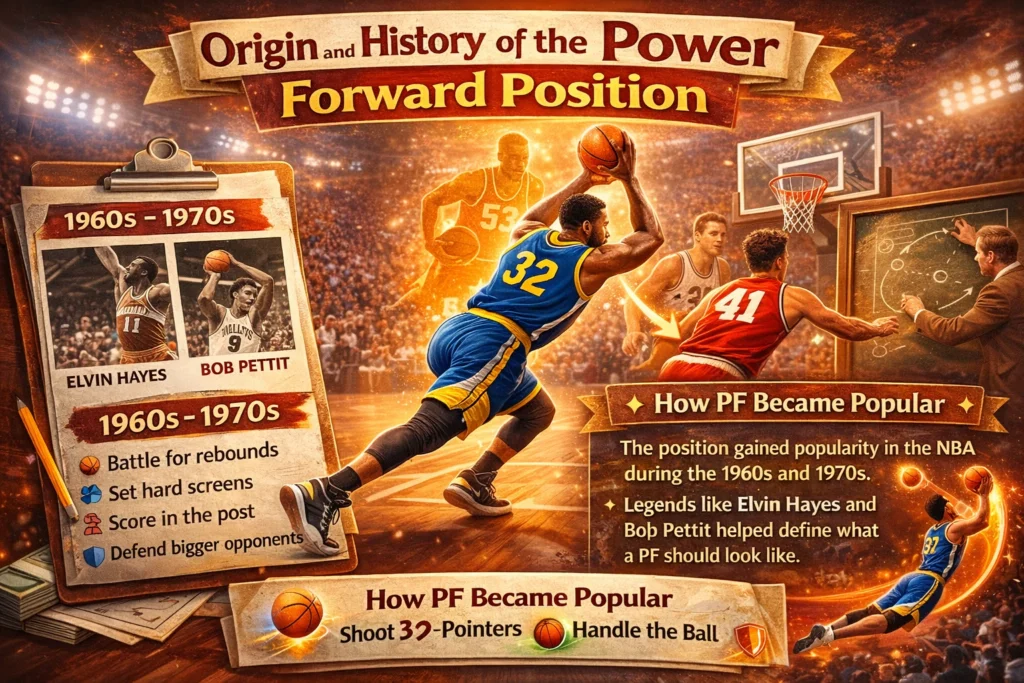
The power forward role developed as basketball became more structured and position based.
Early basketball did not strictly define positions the way modern basketball does.
As the game evolved in the mid 20th century, coaches needed players who could:
• Battle for rebounds
• Set hard screens
• Score in the post
• Defend bigger opponents
The power forward emerged as a hybrid role.
It combined the size of a center with the movement of a forward.
How PF Became Popular
The position gained popularity in the NBA during the 1960s and 1970s.
Legends like Elvin Hayes and Bob Pettit helped define what a PF should look like.
Over time, the role expanded.
Modern power forwards now shoot three pointers, handle the ball, and defend multiple positions.
Core Responsibilities of a Power Forward
A PF is expected to contribute in several key areas.
The role can vary depending on the team’s system.
Traditional Power Forward Duties
• Rebounding on both ends
• Scoring near the basket
• Setting screens for guards
• Defending opposing big men
• Providing physical presence
Modern Power Forward Duties
• Stretching the floor with shooting
• Switching on defense
• Running pick and roll plays
• Creating mismatches
• Passing from the high post
Not every PF does all of these things equally.
Teams adjust the role based on player strengths.
PF Meaning in Box Scores and Stats
When you see PF in a box score, it usually indicates the player’s position.
It can also appear in lineup charts, depth charts, and scouting reports.
Example in Context
“LeBron James started at PF tonight to exploit mismatches.”
This shows how flexible the position has become.
Even players traditionally known as small forwards can play PF.
PF vs Other Basketball Positions
Understanding PF becomes easier when you compare it to other positions.
PF vs Center
| Aspect | Power Forward | Center |
|---|---|---|
| Size | Tall and strong | Tallest and strongest |
| Scoring | Post and mid range | Mostly close to rim |
| Mobility | More agile | Less mobile |
| Defense | Versatile | Rim protection |
Centers usually stay closer to the basket.
Power forwards have more freedom to move.
PF vs Small Forward
| Aspect | Power Forward | Small Forward |
|---|---|---|
| Strength | Higher | Moderate |
| Shooting | Improving | Strong |
| Defense | Interior focused | Perimeter focused |
| Role | Physical presence | Scoring and playmaking |
Small forwards rely more on speed and shooting.
Power forwards emphasize strength and rebounding.
Types of Power Forwards in Basketball
Not all PFs play the same way.
Coaches often classify them into styles.
Traditional PF
• Plays near the rim
• Focuses on rebounds
• Scores in the post
Stretch PF
• Shoots three pointers
• Pulls defenders out
• Opens space for teammates
Point Forward PF
• Handles the ball
• Facilitates offense
• Creates plays
This flexibility explains why PF remains one of the most important roles.
Real World Examples of PF Usage
Here are common ways PF is used in conversation.
Neutral Tone
“He is listed as the starting PF for tonight’s game.”
This usage is factual and informational.
Friendly or Fan Tone
“Our PF dominated the boards tonight 💪”
Fans often use PF casually during games.
Strategic or Analytical Tone
“Moving him to PF improves spacing and defense.”
This tone appears in analysis and coaching discussions.
PF in Youth Basketball and Amateur Leagues
In youth leagues, PF roles are often simplified.
Players may rotate positions more frequently.
Young PFs are usually taught fundamentals like:
• Rebounding
• Defensive positioning
• Passing
• Footwork
As competition increases, specialization becomes clearer.
Alternate Meanings of PF in Basketball
PF can sometimes mean something else depending on context.
This causes confusion for new fans.
PF as Personal Foul
In stat sheets, PF may also stand for Personal Fouls.
Example:
“Player A had 4 PFs in the game.”
This does not refer to position.
Context usually makes the meaning clear.
| PF Meaning | Context |
|---|---|
| Power Forward | Lineups and positions |
| Personal Foul | Stat sheets and box scores |
How to Tell Which PF Meaning Is Used
Look at where the abbreviation appears.
If PF is next to a player name before the game, it means Power Forward.
If PF appears next to numbers during the game, it usually means Personal Fouls.
Polite or Professional Alternatives
In formal writing, you may see:
• Power Forward instead of PF
• Frontcourt player
• Interior forward
Using the full term can help clarity in articles and coaching materials.
PF in Basketball Strategy
Coaches value PFs for matchup advantages.
The position often determines tempo and spacing.
Offensive Impact
A skilled PF can:
• Create mismatches
• Draw double teams
• Open lanes for guards
Defensive Impact
On defense, PFs:
• Guard bigger players
• Switch on screens
• Protect the paint
This versatility makes PF a strategic anchor.
PF Meaning in NBA 2K and Basketball Video Games
In basketball video games, PF determines player attributes.
Ratings emphasize strength, rebounding, and interior defense.
Choosing PF affects:
• Build type
• Playstyle
• Matchups
Gamers often choose PF for balanced gameplay.
Example Table: PF Skills Breakdown
| Skill Area | Importance Level |
|---|---|
| Rebounding | Very High |
| Strength | High |
| Shooting | Medium to High |
| Speed | Medium |
| Defense | High |
This table shows why PFs are considered all around contributors.
Common Misunderstandings About PF
Many people assume PFs only play near the basket. Modern basketball has changed that idea. Some PFs now shoot better than guards. Others initiate offense like point guards. The position continues to evolve.
In basketball, what is PF stat in basketball shows the number of personal fouls a player has committed, helping track their defensive aggression and risk of fouling out.
FAQs
What does PF stand for in basketball?
PF stands for Power Forward, one of the five standard basketball positions.
Is PF the same as center?
No, a PF is usually more mobile and versatile than a center.
Can a small forward play PF?
Yes, many teams use smaller players at PF for speed and spacing.
Does PF ever mean personal foul?
Yes, in stat sheets PF can also mean personal fouls.
What skills are most important for a PF?
Rebounding, strength, defense, and scoring versatility matter most.
Is PF still important in modern basketball?
Absolutely, modern PFs are key to spacing and defense.
Who are famous PFs in basketball history?
Players like Tim Duncan, Kevin Garnett, and Dirk Nowitzki defined the role.
Is PF a good position for beginners?
It can be, especially for players who are tall, strong, and willing to learn fundamentals.
Conclusion:
PF means Power Forward, a versatile and physical position. The role blends strength with skill. Modern PFs shoot, pass, and defend multiple positions. Context determines whether PF means Power Forward or Personal Foul. Understanding PF helps fans enjoy the game more deeply.
In basketball, PF basketball meaning stands for personal foul, which occurs when a player makes illegal physical contact with an opponent. Personal fouls can include actions like pushing, blocking, or hitting another player, and they affect both the game and the player’s status. Accumulating multiple fouls can lead to a player fouling out, while also giving the opposing team free throws in certain situations. Understanding PF basketball meaning is essential for players, coaches, and fans to follow the rules and recognize how fouls impact the flow of the game.
Learning basketball terms like PF makes watching games more fun.
It also helps players and fans speak the same language.
Read More Related Articles:
- Don Mean in Spanish Culture: History, Respect and Usage In 2026
- “Esta” Mean in Spanish: The Small Word Learners Always Notice In 2026
- “Ir” Meaning in Spanish: Usage and Real-Life Examples In 2026

Neon Samuel is a digital content creator at TextSprout.com, dedicated to decoding modern words, slang, and expressions. His writing helps readers quickly grasp meanings and understand how terms are used in real conversations across text and social platforms.